
Why Graduation Season Creates a Waterslide Sizing Decision for CA Fleet Owners
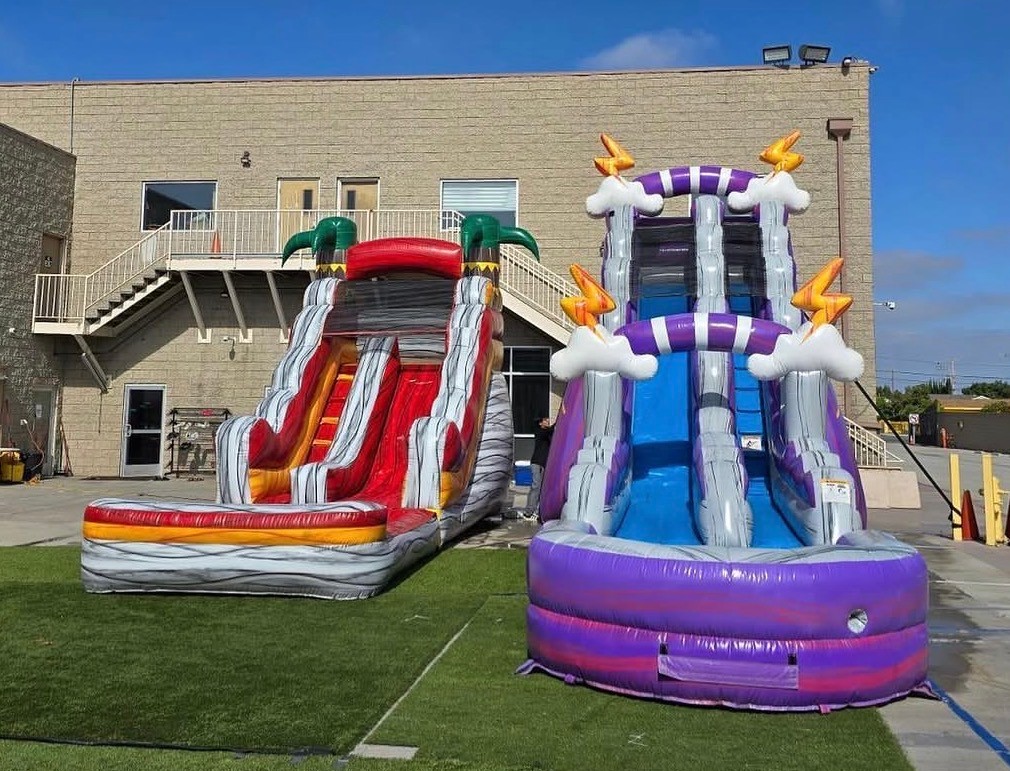
Every May and June, graduation parties across California turn into one of the most concentrated booking windows in the inflatable rental calendar. High school and college graduates want outdoor celebrations, and in CA's warm late-spring climate, waterslides are consistently among the top requested units. For fleet owners, that demand spike is both an opportunity and a planning challenge. If your inventory doesn't include the right slide sizes, you're not just losing a single booking. You're turning away repeat customers, referrals, and the kind of word-of-mouth that builds a summer season.
The sizing decision matters more for graduation events than for typical backyard birthday parties. Graduation parties tend to run larger, often 40 to 80 guests or more, with a mix of teens, young adults, and family members spanning a wide age range. A compact 15-foot slide that works perfectly for a 10-year-old's birthday party may feel underwhelming to a crowd of 17-year-olds celebrating a milestone. At the same time, stocking only large-format slides creates its own problems: higher freight costs, more storage space consumed, and units that don't pencil out for smaller bookings during the rest of the year.
The practical answer is intentional sizing strategy. CA fleet operators who do well during graduation season typically carry at least one mid-range slide (in the 18-to-22-foot height range) and one larger-format unit (24 feet and above) alongside their standard inventory. That combination lets you say yes to the 50-person graduation party in Anaheim Hills and still serve the 20-kid end-of-school bash in Garden Grove without turning either booking away. Understanding why that range matters starts with looking at the actual dimensions and capacity specs behind each category.
Waterslide Dimensions and Capacity Specs That Match Graduation Party Guest Counts
When fleet buyers talk about waterslide sizing, height is the most commonly cited spec, but footprint and throughput matter just as much for graduation-scale events. A 15-foot slide typically occupies a ground footprint of roughly 25 to 30 feet in length and 10 to 12 feet in width. That's manageable for most residential backyards, but the rider throughput at a busy graduation party can create long wait lines that frustrate older guests who aren't as patient as younger kids.
Moving up to an 18-foot slide, you're generally looking at a footprint closer to 30 to 35 feet long and 12 to 14 feet wide. The increased height means a longer, faster slide run, which is a meaningful upgrade for teen and young adult riders. Throughput improves modestly because the ride experience is more satisfying, so guests tend to cycle through at a reasonable pace rather than stacking up at the bottom waiting for something more exciting. For a graduation party of 30 to 50 guests, an 18-foot unit is often the sweet spot between site compatibility and crowd satisfaction.
For larger graduation events, units in the 22-to-28-foot range become worth the investment. These slides typically carry footprints of 35 to 45 feet in length and 14 to 18 feet in width, and some dual-lane configurations can handle two riders simultaneously, which meaningfully improves throughput for crowds of 60 or more. Weight capacity per rider and total occupancy limits vary by manufacturer, so always verify the spec sheet before quoting a large-group event. The ASTM International F24 Committee standards for amusement rides and devices provide the baseline framework that reputable manufacturers design to, and reviewing those specs alongside manufacturer documentation helps fleet buyers evaluate whether a unit is built for commercial use or consumer-grade durability.
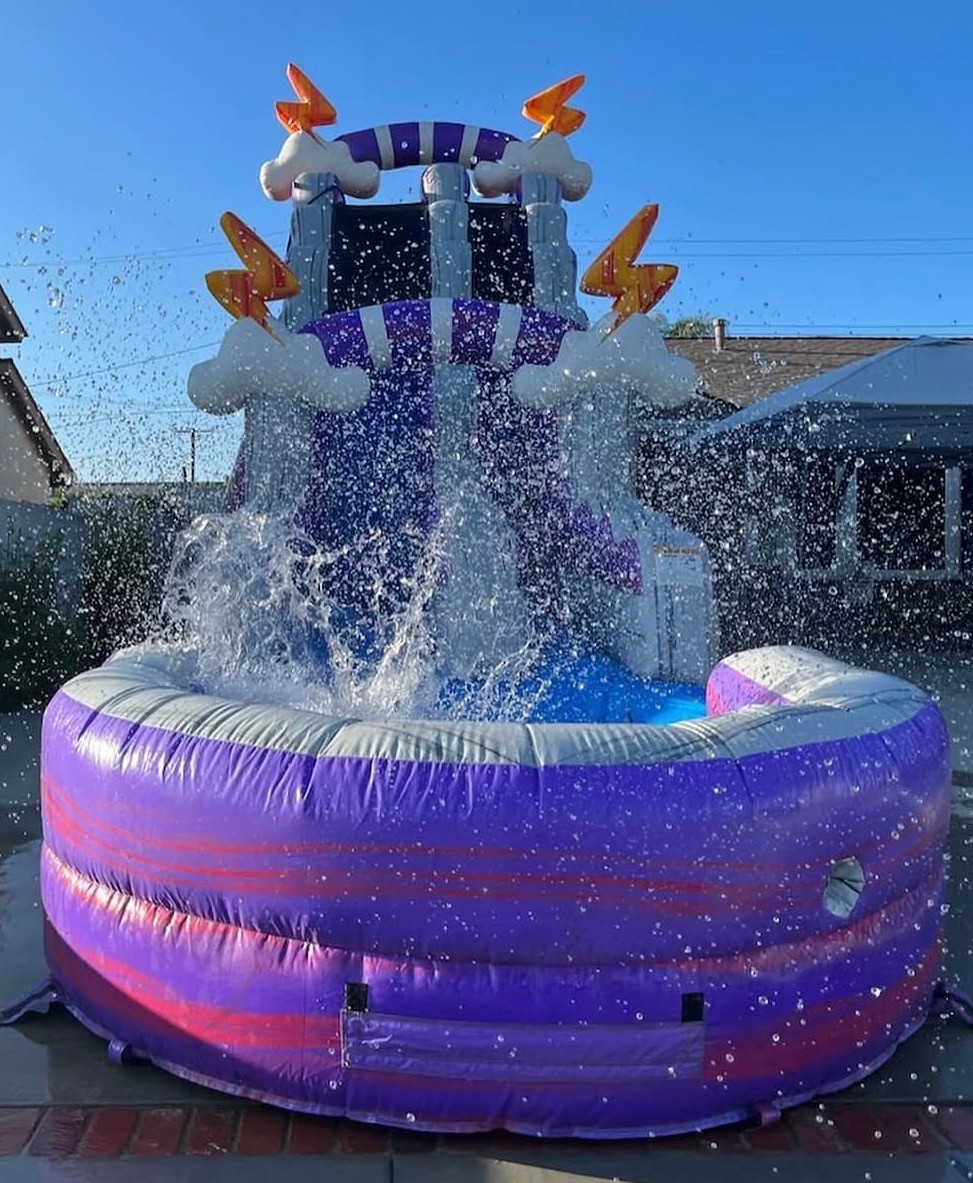
One practical note for CA fleet operators: graduation parties in inland communities like Yorba Linda, Anaheim Hills, and Rancho Santa Margarita often take place in larger backyard settings where a 22-foot or 24-foot slide fits comfortably. Coastal communities with smaller lot sizes may require you to confirm site dimensions before committing a large unit. Building a quick site-assessment checklist into your booking process saves you from day-of complications and protects your equipment. You can see how Jump High Rentals approaches waterslide setup for CA backyard parties for a practical reference on site evaluation factors.
Freight, Delivery, and Storage Considerations for CA Operators Adding Slides
Adding larger waterslides to your CA fleet isn't just a purchasing decision. It's a logistics decision that affects your warehouse, your delivery vehicles, and your labor costs on every booking. Larger slides ship on pallets or in crates, and freight costs from manufacturers (many of whom are based in the southeastern US or overseas) can add $500 to $2,000 or more to the landed cost of a single unit depending on size, weight, and current carrier rates. Getting multiple freight quotes and timing your purchase orders to avoid peak shipping seasons (typically late spring when everyone is restocking for summer) can reduce that cost meaningfully.
Storage footprint is the other factor that fleet buyers sometimes underestimate. A compact 15-foot slide rolls up and stores in a bag that fits on a standard warehouse shelf. A 24-foot dual-lane slide may require a dedicated floor section or a climate-controlled storage area to prevent vinyl degradation in CA's heat. If you're operating out of a smaller facility in Orange County or the Inland Empire, adding two or three large-format slides could push you toward a storage upgrade sooner than your revenue projections anticipated.
Delivery vehicle compatibility is worth mapping out before you finalize a purchase. Large slides may require a box truck or trailer rather than a standard cargo van, and if your current fleet of delivery vehicles can't accommodate the rolled dimensions, you're adding a vehicle cost to the equation. Some CA operators solve this by partnering with a local freight carrier for large-unit deliveries rather than handling them in-house, which keeps vehicle overhead lower while still allowing them to serve large-event bookings.
For operators in Orange County specifically, delivery routing to graduation party venues in communities like Mission Viejo, Laguna Hills, or Fullerton involves navigating residential streets that may have clearance or parking constraints. Building delivery windows that account for those variables protects your setup timeline and your customer relationships. The Jump High Rentals guide on inflatable rental delivery windows in OC covers how those logistics play out in practice, which can be useful context for operators calibrating their own delivery planning.
ROI Framing: Stocking the Right Slide Size vs. Turning Away Graduation Bookings
The ROI case for adding a mid-to-large waterslide before graduation season comes down to a straightforward comparison: what does the unit cost to acquire and operate, and how many bookings does it take to recover that cost? A quality commercial-grade 18-foot waterslide from a reputable manufacturer typically lands in the $3,000 to $6,000 range depending on features and construction. A 22-to-24-foot unit may run $6,000 to $10,000 or more. Those numbers sound significant, but graduation season bookings in CA often command premium pricing, particularly for larger units that aren't widely available in a given market.
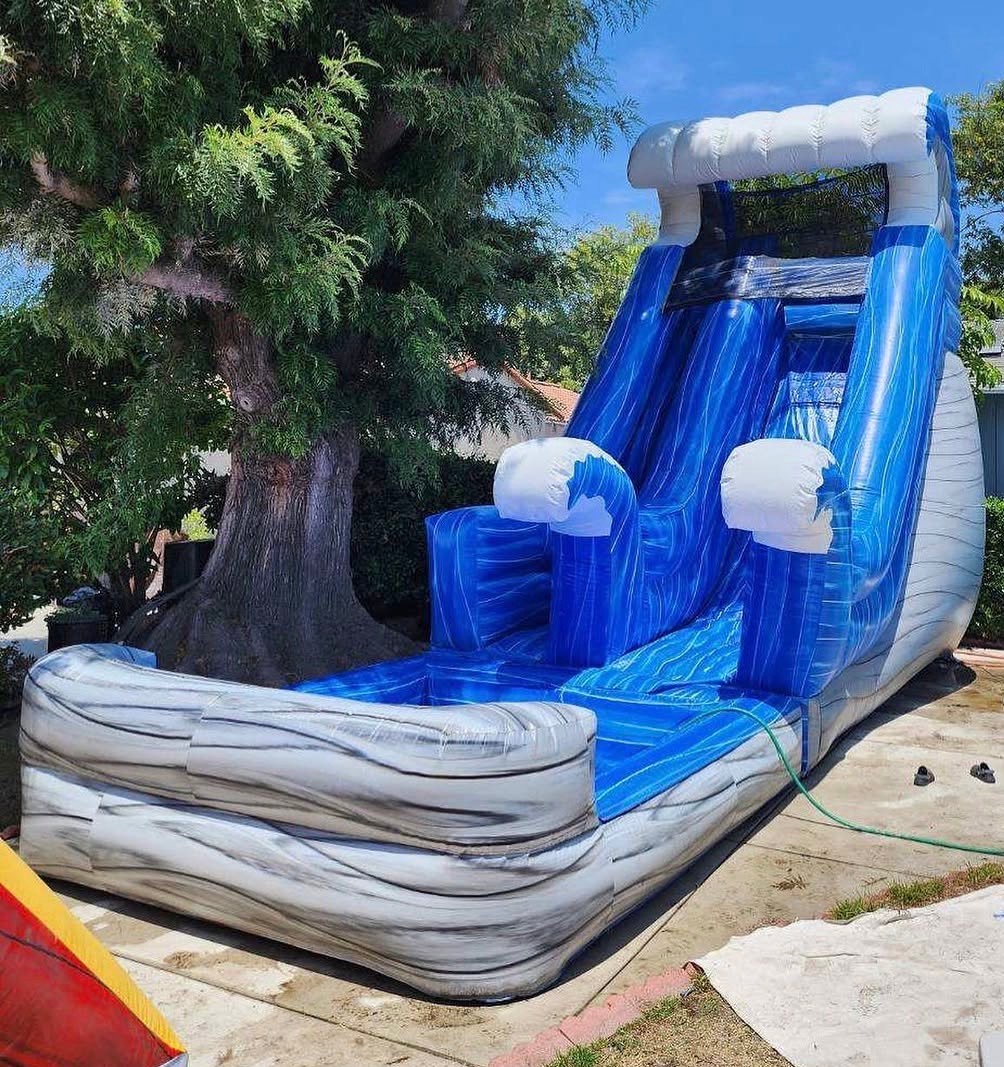
If your market rate for a large waterslide rental is $400 to $600 per day and you book that unit 15 to 20 times during the May-through-August window, you're looking at $6,000 to $12,000 in gross revenue from a single unit in a single season. Even after accounting for cleaning, maintenance, delivery labor, and a portion of storage overhead, the payback period on a well-chosen slide can be shorter than fleet buyers expect. The key qualifier is "well-chosen." A unit that sits because it's too large for most of your market's venues, or too small to satisfy the graduation crowd that's actually calling you, doesn't generate that revenue.
Depreciation is part of the calculation too. Commercial inflatables typically depreciate over a 5-to-7-year useful life depending on use frequency, maintenance quality, and storage conditions. CA's heat and UV exposure can accelerate vinyl wear if units aren't stored properly, so factoring in a replacement reserve when you price your rentals protects your long-term fleet value. For a deeper look at how CA fleet operators approach depreciation planning, the Jump High Rentals guide on commercial inflatable depreciation for CA fleet owners is a useful reference.
One often-overlooked ROI factor is the cost of turning away bookings. When a graduation party customer calls and you don't have the right unit, they don't just book elsewhere for that one event. They often don't call you back for their next event either. In a market like Orange County, where graduation party season overlaps with Fourth of July, summer birthday parties, and HOA events, losing a customer relationship during peak season has a compounding effect on annual revenue.
Vendor Selection and Warranty Factors When Buying Waterslides for Your CA Fleet
Choosing the right manufacturer matters as much as choosing the right size. Commercial-grade waterslides designed for rental use are built differently from consumer or residential units, and the difference shows up in stitching quality, vinyl weight (typically 18-ounce to 22-ounce commercial PVC), anchor point reinforcement, and blower compatibility. When evaluating vendors, ask specifically whether the unit is rated for commercial rental use and what the warranty covers for that use case. Some manufacturers offer strong warranties for residential use but limit commercial coverage significantly, which matters a great deal when you're putting a unit through 30 or 40 rental cycles per season.
Warranty terms to review carefully include coverage duration (one year is common; two years is better), what's covered (seams, zippers, blower motors, and vinyl panels are the key components), and whether the warranty is voided by specific conditions common in CA rental environments, such as high UV exposure or use on concrete surfaces. Asking for references from other CA rental operators who have purchased from the same vendor gives you real-world feedback that spec sheets don't provide.
Lead time is another vendor factor that catches fleet buyers off guard. Quality commercial waterslides from reputable manufacturers can have lead times of 8 to 16 weeks, particularly if you're ordering custom colors or configurations. If you're planning to have new units ready for graduation season bookings starting in May 2026, ordering in January or February gives you a reasonable buffer. Waiting until March or April risks receiving units after your peak booking window has already started.
For CA fleet operators who want to see how real-world waterslide sizing plays out across different event types and guest counts, browsing the Jump High Rentals catalog gives you a practical reference point. And if you have questions about how specific units perform in the OC market or want to talk through sourcing considerations, the Jump High team is available through the contact page to help you think through your inventory decisions before graduation season demand peaks.