
Obstacle Course Inflatable Lifespan in CA
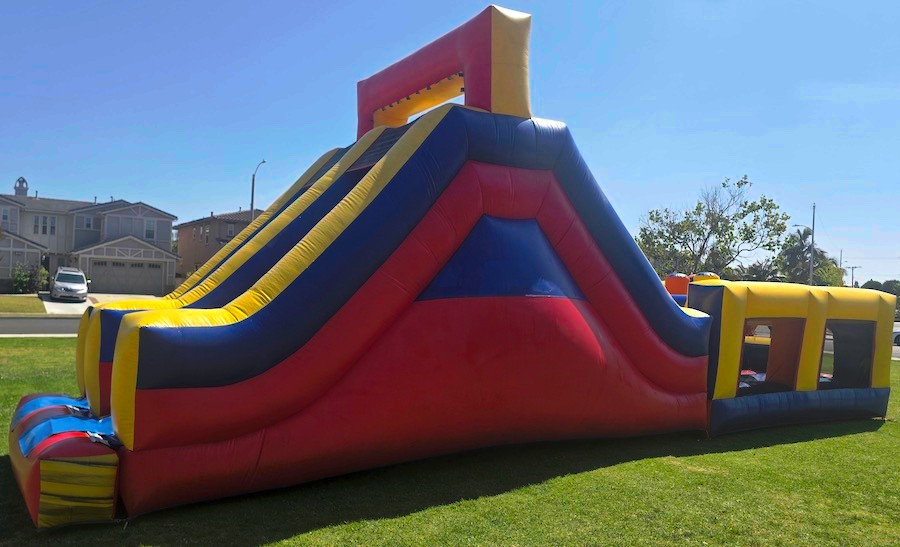
Commercial obstacle course inflatables are a serious investment, whether you're building a rental fleet from scratch or adding units to an existing lineup. In California, that investment faces some real environmental pressure: intense UV exposure, coastal humidity, and summer heat that can push surface temperatures well beyond what operators in cooler states deal with. Understanding how long a well-made unit actually lasts, and what it takes to get there, helps you make smarter buying decisions and keep your equipment earning for as long as possible.
The honest answer to "how long do commercial obstacle courses last?" is somewhere between five and ten years for a unit that sees regular rental use and receives consistent care. Some operators in CA report pushing units past the ten-year mark with diligent maintenance. Others retire units at four or five years because of preventable wear that accumulated early. The difference almost always comes down to how the unit was stored, cleaned, and inspected between uses. If you're planning a large event and want to see what a well-maintained obstacle course looks like in action, the Jump High Rentals catalog gives you a good reference point for commercial-grade units.
How Long Do Commercial Obstacle Courses Last in CA
The lifespan of a commercial obstacle course inflatable depends on three things working together: material quality, frequency of use, and the care it receives between rentals. Most units built for commercial use are made from 18-ounce PVC vinyl or a similar heavy-duty coated fabric. That material is durable, but it's not indestructible, and California's environment tests it in ways that other states simply don't.
A unit rented out every weekend during peak season (roughly April through October in most of Orange County and the surrounding region) accumulates wear faster than one used a few times per month. At that pace, a quality commercial obstacle course typically delivers five to seven years of reliable service before major repairs become frequent. With lighter use and excellent maintenance, that window stretches to eight to ten years. Units that are abused, left wet in storage, or exposed to prolonged sun without UV-protective covers tend to show serious degradation in as few as three years.
It's worth noting that "lifespan" doesn't mean the unit suddenly fails on a specific date. Degradation is gradual. Seams weaken before they split. Colors fade before the material becomes brittle. Recognizing those early signals is what separates operators who get maximum value from their fleet from those who face expensive emergency repairs mid-season.
For event planners and rental customers, understanding lifespan matters too. When you're booking an obstacle course for a school field day or a community event, you want to know the unit arriving at your venue is in solid condition. The Jump High Rentals FAQ covers what to expect from a properly maintained rental unit.
California Climate Factors That Affect Inflatable Lifespan
California is not a single climate. A rental operator in Huntington Beach deals with salt air and coastal humidity. An operator in Fullerton or Yorba Linda faces dry heat and intense summer UV. Someone running events in the Inland Empire adds extreme temperature swings to the mix. Each of these conditions accelerates wear in different ways, and smart CA operators account for all of them.
UV exposure is the most consistent threat across the state. California averages more sunny days per year than most of the country, and PVC vinyl degrades under prolonged ultraviolet radiation. The material becomes stiffer and more brittle over time, which makes seams vulnerable to cracking under the stress of active use. Using UV-protective tarps or covers during outdoor storage, and keeping units out of direct sun when not in use, meaningfully slows this process.
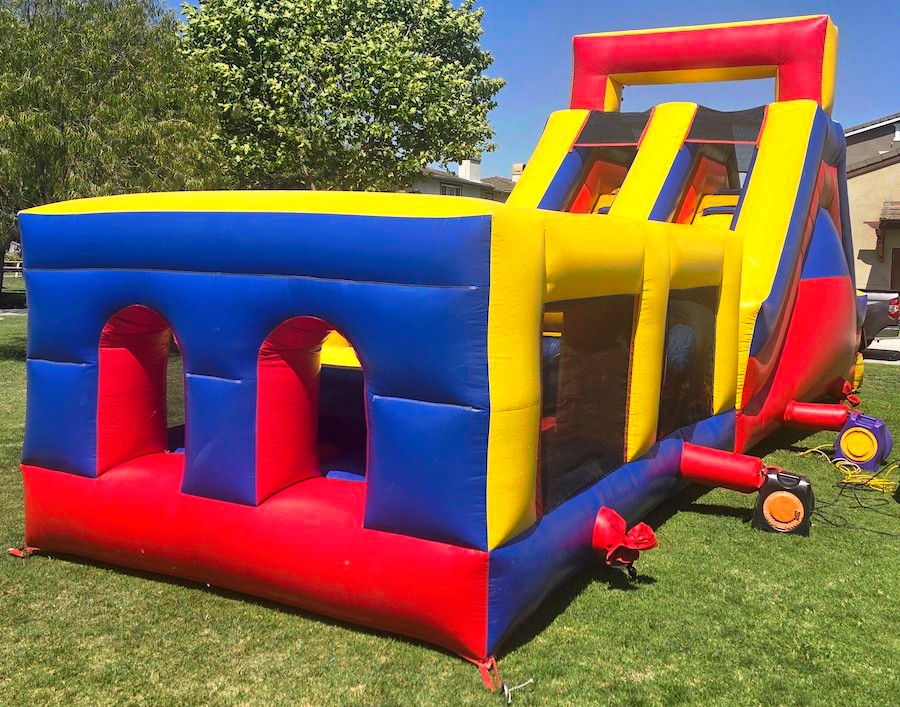
Coastal humidity introduces a different problem. Moisture trapped inside a rolled or folded inflatable creates the conditions for mold and mildew growth. Salt air also accelerates corrosion on metal hardware like D-rings, stakes, and blower fittings. Operators near the coast need to be especially thorough about drying units completely before storage and inspecting hardware after every use.
Heat is the third major factor. On a hot CA summer day, the surface of a dark-colored inflatable sitting in direct sun can reach temperatures well above the ambient air temperature. That thermal stress weakens adhesives used in repairs and softens the material in ways that make it more susceptible to punctures and abrasion. Scheduling events during cooler morning hours when possible, and providing shade for units during breaks in use, reduces cumulative heat damage.
If you're planning an outdoor event and want practical guidance on managing heat around inflatables, the Jump High guide on how heat affects inflatable rentals at OC summer parties walks through the key considerations in plain language.
Daily and Seasonal Maintenance Routines That Add Years
The operators who get the longest life from their obstacle courses treat maintenance as a non-negotiable part of every rental cycle, not something to catch up on when a problem appears. A consistent routine doesn't require a lot of time, but it does require discipline.
After every use, the unit should be inspected for debris, sharp objects, and any visible damage before deflation. Rocks, sticks, and forgotten toys left inside an inflatable cause abrasion and punctures during the deflation and rolling process. A quick walkthrough takes a few minutes and prevents damage that would otherwise go unnoticed until the next setup.
Cleaning should happen before storage, not just when the unit looks dirty. A mild soap solution and a soft brush remove surface grime, sunscreen residue, and organic material that can break down the vinyl over time. The unit must be completely dry before rolling and storing. Even a small amount of trapped moisture creates conditions for mildew, and mildew stains are difficult to remove without aggressive cleaning that itself stresses the material.
Seasonal deep inspections are worth scheduling twice a year, once before peak season and once after. During these inspections, check every seam for separation or stress marks, test all anchor points and D-rings for integrity, inspect the blower connection points for wear, and look for any areas where the material has become discolored or stiff. Catching a weakening seam early means a straightforward repair. Catching it after it splits during a rental means a unit that's out of service at the worst possible time.
Blower maintenance is often overlooked. The blower motor is what keeps the unit inflated during use, and a failing blower creates pressure inconsistencies that stress the material. Cleaning blower filters regularly and checking motor performance before each rental extends both the blower's life and the inflatable's structural integrity.
For operators managing multiple units, a simple logbook that tracks each unit's rental history, cleaning dates, and repair notes pays dividends when you're trying to decide whether a unit is ready for a high-demand event or due for a closer look.
Signs Your Obstacle Course Needs Repair or Retirement
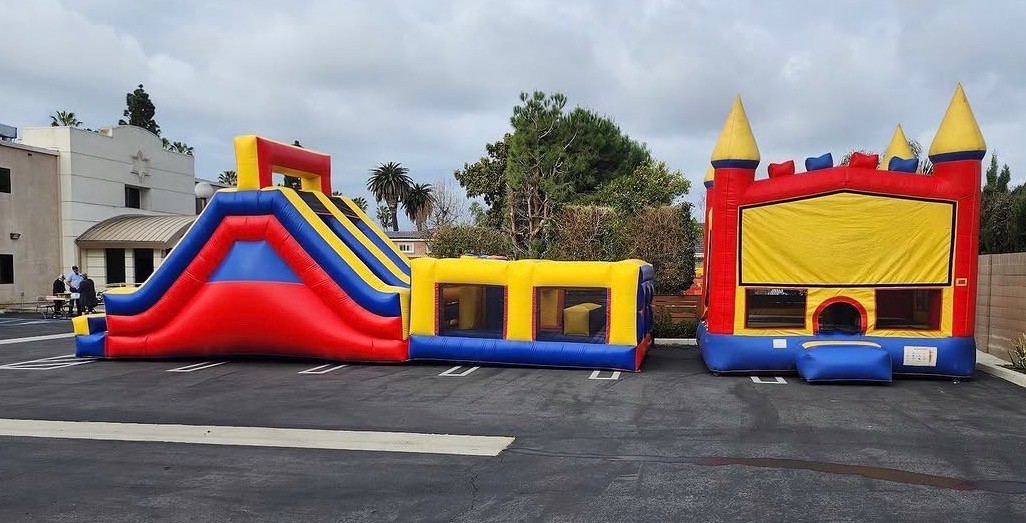
Knowing when to repair and when to retire a unit is one of the most important judgment calls in fleet management. Keeping a compromised unit in rotation creates safety risks and can damage your reputation with clients. Retiring a unit too early leaves money on the table. The goal is an honest, systematic assessment.
Repair is appropriate when damage is localized and the surrounding material is still structurally sound. A small puncture in a panel that's otherwise in good condition, a seam separation that hasn't spread, or a worn anchor point that can be replaced are all reasonable repair candidates. Commercial inflatable repair patches and seam welding are widely available, and a well-executed repair on a quality unit can add years of service.
Retirement becomes the right call when repairs are becoming frequent, when the material itself has become brittle or significantly faded across large areas, or when seam failures are occurring in multiple locations. Brittleness is particularly important to watch for in CA because of UV exposure. When the vinyl no longer flexes naturally and instead cracks under moderate stress, no amount of patching addresses the underlying material degradation.
Structural components deserve the same scrutiny as the vinyl. Tunnels, climbing walls, and slide sections all have attachment points that experience repeated stress. If those connections are showing fatigue, the unit's safety profile changes regardless of how the outer material looks.
For event planners booking obstacle courses for schools, churches, or HOA events, it's reasonable to ask your rental provider about their inspection and retirement standards. At Jump High Rentals, unit condition is part of every booking conversation. If you have questions about what to expect, the contact page is the right place to start.
Buying vs. Renting: What CA Operators Should Know
For fleet owners and event planners in California, the buy-versus-rent question comes up regularly. Purchasing a commercial obstacle course makes sense when you have consistent, predictable demand and the infrastructure to maintain the unit properly. Renting makes sense when your event needs are occasional, when you want access to a variety of units without the storage and maintenance overhead, or when you're still figuring out which unit configurations your clients actually want.
The total cost of ownership for a commercial obstacle course includes the purchase price, storage costs (which are real in CA where space is expensive), maintenance supplies, repair costs, blower replacement, and eventually the cost of retiring the unit responsibly. When you run those numbers honestly, renting from a well-maintained local fleet is often the more cost-effective choice for event planners and organizations that don't run inflatables on a weekly basis.
For operators building a rental business, buying makes more sense, but the quality of the unit matters enormously. A lower-cost unit that degrades in three years under CA conditions costs more over time than a higher-quality unit that lasts eight. Prioritizing commercial-grade materials, reputable manufacturers, and units with documented warranty support is the starting point for a fleet that actually earns its keep.
If you're an event planner in Orange County evaluating options for a school carnival, HOA block party, or corporate picnic, browsing the Jump High Rentals guides gives you a practical sense of what well-maintained commercial inflatables look like in real CA event settings. And if you're ready to talk through what your specific event needs, the Jump High team is easy to reach and happy to walk through unit options, condition standards, and what setup looks like from delivery through pickup.