
Why Guest Count Changes Everything About Your Rental
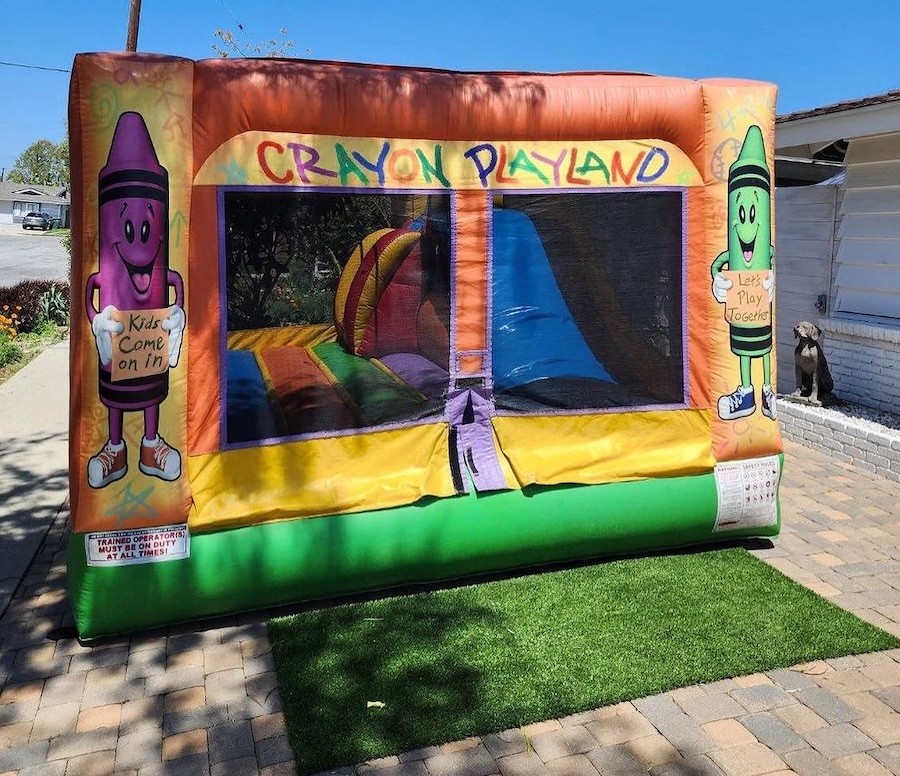
Most parents start planning a bounce house party by picking a theme or a color scheme. Guest count usually comes later, almost as an afterthought. That order of operations can cause real problems on party day, because the number of kids showing up shapes nearly every decision that follows: which inflatable fits your space, how many units you actually need, how long each child waits for a turn, and whether the setup is genuinely safe or just technically functional.
Commercial inflatables used for rental in California are built and operated under ASTM F24 commercial safety standards. Those standards cover design, installation, operation, and maintenance, and they include manufacturer-posted capacity limits that are not suggestions. When you crowd more kids into a bounce house than it is rated for, you increase the risk of collisions, falls, and injuries. Continuous adult supervision is a core operating requirement, not an optional add-on, and the right supervision ratio changes as your headcount grows.
The good news is that matching your guest count to the right setup is straightforward once you know the ranges. Whether you are hosting 12 kids in a Yorba Linda backyard or coordinating a 90-kid church carnival in Anaheim, the planning logic is the same: count your guests first, then choose your inflatable. You can browse the full Jump High Rentals catalog to see which units are available for your date and location, and the FAQ page covers common sizing questions in plain language.
Small Parties (10 to 20 Kids): One Unit, Done Right
A birthday party with 10 to 20 kids is the most common scenario Jump High serves across Orange County backyards, and it is also the easiest to plan well. A single standard bounce house or combo unit is usually the right call here, as long as a few conditions are met.
First, the children should be reasonably close in age. Mixing toddlers and energetic eight-year-olds in the same bounce house at the same time creates a size and weight mismatch that increases the chance of accidental collisions. If your guest list spans a wide age range, plan for supervised rotation so younger and older kids take turns rather than sharing the space simultaneously. The guide on supervising kids on inflatables walks through practical rotation strategies that work well for mixed-age groups.
Second, your yard needs to fit the unit comfortably, with room to spare. A standard bounce house footprint is typically around 15 by 15 feet, but you also need clearance around the blower, a clear path for entry and exit, and enough buffer between the inflatable and any fences, trees, or structures. A tight fit is not a safe fit. If you are unsure whether your space works, the guide on how to pick the right bounce house size for your backyard gives you a practical measuring checklist before you book.
For 10 to 20 kids, a combo unit that includes a bounce area and a small slide can add variety without requiring a second inflatable. That variety matters more than you might expect: kids cycle through activities faster than adults anticipate, and having two features in one unit keeps the energy moving without creating a long line at a single entry point.
Mid-Size Parties (20 to 50 Kids): When One Inflatable Is Not Enough
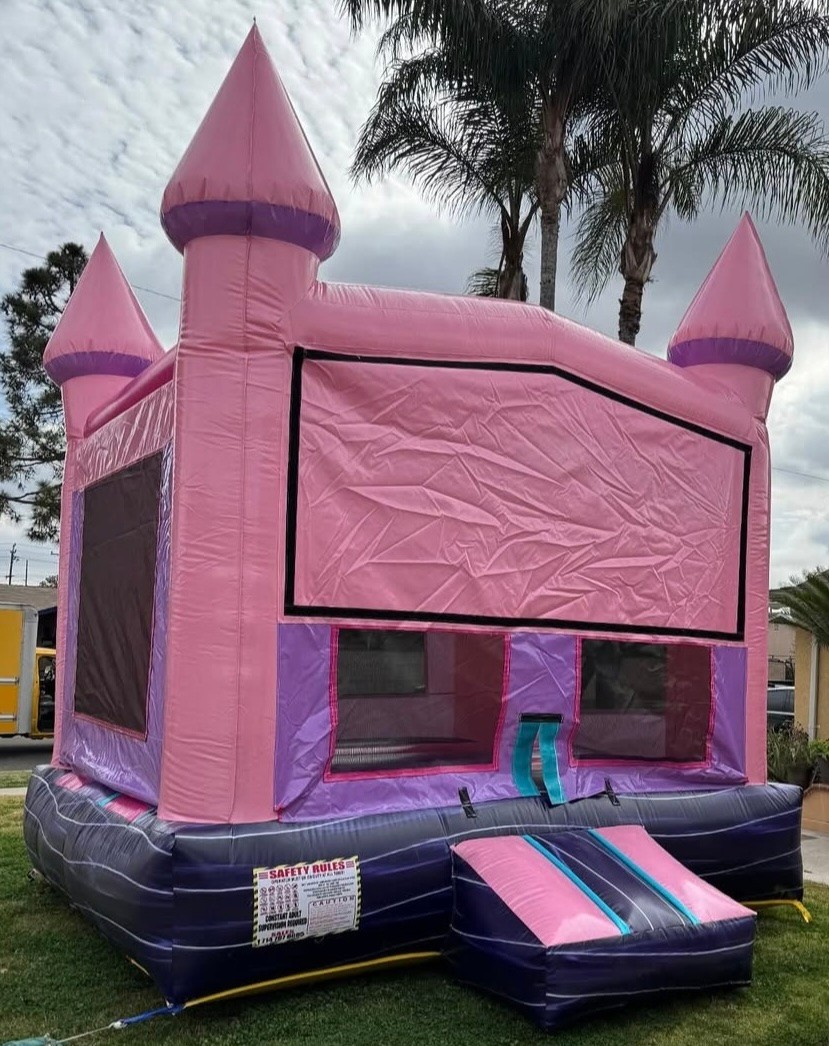
Once your guest count climbs past 20 kids, a single standard bounce house starts to show its limits. The unit may still be physically large enough to hold several children at once, but the real issue becomes wait time and activity flow. With 30 or 40 kids eager to bounce, a single entry point creates a bottleneck that frustrates kids and puts pressure on whoever is supervising the line.
The better approach for 20 to 50 kids is to spread activity across two units or to choose a larger inflatable designed for higher throughput. An inflatable obstacle course is a strong option here because it moves kids through a defined path rather than letting them pile into a single open space. The linear flow of an obstacle course naturally limits crowding and keeps children moving, which reduces the supervision burden compared to an open bounce house at capacity. You can compare the two formats in the obstacle course vs. bounce house guide to see which fits your specific party setup.
For a backyard birthday in this size range, a practical layout might pair a standard bounce house for younger guests with an obstacle course or combo unit for older kids. That separation by age and activity type is one of the most effective ways to keep a mid-size party running smoothly without constant adult intervention. If you are planning a summer party and considering water play, a bounce house and waterslide combo rental can consolidate two activities into one footprint, which helps when yard space is limited.
Venue space is often the deciding factor at this size range. Orange County backyards vary enormously, from compact Irvine townhome patios to generous Anaheim Hills lots with room for two or three inflatables side by side. Before you finalize your rental order, measure your available space and share those dimensions when you contact Jump High. That one step prevents the most common mid-size party problem: arriving on setup day to discover the second unit does not fit.
Large Events (50 to 100 Kids): Multi-Unit Layouts and Rotation Plans
A 50 to 100 kid event is a fundamentally different planning challenge than a backyard birthday. At this scale, you are almost certainly working with a school, church, HOA, or community venue rather than a residential yard, and the logistics shift accordingly. Single-unit thinking does not work here. You need a multi-unit layout, a rotation plan, and enough supervision to manage multiple activity zones at once.
The standard planning approach for large events is to divide your guest count into zones. A 100-kid school carnival, for example, might run three or four inflatables simultaneously, with each unit assigned to a specific age group or activity type. Younger children get a toddler-appropriate bounce house in one area. Older kids cycle through an obstacle course or a waterslide in another zone. Timed rotations, typically 10 to 15 minutes per group, keep lines manageable and ensure every child gets meaningful time on each unit rather than waiting 45 minutes for a single turn.
Rotation plans also make supervision more manageable. When each zone has a designated adult monitor and a clear entry and exit point, the overall event runs with less chaos than a free-for-all layout where kids drift between units unpredictably. The guide on multi-unit inflatable rentals for large OC events covers zone layout strategies in more detail, and the inflatable rental checklist for OC parties with 50 guests is a useful planning companion for event coordinators managing the logistics end.
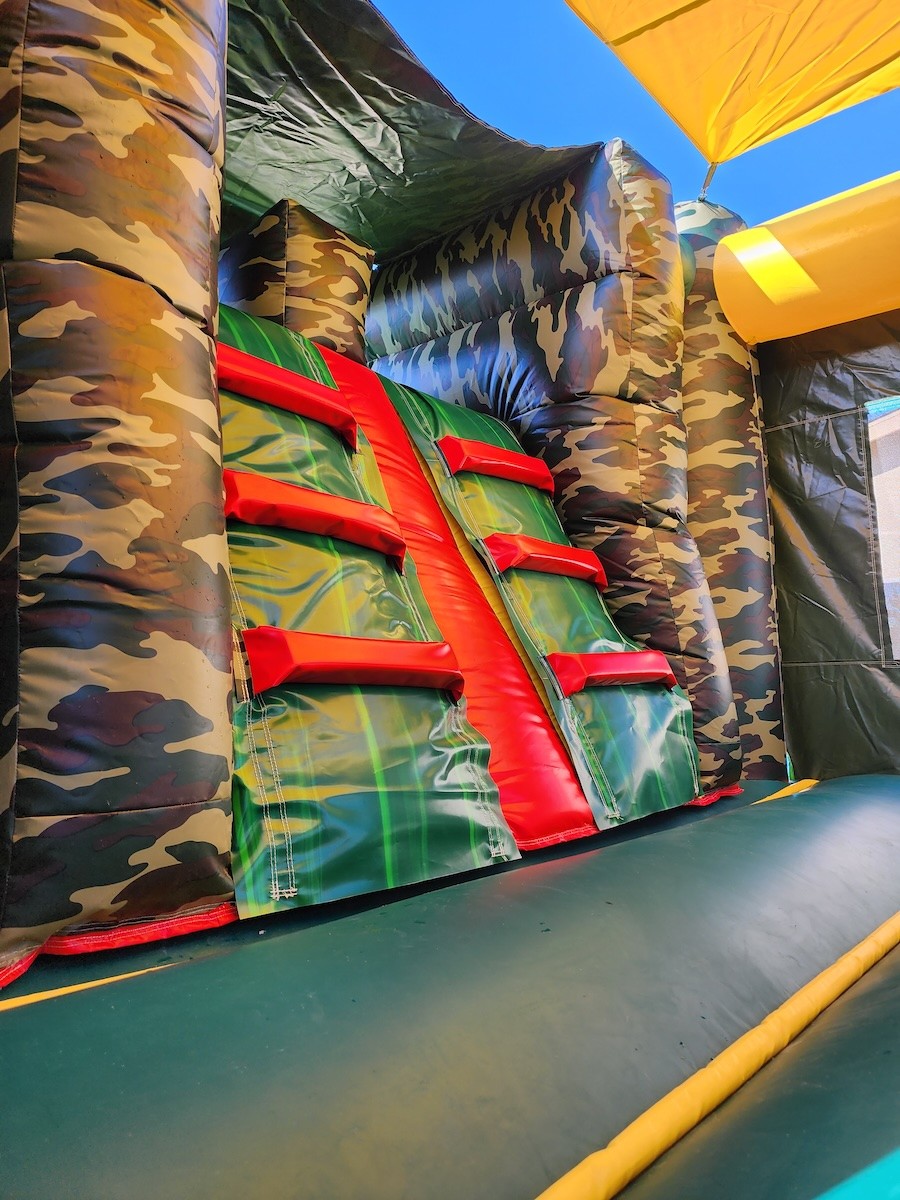
Power access is a practical concern at this scale that often surprises first-time large-event planners. Each inflatable requires a dedicated blower, and multiple blowers running simultaneously can strain a single circuit. Confirm your venue's power capacity before finalizing your unit count, and review the power and extension cord guide for OC inflatables so you are not troubleshooting electrical issues while 80 kids are waiting to bounce.
Space, Surface, and Setup: What OC Backyards and Venues Actually Need
Guest count and inflatable selection are only part of the equation. The physical setup conditions at your location determine whether your plan actually works on the day of the event.
Surface type matters for anchoring. Grass allows for traditional stake anchoring, which provides the most secure hold. Concrete, pavers, and hardscape require weighted anchoring with sandbags or ballast, which is safe when done correctly but requires the right equipment and technique. If your party is on a hard surface, confirm that your rental company handles weighted anchoring as part of the setup service. Jump High's guide on bounce house setup on pavers and hardscape in CA explains what proper anchoring looks like on different surfaces.
Slope is another variable that Orange County's hillside neighborhoods make relevant. A bounce house needs to sit on a reasonably level surface. A gentle grade is manageable, but a steep slope in an Anaheim Hills or Yorba Linda backyard can make safe setup impossible without a different unit placement or a different inflatable choice altogether. The sloped backyard guide covers what to check before you book.
Weather is the one variable no one fully controls. Orange County's climate is generally forgiving, but wind is the most common outdoor event disruptor for inflatables. Industry guidance commonly points to winds around 15 mph as a threshold for cautionary shutdown decisions. If conditions deteriorate on your event day, the right call is to deflate and pause rather than push through. The guide on wind speed limits and inflatable safety for OC parties gives you a clear framework for making that call without second-guessing yourself.
Booking the Right Setup for Your Headcount in Orange County
The simplest way to avoid a guest-count mismatch is to lead with your numbers when you reach out to book. Share your expected headcount, the ages of the children attending, your venue type (backyard, park, school, church), and your available setup dimensions. That information lets Jump High recommend the right combination of units for your specific event rather than defaulting to a one-size-fits-all suggestion.
Orange County's warm-weather months and school-break periods create higher demand for waterslides and larger multi-unit setups, so booking earlier gives you more flexibility on unit selection. For summer parties and end-of-school events, reaching out several weeks in advance is a practical habit. The guide on how far ahead to book inflatable rentals in OC gives you a seasonal booking timeline that takes OC demand patterns into account.
Every Jump High rental includes delivery, professional setup, anchoring, and pickup. You are not managing equipment logistics on your own. That reliability matters most at larger events where a late or incomplete setup can derail an entire program. When you are ready to plan, contact Jump High Rentals with your guest count and party details, and the team will help you build a setup that fits your headcount, your space, and your budget without the guesswork.