
Material and Construction Specs That Determine Longevity
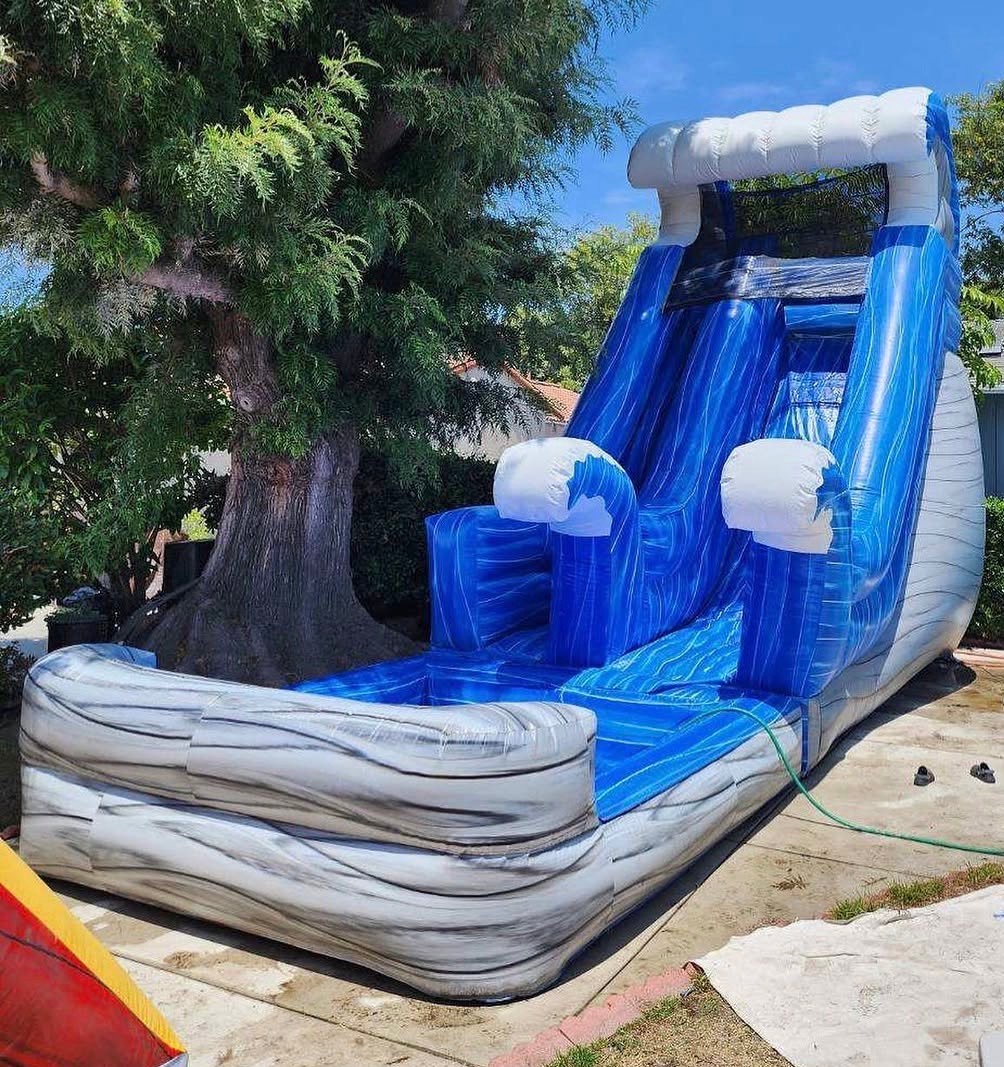
When you're evaluating a commercial waterslide purchase, the vinyl is the first place to look and the easiest place to get burned by a vendor cutting corners. Most reputable manufacturers build commercial-grade waterslides from 18-oz PVC-coated vinyl or heavier. Some premium units use 21-oz or even heavier material on high-stress zones like the slide lane, entry steps, and anchor points. If a vendor quotes you a unit without specifying the vinyl weight in ounces per square yard, that's a gap worth closing before you sign anything.
Thread count and weave type matter alongside raw weight. Double-stitched and quadruple-stitched seams at stress points are the standard you want to see documented. Ask the vendor for a spec sheet that calls out seam construction explicitly. A unit that lists "reinforced seams" without specifying stitch count or seam overlap width is giving you marketing language, not engineering data.
The slide lane surface deserves its own scrutiny. Waterslides intended for commercial rental use should have a textured or flocked interior surface on the slide lane to control descent speed, particularly for younger riders. Smooth PVC lanes can create uncontrolled slide speeds that create supervision challenges at events. Confirm whether the lane surface is bonded, heat-welded, or sewn, because bonded surfaces can delaminate under heavy seasonal use in warm climates.
Anchor point reinforcement is another spec that separates units built for one-time use from those built for 200-plus rental deployments per year. Look for D-ring anchor points with a minimum 1,500-lb pull rating and reinforced base panels around each ring. If the vendor can't provide pull-test data or references to ASTM F2374 (the standard covering inflatable amusement ride safety), ask why. That standard covers design, manufacture, and testing requirements for inflatable amusement devices, and a manufacturer building to that benchmark should be able to say so clearly.
Blower Ratings and Inflation Performance to Confirm
The blower is the engine of any inflatable, and undersized blowers are one of the most common problems fleet buyers discover after delivery. A commercial waterslide in the 18-to-22-foot height range typically requires a continuous-duty blower rated at a minimum of 1.5 HP, with many larger units requiring 2 HP or dual-blower configurations. Confirm the required blower rating in writing, and verify whether the blower is included in the purchase price or sold separately.
Continuous-duty rating is the key phrase here. Residential or light-commercial blowers may carry the same horsepower number as a true continuous-duty unit, but they're not built to run for six to eight hours straight under load. A blower that overheats and shuts down mid-event is a service failure that damages your reputation and potentially your rental agreement terms. Ask the vendor to confirm the blower's duty cycle rating and thermal protection specs.
Amperage draw matters for your operational planning too. A 2 HP blower typically draws between 12 and 15 amps at 120V. If you're delivering to residential backyards or park events, you need to know whether the unit can run on a standard 20-amp circuit or whether you'll need a generator. That calculation affects your delivery checklist, your customer communication, and your equipment costs. Our power and extension cord guide for OC inflatables walks through the practical side of this for rental operators, and the same principles apply whether you're running units in Orange County or Oregon.
Inflation time is a practical spec that affects your setup window on busy delivery days. A properly sized blower should bring a commercial waterslide to full operating pressure in three to five minutes. If a vendor's spec sheet shows inflation times over eight minutes, the blower is likely undersized for the unit volume. Confirm the inflation time under standard operating conditions, not just at sea level with no load.
Dimensions, Weight, and Freight Considerations for OR Buyers
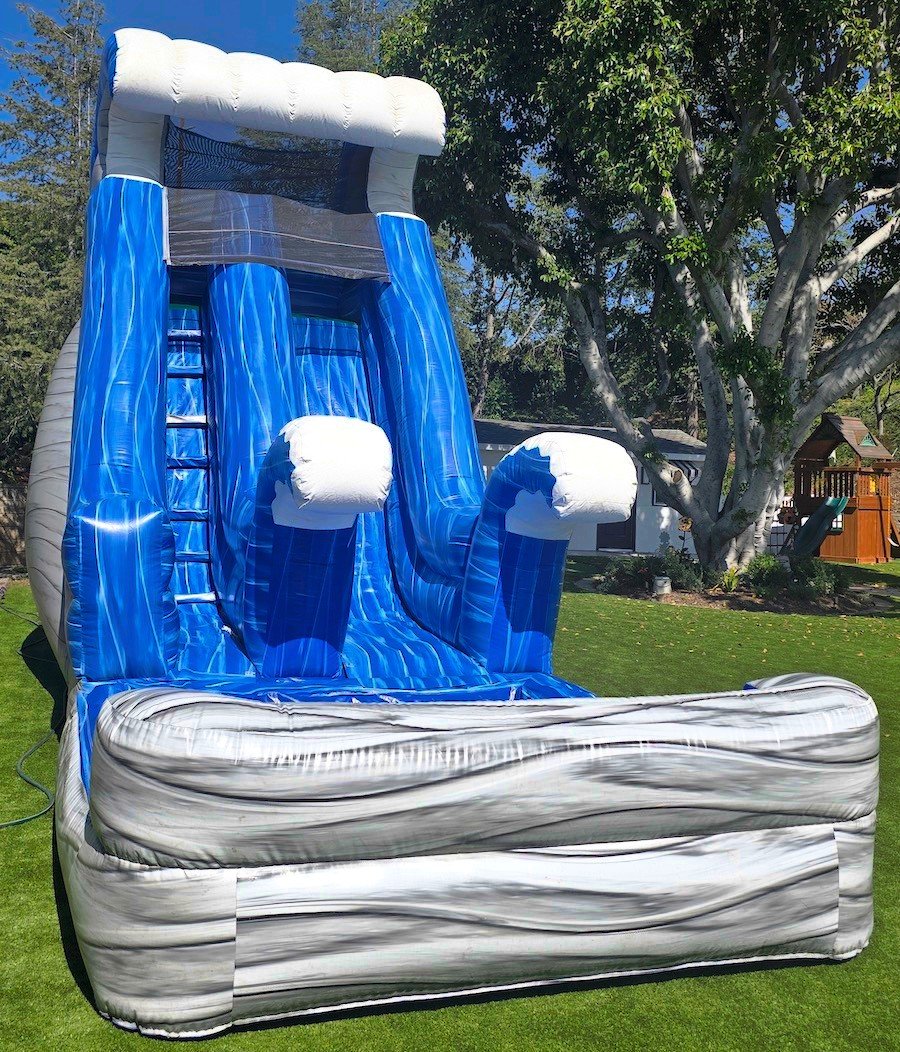
Oregon buyers face longer freight lanes than buyers in Southern California, and that distance amplifies every freight-related risk. A commercial waterslide that ships from a manufacturer in China or from a domestic distributor in a southern state can arrive in Portland or Eugene with damage that wasn't visible at the point of origin. Before you place an order, confirm the unit's packed dimensions and shipping weight so you can match them against the freight carrier's handling specs.
Most commercial waterslides in the 18-to-22-foot range pack down to a rolled bundle weighing between 250 and 450 pounds, depending on vinyl weight and unit complexity. Larger dual-lane or multi-feature units can exceed 600 pounds packed. That weight determines whether the unit ships LTL (less-than-truckload) on a pallet or requires a dedicated freight arrangement. LTL shipping introduces more handling touchpoints, which means more opportunities for puncture or seam damage during transit.
Request that the vendor ship with liftgate service to your delivery address, and confirm whether inside delivery is included or costs extra. For Oregon buyers receiving at a warehouse or storage facility, liftgate access is often straightforward. For buyers receiving at a residential address or a facility without a loading dock, the logistics get more complicated and more expensive if you haven't planned for it in advance.
Inspect the unit thoroughly before signing the freight carrier's delivery receipt. Open every bag, unroll the main body, and check seam lines and anchor points for stress marks or punctures. Signing the receipt without inspection limits your ability to file a freight damage claim later. Document any damage with photos before the driver leaves. This step sounds obvious, but it's skipped often enough that it's worth stating plainly.
Footprint dimensions also matter for your storage and deployment planning. A 20-foot waterslide may have a setup footprint of 25 feet by 15 feet or larger once you account for the splash pool, anchor stakes, and blower placement. Confirm the full setup dimensions (not just the unit body) so you can accurately assess whether the unit fits the venues you're targeting in your Oregon market.
Warranty Terms and Vendor Support Red Flags to Watch
Warranty language is where many commercial inflatable purchases go sideways. A one-year warranty sounds reasonable until you read the exclusions and discover that seam failures, blower motor burnout, and UV degradation are all carved out. Ask the vendor to provide the full warranty document before purchase, not a summary paragraph from the product listing.
The minimum warranty you should expect on a commercial-grade waterslide is one year on materials and workmanship, with seam repairs covered explicitly. Some manufacturers offer two-year or three-year warranties on units built to higher vinyl and seam standards. If a vendor offers a 90-day warranty on a unit priced at several thousand dollars, that's a signal about how they expect the unit to perform under real rental conditions.
Parts availability is a practical warranty concern that often goes unasked. Confirm that the vendor stocks replacement blowers, repair patches, and anchor hardware compatible with your specific unit. A vendor who can't ship a replacement blower within five business days is a vendor who will cost you rental revenue during the wait. Ask directly: "If my blower fails in month four, what's your parts lead time?"
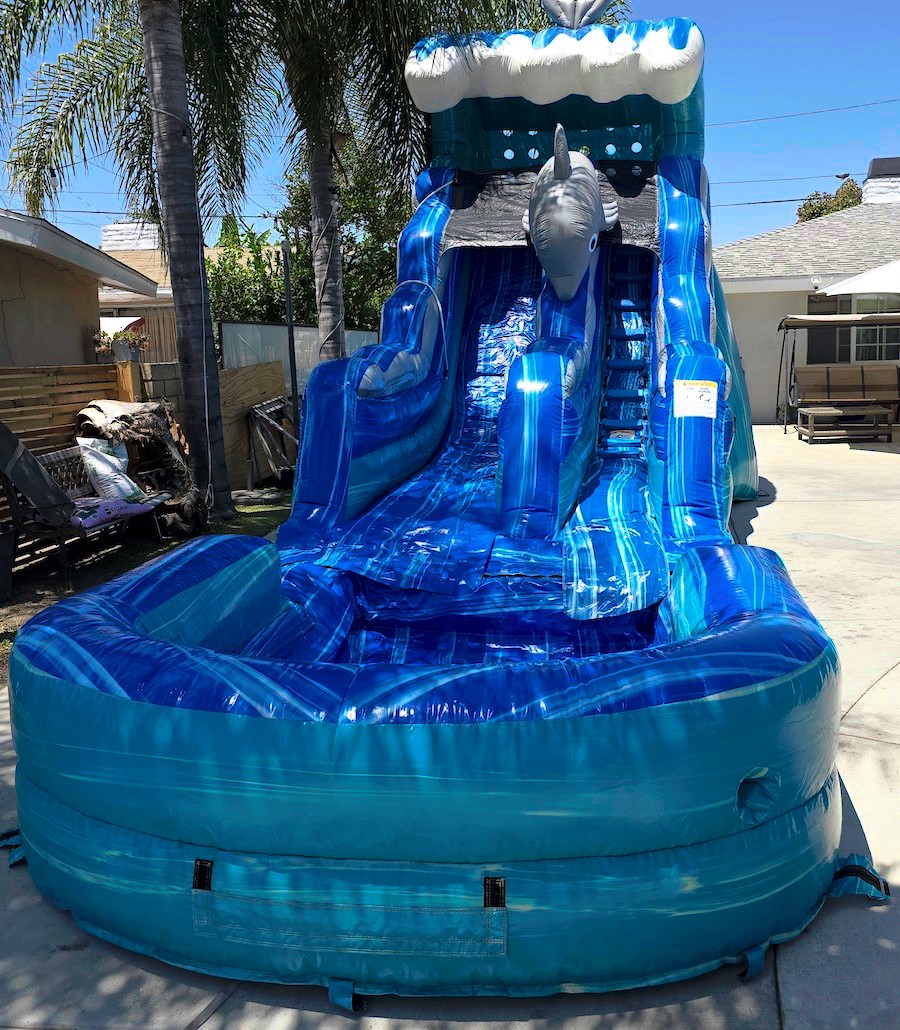
Vendor communication patterns before the sale often predict support quality after the sale. If a vendor takes four days to answer a pre-sale spec question, expect similar response times when you have a warranty claim. Vendors who provide detailed spec sheets, answer questions with specifics rather than generalities, and offer references from existing fleet buyers are demonstrating the kind of operational support that matters when you're running a rental business and need issues resolved quickly.
Watch for vendors who push you toward a purchase decision before you've received complete documentation. A legitimate commercial inflatable manufacturer will provide a full spec sheet, warranty document, and safety certification references without hesitation. If you're being asked to commit before those documents are in your hands, slow down.
Storage Footprint and Depreciation Planning for Your Fleet
Storage is a cost that first-time fleet buyers often underestimate. A commercial waterslide that packs to a 250-pound bundle still requires dry, climate-controlled storage to prevent mold, vinyl degradation, and blower motor corrosion. In Oregon's wet climate, moisture management in your storage space is not optional. Units stored in damp conditions develop mold on interior surfaces that is difficult to remediate and creates health and safety concerns for renters.
Calculate your storage cost per unit as part of your ROI model before you buy. If you're renting storage space, divide your monthly storage cost by the number of units you're storing to get a per-unit monthly cost. That number needs to factor into your rental pricing to ensure each unit is covering its own overhead. A waterslide that generates strong summer revenue but sits idle for eight months of the year in a paid storage unit has a different ROI profile than one you can deploy year-round.
Depreciation planning starts with an honest assessment of expected rental cycles. A commercial-grade waterslide built to ASTM standards and maintained properly can realistically handle 150 to 200 rental deployments before it requires significant repair investment. If you're projecting 30 rentals per season in Oregon's shorter outdoor event window, that unit has a five-to-seven-year useful life under normal conditions. Build that depreciation timeline into your pricing so you're setting aside revenue for eventual replacement.
Maintenance records are the foundation of accurate depreciation tracking. Log every deployment, every repair, and every blower service interval. That documentation also supports your safety inspection process and gives you data to make informed decisions about when to retire a unit versus when to repair it. Fleet buyers who treat their inflatables as tracked assets rather than equipment purchases tend to make better replacement timing decisions and avoid the cash-flow surprise of replacing multiple units in the same season.
For a real-world reference point on what commercial-grade waterslides look like in active rental operation, browsing the Jump High Rentals catalog gives you a practical baseline for unit types, size ranges, and feature configurations that perform well in the Southern California market. The operational demands in Orange County, where summer rental volume is high and units need to perform reliably across dozens of consecutive weekend deployments, are a useful benchmark for evaluating whether a unit is genuinely built for commercial use.
If you're working through fleet planning questions or want to talk through what spec verification looks like in practice, the Jump High contact page is a good starting point. And if you're still building out your general knowledge base on inflatable rental operations, the guides library covers a wide range of operational topics that apply whether you're running a fleet in Oregon or anywhere else in the country.