
Start With the Setup Zone, Not the Whole Yard
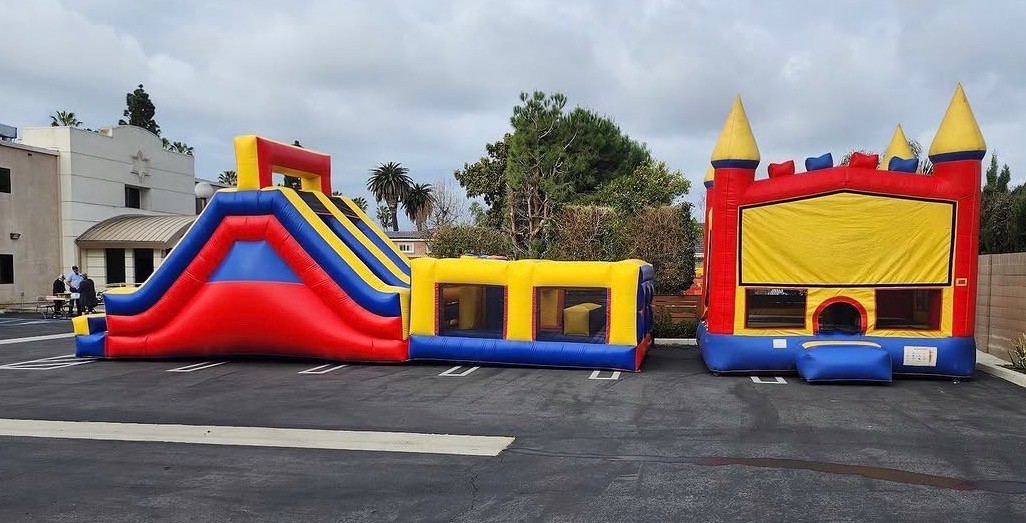
Most Orange County parents walk outside, look at their backyard, and think, "Yeah, that's plenty of room." And honestly, it might be. But the number that matters for an inflatable rental is not the total size of your yard. It's the size of the clear, usable zone where the unit will actually sit.
Before you browse the Jump High Rentals catalog, grab a tape measure and walk the specific spot where you picture the bounce house or water slide going. Measure only the open area, not the patio, not the planter boxes, not the stretch of lawn that runs under a tree. Write down the length and width of that zone in feet. That single measurement will tell you more than a rough estimate of your whole property ever could.
A few things tend to eat into usable space that parents don't immediately notice. Sprinkler heads and low-profile drip lines can interfere with anchoring stakes. A patio table pushed to the edge of the grass still counts as an obstacle if the inflatable needs to sit close to it. Raised garden beds, decorative boulders, and even a garden hose left coiled on the ground can all shrink the real footprint. Walk the zone slowly and mentally clear it before you measure. That way, your number reflects what the setup crew will actually find when they arrive.
If you're planning a larger event, like a birthday for 30 kids in a Yorba Linda backyard or a neighborhood gathering in Laguna Hills, it helps to check the inflatable rental checklist for OC parties with 50 guests before you finalize your space plan. Knowing your guest count and your usable square footage together gives you a much clearer picture of which unit fits your party.
Buffer Space, Overhead Clearance, and Why Both Matter
Once you have your usable footprint, the next step is to think about what surrounds it. Inflatables need breathing room on all sides, not just for aesthetics, but for safe anchoring, blower placement, and kids moving in and out of the entrance without bumping into a fence or wall.
A good working rule is to leave at least three feet of clear space on every side of the inflatable. That means if you're booking a unit with a 15-by-15-foot base, your usable zone should be closer to 21 by 21 feet to give the setup crew enough room to work and to keep the play area safe during the party. Some larger combo units and obstacle courses need even more clearance, so always check the listed dimensions on the product page and add that buffer before deciding whether your yard qualifies.
Overhead clearance is the detail that surprises people most often. A backyard can look wide open from ground level and still have a tree canopy, a pergola, or roof eaves that drop into the space at 10 or 12 feet. Most standard bounce houses need roughly 15 to 18 feet of vertical clearance depending on the style, and water slides often need more because of the arch or peak at the top. Before you book, stand in your setup zone and look straight up. If anything is hanging into that space, measure how high it sits. Power lines are a hard stop regardless of height, so if any run over or near your yard, flag that immediately when you contact the rental team.
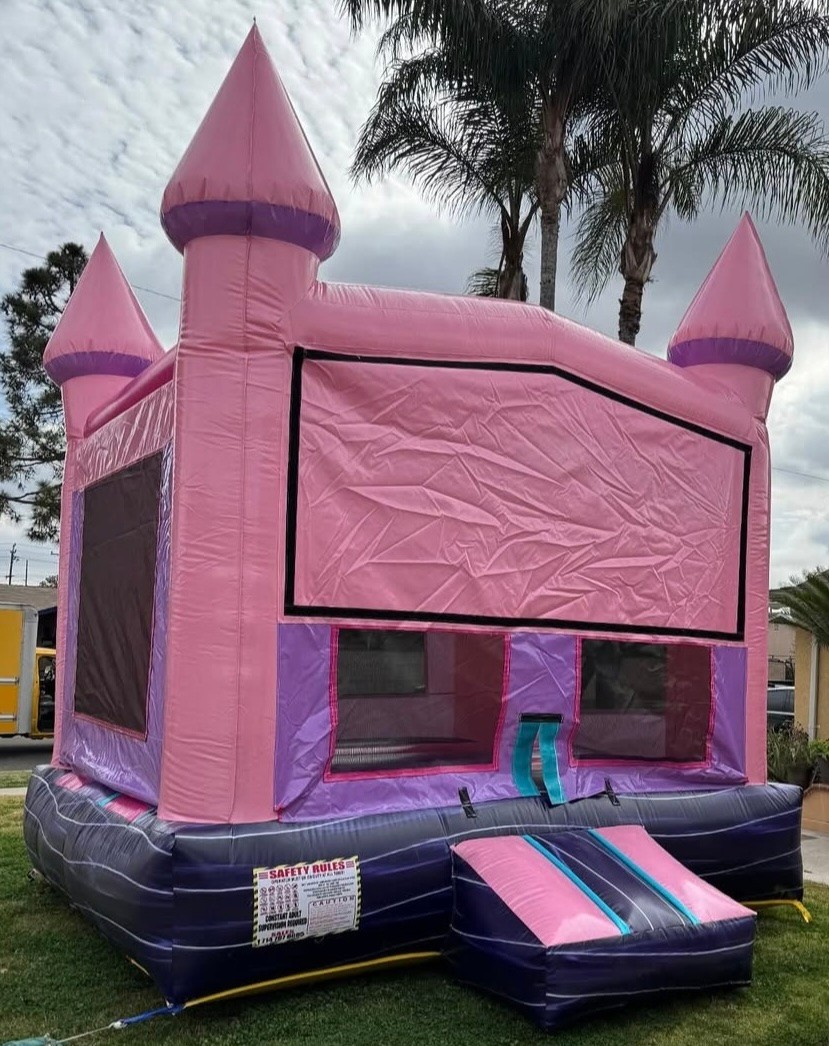
For families with pergolas, covered patios, or mature trees that shade part of the yard, it's worth reading the guide on how to pick the right bounce house size for your backyard to understand how height and footprint interact when you're choosing between unit styles.
Measuring the Delivery Path Before Booking Day
Here's a step that many families skip entirely: measuring the path from the street to the setup zone. The inflatable itself might fit your yard perfectly, but if the crew can't get it there, the whole plan stalls.
The most common bottleneck is the side gate. A standard residential gate in Orange County is often 36 to 48 inches wide, and some older homes have gates as narrow as 32 inches. Rolled or folded inflatables are bulky and heavy, and squeezing them through a tight opening takes extra time and sometimes isn't possible at all. Measure your gate opening from post to post at its narrowest point. A clearance of at least 48 inches makes delivery much smoother, and 60 inches or more is even better for larger units.
Beyond the gate, think about what the crew will walk through on the way to the backyard. A narrow side yard with a raised planter on one side and a fence on the other can be just as limiting as a small gate. Stairs are another factor, since most inflatables are transported on a dolly and steps require extra handling. If your path includes a step down from the patio or a raised deck edge, mention that when you book.
Slopes along the delivery path matter too, not just for the setup zone. A steep side yard can make rolling equipment difficult and slow down the whole process. If your property has any significant grade changes between the street and the backyard, a quick heads-up to the Jump High team helps them plan accordingly. You can find more detail on how delivery day actually works in the guide on what to expect on delivery day for OC inflatable rentals.
Surface and Slope Checks That Affect Inflatable Safety
The ground your inflatable sits on affects how it anchors, how it performs during use, and how safe it is for the kids bouncing inside. Flat grass is the easiest surface to work with and the most common setup in OC backyards. But not every yard is flat, and not every lawn is in the same condition.
Start by checking for slope. Stand at one end of your setup zone and look toward the other end. If the ground visibly tilts, it's worth measuring how much. A gentle grade of an inch or two over 15 feet is usually manageable, but a steeper slope can affect how the inflatable sits and how anchoring stakes hold. If you're unsure whether your yard qualifies, the guide on sloped backyard: what to check before booking walks through the key questions in plain language.
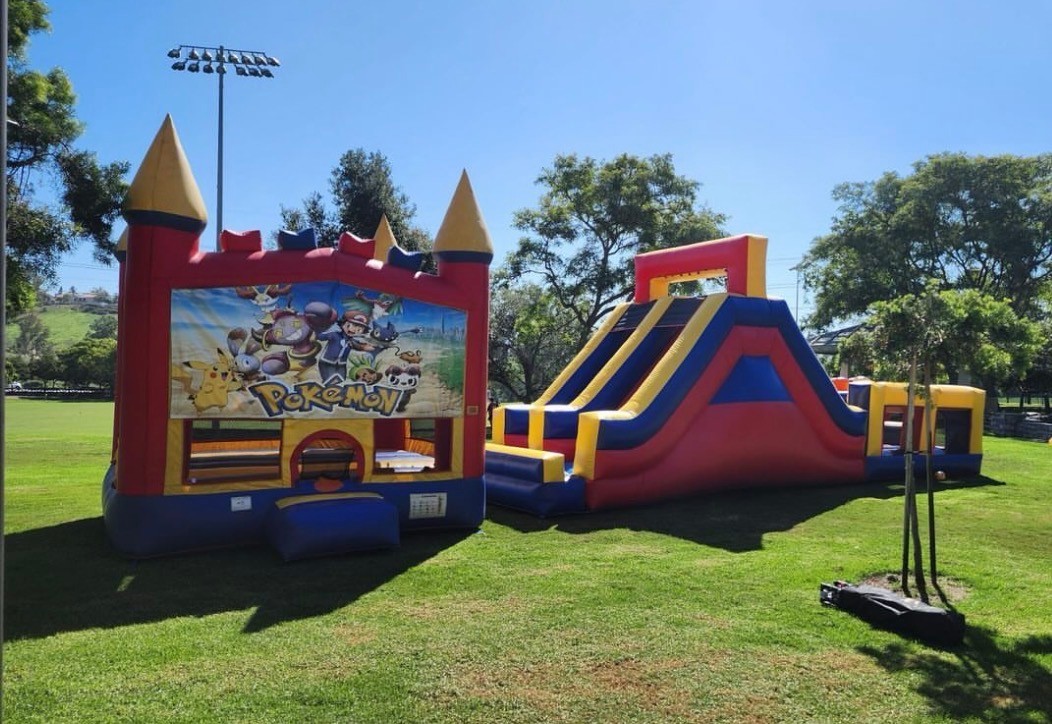
Surface condition matters just as much as slope. Wet or muddy ground can make staking unreliable and leave a mess under the unit. Very dry, hard-packed soil can make it harder to drive stakes to the right depth. If your lawn has recently been aerated, overseeded, or watered heavily, let the team know. For yards with artificial turf, the anchoring approach is different, and it's covered in detail in the bounce house on artificial turf CA setup guide.
If your setup zone is on concrete, pavers, or another hard surface, that's workable too. The anchoring method changes from stakes to weighted sandbags or anchor points, so it's important to mention your surface type when you book rather than on the day of delivery.
How to Share Your Measurements With Jump High
Once you've walked the yard, measured the setup zone, checked overhead clearance, and noted the delivery path, you have everything the Jump High team needs to recommend the right unit for your space. The easiest way to share that information is through the contact page, where you can describe your setup and ask questions before committing to a booking.
When you reach out, include the length and width of your usable setup zone, the overhead clearance if you spotted any potential obstacles, your gate width and any path details that might affect delivery, and the surface type (grass, artificial turf, concrete, or pavers). A quick note about slope is helpful if your yard isn't flat.
Photos make a real difference. A few snapshots from different angles, including one looking up from the setup zone and one showing the gate and side yard, give the team a much clearer picture than measurements alone. OC backyards vary a lot, from the compact lots in older Anaheim neighborhoods to the larger properties in Yorba Linda and Rancho Santa Margarita, and a photo helps confirm that the unit you're considering will actually fit and look great in your specific space.
If you're still in the early planning stage and want to explore what's available before you measure, the rentals page lists dimensions for every unit. You can also check the FAQ for common questions about setup requirements, power needs, and what the delivery crew handles on arrival. The goal is a smooth setup day with no surprises, and a few minutes of measuring now is the simplest way to get there.
SEO metadata