
What Commercial Inflatables Actually Cost in 2026
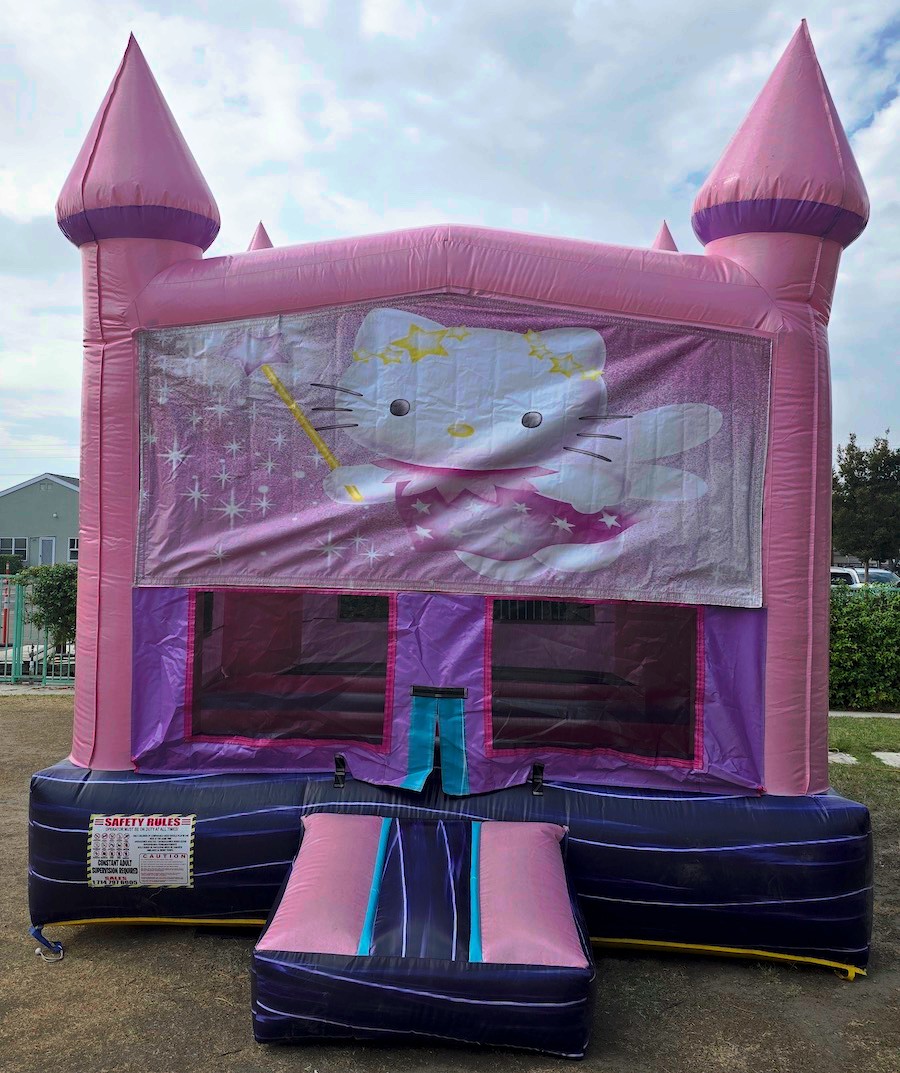
If you're planning to launch a bounce house rental business in Texas, the first number you need to nail down is unit cost, because everything else in your budget flows from there. Commercial inflatables are not the same as the residential units you see at big-box stores. They're built from heavier-gauge vinyl (typically 18 oz to 21 oz material), reinforced at stress points, and rated for continuous public use. That durability comes with a price tag that surprises a lot of first-time buyers.
In 2026, a standard commercial bounce house from a reputable manufacturer runs roughly $1,500 to $3,500 per unit depending on size, theme, and construction quality. Combo units that combine a bounce chamber with a slide or obstacle elements push that range to $3,000 to $6,500. Full-length inflatable obstacle courses, which are popular for school carnivals, church events, and corporate picnics, can run $5,000 to $12,000 or more depending on length and feature count. Waterslide inflatables sit in a similar range, with larger dual-lane slides often landing between $4,500 and $9,000.
Those numbers represent the unit alone. Before you write a single check, understand that the purchase price is the floor, not the ceiling. Blowers, repair kits, ground tarps, and anchor systems add several hundred dollars per unit at minimum. If you're buying themed units with licensed artwork, expect a licensing premium on top of the base price. Buying from a domestic distributor versus importing directly from an overseas manufacturer also affects your per-unit cost significantly, though importing introduces its own complexity around lead times, customs, and quality control that first-time buyers often underestimate.
The smartest approach for a TX startup is to request itemized quotes from at least two or three manufacturers, compare material specs side by side, and ask specifically whether the quoted price includes a blower. Many manufacturers list unit prices without the blower, which can add $200 to $600 per unit when purchased separately.
Freight and Delivery Costs for TX Fleet Buyers
Texas is a large state, and your freight costs will vary considerably depending on whether you're receiving units in Dallas, Houston, San Antonio, or a smaller market. Commercial inflatables ship via LTL (less-than-truckload) freight because of their size and weight. A single large combo unit can weigh 300 to 600 pounds when packed, and an obstacle course can exceed 1,000 pounds. That weight, combined with dimensional pricing, means freight is a real line item in your startup budget.
For TX buyers receiving shipments from domestic manufacturers in states like California, Georgia, or the Midwest, LTL freight costs typically run $300 to $800 per unit for standard delivery to a commercial address with a loading dock. Residential delivery or liftgate service adds to that number, often $75 to $150 per shipment. If you're ordering multiple units at once, consolidating into a single freight shipment almost always saves money compared to shipping units individually, so plan your initial purchase order with that in mind.
Importing directly from overseas manufacturers, primarily in China, can lower your per-unit cost by 30 to 50 percent on paper. However, ocean freight, customs duties, port fees, and domestic drayage from the port to your facility add back a significant portion of those savings. A full container load (FCL) makes overseas importing more cost-effective than a less-than-container load (LCL), which means you need enough volume to justify the approach. For a startup buying three to five units, domestic sourcing usually makes more financial sense even at a higher per-unit price, because the logistics are simpler and lead times are far shorter.
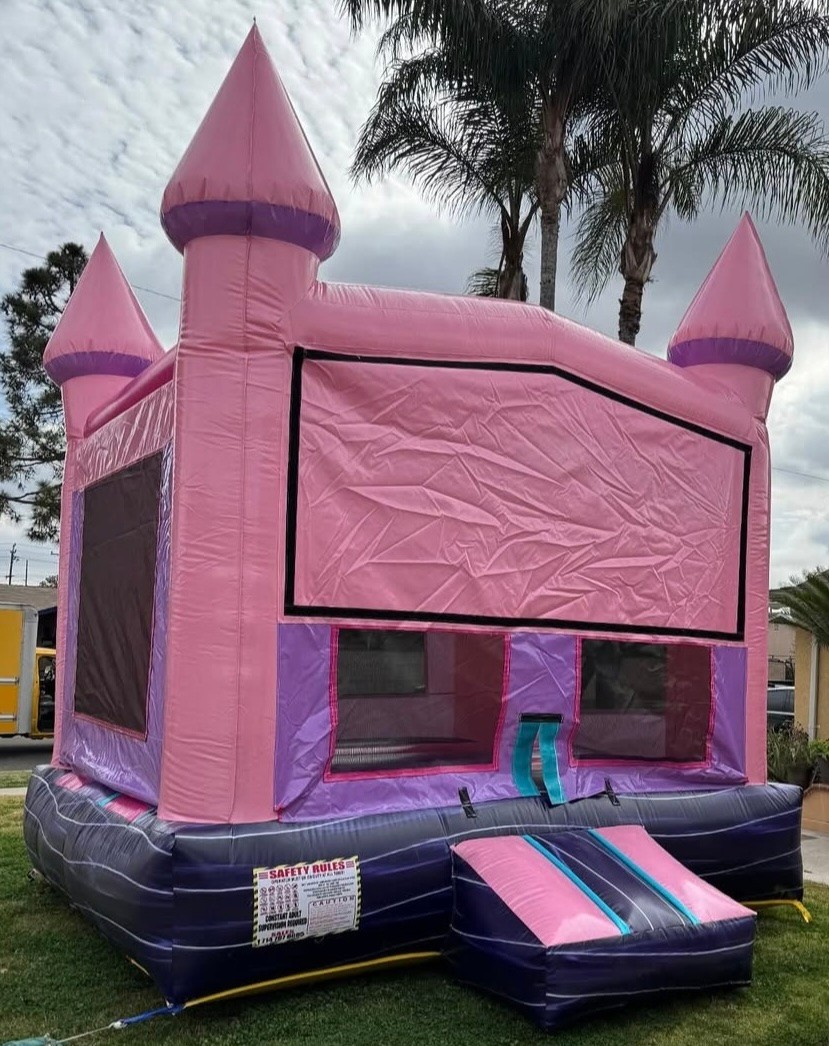
One practical tip: always request a freight quote before finalizing your purchase order. Some manufacturers offer freight coordination as part of their sales process, which can save you the effort of negotiating with carriers directly. Others leave freight entirely to the buyer. Knowing which situation you're in before you commit helps you build an accurate total landed cost for each unit.
Sizing Your Starter Fleet: How Many Units to Begin With
One of the most common questions new fleet operators ask is how many units they need to open for business. The honest answer is that three to five units gives you enough variety to serve different event types without overextending your capital before you've built a customer base.
A practical starter configuration for a TX market might include one standard bounce house for smaller birthday parties, one combo unit that handles both bouncing and sliding, and one waterslide for summer demand. That three-unit core lets you serve the most common booking types while keeping your initial investment in the $12,000 to $20,000 range (including freight and accessories). From there, you can add obstacle courses or specialty units as your booking volume justifies the additional inventory.
The temptation to buy more units upfront is real, especially when manufacturers offer volume discounts. Resist that temptation until you understand your local market's demand patterns. Texas summer heat drives strong waterslide demand from May through September, but dry inflatable bookings may be more consistent year-round in markets with mild winters. Your unit mix should reflect your specific geography and customer base, not just what looks appealing in a manufacturer's catalog.
For guidance on how guest count and event type affect which units get booked most often, the inflatable capacity limits guide from Jump High Rentals offers a useful operational reference. Understanding how capacity works in practice helps you choose units that will actually turn over bookings rather than sit in storage.
If you're evaluating whether to buy inventory outright versus renting units from an established operator to fulfill early bookings, the math usually favors buying once you can project 15 to 20 rental days per unit per month. Below that utilization rate, the capital tied up in owned inventory may not generate a better return than a subcontracting or partnership arrangement.
Warranties, Vendor Support, and What to Ask Before You Buy
A commercial inflatable is a piece of equipment that will be inflated, deflated, dragged across grass and concrete, and exposed to sun, wind, and moisture hundreds of times over its useful life. Warranty terms matter, and not all warranties are created equal.
Most reputable domestic manufacturers offer a one-year warranty on materials and seams, with some extending coverage to two or three years on structural components. Ask specifically what the warranty covers: seam separation, blower motor failure, and vinyl degradation are the three most common failure points. Ask whether warranty repairs require you to ship the unit back to the manufacturer or whether the vendor provides repair materials and instructions for field repairs. For a TX operator, shipping a 400-pound unit back to a manufacturer for a seam repair is a significant logistical and financial burden, so field-repairable warranty terms are meaningfully better than return-to-manufacturer policies.
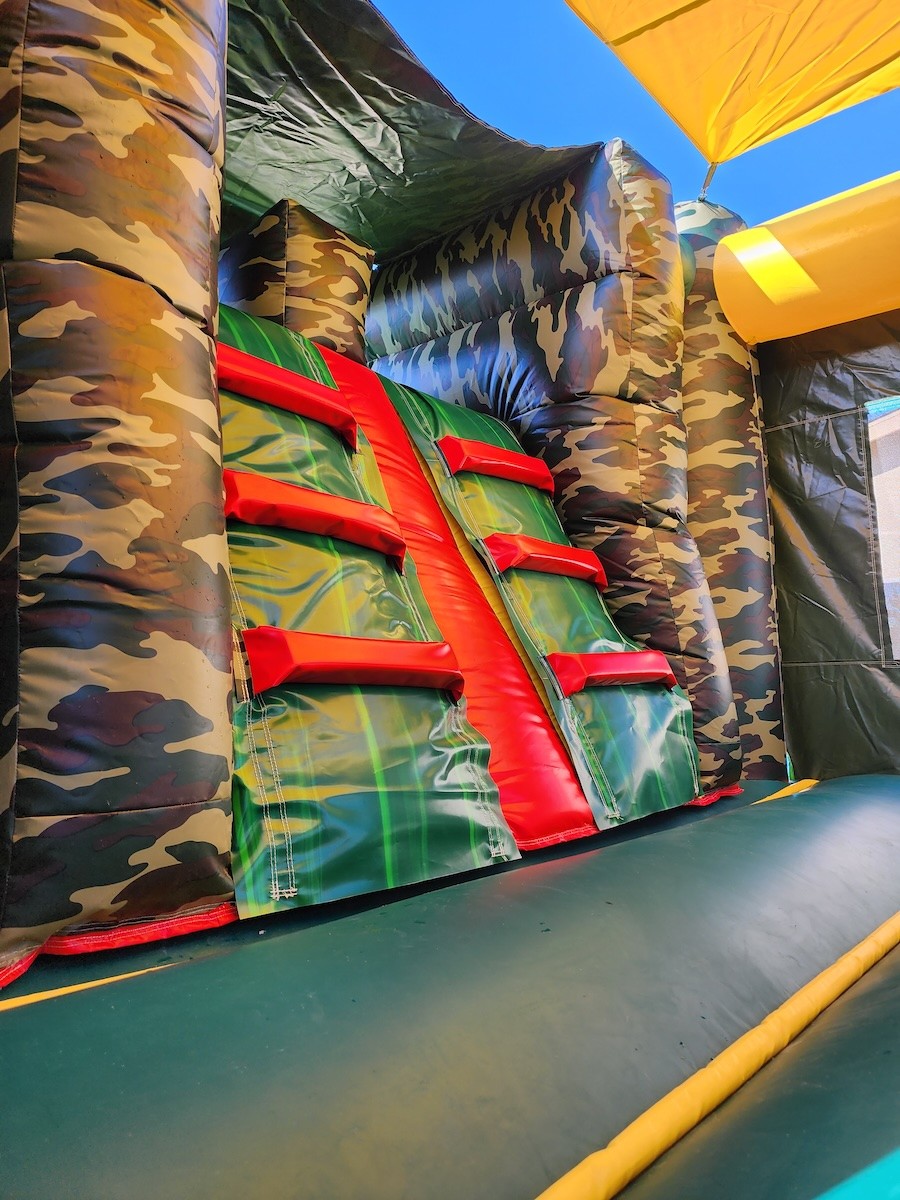
Vendor support quality varies widely. Before committing to a purchase, ask whether the manufacturer has a dedicated support line, what their average response time is for warranty claims, and whether they stock replacement parts (blowers, anchor stakes, repair patches) for the specific models you're buying. A manufacturer that goes quiet after the sale is a real operational risk when you have a booking on Saturday and a failed blower on Friday afternoon.
Also ask about the manufacturer's testing and safety certification process. In the United States, the ASTM International standard F2374 covers design, manufacture, and operation of inflatable amusement devices. Asking whether a manufacturer's units are designed to meet ASTM F2374 is a reasonable due-diligence question that separates vendors who take safety seriously from those who don't. This is not a guarantee of any particular safety outcome, but it's a meaningful signal about manufacturing standards.
Storage, Depreciation, and Long-Term Fleet Planning
Your units need somewhere to live when they're not at an event. Storage is an ongoing cost that first-time buyers often leave out of their startup budget entirely, and that omission can distort your ROI projections significantly.
A single commercial bounce house packed into its bag takes up roughly 4 by 4 by 4 feet of space. A combo unit or obstacle course can require two to three times that volume. A five-unit starter fleet needs a minimum of 400 to 600 square feet of dry, climate-controlled storage to keep vinyl in good condition. Texas heat and humidity accelerate vinyl degradation if units are stored in non-climate-controlled spaces, so a garage or warehouse with temperature management is worth the added monthly cost. Self-storage units in TX markets typically run $100 to $300 per month for a 10-by-20-foot climate-controlled unit, which is a reasonable starting point for a small fleet.
Depreciation is the other number that belongs in your long-term plan. Commercial inflatables have a useful life of roughly five to eight years with proper care, though heavy-use units may need significant repair or replacement sooner. Spreading your purchase cost across that useful life gives you a depreciation figure that belongs in your pricing model. If you paid $5,000 for a combo unit and expect it to last six years, that's roughly $833 per year in depreciation before you account for repairs, cleaning supplies, and blower maintenance.
For a deeper look at how multi-unit operations handle logistics and event-day coordination, the multi-unit inflatable rentals guide offers practical perspective from an operator running a real fleet in Southern California. The operational principles around scheduling, delivery sequencing, and unit rotation apply regardless of geography.
Building a sustainable TX inflatable rental business means treating your fleet as a depreciating asset with real carrying costs, not just a one-time purchase. Operators who plan for storage, maintenance, and eventual unit replacement from day one tend to price their rentals accurately and avoid the cash-flow surprises that catch undercapitalized startups off guard.
If you're ready to compare commercial unit specs, think through your starter fleet configuration, or explore what a well-run inflatable operation looks like from the inside, the team at Jump High Rentals is happy to share what they've learned running a fleet across Orange County. Reach out through the contact page to start the conversation, and browse the full rentals catalog to see the kinds of units that perform well in a high-demand Southern California market.