
What Sets Dual-Lane and Single-Lane Waterslides Apart
If you have ever watched a line of excited kids waiting their turn at a backyard waterslide, you already understand the core difference between a single-lane and a dual-lane unit. One slide sends kids down one at a time. The other lets two riders go simultaneously, side by side, which cuts wait times nearly in half and adds a friendly racing element that older kids absolutely love.
The physical difference goes beyond the number of lanes, though. A dual-lane waterslide is wider, often significantly heavier, and requires a larger flat footprint to set up safely. A typical single-lane inflatable waterslide might measure around 10 to 12 feet wide and 20 to 25 feet long. A dual-lane version of similar height can stretch 14 to 18 feet wide and 25 to 30 feet or more in length, depending on the model. That extra width and length matters a great deal in an Orange County backyard where every foot of usable space counts.
Height is another variable worth understanding. Both lane configurations come in a range of heights, from gentle slopes suited to younger children all the way up to taller climbs that appeal to tweens and teens. The lane count does not automatically determine the height, so you can find a single-lane slide that is taller than some dual-lane options. What the lane count does determine is how many kids can ride at once and how quickly your group cycles through. If you want a deeper look at how waterslides compare to other wet inflatables for a backyard party, the waterslide vs. slip-and-slide guide covers that angle well.
How Backyard Size and Shape Affect Your Choice in CA
Southern California backyards come in every shape imaginable. A Yorba Linda home might have a generous rectangular lawn with room to spare. A Costa Mesa bungalow might offer a narrow side yard or an L-shaped space that limits what you can fit. Before you fall in love with a dual-lane slide online, measure your usable space carefully and honestly.
The key measurement is not just length and width. You also need to account for clearance around the unit. Most inflatables require at least two to three feet of buffer on each side for anchoring stakes and for safe entry and exit. The blower motor sits at the back or side of the unit and needs its own clearance. Add the space for a splash pool or wet landing zone at the base of the slide, and the true footprint of a dual-lane unit can easily reach 20 feet wide by 35 feet long in total setup area.
Slope is a separate concern that affects both lane configurations, but it becomes more critical with larger units. Inflatable waterslides need to be set up on reasonably level ground. A gentle natural grade can sometimes be accommodated with careful placement and anchoring, but a steep or uneven yard may rule out the larger dual-lane models entirely. The water slide rental setup on sloped CA backyards guide walks through what to check before you book. If your yard has any significant slope, share that detail with the Jump High team early so they can recommend a unit that will sit safely and look great on your specific terrain.
Backyard access also plays a role. Dual-lane slides are heavier and bulkier to transport through a gate or side yard. If your only access point is a standard 36-inch gate, a large dual-lane unit may not make it through without disassembly or alternative routing. Single-lane slides are generally easier to maneuver into tighter spaces, which is one practical reason many OC families with compact yards choose them even when their guest count might otherwise suggest a dual-lane.
Guest Count: When One Lane Is Enough and When It Is Not
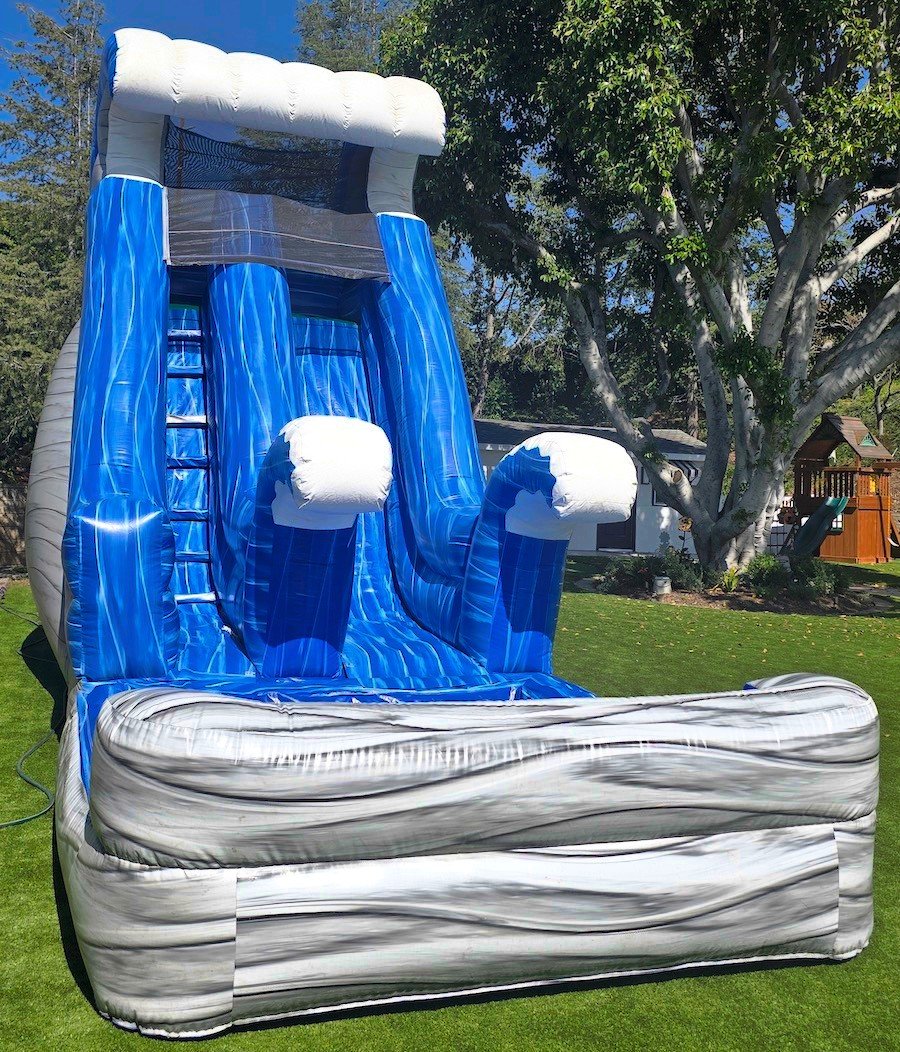
Guest count is the most direct driver of which slide configuration makes sense for your party. A single-lane waterslide can comfortably serve a group of 10 to 20 kids over the course of a two to four hour party. Each ride takes roughly 30 to 60 seconds from climb to splash, so the throughput is reasonable when the group is small and kids are rotating through other activities between turns.
Once your guest count climbs above 20 children, a single lane starts to feel like a bottleneck. Kids waiting five or six minutes for a single turn tend to drift away from the slide area, get bored, or pile on in ways that create safety concerns. A dual-lane slide solves this by doubling the throughput. Two kids go down at once, the line moves faster, and the competitive element of racing a friend keeps energy high without kids feeling frustrated by the wait.
For parties with 30 or more kids, a dual-lane slide is almost always the better investment. The extra cost of the larger unit is offset by how much more use it gets and how much smoother the party flows. If you are planning a larger event, the inflatable rental checklist for OC parties with 50 guests offers a broader look at how to match equipment to crowd size.
Age mix matters too. If your guest list is mostly toddlers and young children under age five, a single-lane slide at a gentler height is often the safer and more appropriate choice regardless of how many kids are coming. Younger children benefit from a calmer, more controlled experience, and a single lane makes it easier for a supervising adult to watch each child closely. Dual-lane slides tend to shine brightest with kids in the six to twelve age range, where the racing dynamic is genuinely exciting and kids are physically capable of handling the climb and descent safely.
Setup Requirements, Slope Concerns, and Delivery Logistics
Understanding what happens on delivery day helps you prepare your yard and avoid surprises. Jump High's crew handles the full setup and takedown, but you play an important role in making sure the space is ready when they arrive. Clear the area of furniture, toys, garden hoses, and any obstacles before the crew gets there. Make sure the gate or access path is unlocked and wide enough for the equipment to pass through.
Both single-lane and dual-lane waterslides require a continuous water source during operation. You will connect a standard garden hose to the slide's water inlet, and the hose needs to reach from your outdoor spigot to the slide location without stretching across a walkway or tripping hazard. For a dual-lane unit, confirm your water pressure is adequate, since some larger slides have two water inlets and benefit from good flow to keep both lanes running smoothly.
Power is the other utility to plan for. The blower that keeps the slide inflated runs continuously throughout your rental period. A standard 110-volt outdoor outlet within reach of the unit is usually sufficient, but extension cord length and gauge matter. The power and extension cord guide for OC inflatables explains what to look for so you are not scrambling on party day.
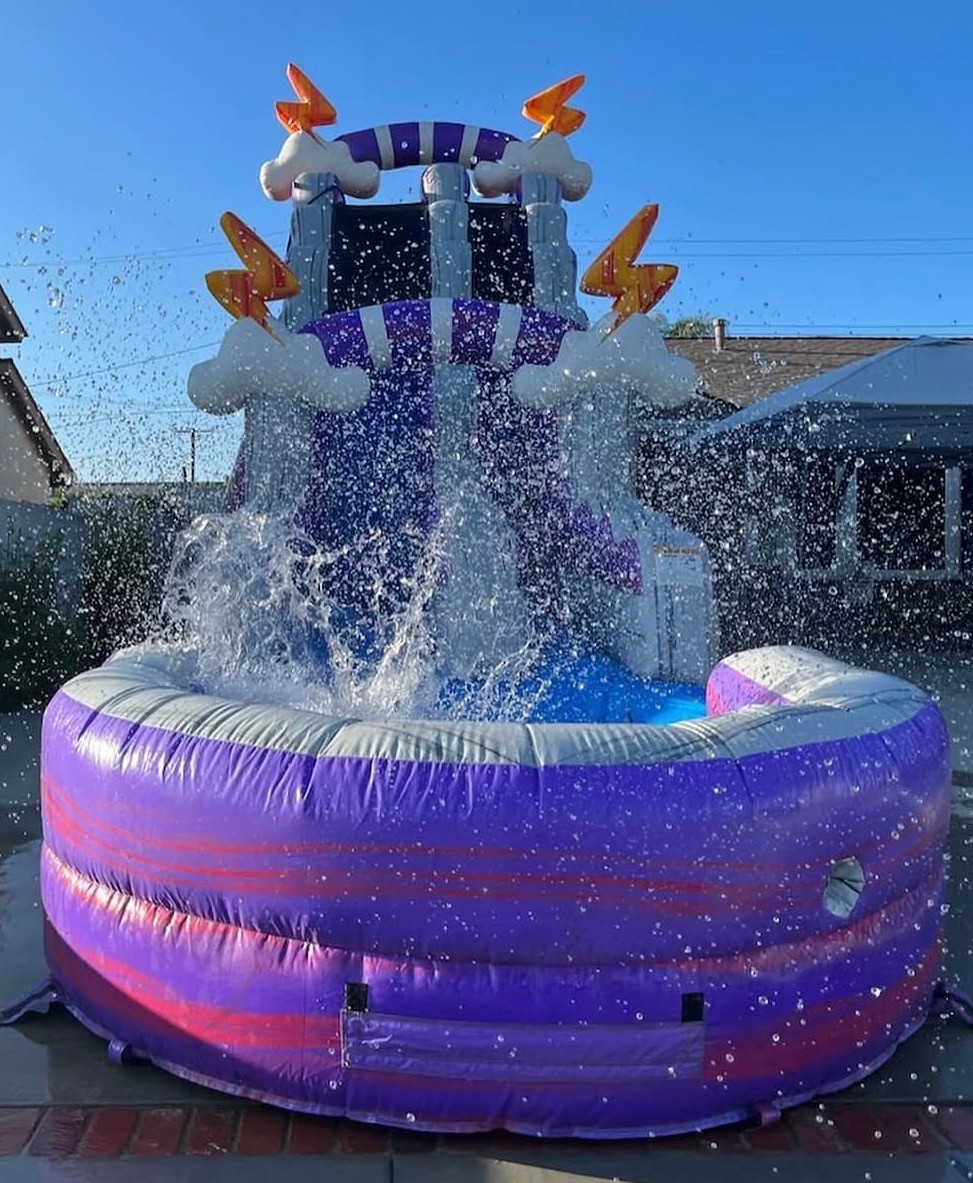
Anchoring is handled by the Jump High crew using stakes in grass or weighted sandbags on hard surfaces. Dual-lane slides, because of their larger size and surface area, require more anchor points to stay secure in any breeze. Orange County afternoons can bring coastal winds, particularly in communities closer to the coast like Huntington Beach or Newport Beach. The crew will assess conditions on arrival and anchor the unit appropriately, but it is worth knowing that larger slides have more wind exposure than smaller ones. The wind speed limits and inflatable safety guide covers the thresholds that matter for outdoor inflatable use.
Which Slide Fits Your Party Best: A Practical OC Checklist
Pulling all of this together into a clear decision does not have to be complicated. Think through these four questions before you browse the catalog or call to book.
First, measure your usable backyard space and identify the access path. If your flat, clear area is smaller than roughly 15 by 28 feet, a single-lane slide is likely your best fit. If you have 18 by 32 feet or more of level ground with good gate access, a dual-lane unit becomes a realistic option.
Second, count your expected child guests and think about their ages. Under 20 kids, or a group that skews younger than age six, generally works well with a single-lane slide. Twenty or more kids in the six to twelve range is where a dual-lane slide earns its keep.
Third, consider your yard's terrain. Any meaningful slope, soft or uneven ground, or limited anchor points should prompt a conversation with the Jump High team before you commit to a larger unit. They can confirm whether your specific yard can safely accommodate the model you have in mind.
Fourth, think about the overall party flow. If the waterslide is the main attraction and kids will be cycling through it for most of the party, dual-lane throughput is worth the investment. If the slide is one of several activities and kids will naturally rotate between a bounce house, lawn games, and food, a single-lane slide may be plenty.
When you are ready to see what fits your yard and your guest list, browse the Jump High rentals catalog to explore current waterslide options. If you have specific questions about dimensions, delivery to your neighborhood, or how a particular unit will work in your space, the Jump High contact page is the fastest way to get a straight answer from someone who knows Orange County backyards well. Getting the right slide for your party is exactly the kind of detail that makes the difference between a good afternoon and a great one.