
Revenue Per Booking: Obstacle Courses vs. Bounce Houses in WY Markets
Wyoming's rental market rewards operators who choose equipment strategically. The state's spread-out population centers, from Cheyenne and Casper to Gillette and Jackson, mean that each booking carries real travel overhead, so the revenue you collect per unit matters more here than in a dense metro market.
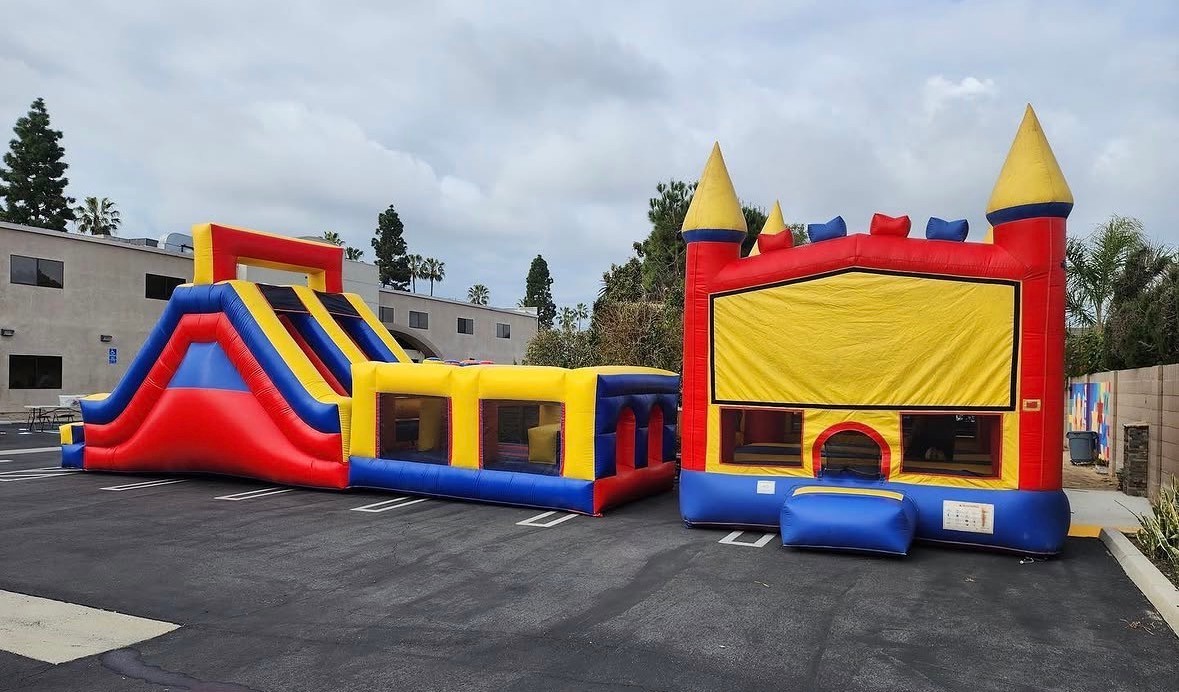
Obstacle courses consistently command higher rental rates than standard bounce houses. In most mid-tier U.S. rental markets, a single-lane or dual-lane obstacle course rents for roughly $350 to $600 per event day, while a comparable standalone bounce house lands between $150 and $300. Wyoming operators working school carnivals, church festivals, and HOA block parties often find that obstacle courses justify a price premium because they serve a wider age range, including older kids and teens who have outgrown basic bounce units. That broader appeal translates directly into fewer "we need something for the older kids too" objections from event planners.
Bounce houses, on the other hand, close bookings faster. Parents planning backyard birthday parties for younger children are comfortable with the format, the price point, and the footprint. If your WY market includes a healthy volume of residential birthday bookings, a bounce house earns its place in the fleet through sheer booking frequency, even if the per-event rate is lower.
The honest comparison here is revenue per available day, not just rate per booking. An obstacle course sitting idle for three weekends while you wait for a large event booking earns nothing. A bounce house that goes out six times in the same window at a lower rate may outperform it on raw cash flow. Wyoming operators should track both metrics separately before deciding which unit type to prioritize.
For operators just starting to build inventory, the Jump High Rentals catalog is a useful reference for understanding how unit types are positioned by event type and audience, even if your market is WY rather than Orange County.
Unit Specs, Footprint, and Storage Realities for Wyoming Operators
Obstacle courses and bounce houses differ significantly in their physical demands, and those differences hit harder in Wyoming than in warmer, more compact markets.
A standard commercial bounce house typically occupies a footprint of roughly 13 by 13 feet to 15 by 15 feet when inflated, with a packed weight between 150 and 250 pounds depending on the PVC weight grade. Storage is manageable. A single unit rolls into a large cargo van or a modest trailer bay, and a 10 by 10 foot climate-controlled storage space can hold two to three units comfortably. For Wyoming winters, climate-controlled storage is not optional. PVC becomes brittle in sustained sub-zero temperatures, and a cracked seam discovered in April costs far more than the monthly storage fee you saved over winter.
Obstacle courses are a different category entirely. A 40-foot single-lane course inflated can run 12 to 15 feet wide and 10 to 12 feet tall. Packed, these units weigh 400 to 700 pounds and require a dedicated trailer or a box truck with a liftgate. Storage footprint roughly doubles compared to a bounce house, and the unit's weight means you need proper shelving or pallet systems to avoid stress damage to seams during off-season storage.
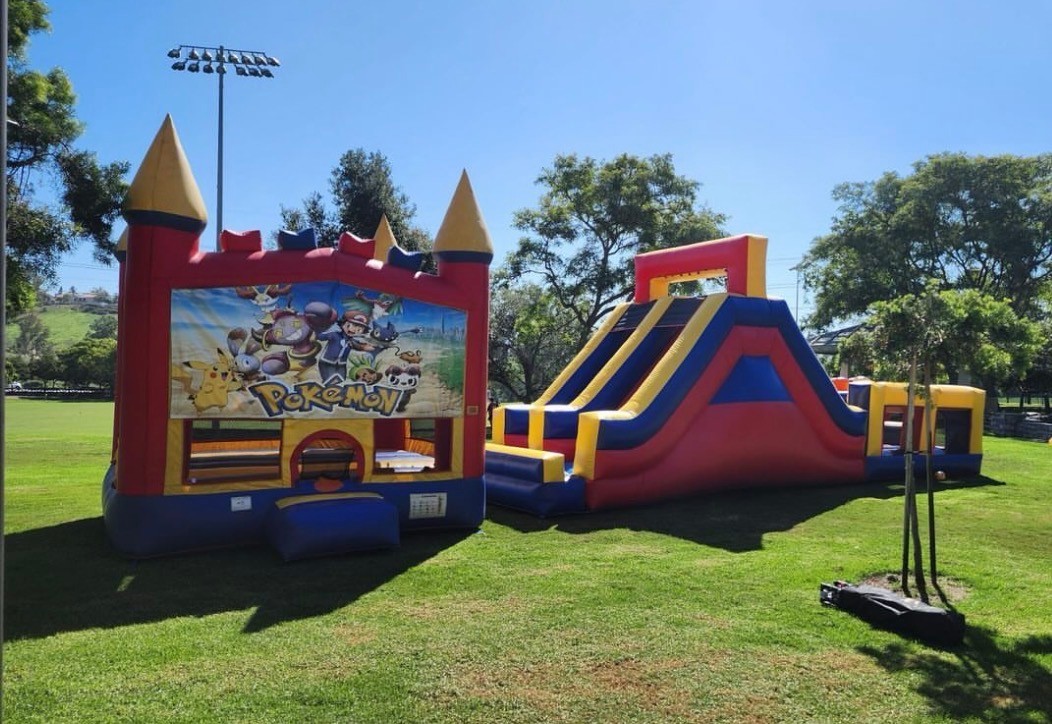
The practical implication for WY operators is that adding your first obstacle course is not just a purchase decision. It is also a logistics infrastructure decision. If you are currently running a cargo van and a small storage unit, an obstacle course may require you to upgrade both before the unit earns its first dollar. Factor those capital costs into your ROI calculation before the purchase, not after.
For a deeper look at how footprint and surface type interact with setup requirements, the space planning guide for inflatable obstacle courses covers the key measurements worth understanding before you commit.
Freight, Delivery Costs, and Vendor Support When Buying in WY
Wyoming's geography creates a freight reality that operators in coastal states rarely face. The state has no major commercial inflatable manufacturing hub nearby, which means most units ship from the Southeast, Midwest, or directly from overseas consolidators on the West Coast. Freight costs for a single commercial bounce house typically run $200 to $500 depending on origin and carrier. An obstacle course, given its weight and dimensional size, can push freight costs to $600 to $1,200 or more for a single shipment.
Those numbers matter because they affect your true cost of acquisition, not just the unit price. A $2,800 bounce house with $400 in freight has a different break-even calculation than a $5,500 obstacle course with $900 in freight. Wyoming operators should always request freight quotes before finalizing a purchase, and they should ask vendors whether the unit ships via LTL (less-than-truckload) or full truckload, since LTL shipments carry a higher risk of transit damage and longer delivery windows.
Vendor support is equally important and often underestimated. When a seam fails or a blower motor burns out mid-season in Casper, your vendor's responsiveness determines whether you lose one booking or an entire month of revenue. Before purchasing, ask vendors directly about their warranty terms, their repair kit availability, and whether they stock replacement blowers for the specific units they sell. A vendor who ships a repair kit within 48 hours is worth more to a WY operator than one offering a marginally lower unit price.
The Jump High Rentals contact page is a reasonable starting point for spec questions, even for operators outside California, since the team works with commercial-grade units and can speak to what buyers should look for in vendor relationships.
Seasonal Utilization and Depreciation Across a Short WY Event Calendar
Wyoming's outdoor event season runs roughly May through September in most of the state, with Jackson and higher-elevation markets compressing that window further. That gives most WY operators approximately 20 to 22 viable outdoor event weekends per year, compared to 40 or more in a Southern California market. Depreciation math changes significantly under those conditions.
A commercial bounce house rated for 3 to 5 years of regular use in a year-round market may realistically last 7 to 10 years in a WY fleet if stored properly and maintained well. That extended lifespan is a genuine advantage, but it also means your capital is tied up longer before you need to replace the unit. Operators should model depreciation on actual usage hours, not calendar years, to get an accurate picture of when a unit's maintenance costs will begin to outpace its revenue contribution.
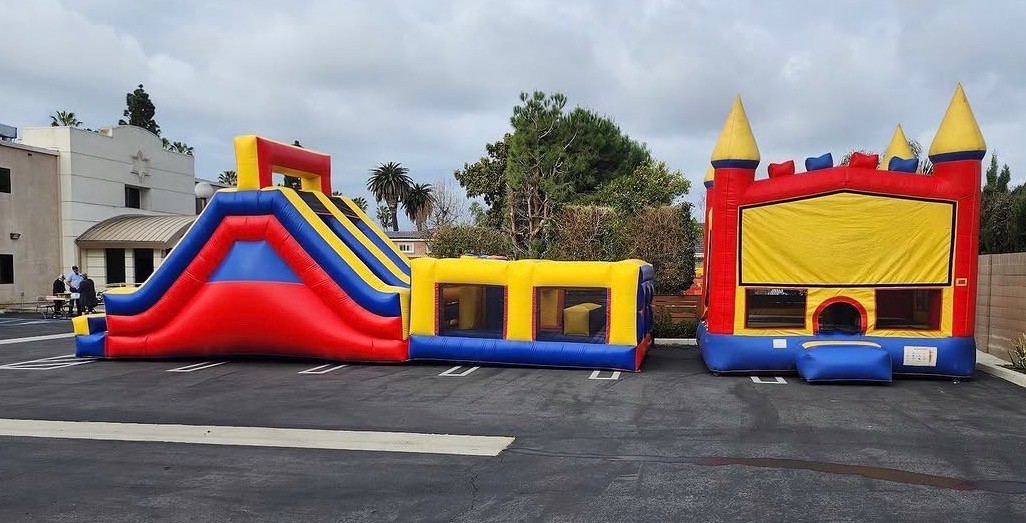
Obstacle courses depreciate faster in active use because they have more contact points, more seams under stress, and more components (climbing walls, pop-up obstacles, slide exits) that can wear independently. In a short WY season, this is less of a concern than it would be in a high-volume Southern market. However, it does mean that obstacle courses purchased for WY fleets should be inspected thoroughly at the start and end of each season, with seam repairs addressed immediately rather than deferred.
Utilization rate is the metric that ties this together. If your bounce house goes out 18 of 22 available weekends and your obstacle course goes out 10 of 22, the bounce house is generating more revenue per dollar of acquisition cost, even if the obstacle course earns more per booking. Wyoming operators building their first fleet should target units with the highest realistic utilization rate for their specific market before chasing the highest per-booking rate.
The guides section at Jump High Rentals includes ROI-focused content that, while written for different markets, covers the utilization and depreciation frameworks that apply directly to WY fleet planning.
Building a Balanced WY Fleet: When to Add Each Unit Type
The right fleet composition for a Wyoming operator depends on the mix of event types in your market and the logistics infrastructure you can realistically support in 2026.
If your primary market is residential birthday parties and small community events, start with two to three commercial bounce houses before adding an obstacle course. Bounce houses are easier to transport, store, and repair, and they close bookings with less sales friction. Once your bounce house inventory is generating consistent revenue and covering your operating costs, you have the cash flow and the operational experience to absorb the higher complexity of an obstacle course.
If your primary market is school carnivals, church festivals, and HOA events, an obstacle course should be in your first or second purchase. These clients often have larger budgets, longer rental windows, and a genuine need for equipment that serves mixed age groups. An obstacle course in this context earns its premium rate consistently and differentiates your fleet from competitors offering only bounce houses.
A practical starting point for most WY operators entering the market in 2026 is a fleet of two bounce houses and one obstacle course. This combination covers the majority of event types, keeps freight and storage costs manageable, and gives you real booking data on which unit type your specific market prefers. From there, you can scale toward whichever unit type is generating better utilization numbers.
Before finalizing any purchase, review the FAQ at Jump High Rentals for practical questions about commercial unit selection, and reach out through the contact page to discuss spec requirements with the team. Wyoming's market has real constraints, but operators who choose equipment thoughtfully from the start build fleets that generate reliable returns across a short but profitable season.