
Commercial Inflatable Depreciation for CA Fleet Owners
If you operate a bounce house rental business in California, or you're building one from the ground up, depreciation is one of the most practical financial concepts you need to understand. Not because of what it does on a tax form (consult a qualified CPA or tax professional for that), but because of what it tells you about your inventory. How long will a unit hold its value? When does repair stop making sense? How do you time replacements so your fleet stays competitive without bleeding cash? These are the questions that separate operators who scale from operators who stall.
This guide covers the practical side of commercial inflatable depreciation for CA fleet owners: how units lose value, how to estimate useful life, and how to use that thinking to make smarter buying and retirement decisions. Whether you're sourcing your first unit or managing a fleet of twenty, understanding depreciation as an inventory planning tool will sharpen every purchasing decision you make.
How Commercial Inflatables Lose Value Over Time
Commercial inflatables don't depreciate the way a car does, where mileage and mechanical wear are the primary drivers. For bounce houses, obstacle courses, and waterslides, value loss is driven by a combination of physical wear, UV degradation, market saturation, and changing customer expectations.
The material itself matters enormously. Most commercial-grade inflatables are constructed from 18-ounce PVC vinyl or similar heavy-duty materials. That construction holds up well under regular use, but it isn't immune to the California environment. Prolonged sun exposure in Southern California accelerates UV breakdown on seams and panels, which means a unit used at outdoor summer events in Anaheim or Riverside will show wear faster than one stored in a climate-controlled warehouse between rentals. Color fading is one of the first visible signs, and it matters more than operators often expect because customers notice it immediately.
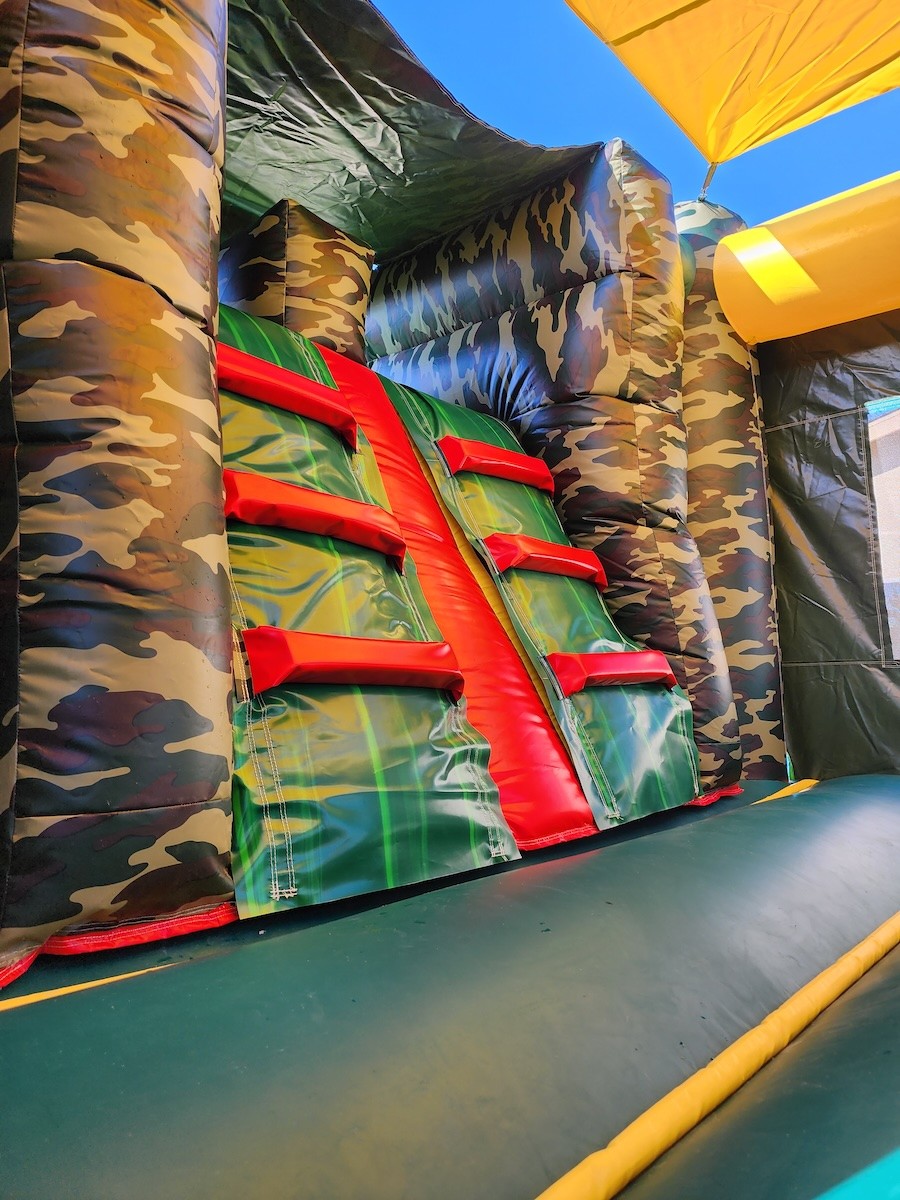
Structural wear follows a predictable pattern. Seams and stitching take the most stress during inflation, deflation, and active use. Blower attachment points, entry tunnels, and climbing walls are the highest-contact areas and tend to show wear first. A well-maintained unit can absorb hundreds of rental cycles before seam repairs become necessary, but deferred maintenance accelerates value loss faster than almost anything else.
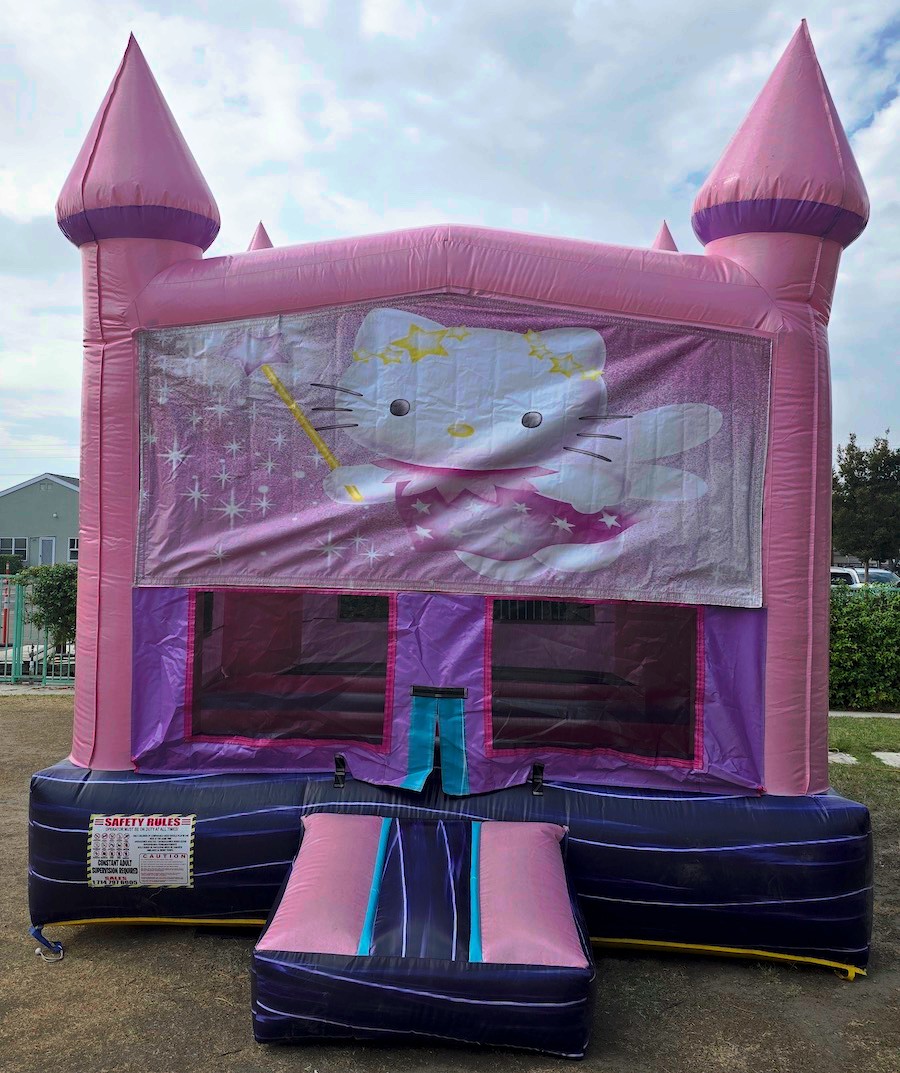
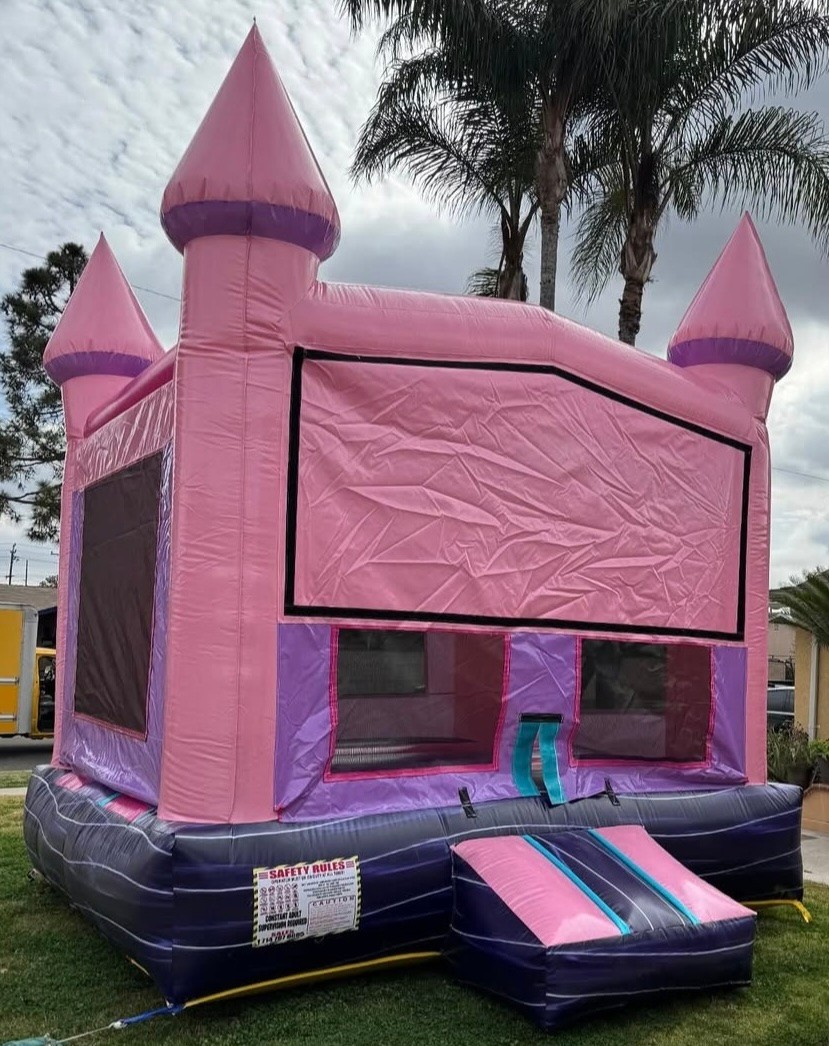
Market depreciation is a factor that's easy to overlook. Even a structurally sound unit loses rental appeal when newer, more visually dynamic designs enter the market. Customers browsing rental catalogs in CA are increasingly drawn to themed units, combo designs, and interactive features. A plain single-color bounce house that looked fresh five years ago may now sit at the bottom of your booking queue, not because it's broken, but because it looks dated next to newer inventory.
Useful Life Estimates and What They Mean for Fleet Planning
The IRS classifies most commercial inflatables as five-year property under the Modified Accelerated Cost Recovery System (MACRS), though how that applies to your specific situation is a question for your tax professional. From a practical fleet planning standpoint, five to seven years is a reasonable working estimate for the useful life of a well-maintained commercial inflatable used in regular rental rotation.
That range isn't a hard ceiling. Some operators in CA report units lasting eight to ten years with careful maintenance, proper storage, and selective deployment. Others see units reach functional end-of-life in three to four years due to heavy use schedules, outdoor storage, or inadequate cleaning protocols. The spread is wide, which is exactly why tracking individual unit performance matters more than applying a single blanket estimate to your whole fleet.
For fleet planning purposes, useful life estimates help you project replacement costs and budget for them in advance rather than scrambling when a unit fails mid-season. If you paid $3,000 for a bounce house and expect it to generate revenue for six years, you can work backward to understand what annual revenue that unit needs to produce to justify its place in your inventory. Units that consistently underperform that threshold are candidates for early retirement or repositioning to lower-demand slots in your calendar.
Waterslides and combo units typically carry higher acquisition costs than standalone bounce houses, and they also tend to see heavier wear because of the water exposure and the physical demands of the slide surface. Planning for a slightly shorter useful life on wet units (closer to four to five years of active use) is a conservative approach that many experienced CA fleet operators use. You can browse Jump High's rental catalog to get a practical sense of which unit types see the highest demand in the Orange County and broader CA market, which directly informs which categories are worth prioritizing in your own fleet.
Replacement Cycles: When to Retire a Unit vs. Repair It
One of the most common mistakes newer fleet owners make is holding onto a unit too long because the repair cost feels lower than replacement. That calculation is often correct in isolation, but it misses the bigger picture of opportunity cost and customer perception.
A useful framework is to evaluate each unit on three dimensions at once: structural integrity, visual appeal, and booking performance. A unit that scores well on all three is worth repairing when something breaks. A unit that fails on two of the three is likely a retirement candidate, even if the specific repair needed is minor.
Structural repairs like seam patching, blower replacement, or anchor strap replacement are generally worth doing on units that are still visually competitive and booking well. These are maintenance costs, not depreciation events. But when a unit needs repeated seam repairs in the same area, or when the vinyl itself is showing brittleness or cracking, that's a signal that the material has reached the end of its serviceable life. Continuing to repair at that point is throwing good money after bad.
Visual retirement is harder to quantify but equally real. If a unit's color has faded significantly, if the graphics look dated, or if it's consistently getting passed over in favor of newer units in your catalog, that's a depreciation signal worth acting on. Retiring a low-booking unit and replacing it with something that matches current customer preferences in CA will almost always produce better returns than keeping the old unit in rotation.
For CA operators specifically, the summer rental season is intense and compressed. Units that aren't fully reliable going into May and June create real operational risk. Building your replacement cycle around pre-season readiness, rather than waiting for a unit to fail mid-rental, is a practical approach that protects both your revenue and your reputation.
Buying New vs. Used Inflatables: Depreciation Implications for CA Buyers
The used inflatable market in California is active, and it's genuinely possible to find well-maintained units at significant discounts. But depreciation awareness changes how you evaluate those deals.
When you buy a used unit, you're buying into whatever depreciation has already occurred, plus whatever remains. A three-year-old bounce house from a high-volume operator may have absorbed the equivalent of five or six years of wear from a lower-volume fleet. Without a maintenance history, you're estimating remaining useful life based on visual inspection alone, which is an imprecise tool.
New units come with manufacturer warranties, known material condition, and a full useful life ahead of them. For high-demand unit types (combo units, waterslides, themed bounce houses), buying new often makes more financial sense because you're maximizing the revenue-generating window before the unit starts to look dated. The guides hub at Jump High covers a range of topics relevant to fleet planning, including sizing, unit types, and what customers in the CA market are actually booking.
Used units make more sense for lower-demand categories, backup inventory, or situations where you need to expand quickly without a large capital outlay. If you're buying used, prioritize units with documented maintenance records, inspect seams and blower attachment points carefully, and factor in the cost of any immediate repairs when calculating your effective purchase price.
Freight and delivery costs are a meaningful variable for CA buyers sourcing from out-of-state manufacturers or wholesalers. A unit priced attractively from a Midwest supplier may carry $300 to $600 or more in freight costs depending on size and crating requirements. Build those costs into your total acquisition figure before comparing new versus used options, and before calculating your expected return per rental cycle.
Tracking Depreciation as Part of Fleet Inventory Management
Depreciation awareness is only useful if it's connected to actual records. Fleet owners who track unit performance systematically make better replacement decisions than those who rely on memory or gut feel.
At a minimum, your inventory records for each unit should capture the purchase date, acquisition cost (including freight and any setup costs), total rental cycles completed, maintenance and repair history with costs, and current booking frequency relative to other units in your fleet. With that data, you can calculate a rough cost-per-rental for each unit over its life, which tells you far more about actual performance than the original purchase price alone.
Some CA fleet operators use simple spreadsheet tracking, while others invest in rental management software that logs bookings and maintenance automatically. Either approach works as long as the data is actually maintained. The operators who struggle with replacement timing are almost always the ones who don't have reliable records and end up making decisions reactively rather than proactively.
Connecting your depreciation tracking to your buying calendar is the final step. If your records show that certain unit types consistently reach visual or structural retirement around the four-year mark, you can plan acquisition budgets accordingly and avoid the cash flow crunch that comes from replacing multiple units in the same season. For CA operators building or scaling a fleet, that kind of forward planning is what separates a sustainable business from one that's always playing catch-up.
If you're evaluating which unit types generate the strongest demand in the Orange County and Southern CA market before making your next purchase, the Jump High rentals page is a useful reference point. You can also reach out through the contact page with questions about what's working in the local market. Understanding what customers are actually booking is the best starting point for any fleet investment decision.