
Why School Parties Need a Different Rental Approach
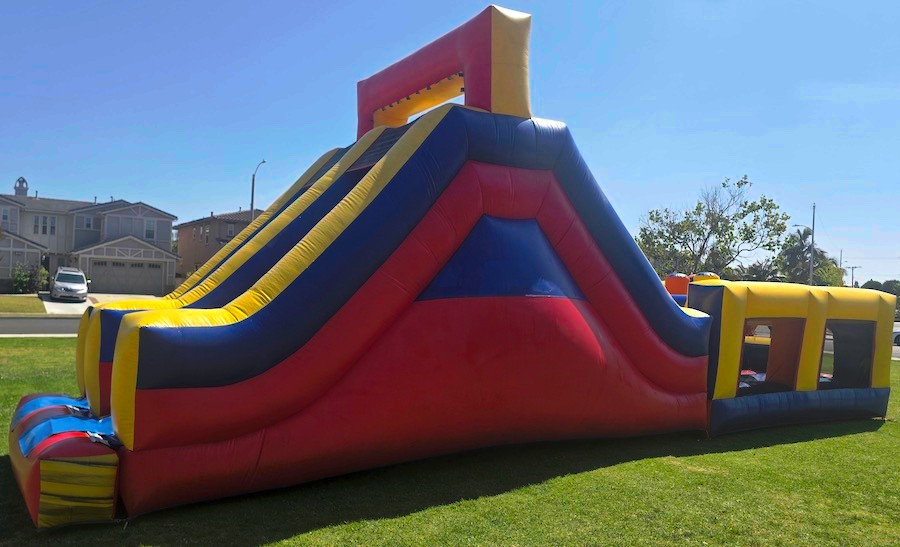
Planning an end-of-year celebration at an Orange County school is a genuinely different challenge from booking a backyard birthday party. The space is shared, the guest count is often large, the supervision ratio is tighter, and the clock runs on a bell schedule rather than whenever the last kid goes home. Getting the inflatable right means thinking about all of those factors together, not just picking the most popular unit from a catalog.
For PTA organizers and parent volunteers, the biggest concerns are usually practical ones: will it fit on the blacktop or field, will it arrive and be ready before students come out, and will it be picked up before the campus needs to close? Those are exactly the right questions to ask, and they shape every recommendation in this guide.
One thing worth knowing upfront is that late spring and early summer are the busiest booking weeks of the year for Orange County inflatable rentals. Weekends and school-adjacent dates fill up quickly, and the best units go first. If you are coordinating a celebration for May or June 2026, starting the conversation with your rental company now gives you the most options and the most flexibility on timing.
Choosing the Right Inflatable for Your Campus Space
The single most common mistake school planners make is choosing a unit based on how exciting it looks rather than whether it actually fits the venue. A 40-foot obstacle course looks impressive in a photo, but if your usable blacktop is 30 feet wide with a fence on one side and a portable classroom on the other, that unit will not work. Measure the usable footprint carefully, including clearance on all sides, before you look at any product page.
For most elementary school celebrations, a standard jumper or a mid-size combo unit tends to be the most practical choice. Standard jumpers typically run around 15 by 15 feet, which fits comfortably on most school fields or blacktop areas. A combo unit adds a small slide and usually runs closer to 15 by 20 feet or larger, so confirm your dimensions before upgrading. If you are planning a school-wide field day with a larger crowd, you might consider multiple smaller units rather than one oversized inflatable. That approach also helps with supervision, since you can station a volunteer at each unit rather than managing a single long line. The inflatable rental checklist for OC parties with 50 guests is a helpful starting point for thinking through capacity across multiple units.
Surface type matters more than most planners expect. Grass anchoring uses stakes driven into the ground, while concrete or asphalt setups require sandbag anchoring instead. Most school campuses have a mix of both, so tell your rental company exactly where you plan to place the unit. If you are working with a blacktop area, review the concrete vs. grass setup guide before your booking call so you can describe the surface accurately.
Age range is another factor that gets overlooked. If your celebration mixes kindergarteners with fifth graders, a single large jumper can create supervision challenges when older kids bounce alongside much younger ones. Separating age groups by unit or by time slot is a practical solution that keeps the energy manageable and the experience safer for everyone involved.
Logistics That Make or Break a School Event
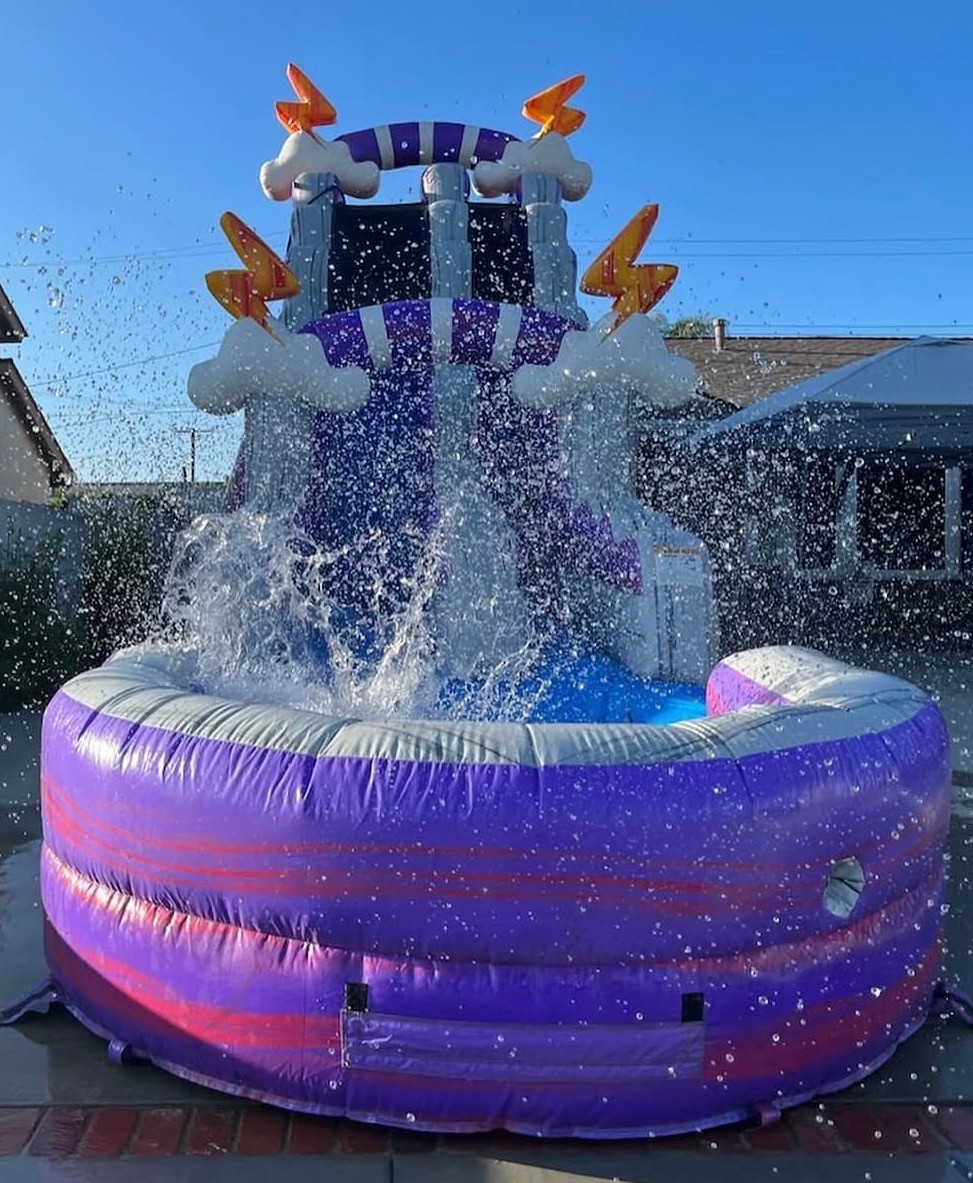
The logistics of a school inflatable rental are where things most often go sideways, and most of the problems are preventable with a little advance planning. The two biggest variables are power access and delivery timing.
Power access on school campuses is not always straightforward. Many blacktop areas and fields do not have outdoor outlets nearby, which means you may need a generator to run the blower. Ask your rental company about generator availability early in the planning process, and confirm whether the generator noise level is acceptable for your campus environment. The power and extension cord guide for OC inflatables covers what to check before your event day so there are no surprises when the delivery crew arrives.
Delivery timing at a school requires more coordination than a typical backyard drop-off. The rental company needs a clear access window, usually at least 30 to 45 minutes before students arrive at the setup area. That means confirming with your principal or facilities coordinator when gates open, where the delivery truck can park, and whether any staff need to be present to grant access. Setup typically takes 20 to 30 minutes for a standard jumper and a bit longer for larger combo units or obstacle courses. Build that buffer into your schedule so the inflatable is fully inflated and ready before the first group of kids arrives.
Pickup timing is just as important. Schools often need the campus clear by a specific time after dismissal, and a rental company that cannot commit to a pickup window creates real problems for your facilities team. Confirm the pickup time in writing when you book, and share that window with your campus coordinator so everyone is aligned. For larger events with multiple units, review the multi-unit inflatable rental guide for large OC events to understand how staggered pickup logistics typically work.
Supervision planning is another area where school events differ from private parties. Most rental companies can describe their safety standards and how their units are anchored and maintained, but the on-site supervision during use is the school's responsibility. Designate a specific adult volunteer for each unit, brief them on the basic rules before students arrive, and make sure they know who to contact if the blower trips or if a student needs to exit quickly. The supervising kids on inflatables guide is a practical resource to share with your volunteer team ahead of the event.
If your celebration is at an off-campus park rather than the school grounds, permit requirements add another layer of planning. Many Orange County city parks require a permit for inflatable use, and lead times typically run 14 to 30 days. Some parks also lack outdoor power outlets, making a generator essential. The Irvine park permit events guide walks through what that process looks like for one common OC venue type, and the same general steps apply across most city parks in the county.
Pricing and Booking Timelines for OC School Events
Understanding the pricing landscape helps you build a realistic budget before you go to your PTA board or school administration for approval. In Orange County for 2026, standard jumpers generally run in the range of $159 to $200 for a day rental. Combo bouncers with a slide typically fall between $250 and $450 depending on size and features. Obstacle courses, which are popular for older students and field day formats, usually start around $400 and go up from there based on length and configuration. Generator rental, if needed, adds to the total, so ask about that cost separately when you get a quote.
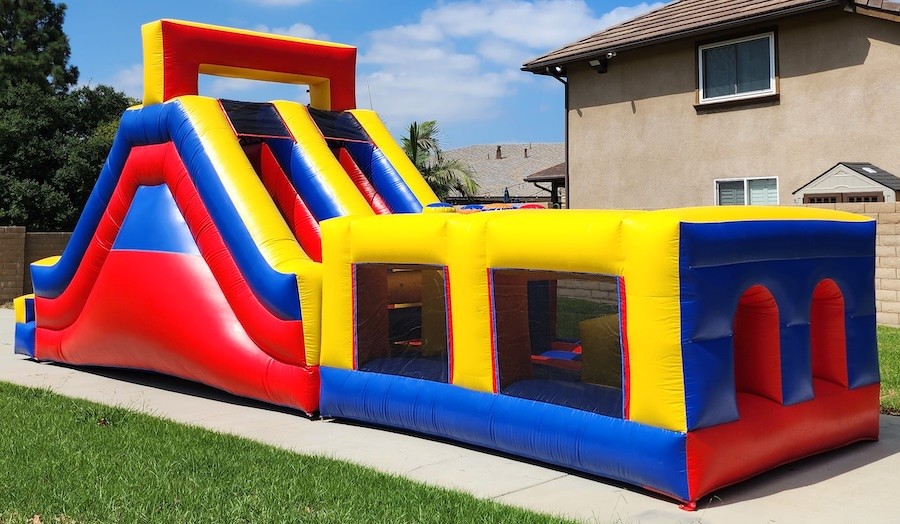
Final pricing can shift based on your delivery location within OC, the length of the rental window, and whether you need any add-ons. Getting a specific quote for your campus address and event date is the most reliable way to build your budget. The bounce house rental pricing guide for OC parents also covers how booking timing affects availability and, in some cases, pricing flexibility.
For school events in May and June, booking four to six weeks in advance is a reasonable minimum. If your event falls on a Friday (which many end-of-year celebrations do), expect competition for delivery slots from weekend birthday parties booking the same day. The earlier you lock in your date and unit, the more likely you are to get the specific inflatable and delivery window your campus schedule requires. If you are coordinating a larger school carnival or field day with multiple inflatables, earlier is always better. The inflatable rentals for OC school carnivals and fundraisers guide goes deeper on multi-unit planning for those larger formats.
Questions to Ask Before You Confirm the Rental
Before you finalize any booking for a school event, a short list of practical questions will save you from avoidable headaches on the day of the celebration. These are not complicated, but they are easy to forget when you are juggling a dozen other end-of-year tasks.
Start with the basics: what are the exact dimensions of the unit, including the clearance space needed on all sides? What surface is it designed for, and how is it anchored on concrete versus grass? Does the blower require a standard 20-amp outlet, and if so, how far can the power cord safely run? If a generator is needed, what does that add to the cost and the setup footprint?
Then move to logistics: what is the delivery window, and how much time does setup require? What is the confirmed pickup time, and what happens if the event runs long? What is the cancellation or weather policy if the school needs to postpone? For school events in particular, it is worth asking about the company's cleaning process, since parents and administrators often want to know that the unit arriving on campus has been properly sanitized between rentals. The how inflatables are cleaned and sanitized in OC guide explains what a thorough cleaning process looks like so you know what to ask for.
Finally, clarify who handles what on event day. The rental company handles delivery, setup, and pickup. Your team handles on-site supervision, cord safety management, and student access. Making sure both sides understand their responsibilities before the day arrives keeps the event running smoothly and gives your volunteers clear direction from the start.
If you are ready to start planning your school's end-of-year celebration, reach out to Jump High Rentals with your event date, campus location, surface type, and approximate guest count. Late spring and early summer dates book up fast across Orange County, and sharing those details early means you get the right unit matched to your space rather than whatever happens to be left. The team at Jump High serves schools, churches, and HOAs across OC and includes setup and pickup in every rental, so your volunteers can focus on the kids rather than the equipment.