
Purchase Price vs. Revenue Ceiling for Each Unit Type
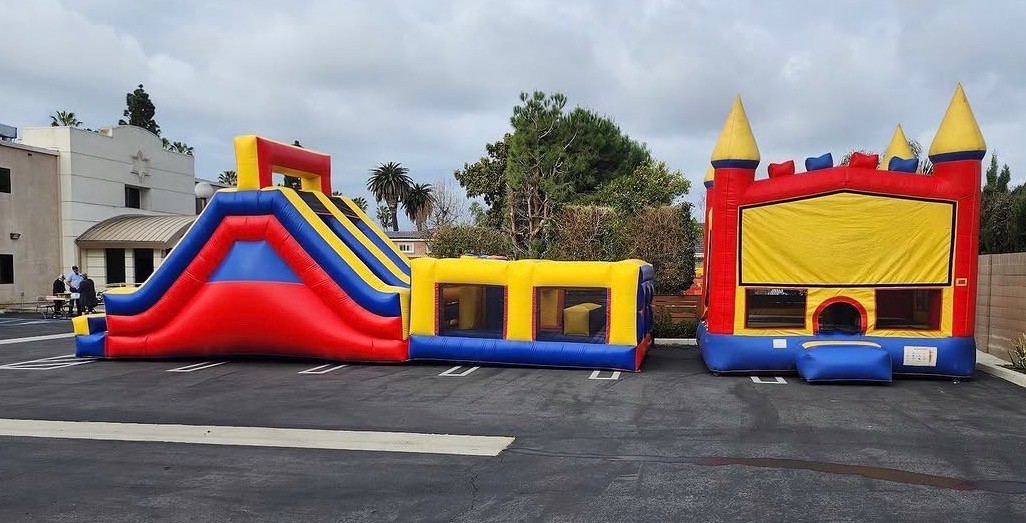
The first question most Colorado rental operators ask is simple: which unit makes more money? The honest answer is that obstacle course inflatables carry a higher purchase price but also open a higher revenue ceiling, and whether that ceiling justifies the upfront cost depends entirely on how you run your calendar.
A commercial-grade standalone bounce house typically runs between $1,500 and $3,500 at wholesale, depending on size, PVC weight, and manufacturer. A comparable-quality obstacle course inflatable, the kind built to handle repeated commercial use, usually falls in the $3,500 to $8,000 range, with larger dual-lane or extended-length units pushing higher. That gap feels significant when you're building a starter fleet on a tight budget.
The revenue picture shifts when you look at what each unit commands per booking. Standalone bounce houses in Colorado markets tend to rent for $150 to $300 per day for backyard events, with school and HOA bookings sometimes reaching $350 to $400. Obstacle courses, because they serve older kids and larger group events, routinely command $350 to $600 per booking, and corporate picnic or school carnival clients often pay more. If your obstacle course goes out 30 weekends a year at an average of $450, that's $13,500 in gross revenue from a single unit. A bounce house at 35 bookings and $225 average brings in $7,875. The obstacle course earns back its higher purchase price faster than the raw sticker shock suggests, provided your market supports the booking volume.
For operators just starting out, the practical move is often one bounce house to anchor entry-level demand, paired with one obstacle course to capture the higher-ticket school carnival and teen party segment. You can see how other operators think through this balance in the Jump High guides library, which covers fleet planning from multiple angles.
Freight and Delivery Costs Into Colorado Markets
Freight is where many first-time commercial buyers get surprised. Colorado's geography creates real cost variation depending on whether you're receiving units in Denver, Colorado Springs, Fort Collins, or a more rural market like Pueblo or Grand Junction.
Most commercial inflatables ship via LTL (less-than-truckload) freight from manufacturers concentrated in the Southeast or from domestic warehouses on the coasts. A single obstacle course inflatable, packed and palletized, typically weighs 300 to 600 pounds depending on length and PVC grade. LTL freight from a Southeast manufacturer to Denver currently runs roughly $400 to $900 per pallet, though carrier pricing shifts seasonally and with fuel surcharges. Shipping to western slope markets in Colorado can add $150 to $300 on top of that, and liftgate delivery fees (which you almost certainly need without a loading dock) add another $75 to $150.
That means your true landed cost on an obstacle course inflatable could be $500 to $1,200 higher than the quoted unit price. Budget for this before you compare vendors. A manufacturer offering a unit at $4,200 with $900 freight may be a better deal than a $3,800 unit with $1,400 freight to your zip code.
A few practical notes for CO buyers: request a freight quote to your actual delivery address before finalizing any purchase order. Ask whether the manufacturer uses a preferred carrier with negotiated rates, since some vendors pass those savings to buyers. Also confirm whether the unit ships fully assembled in a bag or in multiple components, because multi-piece shipments sometimes arrive on separate pallets and generate separate freight charges.
Storage Footprint and Depreciation Over Time
Storage is a cost that doesn't show up on the invoice but shows up every month in your overhead. Obstacle course inflatables are longer units, often 40 to 60 feet when inflated, and they pack down into bags that measure roughly 4 by 4 by 4 feet to 5 by 5 by 5 feet depending on the model. A standalone bounce house packs into a noticeably smaller footprint, typically 3 by 3 by 3 feet or less.
If you're renting warehouse or garage space in the Denver metro area, where commercial storage runs $1.50 to $3.00 per square foot monthly, the difference in storage footprint between five bounce houses and five obstacle courses adds up over a year. Obstacle courses also require more careful rolling and folding to avoid stress creases in the PVC, which means your staff needs proper training to protect the unit's lifespan.
On depreciation, commercial-grade inflatables built from 18-ounce PVC or heavier typically last 5 to 10 years with proper maintenance. Lighter units (13-ounce or below) depreciate faster under heavy commercial use. Obstacle courses take more surface abrasion than bounce houses because users are crawling, climbing, and sliding rather than just jumping, so seam integrity and material weight matter more for this unit type. Buying a heavier-gauge obstacle course at a higher upfront cost often produces a lower cost-per-rental over the unit's life. The Jump High rentals page gives a sense of the unit types that hold up well in real-world Orange County conditions, which translates to similar durability expectations for CO operators.
Booking Frequency and Seasonal Demand in CO
Colorado's seasonal demand pattern differs meaningfully from coastal California markets. The outdoor party season in most CO markets runs from late April through early October, with a hard compression in winter months that affects how many bookings you can realistically project per year.
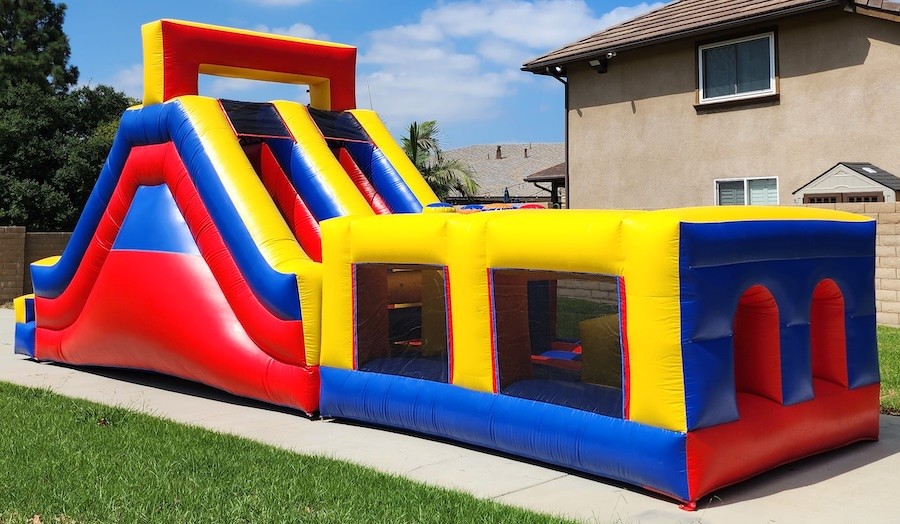
Standalone bounce houses tend to book steadily through the spring and summer birthday season, with a secondary bump around school field days in May and June. Obstacle courses show stronger demand from schools, churches, and corporate clients who plan larger events, and those clients often book further in advance. The school carnival and church festival segment is particularly strong for obstacle courses because event planners want a unit that handles mixed ages and higher throughput, which a single bounce house can't match.
In Colorado's mountain-adjacent markets, weather cancellations are a real factor. Wind events and afternoon thunderstorms in summer can interrupt outdoor events, so your rental agreement's weather policy matters. For fleet planning purposes, assume 5 to 10 percent of bookings may reschedule due to weather in a typical CO season. Obstacle courses, because they serve larger institutional clients who often reschedule rather than cancel outright, tend to have better revenue recovery after weather disruptions than bounce houses rented to individual families.
If you're targeting school carnival and fundraiser clients specifically, the inflatable rentals for OC school carnivals and fundraisers guide walks through how those events are structured and what clients expect from a rental vendor, which applies directly to how CO operators should pitch institutional clients.
Warranty Coverage and Vendor Support for Commercial Buyers
Warranty terms are where the difference between a reputable commercial manufacturer and a budget importer becomes very clear. For obstacle course inflatables, which take more mechanical stress per rental than bounce houses, warranty coverage on seams, blowers, and structural components is not a minor detail. It's a meaningful part of your total cost of ownership.
Reputable commercial manufacturers typically offer one to three years of warranty coverage on seams and stitching, with blower warranties running six months to one year. Some vendors offer extended coverage for an additional fee. Budget-tier manufacturers, particularly those selling through wholesale marketplaces without a dedicated support team, often provide 90-day warranties or warranties that exclude labor costs for repairs. When you're running a unit 30 to 40 weekends a year, a seam failure in month four with no warranty support means paying $200 to $500 out of pocket for a repair that a better vendor would have covered.
For Colorado operators, vendor support distance matters. A manufacturer based in the Southeast or Midwest can ship repair patches and replacement blowers within two to three business days via ground freight to Denver. A manufacturer based overseas may have a domestic distributor, or may not, and lead times on parts can stretch to two to four weeks. Ask specifically: where are repair parts warehoused, what is the typical turnaround on a warranty claim, and does the vendor have a phone support line for commercial accounts?
The Jump High FAQ covers common questions about unit care and vendor expectations from a rental operator's perspective. For fleet planning questions specific to your Colorado market, the Jump High contact page is the right place to start a conversation about sourcing, unit selection, and what operators in similar markets have found works well.
Obstacle course inflatables earn their higher price tag in the right market with the right client mix. The math works when you combine strong institutional demand, disciplined freight budgeting, proper storage, and a vendor who stands behind the unit after delivery. For CO operators building a fleet in 2026, the question isn't really whether obstacle courses outperform bounce houses. It's whether your local market and operational setup can support the booking volume that makes the investment pay off on a reasonable timeline.