
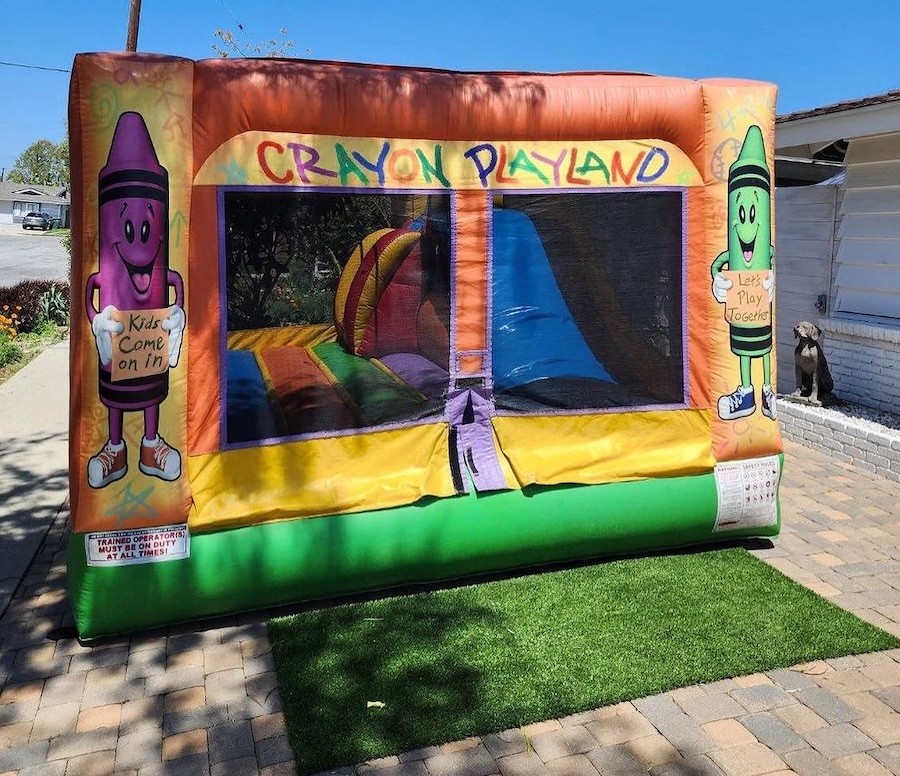
Bounce houses are one of the most reliable ways to keep kids entertained at a backyard birthday, but the question parents ask most often is a simple one: how many kids can actually be in there at once? The answer is more specific than most people expect, and getting it right makes the difference between a fun afternoon and an avoidable injury.
This guide gives you a practical framework based on unit size and weight limits so you can manage capacity confidently on the day of your party.
Why Bounce House Capacity Is About Weight, Not Just Headcount
Most parents think about capacity as a headcount. Six kids sounds reasonable for a standard bounce house, but that number alone does not tell the full story. Every bounce house has two limits set by the manufacturer: a maximum number of occupants and a maximum combined weight. Both limits matter, and the weight limit is often the one that gets overlooked.
Here is why that matters in practice. A group of six seven-year-olds weighing around 50 pounds each adds up to 300 pounds total, well within the limit for most medium units. But six ten-year-olds averaging 80 pounds each puts you at 480 pounds, which starts to push against the lower end of some unit limits. The headcount is the same. The risk profile is not.
Every rental unit should have a capacity label near the entrance or along an exterior seam. That label is the authoritative source for the specific unit you have rented, not a general estimate from a website. When Jump High Rentals delivers your unit, the label is right there on the inflatable so you do not have to guess.
The practical takeaway: before kids start bouncing, check the label, estimate the average weight of your group, and do a quick calculation. It takes about 30 seconds and it is the single most useful safety step you can take.
How Many Kids Fit by Unit Size
Unit size is the starting point for any capacity conversation. Here is how the numbers generally break down for residential and commercial inflatables:
Small units (approximately 10 by 10 feet) These are compact inflatables suited for younger children, typically ages three through seven. They generally accommodate four to six kids at a time with a combined weight limit in the range of 600 to 800 pounds. Small units work well for toddler-focused parties or yards with limited space.
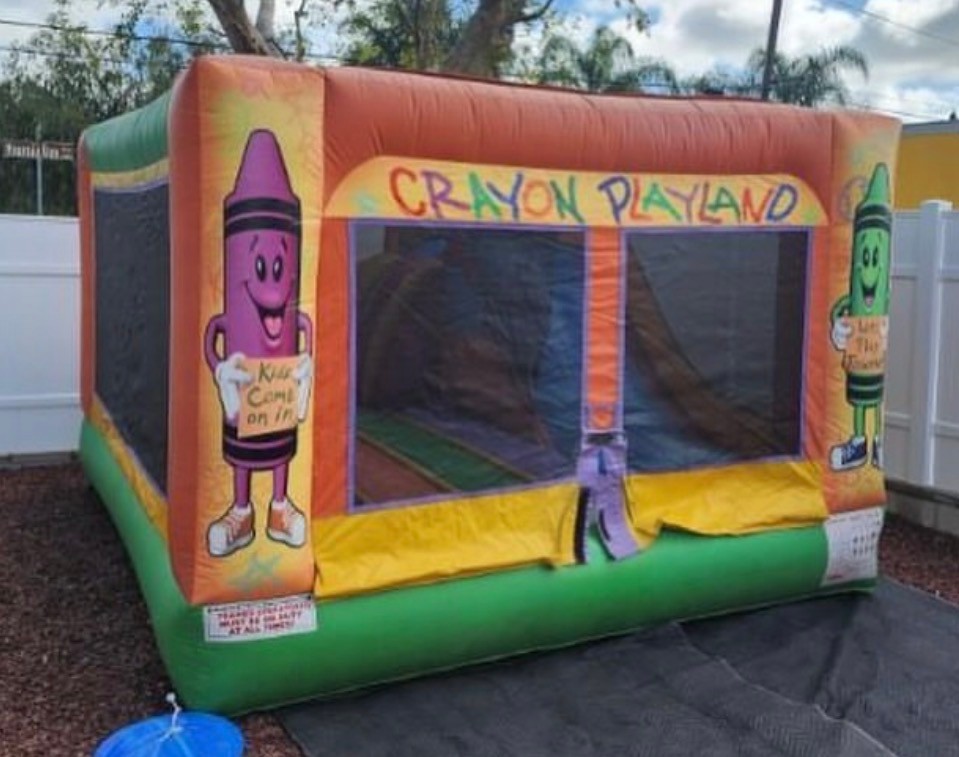
Medium units (approximately 13 by 13 feet) This is the most common size for backyard birthday parties in Orange County. Medium units typically handle six to eight kids at a time, with combined weight limits ranging from 800 to 1,000 pounds. They work for a wider age range, generally three through twelve, which makes them a flexible choice when your guest list includes kids of different ages.
Large units (approximately 15 by 15 feet and up) Larger inflatables support eight to ten kids at a time with combined weight limits from 1,000 to 1,500 pounds. These are well suited for bigger parties, school events, or community gatherings where more kids will be cycling through throughout the day.
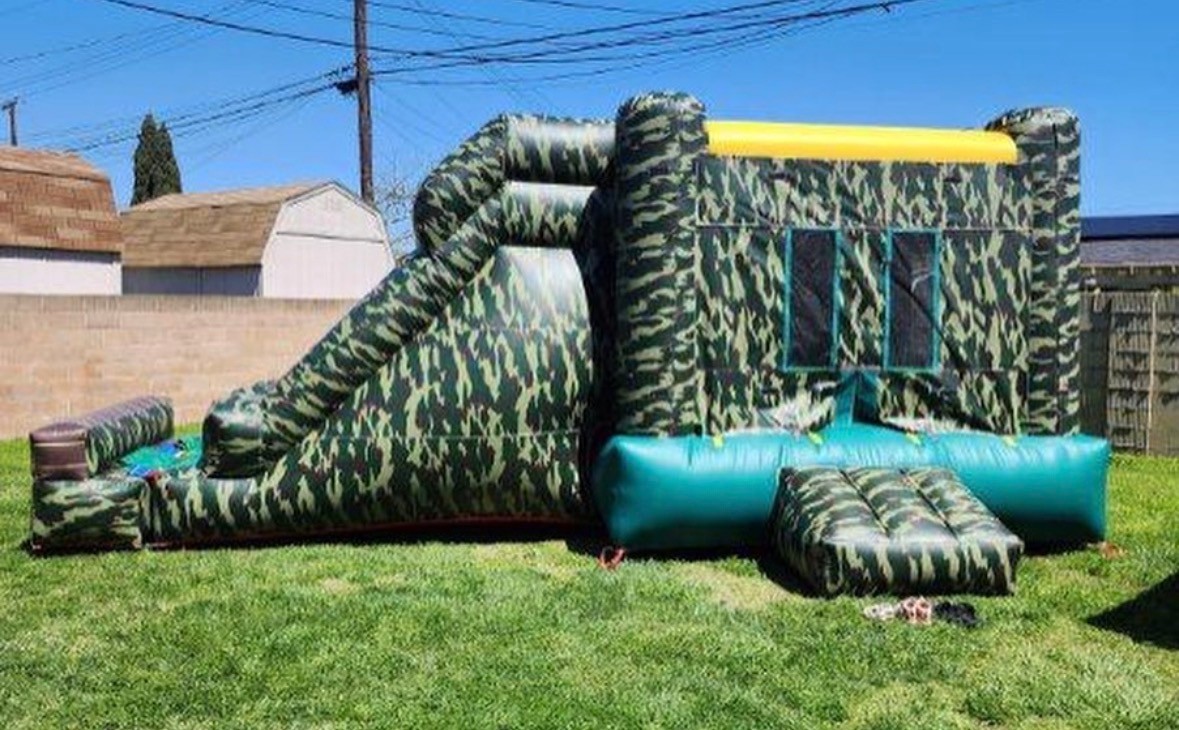
Combo units Combo inflatables include a bounce area plus features like a slide or climbing wall. The bounce area of a combo unit typically follows the same capacity guidelines as a medium unit, around six to eight kids, but the total weight limit varies by model. Always check the label for the specific combo you rent.
These ranges reflect general industry standards. The exact limits for your unit will be on the manufacturer label, and that number takes priority over any general estimate.
Teens and Adults Change the Math Entirely
Children are not the only ones who want to bounce, and this is where capacity math shifts significantly. Teens and adults weigh considerably more than younger kids, which means the weight limit fills up much faster even with fewer people inside.
As a general rule, a single teenager counts roughly the same as three or four younger children in terms of weight impact on the unit. One adult in a standard 13 by 13 unit can account for a substantial portion of the total weight allowance on their own.
For mixed-age parties, the safest approach is to run separate sessions. Let younger kids bounce together during one rotation, then allow older kids or teens to have their own time with a smaller group inside. This keeps the weight distribution manageable and also reduces the risk of larger kids accidentally landing on smaller ones, which is one of the most common causes of bounce house injuries.
If adults want to participate, check the weight limit on your specific unit before allowing it. Some larger commercial units are rated for adult use. Many residential-sized units are not. The label will tell you.
Practical Tips for Managing Capacity at Your Party
Knowing the limits is one thing. Enforcing them during an active birthday party with excited kids is another. These tips help you stay on top of capacity without turning into the fun police.
- Assign one adult as the dedicated bounce house monitor for the duration of the party. This person manages the entrance, counts kids in and out, and keeps the group rotating so everyone gets a turn.
- Group kids by age and size when possible. Running a toddler session before the older kids arrive prevents the size mismatch that leads to most collisions.
- Estimate the average weight of your group before the party starts. For a group of eight-year-olds, 65 to 70 pounds per child is a reasonable estimate. Multiply by your planned occupant count and compare it to the weight limit on the label.
- Post a short list of rules near the entrance. Simple reminders like no shoes, no flipping, and wait for the monitor to signal before entering go a long way when kids can read them themselves.
- Watch the weather. Wind above 15 to 20 miles per hour is a signal to pause use. Rain makes surfaces slippery. If conditions change, bring kids out and deflate until it is safe again.
- Keep the area around the unit clear. A 15-foot clearance zone around the inflatable gives kids a safe landing area if they exit unexpectedly and gives your setup crew room to anchor the unit properly.
None of these steps require special equipment. They just require one attentive adult and a little planning before guests arrive.
Choosing the Right Size When You Book in Orange County, CA
Picking the right unit before the party is the most effective way to avoid capacity problems on the day. The two questions that matter most are how many kids will be at your party and what ages they are.
For a backyard birthday with 10 to 15 kids ages five through ten, a medium 13 by 13 unit is usually the right fit. Kids will rotate in and out naturally, and the weight limit gives you comfortable headroom for the age group. If your guest list runs larger, say 20 or more kids, a large unit or a combo inflatable gives you more capacity and keeps lines shorter.
For school events, HOA gatherings, or church carnivals in Orange County, the calculus changes. These events often run for several hours with a continuous flow of kids rather than a fixed guest list. In those cases, a larger unit or multiple inflatables staged in rotation tends to work better than a single medium unit that gets overwhelmed.
Pricing in the Orange County market generally runs from about $159 to $200 per day for a standard jumper, $250 to $450 for combo units, and $400 and up for obstacle courses. If your event is at a public park in Orange County, plan to apply for a permit through OC Regional Parks or your city's parks department at least 14 to 30 days in advance. The OC Regional Parks fee is currently around $75, though fees can change, so confirm directly with the agency before your event.
When you reach out to Jump High Rentals, share your guest count, the ages of the kids attending, and your yard or venue dimensions. The team can match you to a unit that fits your space and your crowd, and every rental includes the capacity label right on the inflatable so you have the manufacturer's numbers in hand from the moment setup is complete. Reach out before your party date to check availability and get a recommendation that fits your specific situation.