
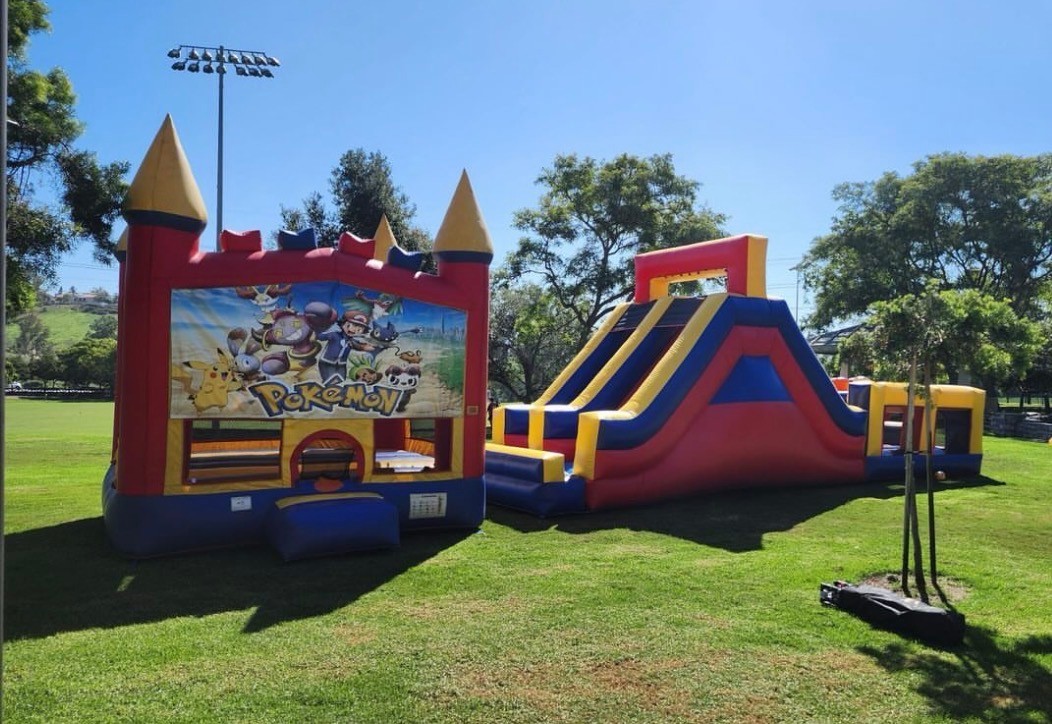
Booking an inflatable obstacle course is one of the most exciting upgrades you can make to a backyard birthday, school field day, or community event. But before you confirm a rental, there is one question that matters more than almost anything else: does your space actually fit the unit?
The answer is not as simple as matching the inflatable's listed dimensions to your yard. There is the size of the unit itself, and then there is the total space you need to run it safely. Those two numbers are never the same, and understanding the difference is what separates a smooth setup day from a stressful one.
This guide walks you through everything you need to measure before you book, from clearance zones and height requirements to access paths and California park permits.
Why the Unit Size and the Space You Need Are Two Different Numbers
When a rental company lists an obstacle course as 40 feet by 15 feet, that measurement describes the inflatable itself. It does not include the room your setup crew needs to anchor the unit, the safe entry and exit paths kids use during the event, or the buffer space that keeps guests from bumping into fences, trees, or walls.
Every inflatable obstacle course requires clearance on all four sides. That clearance serves a few critical purposes:
- Anchoring room: Stakes or sandbag weights need open ground around the perimeter to secure the unit properly.
- Safe entry and exit: Kids approaching the entrance or climbing out at the finish need a clear path that keeps them away from the sides of the inflatable.
- Crew access: The setup and breakdown team needs to move around the unit freely, especially when attaching the blower and checking anchor points.
- Obstacle prevention: Clearance keeps participants from making contact with hard surfaces nearby if they stumble near the edges.
For most standard obstacle courses, the industry guideline is 3 to 4 feet of clearance on all sides. Larger units, particularly those 50 feet or longer, often require 4 to 5 feet of clearance to meet safety expectations. That means a 40-by-15-foot course does not need a 40-by-15-foot space. It needs something closer to 50 feet by 25 feet once you account for the buffer on every side.
The practical takeaway: always plan for the total footprint, not just the unit dimensions listed in the product description.
A Quick Reference Guide to Obstacle Course Sizes and Clearance Zones
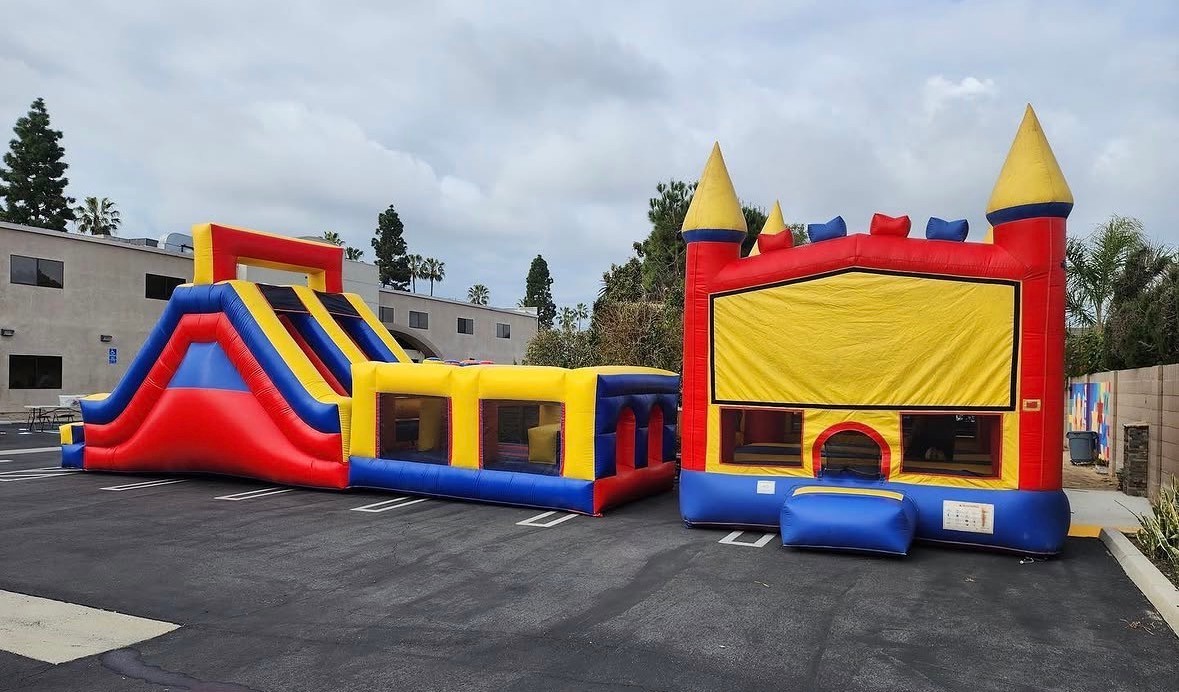
Different obstacle course sizes call for different total space requirements. Here is a straightforward reference based on standard industry clearance guidelines of 3 to 5 feet on all sides, depending on unit length.
| Actual Unit Size | Total Space Needed | Minimum Clearance |
|---|---|---|
| 25 ft × 11.5 ft | 30 ft × 14 ft | 3 feet |
| 40 ft × 15 ft | 50 ft × 25 ft | 3 to 4 feet |
| 50 ft × 20 ft | 64 ft × 24 ft (approx.) | 4 feet |
| 60 ft × 11 ft | 64 ft × 15 ft | 4 feet |
Larger inflatables, especially those used at school field days or HOA community events, may require 5 feet of clearance on the sides where guests enter and exit. When in doubt, give yourself more room rather than less. A tight fit on paper often becomes a real problem once the blower is running and the unit is fully inflated.
If you are planning an event in Orange County and are not sure which unit size fits your space, the team at Jump High Rentals can help you match your measurements to the right course before you commit to a booking.
Other Measurements to Check Before You Book
Total ground space is the most important measurement, but it is not the only one. Three other dimensions can affect whether a setup goes smoothly or hits an unexpected snag.
Height clearance. Obstacle courses are taller than they look in photos. Most standard units require at least 14 to 16 feet of vertical clearance from the ground to the lowest overhead obstacle. That means low-hanging tree branches, roof overhangs, patio covers, and utility lines all need to be accounted for. Measure from the ground up before assuming your backyard or venue is clear.
Access path width. The inflatable arrives rolled or folded on a cart or dolly. Your setup crew needs a clear, unobstructed path from the delivery vehicle to the setup spot. Measure the width of any gates, side yard passages, or doorways along that route. A single standard doorway is typically 36 inches wide, which may be tight for larger units. A double-door entry or a wide side gate makes the process much easier for everyone.
Power source distance. Every inflatable obstacle course runs on a continuous-duty blower that must stay plugged in throughout the event. Check how far your setup area is from the nearest outdoor electrical outlet. If the distance is significant, you may need a heavy-duty extension cord rated for the blower's power draw. Your rental company can advise on what is appropriate for the specific unit you choose.
Taking five minutes to measure all three of these factors before booking day can prevent delays, repositioning, or last-minute changes on the morning of your event.
Parks, Permits, and Public Spaces in CA
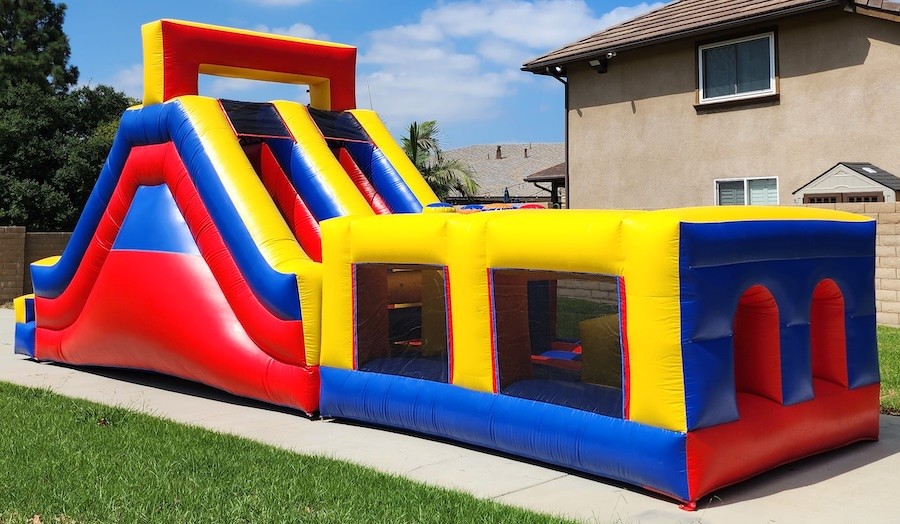
Many Orange County families and event planners choose parks, school grounds, or community center lawns for larger events. If that describes your setup location, there is an extra layer of planning to factor in.
Private backyard events generally do not require a permit for an inflatable rental, though rules can vary by city. If your event is entirely on private property and is not open to the public, you are usually in the clear. That said, it is worth a quick check with your local city office if you have any uncertainty.
Public parks and shared community spaces are a different story. Most California cities require a permit for commercial inflatable use in public parks. These permits typically cover health, safety, and liability compliance for the event. Permit timelines vary by city. Some municipalities ask for applications at least 10 days before the event, while others have longer review windows. Fees also vary widely, ranging from a nominal amount around $10 to higher costs depending on event size, location, and the specific city's fee schedule.
HOA and school events may have their own internal approval process on top of any city requirements. If you are coordinating a field day, carnival, or community celebration, check with your venue contact early. Waiting until the week before the event to start the permit process can put your timeline at risk.
Jump High Rentals works with schools, churches, and HOAs across Orange County regularly. While the team cannot provide legal or permit advice, they can share what information is typically needed and help you plan your rental around your event timeline.
How to Confirm Your Space Works Before Delivery Day
The best way to avoid surprises on setup day is to do your homework before you book. Here is a simple checklist to work through once you have a venue or backyard in mind.
- Measure the length and width of your available setup area, then subtract the clearance zone on all four sides to confirm the unit fits.
- Check vertical clearance from the ground up to 16 feet, looking for branches, overhangs, power lines, and covered patio structures.
- Walk the delivery path from the street or parking area to the setup spot and note any gates, steps, or narrow passages.
- Locate the nearest outdoor electrical outlet and estimate the distance to your setup area.
- If your event is in a public space, contact the relevant city or park department early to ask about permit requirements and timelines.
Once you have those measurements in hand, share them with Jump High Rentals. The team can confirm whether your space works for a specific unit, suggest a better-sized option if needed, and help you plan a setup that runs smoothly from the moment the truck arrives.
Reach out with your venue dimensions and event date, and let the team take the guesswork out of the planning process. A little measuring now means a lot more fun on the day that matters.