
Obstacle Course Inflatable Buying Guide
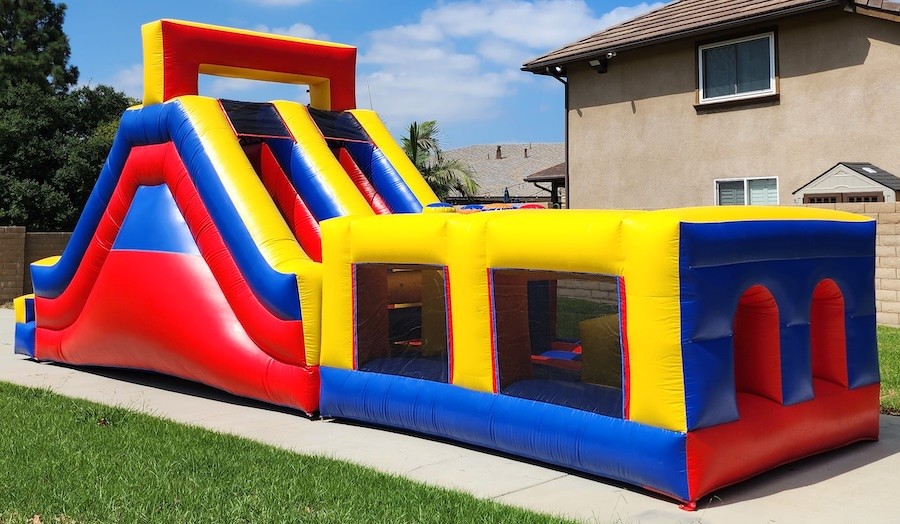
Buying a commercial obstacle course inflatable is one of the most consequential inventory decisions you will make as a rental operator. The unit you choose sets your price ceiling, determines which event types you can serve, and shapes your storage and logistics requirements for years. For Oregon-based fleet owners, the stakes are a little higher because freight distances, seasonal weather patterns, and the mix of suburban and rural event venues all factor into which unit actually earns its keep. This guide walks you through the specs, sourcing questions, and ROI math you need before you commit.
If you want to see what customers are actually booking on the rental side before you invest, the Jump High Rentals catalog gives you a real-world reference for demand patterns, unit types, and the features renters request most often.
What to Look for in a Commercial Obstacle Course Inflatable
The most important thing to understand upfront is that commercial-grade and residential-grade are not interchangeable labels. A commercial obstacle course inflatable is built to absorb repeated daily use, outdoor UV exposure, and the stress of frequent inflation and deflation cycles across an entire season.
Material weight and weave. Look for units built from 18-oz or heavier PVC-coated nylon or vinyl. Lighter materials (under 14 oz) are common in consumer units and will not hold up to the wear cycles a rental business demands. Stitching at seams and anchor points is where cheaper units fail first, so ask vendors for specifics on double-lock or quadruple-lock stitching at stress points.
ASTM compliance. ASTM International publishes standards for inflatable amusement devices (F2374 and related standards). Reputable commercial manufacturers design to these benchmarks. You are not required to cite these as legal requirements here, but asking a vendor whether their units are designed to ASTM specifications is a reasonable due-diligence question that separates serious manufacturers from importers selling on price alone.
Blower motor specs. A continuous-duty blower rated for commercial use is not optional. Look for UL-listed motors in the 1.5 to 2 HP range for a standard 40-to-60-foot obstacle course. Undersized blowers cause partial inflation under load, which is both a safety concern and a customer complaint waiting to happen.
Feature set and age range fit. Obstacle courses with pop-ups, crawl tunnels, climbing walls, and slide exits serve a wider age range than simple bounce chambers. Units that work for ages 5 through 14 book more consistently across school carnivals, church events, and birthday parties than those designed for a narrow age band. The obstacle course vs. bounce house guide on Jump High's site illustrates how customers think about this tradeoff when they are choosing a rental.
Freight, Delivery, and First-Day Setup in Oregon
Oregon operators face freight realities that buyers in Southern California or the Midwest do not. Most commercial inflatable manufacturers are located in the Southeast United States or source from overseas factories, which means your unit is traveling a significant distance before it reaches your warehouse.
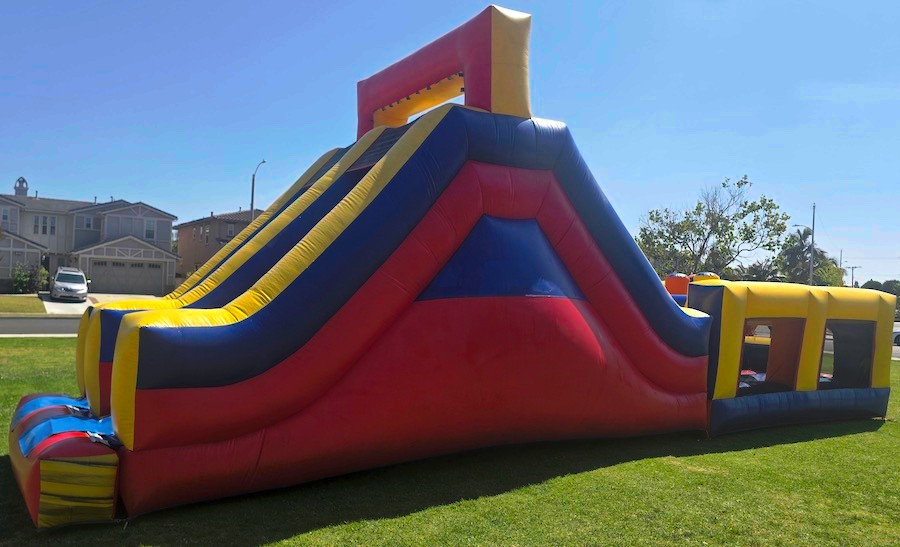
Freight cost ranges. Budget between $400 and $900 for standard LTL (less-than-truckload) freight from a domestic manufacturer to an Oregon address, depending on the unit's weight and your proximity to a major freight hub. Portland-area operators typically see lower freight costs than buyers in Eugene, Bend, or the coast. Always get a freight quote before finalizing your purchase order, and ask whether the manufacturer ships on a pallet with proper crating. Damage claims on improperly packed inflatables are a headache that delays your first booking season.
Inspection on arrival. When the freight carrier delivers your unit, inspect it before signing the delivery receipt. Unbox and unroll the inflatable in your warehouse or a large open space within 24 hours of delivery. Document any seam damage, blower issues, or missing hardware with photos before you contact the manufacturer. Most warranty claims require documented proof that damage was not caused by use.
First inflation and setup. Plan a full test inflation before your first booking. Inflate the unit completely, walk through every tunnel and obstacle section, and run the blower for at least 30 minutes under load. Check anchor point D-rings, stake loops, and any attachment hardware. Oregon's variable terrain, from grass parks in the Willamette Valley to gravel lots at rural fairgrounds, means you will want to verify your staking kit is complete and appropriate for multiple surface types.
Unit Specs, Sizing, and Booking Fit for OR Events
Sizing is where many first-time fleet buyers make an expensive mistake. Bigger is not always better when your primary market is backyard birthdays and school field days rather than county fairs.
Footprint planning. A standard commercial obstacle course runs 40 to 60 feet in length and 12 to 15 feet wide, with a setup footprint that adds 5 to 8 feet on each end for safe entry and exit zones. That puts your total required space at roughly 50 to 75 feet long. Before you buy, map your most common booking venues. If most of your OR customers are hosting in suburban backyards or school multipurpose areas, a 55-foot unit will fit more locations than a 65-foot unit, which directly affects your booking rate. The space requirements guide at Jump High covers this math in detail.
Weight capacity and throughput. Commercial obstacle courses are typically rated for 6 to 10 participants at a time, with a weight limit per participant (often 200 to 250 lbs). Higher throughput matters at school carnivals and community events where you may have 100 or more kids cycling through over a few hours. A dual-lane obstacle course doubles throughput and commands a higher rental rate, but it also requires more storage space and a larger vehicle for transport.
Seasonal demand in Oregon. Oregon's rental season peaks from late May through September, with a secondary bump around school carnival season in April and May. Wet spring weather can push outdoor events indoors or cause cancellations, so factor a realistic number of bookable weekends into your revenue projections. A unit that sits unused through a rainy April still costs you in storage and depreciation.
ROI vs. Renting: When Buying Makes Sense for OR Operators
The core ROI question is straightforward: how many rentals does the unit need to complete before it pays for itself, and can your market realistically support that booking volume?
Purchase price range. A commercial-grade obstacle course inflatable from a reputable domestic manufacturer typically runs $3,000 to $8,000 depending on size, features, and material weight. Add freight, a commercial blower if not included, a staking kit, and a storage bag, and your all-in cost is closer to $4,000 to $9,500.
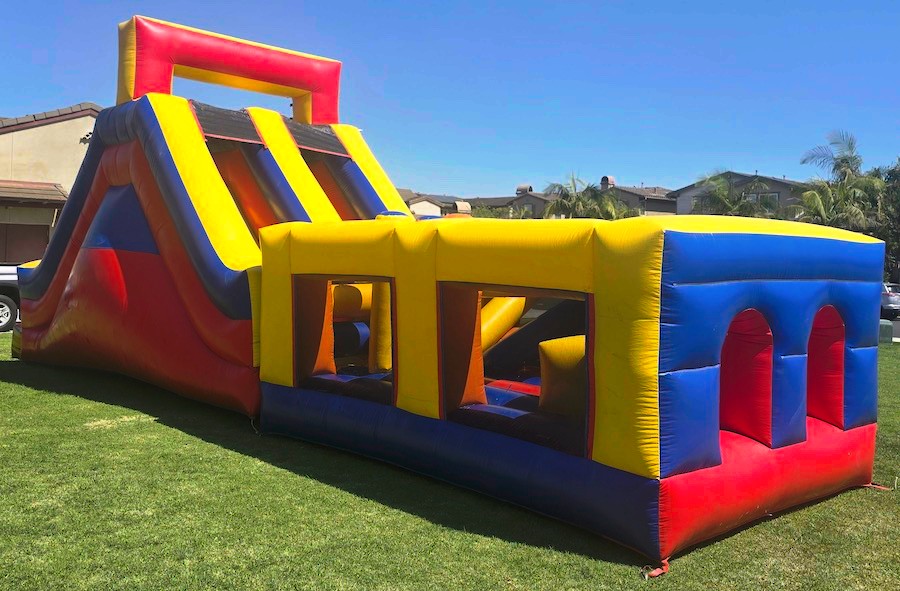
Revenue per rental. Obstacle course rentals in Oregon markets typically price between $250 and $500 per day depending on unit size, delivery distance, and local competition. At $350 per rental and a $6,000 all-in cost, you need roughly 17 paid bookings to break even on the unit before accounting for ongoing maintenance, transport, and storage costs.
Realistic booking volume. A well-marketed obstacle course in a mid-size Oregon market (Portland suburbs, Salem, Eugene) can realistically book 30 to 50 times per season in its first full year if you have delivery logistics in place and a working marketing channel. That puts your payback period at one to two seasons, which is a reasonable return for a durable asset with a 5-to-8-year commercial lifespan.
When renting beats buying. If you are testing demand in a new market, or if your storage situation is not yet set up for a large unit, renting from an established operator to fulfill overflow bookings is a lower-risk path. The obstacle course rental guides at Jump High show you what customers expect from a well-run rental operation, which is useful context even if your market is Oregon rather than Orange County.
Warranties, Vendor Support, and Long-Term Inventory Planning
A commercial inflatable is a depreciating asset, and the vendor relationship you choose affects how long that asset stays in service.
What a real warranty covers. Look for manufacturers offering at least a one-year warranty on seams and stitching, and a separate warranty on the blower motor (typically 90 days to one year). Ask specifically what the claims process looks like: do you ship the unit back, or does the manufacturer send a repair kit and instructions? For an Oregon operator, a vendor who supports field repairs with patch kits and video documentation is more practical than one who requires you to freight the unit back to Georgia for service.
Vendor reputation and parts availability. Buy from manufacturers who have been in business for at least five years and who can supply replacement blowers, patch materials, and anchor hardware. A unit that sits out of rotation for three weeks waiting for a replacement blower costs you bookings. Ask vendors for references from other rental operators before you commit.
Depreciation and replacement planning. A well-maintained commercial obstacle course depreciates over five to eight years of regular use. Build a replacement reserve into your pricing from the start. Setting aside $50 to $100 per rental toward a replacement fund keeps you from facing a large capital outlay when the unit reaches end of life.
Scaling your fleet. Once your first obstacle course is consistently booked, the case for a second unit becomes much easier to make. A second unit lets you serve simultaneous events, reduces the risk of a single-unit failure canceling a booking, and opens the door to multi-unit packages for school carnivals and HOA events. The multi-unit inflatable rental guide at Jump High illustrates how operators structure larger event packages, which translates directly to how you should think about fleet expansion.
If you are building or scaling a rental fleet and want to see how customer demand actually shapes inflatable inventory decisions, the Jump High Rentals guides library is a practical reference for understanding what renters book, what questions they ask, and what features drive repeat business. Use it as a demand-side lens while you work through the supply-side decisions this guide covers.