
Obstacle Course Footprints and Sizing Tiers for WA Operators
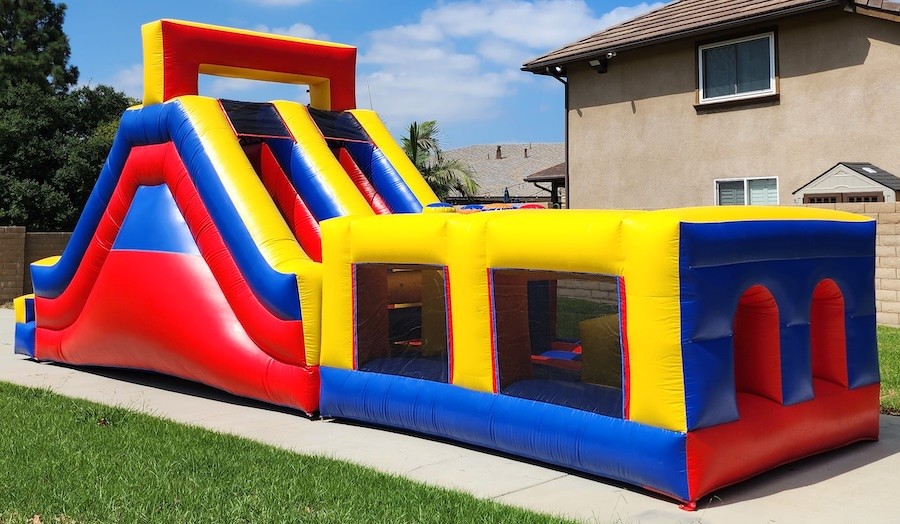
Obstacle course inflatables come in a wider range of footprints than most new buyers expect, and choosing the wrong tier for your WA market can create real problems at delivery, storage, and event setup. The three practical sizing tiers most commercial buyers work within are compact (roughly 30 to 40 feet long), mid-size (50 to 65 feet), and large-format (70 feet and beyond). Each tier carries different implications for the venues you can serve, the truck capacity you need, and how quickly you can turn a unit around between events.
Compact units in the 30 to 40 foot range are the most versatile entry point for WA operators working suburban neighborhoods, school fields, and HOA common areas. They typically measure 12 to 15 feet wide and 10 to 12 feet tall at the highest arch, which keeps them manageable for a two-person crew. Mid-size units at 50 to 65 feet open up school carnival and corporate picnic bookings, but they require a clear run of space that many residential backyards simply cannot offer. Before you commit to a mid-size unit, map out the typical venues in your service territory and confirm that at least 70 percent of your likely bookings can physically accommodate the footprint, including the buffer zone around all four sides.
Large-format courses at 70 feet and above are generally best suited for operators who already have a stable base of school district, municipal park, and large corporate clients. The revenue per booking is higher, but so is the risk of a wasted delivery day when a venue turns out to be too small. If you are just building your WA fleet, one compact and one mid-size unit will cover far more booking scenarios than a single large-format course at roughly the same capital outlay.
One practical note on width: many operators focus on length when comparing units, but width is often the limiting factor in real venues. A 15-foot-wide unit needs clear access through a gate or side yard that is at least 4 feet wide for rolling transport, and the setup footprint should be measured with stakes and tie-down lines included, not just the inflated shell.
PVC Grade, Blower Specs, and Build Quality Benchmarks
The material and blower specifications on a commercial obstacle course determine how long the unit earns revenue before it needs significant repair or replacement. For commercial rental use, you want a minimum of 18-ounce PVC on the main body panels, with 21-ounce or heavier material on high-wear zones like entry tunnels, pop-up obstacles, and climbing walls. Lighter material (14-ounce or below) is common on units priced for residential or light-commercial use, and it will show seam stress and surface abrasion much faster under daily rental conditions.
Blower requirements scale with unit volume. A compact 30 to 40 foot course typically runs on a single 1.5 HP continuous-duty blower drawing around 1,100 to 1,400 watts. Mid-size units often require a 2 HP blower or dual-blower configuration, pulling 1,800 to 2,200 watts total. Large-format courses can demand 3 HP or more. This matters for WA operators because many park venues and school sites have limited electrical access, and showing up with a unit that needs 20-amp dedicated service when only a standard 15-amp outlet is available will end your event before it starts. Always confirm the venue's electrical panel capacity before booking, and review our power and extension cord guide for OC inflatables for a practical reference on cord gauge and run length, even if your market is WA rather than Southern California.
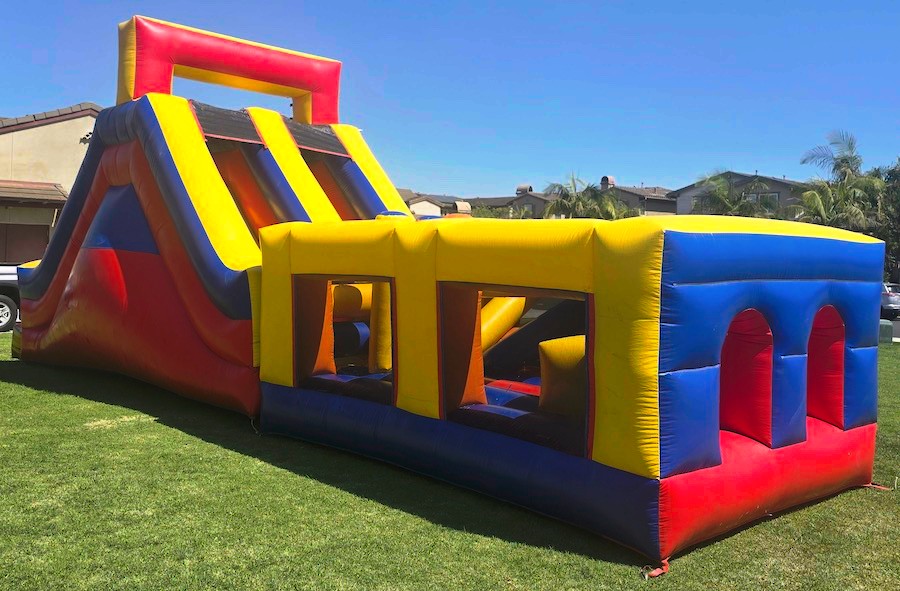
Stitching quality is the other benchmark that separates commercial-grade units from budget alternatives. Look for triple-stitched seams with heat-welded reinforcement at stress points, particularly at the base of climbing walls and around blower intake ports. Reputable manufacturers will provide a seam warranty separate from the general unit warranty, which is a useful signal that they stand behind the construction. Ask vendors for a sample stitch cross-section or a close-up photo of seam construction before placing a large order.
Freight, Delivery, and Storage Realities for WA Buyers
Buying a commercial obstacle course in WA means thinking about freight before you think about the unit itself. Most commercial inflatables ship from manufacturers in China or from domestic distributors on the East Coast or in the Midwest, and a mid-size obstacle course packed into its transport bag will typically weigh 300 to 500 pounds with the blower included. Freight costs for a single unit from a domestic distributor to a WA delivery address have ranged from roughly $400 to $900 in recent years, depending on the carrier, the destination zip code, and whether you are receiving at a commercial dock or a residential address. Residential delivery adds a lift-gate fee and often a longer lead time.
If you are ordering multiple units, consolidating shipments into a single LTL (less-than-truckload) pallet or crate will almost always reduce your per-unit freight cost. Ask your vendor specifically whether they can palletize multiple units together and whether they have a preferred carrier relationship that covers WA destinations. Some manufacturers offer free freight promotions on orders above a certain dollar threshold, but read the fine print carefully: "free freight" sometimes means the cost is built into the unit price rather than genuinely waived.
Storage is a cost that first-time buyers consistently underestimate. A compact obstacle course in its transport bag occupies roughly 4 by 4 by 3 feet of floor space, but you also need room to unroll and inspect the unit between rentals, which means a practical working footprint of at least 20 by 15 feet per unit. Mid-size and large-format courses need proportionally more. In WA markets where warehouse space in suburban corridors can run $1.00 to $1.50 per square foot per month, a two-unit obstacle course inventory can add $300 to $600 in monthly overhead before you account for blower storage, repair supplies, and cleaning equipment. Factor that into your break-even calculation from day one.
ROI Comparison: Obstacle Courses vs Standard Bounce Houses
Obstacle courses command meaningfully higher rental rates than standard bounce houses in most WA markets, which makes the ROI math attractive at first glance. A compact bounce house might rent for $200 to $300 per day in a competitive suburban market, while a mid-size obstacle course in the same market often books for $400 to $650 per day. The revenue premium is real, but so are the additional costs that come with the larger, more complex unit.
Setup and breakdown time for a mid-size obstacle course typically runs 45 to 75 minutes per event, compared to 20 to 35 minutes for a standard bounce house. If you are running multiple deliveries in a day, that time difference compounds quickly and may require a second crew member, which adds labor cost to every booking. The higher rental rate needs to absorb that labor difference before it translates into better margin.
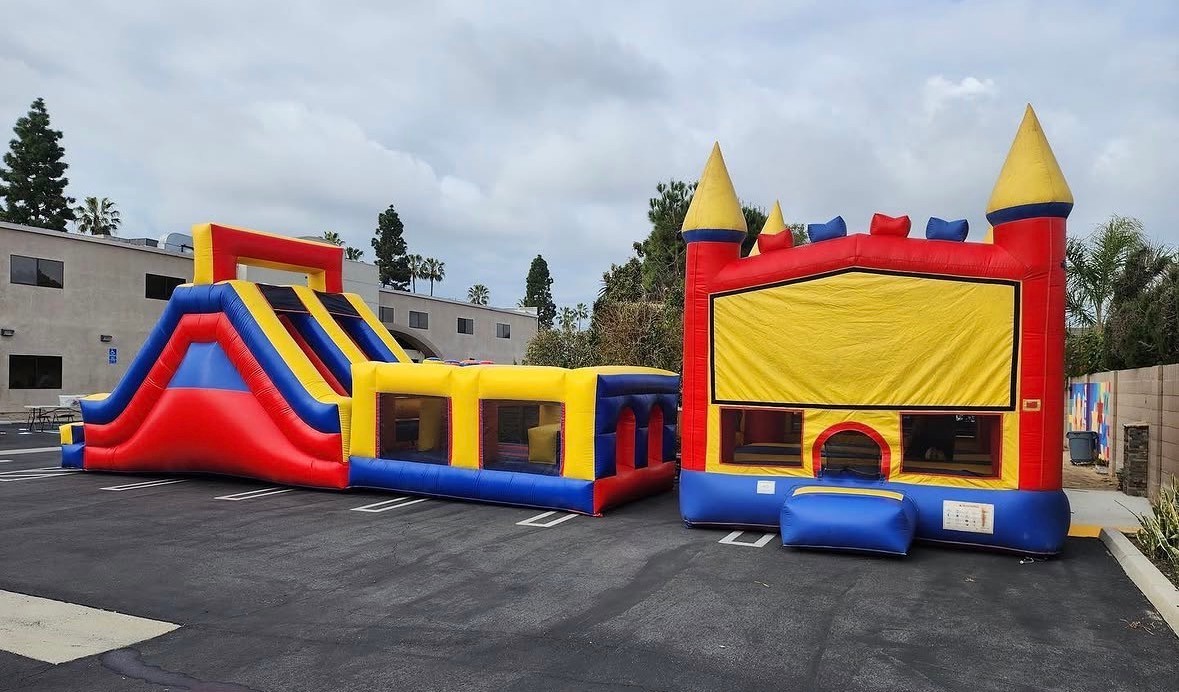
On the booking frequency side, obstacle courses tend to attract a broader age range than standard bounce houses, which helps fill your calendar. Teens and adults who would skip a bounce house will often engage with an obstacle course, making these units particularly strong for school field days, corporate picnics, and community events. Our guide on inflatable rentals for school field days in CA walks through how these bookings typically structure, and the event-type logic applies equally well to WA school and community markets.
A reasonable break-even target for a mid-size obstacle course purchased at $4,000 to $7,000 (unit plus freight) is 12 to 20 rental days at market rate, assuming you are not financing the purchase. Operators who finance should add interest cost to the denominator and recalculate. Units that book consistently on weekends and pick up at least two to three weekday school or corporate events per month typically hit break-even within one full rental season in active WA markets.
For a direct comparison of how obstacle course ROI stacks up against combo bounce house units, the obstacle course vs bounce house guide offers a useful framework, even though it is written from a renter's perspective rather than a buyer's.
Warranties, Vendor Support, and Sourcing for WA Fleet Buyers
A commercial inflatable is only as reliable as the vendor standing behind it, and warranty terms vary enough across the market that they deserve careful comparison before you sign a purchase order. The baseline expectation for a commercial-grade obstacle course is a one-year warranty on the blower motor and a two-year warranty on seams and structural panels. Some manufacturers offer three-year seam warranties on their premium lines, which is worth paying a modest premium for if you plan to run the unit hard.
More important than the warranty length is the vendor's repair support process. Ask specifically whether they stock replacement panels and blower parts for your unit model, how long a typical warranty claim takes to resolve, and whether they can ship repair patches directly to you for field repairs. A vendor who can get you a replacement blower motor within five business days is worth more in practice than one offering a longer warranty with a six-week turnaround on parts.
For WA buyers sourcing units, the main channels are direct-from-manufacturer (typically Chinese factories with US-based sales reps), domestic distributors who maintain US warehouse stock, and the secondary market of used commercial units from operators who are retiring or upgrading inventory. Direct-from-manufacturer orders offer the lowest unit cost but carry longer lead times (often 8 to 14 weeks for custom orders) and more variable quality control. Domestic distributors charge more per unit but can ship within days and typically offer better post-sale support. The secondary market can deliver strong value on well-maintained units, but always request a full inspection report and photos of seams, blower ports, and climbing surfaces before purchasing sight unseen.
If you want a real-world reference for how obstacle courses perform in an active rental market before committing to a purchase, browsing Jump High's rental catalog gives you a practical look at the unit types and sizes that move consistently in the Southern California market. OC and WA markets share similar suburban event demographics, so the booking patterns translate reasonably well. For specific sourcing questions or to discuss how obstacle course inventory has performed in our market, reach out to Jump High directly and we are happy to share what we have learned from operating these units at scale.