
How Event Seasons Should Drive Your Inflatable Purchase Calendar
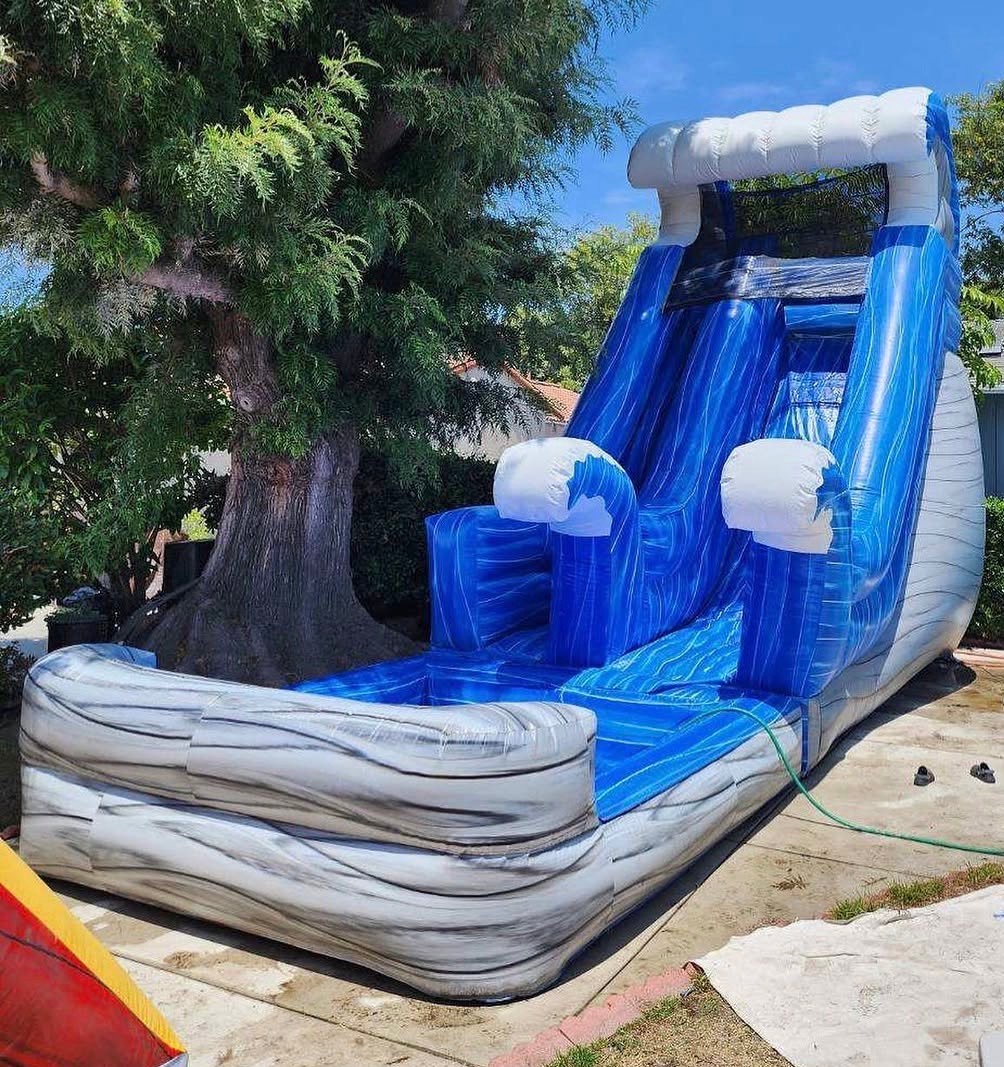
If you're building or scaling a commercial inflatable fleet, the single most expensive mistake you can make is buying reactively. Ordering a waterslide in June because summer bookings are already rolling in means you'll receive that unit in August, miss the peak window entirely, and spend the fall wondering why your ROI looks soft. Seasonal demand doesn't wait for your purchase order to clear customs.
The Orange County rental market offers a useful benchmark here. In a high-density, year-round-warm market like OC, operators run bounce houses and combo units through birthday season (March through May), waterslides and obstacle courses through summer (June through September), and dry inflatables through fall festivals, school carnivals, and holiday events (October through December). That cycle is compressed compared to lower-density markets, but the underlying logic applies everywhere: each unit type has a peak window, and your purchase calendar needs to work backward from that window by at least 90 to 120 days.
For operators in Wyoming and similar lower-density, weather-constrained markets, the calendar looks different but the discipline is the same. Wyoming's outdoor event season runs roughly late May through early September, with a shorter but intense concentration of demand around summer holidays, county fairs, school field days, and community festivals. That means your buying window for summer inventory is January through March at the latest. If you're sourcing direct from a manufacturer overseas, you may need to push that to November or December of the prior year to account for production queues and freight transit.
The practical move is to map your confirmed or projected bookings by month, identify which unit types are driving the most revenue per event day, and then work backward to a purchase date that gives you at least 60 days of buffer after expected delivery. That buffer covers inspection, inflation testing, minor repairs, and any permit or insurance documentation your market requires before a unit goes live. You can find a useful frame for thinking about unit performance in real-world rental conditions by browsing Jump High's rental fleet, which reflects the kinds of units that actually move in a high-volume OC market.
Matching Unit Types and Specs to Peak Demand Windows
Not all inflatables perform equally across seasons, and buying the wrong unit for your primary demand window is a fast way to create idle inventory. The general rule is that wet units (waterslides, combo slides with splash pools) are summer-specific, while dry bounce houses, obstacle courses, and combo units without water features carry demand across a much wider calendar window.
For a Wyoming operator, a 20-foot waterslide is a strong summer asset but a storage liability from October through April. If your storage footprint is limited, prioritize units that earn revenue across at least two seasons. A 15-by-15 commercial bounce house with a themed exterior (princess, sports, superhero) books for birthdays year-round, including indoor gym or church hall events during winter months. An obstacle course in the 30-to-50-foot range books for school field days, church carnivals, and corporate picnics across spring, summer, and fall. These are your anchor units. Waterslides and large combo slides are your seasonal amplifiers.
On specs, commercial-grade units matter more than most new operators expect. A unit rated for continuous commercial use (look for 18-ounce or heavier vinyl, reinforced stitching at stress points, and a blower motor rated for 8-plus hours of continuous operation) will outlast a residential-grade unit by several seasons under regular rental use. The cost difference at purchase is real, but the depreciation math favors commercial grade when you're running a unit 20 or more times per season. Warranties vary significantly by manufacturer and sourcing channel, so read the fine print on what's covered, for how long, and whether warranty service requires shipping the unit back to the manufacturer.
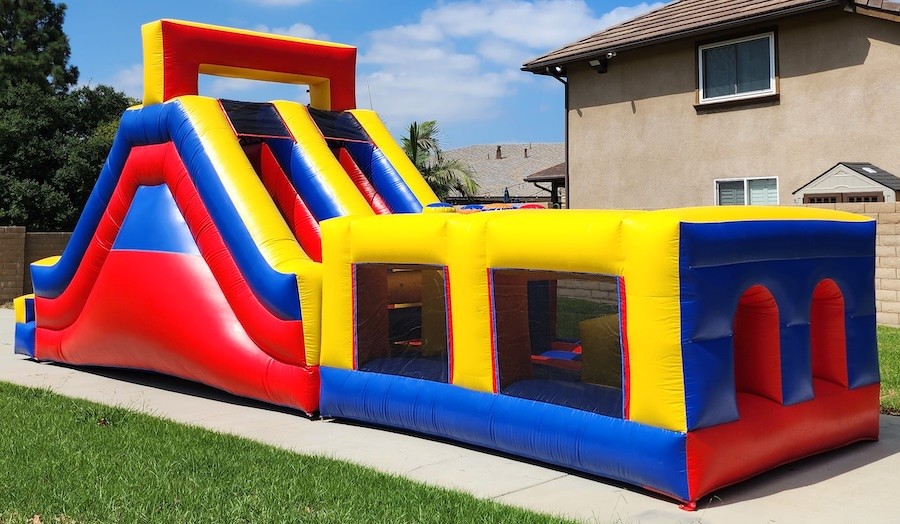
For operators planning a mixed fleet, a reasonable starting configuration for a lower-density market like Wyoming might include two to three anchor bounce houses in different size tiers, one obstacle course, one combo unit with a slide, and one waterslide for summer peak. That mix covers the widest range of event types without overcommitting to storage or maintenance overhead before you've established your booking volume. As you scale, add units that mirror your highest-revenue event types first.
Freight Lead Times and Delivery Planning for Commercial Inflatables
Freight is where a lot of new fleet operators get surprised. Commercial inflatables sourced directly from manufacturers (most of whom are based in China, with a smaller number in the US) carry lead times that vary by production queue, shipping method, and port congestion. In 2026, standard ocean freight from Chinese manufacturers to a US West Coast port runs roughly 25 to 35 days in transit, plus 5 to 15 days for customs clearance and inland freight to your location. Add 2 to 6 weeks for production if you're ordering custom colors, sizes, or branding. Total lead time from order to delivery can run 60 to 90 days under normal conditions, and longer during peak manufacturing periods (typically January through March, when manufacturers are filling spring and summer orders globally).
For Wyoming operators, inland freight from a West Coast port adds another variable. Less-than-truckload (LTL) shipping from Los Angeles or Long Beach to Wyoming cities like Cheyenne, Casper, or Jackson runs 3 to 7 business days and adds cost that varies by weight and freight class. Commercial inflatables are bulky but not exceptionally heavy, so dimensional weight pricing can affect your freight bill. Get freight quotes before finalizing your order, and ask your manufacturer whether they ship on pallets or in crates. Crated units are better protected but add to dimensional weight. For more context on how crating affects freight costs for inflatables shipped to California, the inflatable freight delivery guide in the Jump High guides section covers real-world considerations that translate to other western markets.
Domestic manufacturers (primarily based in the Southeast and Midwest US) offer shorter lead times, typically 2 to 4 weeks, and simpler freight logistics. Their units tend to carry higher base prices but lower total landed cost when you factor in freight, duties, and the risk of production delays. For operators who need inventory quickly or want to minimize supply chain complexity, domestic sourcing is worth the price premium.
One practical step: build a freight calendar alongside your purchase calendar. Note your target delivery date, subtract your freight lead time, subtract your production lead time, and that's your order date. Add a two-week buffer for delays. If that order date has already passed for your target season, either adjust your launch timeline or look for domestic suppliers who can ship faster.
Storage, Depreciation, and Off-Season Inventory Decisions
Storage is a cost that most fleet planning spreadsheets undercount. A commercial bounce house rolls up to roughly 4 by 4 by 4 feet when packed, but a large obstacle course or waterslide can take up 8 by 8 by 6 feet or more. If you're running a five-unit fleet in Wyoming with a six-month off-season, you're looking at meaningful storage overhead for units that aren't generating revenue from October through April.
The options are self-storage (flexible, scalable, but ongoing cost), dedicated warehouse space (higher fixed cost, better for larger fleets), and home storage in a garage or outbuilding (low cost, but limited by space and climate control). In Wyoming's climate, temperature swings matter. PVC vinyl inflatables can become brittle if stored in extreme cold for extended periods. Most manufacturers recommend storing units at temperatures above freezing and away from direct sunlight. If your storage space isn't climate-controlled, inspect units carefully at the start of each season before they go out on a rental.
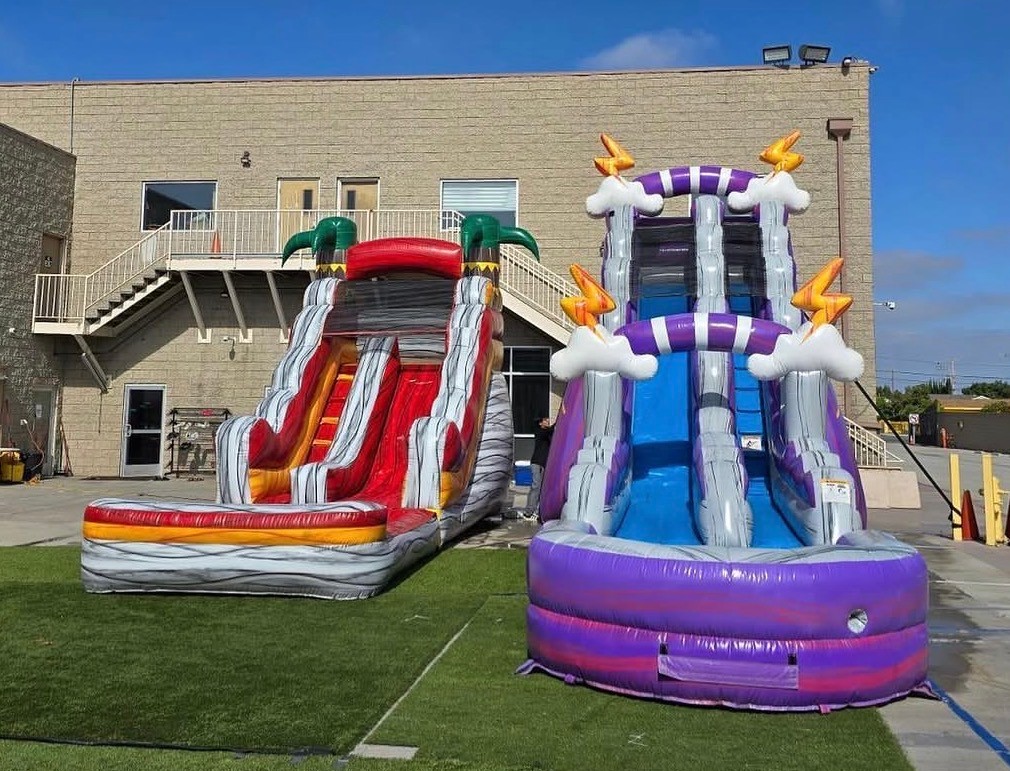
Depreciation is the other side of the storage equation. Commercial inflatables depreciate over time based on use cycles, UV exposure, and maintenance quality. A well-maintained commercial unit in a moderate-use market (say, 30 to 50 rental days per year) can realistically last 5 to 8 seasons before requiring significant repair or replacement. In a high-volume market like OC, that same unit might see 80 to 120 rental days per year and depreciate proportionally faster. For Wyoming operators with a shorter season, lower annual use cycles mean slower physical depreciation, but you're also spreading your purchase cost over fewer revenue-generating days per year. That math reinforces the case for buying commercial-grade units: the higher upfront cost amortizes better over a longer useful life.
Off-season is also the right time to evaluate which units to retire, repair, or replace. A unit that's showing seam stress, fading vinyl, or blower motor issues at the end of a season is a liability if it goes into storage without attention. Address repairs before storage, not after, so you're ready to deploy at the start of the next season without scrambling. The Jump High guides section covers maintenance and cleaning practices that apply equally to rental operators and fleet owners.
Sourcing Strategy: Wholesale vs. Direct Manufacturer for Fleet Buyers
The sourcing decision for commercial inflatables comes down to three channels: direct from overseas manufacturer, domestic manufacturer, and wholesale or distributor. Each has trade-offs that matter differently depending on your fleet size, lead time tolerance, and customization needs.
Direct overseas sourcing (primarily from manufacturers in Guangzhou and surrounding areas in China) offers the lowest per-unit cost and the widest range of unit styles and sizes. The trade-offs are longer lead times, more complex logistics, higher minimum order quantities on some custom work, and warranty service that can be difficult to execute from a distance. For a fleet operator placing a multi-unit order and willing to plan 90-plus days ahead, direct sourcing is often the most cost-effective path. Ask manufacturers for references from US-based operators, request material spec sheets, and confirm warranty terms in writing before ordering.
Domestic manufacturers offer faster delivery, simpler warranty service, and units built to US safety standards. Their catalogs are typically smaller than overseas manufacturers, and per-unit prices are higher. For operators who need one or two units quickly, or who want the assurance of domestic warranty support, the premium is often justified. Look for manufacturers who are members of the ASTM International standards community, as ASTM F2374 and related standards cover inflatable amusement device safety and give you a baseline for evaluating unit quality.
Wholesale distributors sit between these two channels. They buy in volume from manufacturers and resell to operators at a markup over direct pricing but below retail. Lead times are shorter than direct overseas sourcing because distributors carry inventory. The trade-off is less customization flexibility and a narrower selection. For a new operator who wants to start with proven unit types without the complexity of direct importing, a reputable distributor is a reasonable starting point.
Whichever channel you use, get clarity on three things before you commit: what the warranty covers and for how long, who handles warranty claims and how, and what the return or replacement process looks like if a unit arrives damaged. These details matter more than the per-unit price when you're running a rental business that depends on equipment being ready when a booking is confirmed.
For a closer look at the kinds of units that perform well in real-world rental conditions across Orange County, the Jump High rentals page is a practical reference. And if you're working through fleet planning questions specific to your market, the Jump High contact page is a good place to start a conversation about what's working in high-volume OC operations.