
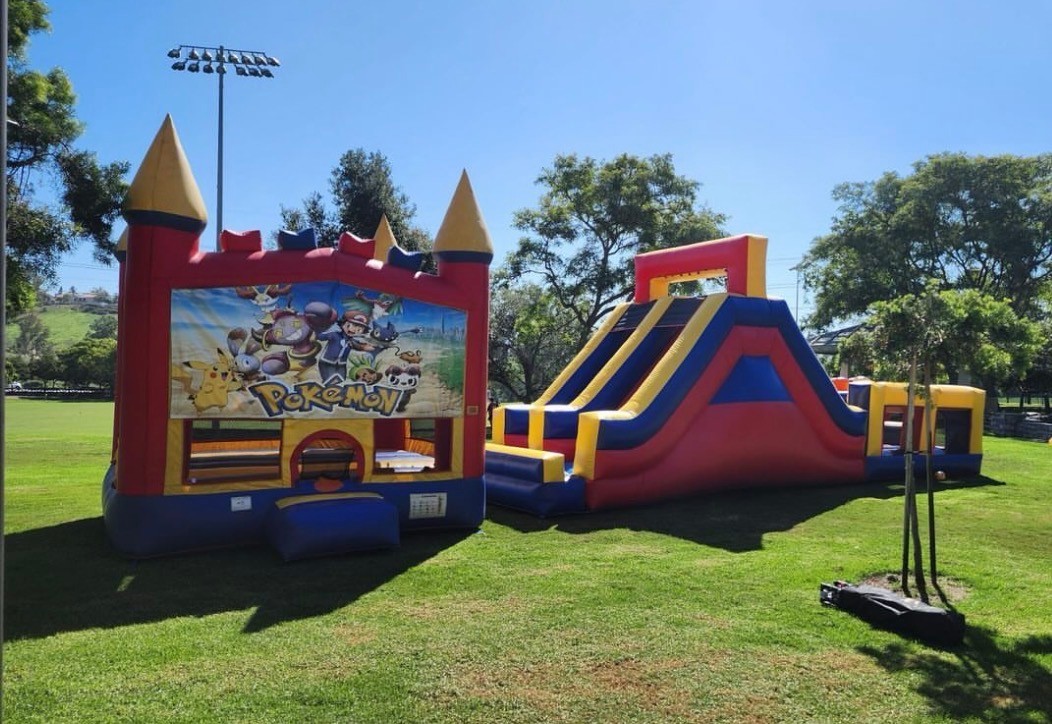
Choosing where to place a bounce house in your backyard sounds simple until you're standing in your yard the morning of the party, looking back and forth between the lawn and the patio. Most Orange County backyards offer both options, and parents often assume one is automatically better than the other. The truth is that both surfaces can work well when they are prepared correctly, and both can cause problems when they are not.
This guide walks you through what each surface actually requires, what to watch for in a typical OC backyard, and how to make a confident decision before your Jump High Rentals delivery arrives.
Why Surface Choice Matters for Inflatable Safety
The surface under a bounce house does more than just hold the unit in place. It affects how the inflatable is anchored, how stable it stays during use, and how safe the surrounding area is for kids getting on and off.
Inflatables are large, air-filled structures that shift slightly as kids jump and move inside. A unit that is not anchored properly, or that sits on an uneven or slippery surface, can move out of position during the rental window. That movement creates risk at the entry and exit points, and it can put stress on the inflatable itself.
Two factors matter more than the surface material alone. The first is whether the ground is level. A flat, even area is important on both grass and concrete. Sloped setups are not recommended because they increase instability and raise the chance of injury. The second factor is whether the anchoring method matches the surface. Grass allows for stakes driven into the soil, while concrete and hardscape require weight-based anchoring such as sandbags. Using the wrong method for the surface, or skipping anchoring entirely, is where most setup problems begin.
Understanding these basics before your delivery helps you choose the right spot and communicate clearly with your rental team.
Setting Up on Grass: What Makes It Work and What to Watch For
Grass is usually the most straightforward surface for an inflatable setup in an OC backyard. Stakes can be driven directly into the soil to create a firm hold, and the softer ground provides a more forgiving landing zone around the unit's perimeter.
That said, not every lawn is ready for a bounce house without some preparation. Here is what to check before your delivery window:
- Level ground: Walk the area and look for low spots, ruts, or slopes. Even a gentle grade can affect how the inflatable sits and how stable it feels during use.
- Hidden hazards: Sprinkler heads, rocks, twigs, and tree roots can puncture the inflatable floor or create trip hazards near the entrance. Clear the area completely before setup.
- Moisture and mud: Southern California lawns are often watered on a schedule, and wet or muddy grass can reduce stake holding strength and make the ground around the inflatable slippery. If your irrigation ran the night before, let the lawn dry before setup.
- Pet waste and debris: A quick yard check before delivery is always worth the few minutes it takes.
- Overhead clearance: Low tree branches, utility lines, and roof overhangs need to be at least a few feet above the top of the inflatable. Check vertical clearance, not just the footprint.
When the lawn is clean, level, and dry, grass is typically the easiest surface to work with. Stakes go in quickly, the unit sits flat, and the soft ground around it is gentler on kids who step off the side.
Setting Up on Concrete, Pavers, or Hardscape in OC
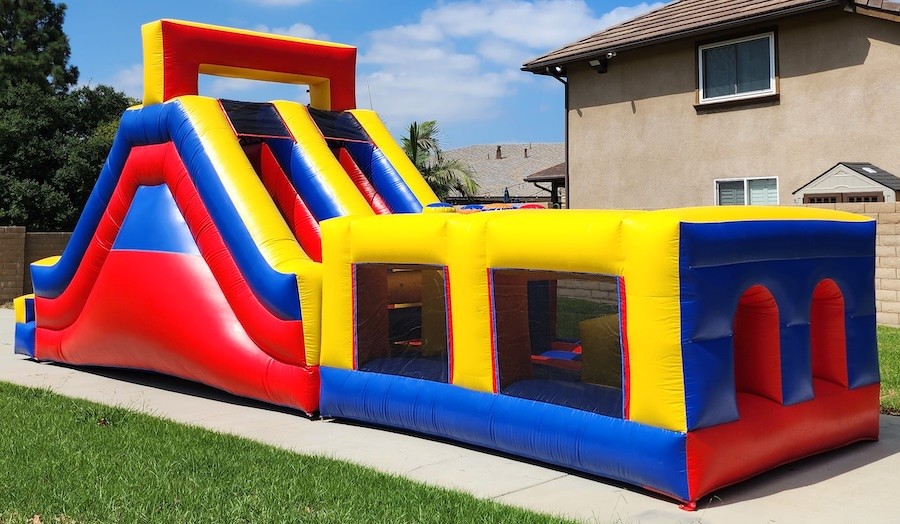
Concrete and pavers are not off-limits for bounce house rentals. Many OC homes have driveways, side yards, or patio areas that work perfectly well as setup surfaces, especially when the lawn is too small, too sloped, or too uneven to use.
The key difference is anchoring. Because stakes cannot go into a hard surface, the inflatable is secured with sandbags or similar ballast weights placed at the anchor points. This method is reliable when done correctly, but it requires that the weights are heavy enough and positioned properly for the size of the unit.
A few things to keep in mind for hardscape setups:
Hard surfaces are less forgiving underfoot. Kids jumping and then stepping off onto concrete face a harder landing than they would on grass. Keeping the area around the entrance clear and making sure kids exit carefully matters more on a hard surface.
Concrete can be slippery if the inflatable shifts even slightly. A unit that is not fully weighted can creep during use, which is why proper ballast placement is important. Your rental team will assess the anchoring needs based on the unit size and the surface.
Protective material is sometimes placed under anchor weights to prevent scuffing or surface damage, particularly on decorative pavers or stamped concrete. If you have a finished hardscape surface you want to protect, mention that when you book.
Driveways in particular tend to be level and open, which makes them a practical choice when the backyard lawn is not suitable. Just confirm there is enough clearance from the garage door, fencing, and any vehicles that need to move during the party.
How to Pick the Right Surface for Your Backyard
Most OC families do not need to overthink this decision. A few straightforward questions will point you in the right direction.
Start with the lawn. Is it open, flat, and large enough for the unit plus a few feet of clearance on all sides? If yes, and the grass is in reasonable condition, the lawn is usually the better choice. Staking into soil is a more direct anchoring method, and the softer surface is more comfortable for kids.
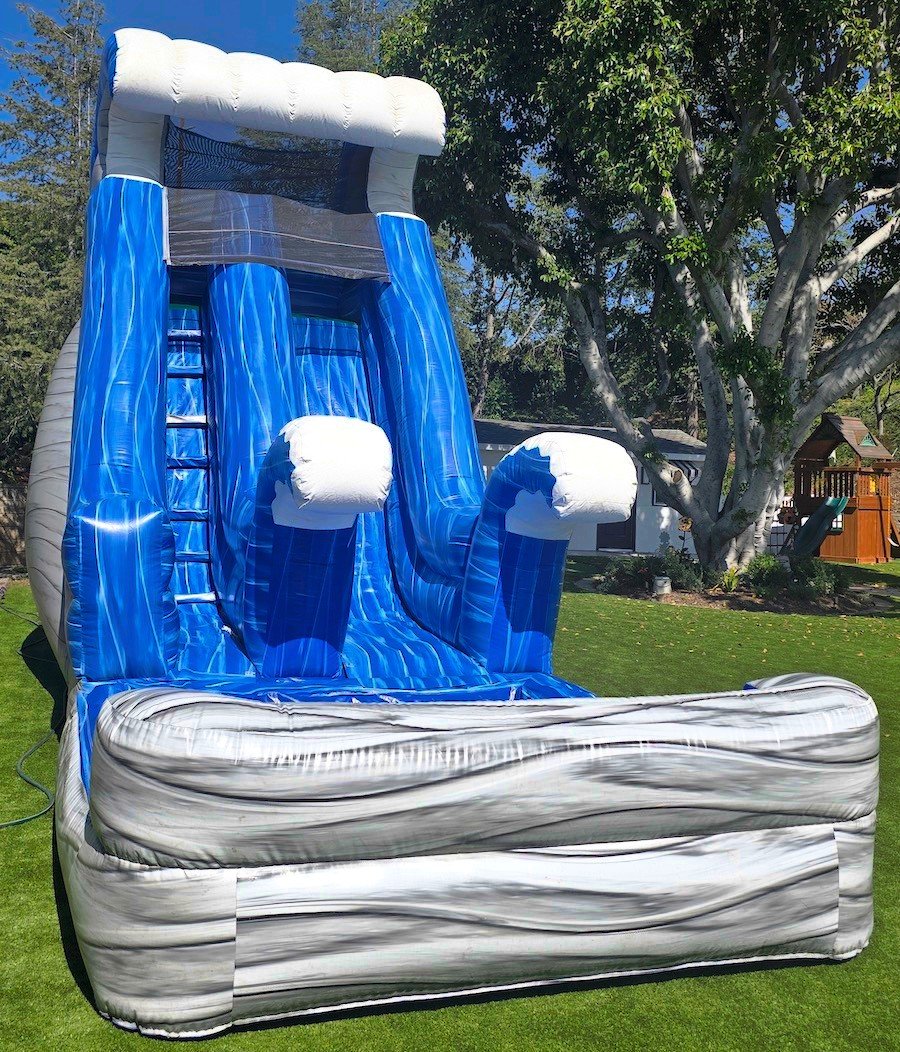
If the lawn has problems, look at your hardscape options. A level driveway or patio that is large enough for the unit and its clearance zone can work just as well with the right anchoring setup.
The questions worth asking yourself before booking are simple. Is the area flat and open? Is it grass or hardscape? Are there sprinkler heads, rocks, or low branches nearby? Is there enough room for the inflatable, the anchor points, and a clear path for kids to enter and exit? Will the surface stay dry and stable during the rental window?
If you can answer those questions confidently, you are ready to choose your setup location.
Questions to Ask Before Your Jump High Rentals Delivery
Before your delivery day, a quick conversation with the Jump High Rentals team can save a lot of guesswork. When you describe your yard, include the surface type (grass, concrete, pavers, or a mix), the approximate dimensions of the open area, and any potential obstacles like trees, fences, or sloped sections.
This helps the team confirm the right anchoring approach for your surface, whether that means stakes for a lawn setup or sandbags for a patio or driveway. It also helps with unit placement so the entrance faces the right direction and kids have a clear, safe path on and off the inflatable.
A few details that are especially useful to share:
Whether your lawn was recently watered or is likely to be wet on the day of the party, any decorative hardscape surfaces you want to protect from scuffing, whether your driveway or patio has a slight slope, and the approximate height of any overhead obstacles like trees or roof lines.
The goal is to arrive with the right equipment for your specific setup so the installation goes smoothly and the unit stays safe and stable throughout the event. Jump High Rentals serves families across Orange County and handles a wide range of backyard setups, from small patios in older neighborhoods to large open lawns in newer communities. Describing your space in advance makes the whole process easier for everyone.
If you are not sure which surface will work better for your yard, reach out before you book. The team can walk through your options and help you make the call that fits your space, your guest count, and the unit you have in mind.