
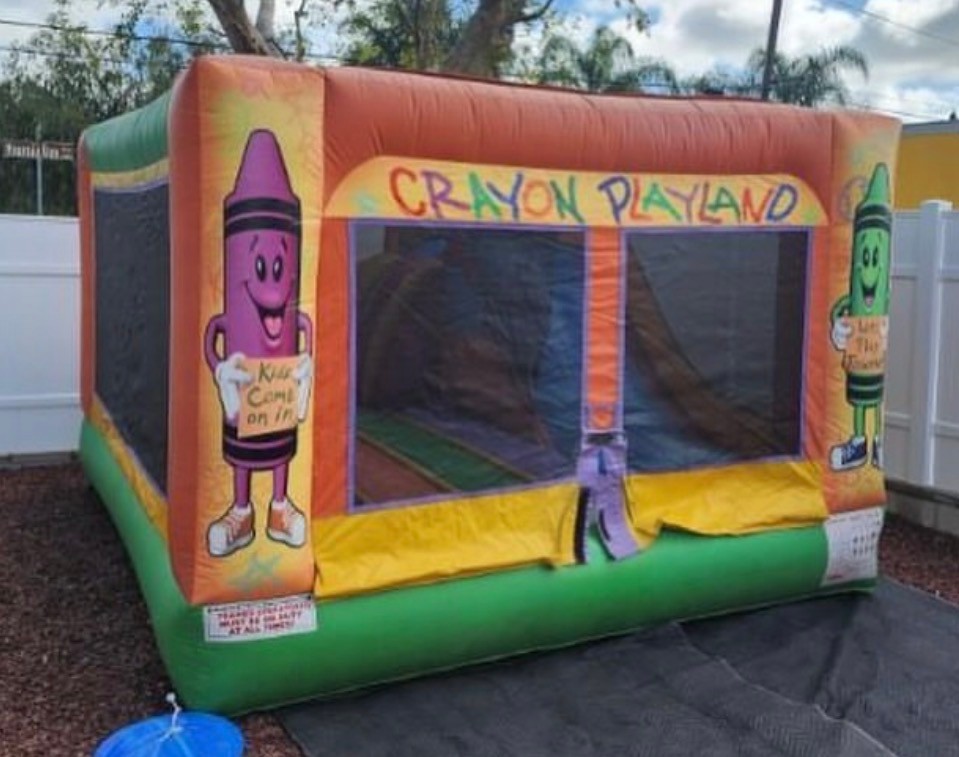
Every backyard birthday in Orange County follows a familiar rhythm. The inflatable goes up, the kids run toward it, and the adults drift toward the snack table. It feels fine because the bounce house looks sturdy, colorful, and fun. But the inflatable itself is not the safety feature. The adult watching it is.
This guide is for parent hosts and event planners who want supervision to be a real, assigned job rather than a vague assumption. Whether you are hosting twelve kids in a Yorba Linda backyard or coordinating a church field day in Anaheim, the same practical principles apply.
Why Active Supervision Is the Real Safety Feature
A bounce house, waterslide, or obstacle course is designed to be fun and durable. It is not designed to enforce rules, stop roughhousing, or notice when a smaller child gets knocked over near the entrance. That part is entirely up to the adult on duty.
Active supervision means one adult stands near the inflatable entrance, watches riders continuously, and steps in before a situation escalates. It is different from passive presence, which is what happens when adults are nearby but focused on conversation, phones, or other tasks. Passive presence feels like supervision but leaves a real gap between what is happening inside the inflatable and what any adult actually sees.
For Orange County families, this distinction matters because backyard parties often involve mixed crowds: cousins of different ages, neighborhood kids, school friends, and younger siblings who wander over. The more varied the group, the more important it is to have eyes on the inflatable at all times rather than checking in periodically.
The clearest way to think about it: assign supervision the same way you assign someone to manage the grill or watch the pool. It is a specific role, not a shared assumption.
How Many Kids at Once and How to Group Them
Overcrowding is one of the most common causes of bumps and falls inside inflatables. When too many children bounce at the same time, the floor becomes unpredictable and smaller kids lose their footing. Keeping the count manageable is one of the simplest things a host can do.
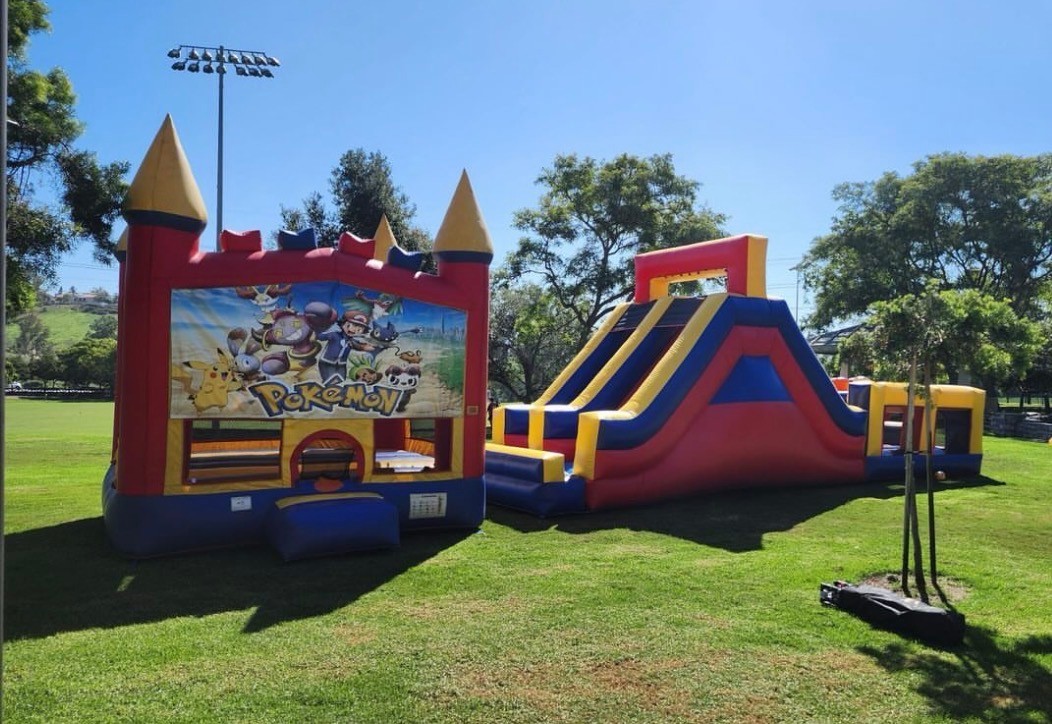
A few practical guidelines for Orange County parties:
- Follow the capacity listed on the inflatable or communicated by your rental company at delivery. Jump High Rentals walks customers through capacity expectations when the unit is set up, so ask if you are unsure.
- Group children by similar size and age when possible. A seven-year-old and a three-year-old bouncing together creates a real size mismatch, even if both are well-behaved.
- For larger groups, use timed turns. Five to ten minute rotations keep the count low and give every child a fair chance without a pile-up at the entrance.
- If younger children (roughly five and under) are joining the party, consider giving them a dedicated session without older or larger kids in the unit at the same time.
Some pediatric guidance takes a stricter position, recommending that children under six avoid bounce houses entirely and that only one child bounce at a time. That standard is more conservative than most rental-company checklists, but it is worth knowing as a reference point, especially if your guest list skews very young. When in doubt, smaller groups and closer supervision are always the safer choice.
Rules to Set Before Anyone Steps Inside
The best time to explain the rules is before the first child enters, not after the first collision. A quick thirty-second announcement from the supervising adult sets the tone for the whole event and gives kids a clear picture of what is expected.
Cover these basics before play begins:
- No shoes inside the inflatable
- No glasses, jewelry, or hard accessories
- No flipping, wrestling, or intentional collisions
- No climbing on walls, netting, or the exterior of the unit
- No entry if the inflatable looks soft, underinflated, or unstable
Keep the language simple and direct. Kids respond well to clear expectations, especially when an adult they recognize delivers them with confidence. If you are hosting a large group, consider posting a short rules list near the entrance so parents and older kids can reference it throughout the event.
For school events, church festivals, and HOA gatherings, it helps to brief any parent volunteers on the same rules before guests arrive. Consistency matters. If one adult allows flipping and another does not, children will test the boundary every time the supervisor rotates.
When to Pause or Stop Play Entirely
Knowing when to call a break is just as important as knowing the rules. There are situations where the right call is to clear the inflatable immediately, even if the kids protest.
Stop play and clear the unit when:
- Wind picks up noticeably or the inflatable begins to shift or lean
- Rain starts, making surfaces slippery
- The blower loses power or the unit begins to deflate
- A child is injured or visibly upset inside
- Roughhousing escalates despite verbal reminders
- The supervising adult needs to step away and no replacement is in place
In Southern California, afternoon wind is a real consideration during spring and early summer. If your party runs into the late afternoon and conditions change, follow the guidance from your rental company. Jump High Rentals provides clear instructions at setup about weather thresholds, and those instructions are the right reference point for your specific unit and location.
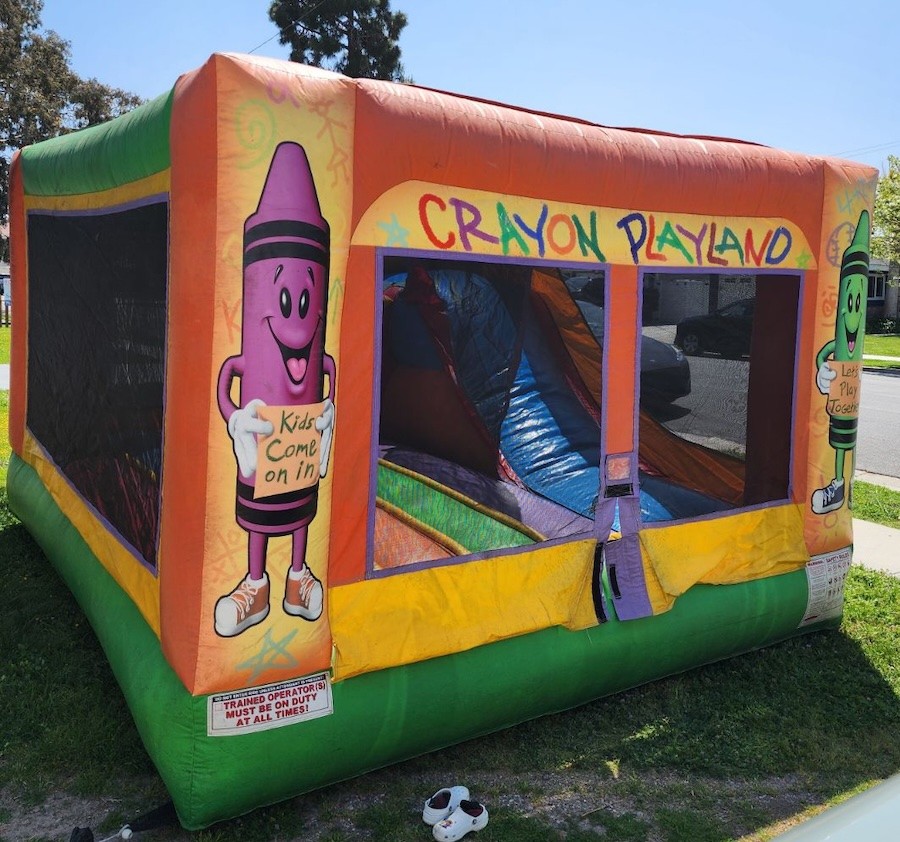
Pausing play is not an overreaction. It is the kind of decision that keeps a fun afternoon from turning into an avoidable situation. Kids can take a water break, grab a snack, and return when conditions are right.
Assigning the Supervisor Role at Larger OC Events
Backyard birthdays with a dozen kids are manageable with one attentive adult. School field days, church carnivals, and HOA summer events are a different scale entirely, and the supervision plan needs to match.
For larger events, the key shift is moving from informal watching to a clearly assigned role. That means:
- Designating one adult per inflatable, not one adult for the general area
- Briefing that person on capacity limits, rules, and stop conditions before the event opens
- Rotating supervisors on a schedule so no one loses focus after a long stretch
- Making sure every supervisor knows who to contact if a situation needs escalation
Assuming that parents in the crowd will self-monitor is a common gap in event planning. In practice, parents at community events are often socializing, managing younger siblings, or simply unaware of what is happening inside the inflatable. A designated supervisor removes that ambiguity entirely.
If your event includes a permit for a public Orange County park, check whether the venue has added any specific supervision or staffing requirements for inflatables. Park policies can vary by location and are worth confirming before your delivery date.
Ready to Plan Your OC Party?
Jump High Rentals serves families, schools, churches, and HOAs across Orange County with clean, well-maintained inflatables and a delivery team that walks you through setup, capacity, and safety expectations on the spot. When you book with Jump High Rentals, you are not just reserving equipment. You are getting a team that wants your event to go smoothly from the first bounce to pickup.
Call or book online to check availability for your date. The team is happy to answer questions about unit sizing, setup requirements, and what to expect on delivery day.