
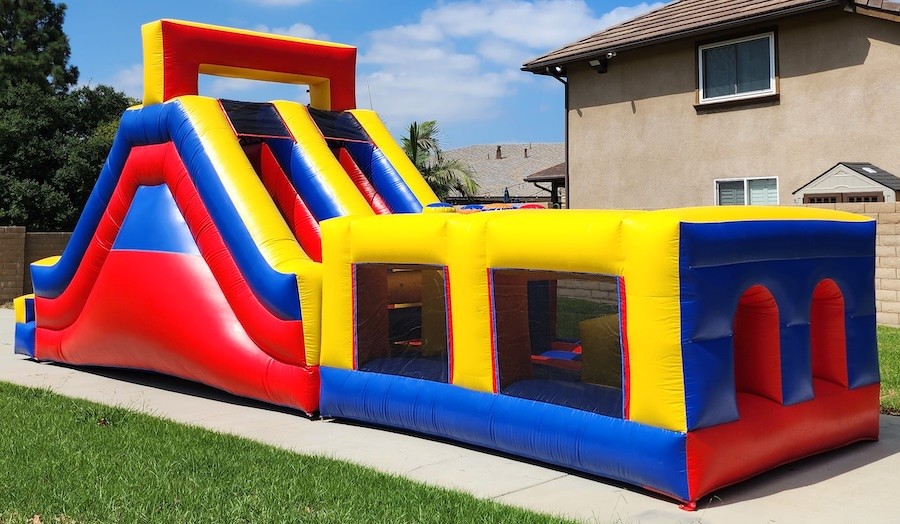
Planning a church carnival in Orange County takes a lot of moving parts, and inflatables are often the centerpiece that kids (and parents) remember most. Whether your event is a fall festival, a spring fundraiser, or a summer family night, getting the inflatable side of things right means checking a few key details before you ever confirm a booking.
This checklist is built for church volunteers, ministry coordinators, and committee leads who want to feel confident going into event day. Work through each section before you call your rental company, and you will have the information you need to choose the right unit, prepare your venue, and keep the day running smoothly.
Confirm Your Space Before You Book
The most common planning mistake is assuming that any open patch of grass or pavement is automatically ready for an inflatable. In practice, the setup area needs to meet a few specific conditions before a unit can go up safely.
Start by measuring the area where you plan to place the inflatable. Most standard bounce houses need a footprint of roughly 15 by 15 feet at minimum, and larger combo units or obstacle courses can require significantly more. Beyond the inflatable itself, you need additional clearance around the entrance and exit points so kids can move in and out without crowding. If you are setting up in a church parking lot, a lawn area, or a multipurpose field, walk the space and measure it before booking rather than estimating by eye.
A few questions to answer before you finalize your venue layout:
- Is the ground flat and free of rocks, roots, or sharp debris?
- Is there enough clearance around the inflatable for kids to enter and exit safely?
- Is the area shaded, or will the inflatable be in direct sun for most of the event?
- Is there enough room for a waiting line that does not spill into a walkway or parking area?
- Can a delivery truck reach the setup location without crossing landscaping or tight gates?
That last point matters more than most organizers expect. Rental companies need vehicle access to unload and transport the inflatable to the setup spot. If your church has a narrow side gate or a courtyard that requires carrying equipment a long distance, let your rental company know in advance so they can plan accordingly.
Power, Outlets, and Setup Requirements
Inflatables run on electric blowers, which means power access is a non-negotiable part of the setup. Before you book, confirm that your venue has the right electrical setup for the unit you want.
Most inflatables require a dedicated 20-amp circuit. Larger units, or events with multiple inflatables running at the same time, may need two or three separate outlets. Plugging a blower into an overloaded circuit or a shared power strip is not a safe workaround, so it is worth checking your venue's electrical panel or asking your facilities team about available circuits before your event.
Distance to the outlet also matters. If the nearest outlet is more than 25 feet from your setup area, notify your rental company when you book. Jump High Rentals can bring the right extension equipment when they know ahead of time, but a last-minute surprise on event day can create delays.
A few power-related items to confirm before booking:
- Where is the nearest outdoor outlet, and how many amps does it support?
- Is the outlet within 25 feet of the planned setup area, or will an extension cord be needed?
- Are there other high-draw appliances (food equipment, speakers, lighting) sharing the same circuit?
- Does your church have a facilities coordinator or custodian who can confirm the electrical setup?
Getting these answers early prevents one of the most common event-day headaches. A blower that trips a breaker mid-event is frustrating for everyone, especially when a line of kids is waiting to jump.
Match the Inflatable to Your Crowd and Age Groups
Church carnivals almost always serve a wide range of ages, from toddlers to teenagers and sometimes adults who want to join in. Choosing a single inflatable that works for everyone is rarely the right approach. Instead, think about your crowd in segments and choose attractions that fit each group.
For younger children (roughly ages 2 to 6), a standard bounce house with low walls, a simple entrance, and no steep slides is usually the best fit. These units give little ones a safe space to jump and play without the intimidation of larger equipment.
For older kids (ages 7 to 12), combo units that include a bounce area and a slide tend to be a big hit. Inflatable obstacle courses are also popular with this age group because they add a competitive element that keeps kids engaged longer.
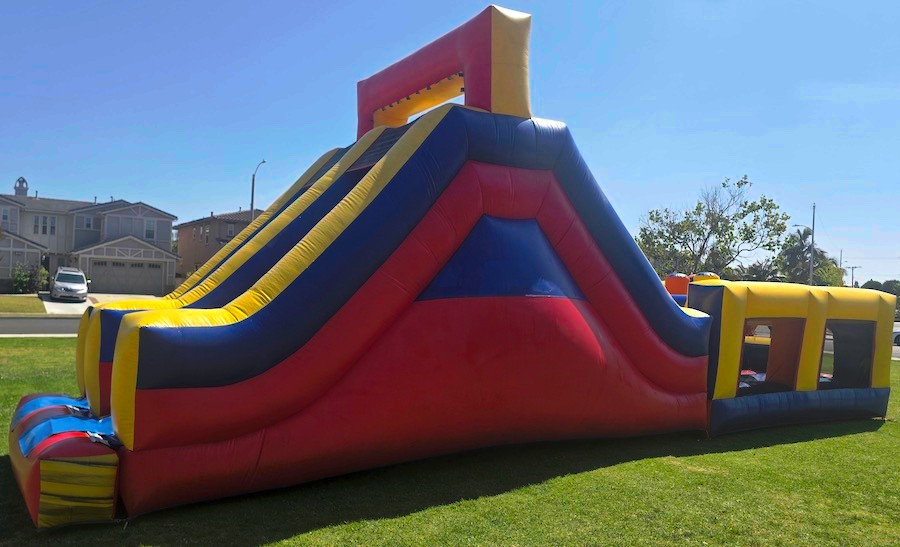
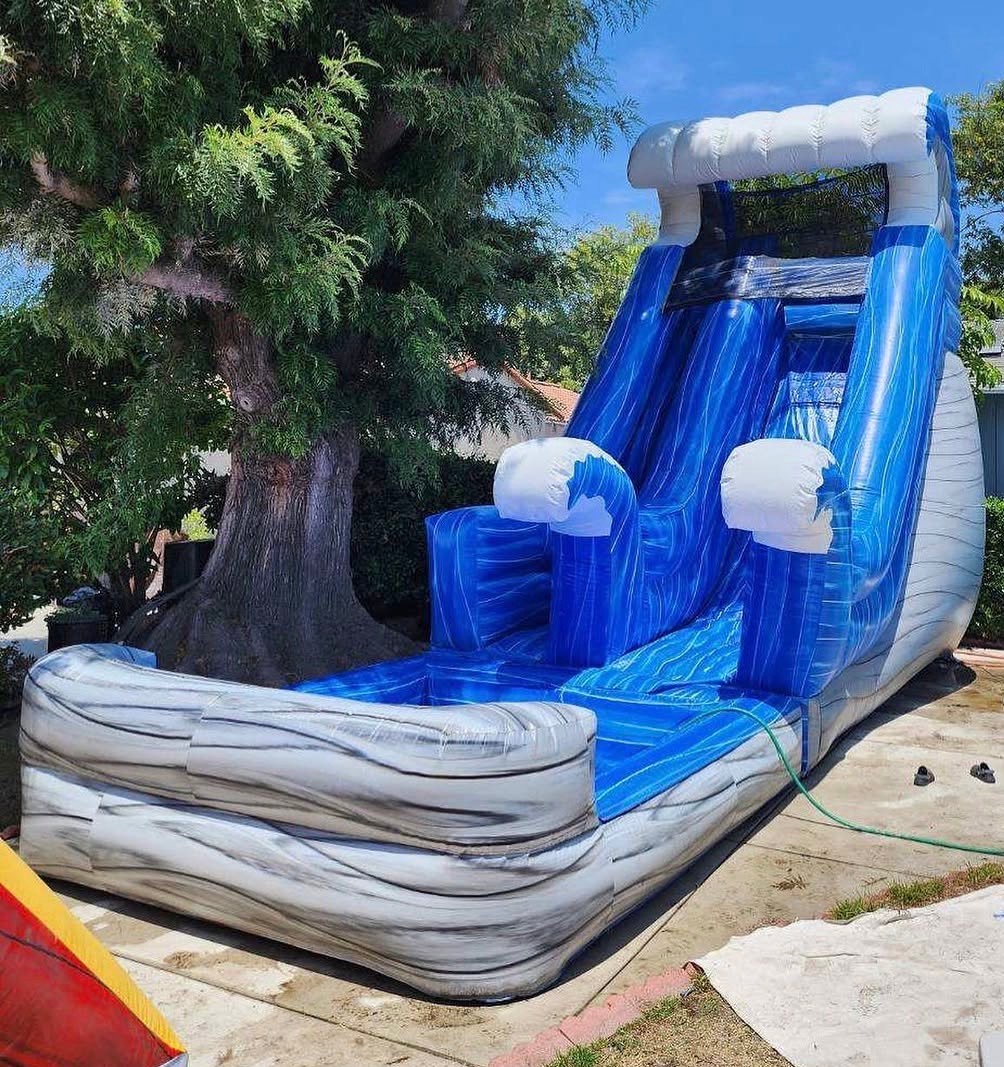
For teens, a full-length obstacle course or a larger waterslide (if your event timing and weather allow) tends to hold attention better than a standard bounce house. Teens often lose interest in equipment that feels designed for younger kids, so giving them something with more of a challenge makes a real difference.
If your event budget and space allow for more than one unit, consider placing a smaller bounce house in one area for the youngest guests and an obstacle course or combo unit in another area for older kids. This naturally separates age groups and reduces the chance of size mismatches during play.
Supervision, Volunteers, and Crowd Flow
An inflatable without consistent adult supervision is a setup for chaos, even at a well-organized church event. Before your carnival, assign specific volunteers to inflatable supervision and make sure they understand their role before the event starts.
Each inflatable should have at least one adult attendant present at all times. That person is responsible for managing the line, enforcing capacity limits, and watching for any behavior that could lead to someone getting hurt. At a church carnival where volunteers rotate between stations, it is easy for an inflatable to go unattended during a shift change. Build overlap into your volunteer schedule so there is never a gap in supervision.
Crowd flow is just as important as supervision. Think about where guests will wait while others are playing, and make sure that waiting area is clearly defined and away from the inflatable's entrance and exit. A rope barrier, a line of cones, or even a simple chalk line can help manage traffic without requiring constant verbal reminders.
A few supervision and crowd flow items to plan before your event:
- How many volunteers will be assigned to each inflatable, and what are their shift times?
- Is there a designated waiting area that keeps the line organized and away from the play zone?
- Who is responsible for enforcing capacity limits if the inflatable gets too crowded?
- Do your volunteers know the basic safety rules to communicate to kids before they enter?
Talking through these logistics with your volunteer team before the event, rather than on the day of, makes a significant difference in how smoothly things run.
What to Expect from Delivery, Setup, and Pickup
One of the biggest advantages of working with a full-service rental company is that you do not have to figure out setup on your own. Jump High Rentals handles delivery, installation, and pickup for every rental in Orange County, which means your team can focus on the rest of the carnival while the inflatable side is taken care of.
That said, there are a few things your team should be ready for on delivery day. The rental crew will need clear access to the setup area, so make sure any vehicles, equipment, or furniture are moved out of the way before they arrive. If your venue has a locked gate or a security checkpoint, coordinate with your facilities team to make sure the delivery crew can get through without delays.
Setup typically takes 30 to 60 minutes depending on the size of the unit, so plan your delivery window to allow enough time before your event starts. Pickup happens after your rental period ends, and the crew will deflate, pack, and remove the inflatable. You do not need to do anything except make sure the area is accessible when they arrive.
Before your event, confirm the following with your rental company:
- What time will the delivery crew arrive, and how long will setup take?
- Is there anything your team needs to do to prepare the setup area before they arrive?
- What is the pickup window, and does it work with your venue's closing time?
- Who is the point of contact on event day if there are any questions or issues?
Having these details confirmed in writing before your event means there are no surprises on the day itself.
If you are ready to start planning your church carnival and want help choosing the right inflatable for your venue and crowd, reach out to Jump High Rentals. Share your event details, your setup area dimensions, and your age group breakdown, and the team can walk you through the options that make the most sense for your event. There is no pressure to book on the spot. It is just a conversation to make sure you feel confident before you commit.