
Why Concrete Requires a Different Anchoring Method
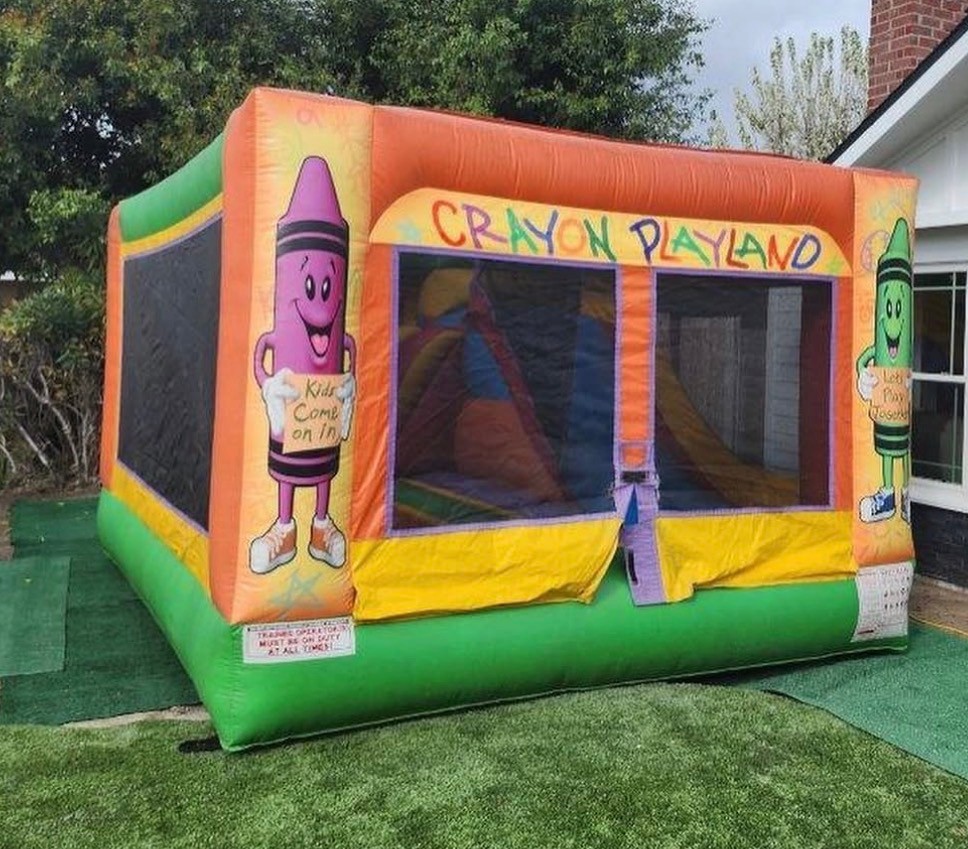
If your backyard is paved, your driveway doubles as your party space, or you're coordinating an event on a school parking lot, you might wonder whether a bounce house can even be set up safely on hard ground. The short answer is yes, and Orange County families do it all the time. The key is understanding why concrete and pavement call for a completely different anchoring approach than grass.
On a grassy lawn, a rental crew drives long steel stakes directly into the soil at each corner of the inflatable. Those stakes grip the earth and hold the unit firmly in place even when a crowd of kids is bouncing at full energy. Concrete and asphalt don't allow that. You cannot drive a stake into a solid hard surface, and attempting to do so would damage both the surface and the anchoring system. That means the entire strategy for keeping the unit stable has to shift.
Instead of stakes, professional crews rely on weight. Heavy-duty sandbags, typically in the range of 40 to 50 pounds each, are secured to the anchor straps at every corner of the inflatable. For larger units like combo bouncers or waterslides, water barrels that hold 100 pounds or more are used to provide the mass needed to keep the structure from shifting. Every anchor point must be loaded, because even one unsecured corner creates a tipping risk when the unit is in use.
This is also why it matters so much to tell your rental company upfront that your setup surface is concrete or pavement. A crew arriving with only grass stakes cannot safely anchor a bounce house on a hard surface. When you book with Jump High Rentals, noting your surface type during booking ensures the team arrives with the correct weights and protective gear for your specific setup.
What Professional Anchoring on Hard Surfaces Looks Like
Picture a sunny Saturday morning in a Laguna Hills driveway. The Jump High crew pulls up, unloads the inflatable, and before anything gets inflated, they lay down a thick ground tarp across the entire footprint of the unit. That tarp is not optional. On concrete, the rough surface can abrade the bottom of the inflatable over hours of use, shortening its life and potentially creating weak spots. The tarp creates a protective layer between the vinyl and the pavement, and it also gives kids a softer surface at the entry and exit points where they step on and off.
Once the tarp is positioned, the inflatable is unrolled and the blower is connected. As the unit inflates, the crew attaches the anchor straps at each corner to the sandbags or water barrels they brought specifically for your surface. Those weights are not just dropped nearby; they are secured through the anchor loops so that any lateral movement of the inflatable transfers directly into the mass of the weight rather than allowing the unit to drift.
For larger inflatables or setups in areas with afternoon wind exposure, crews may add extra sandbags on the side of the unit that faces the prevailing breeze. Orange County's coastal and inland areas can see afternoon gusts, and a unit that is properly weighted for calm conditions may need additional anchoring if the wind picks up during your event. You can read more about how wind conditions affect inflatable safety in our guide on wind speed limits and inflatable safety for OC parties.
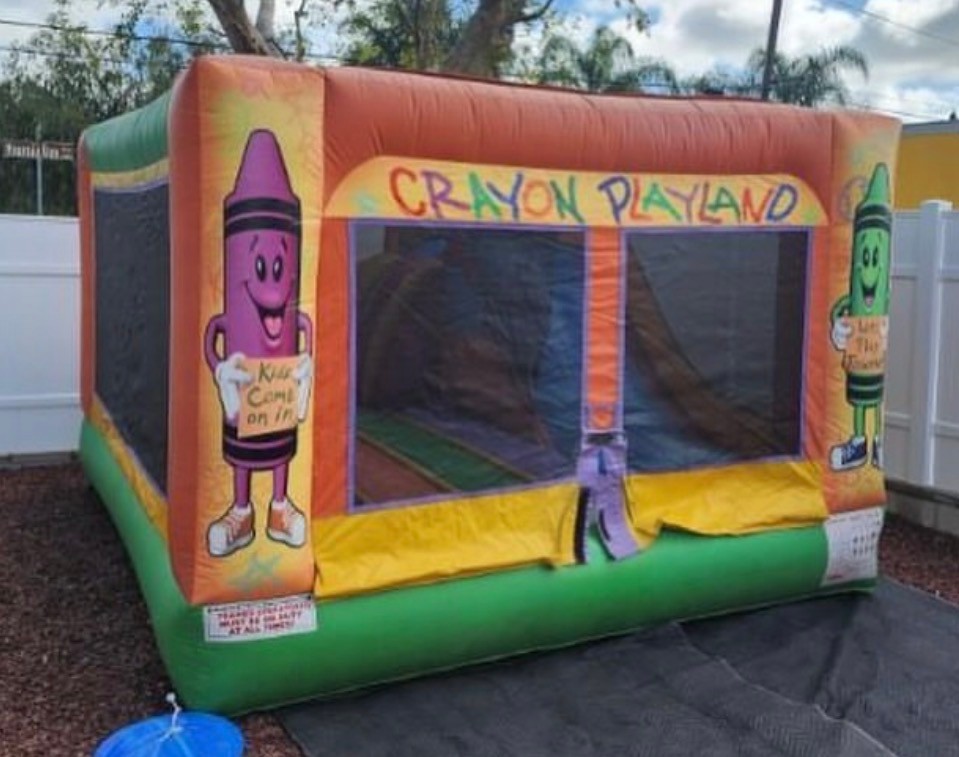
Padding at the entry and exit points is another detail that professional crews handle on hard surface setups. Rubber mats or foam padding placed at the threshold of the bounce house reduce the impact when kids hop in and out, because concrete is significantly less forgiving than turf if a child stumbles at the entrance.
How to Prepare Your Concrete or Pavement Area Before Setup
You can do a lot to make your setup go smoothly before the crew even arrives. Start by sweeping the entire area where the inflatable will sit. Concrete and asphalt collect small rocks, glass fragments, bottle caps, and other debris that can puncture the bottom of the unit or create a slip hazard at the entry. A clean surface protects the equipment and keeps kids safer throughout the event.
Check that the area is as level as possible. Bounce houses can function on a surface with a very slight grade, but a noticeable slope creates stability problems and makes the jumping experience uneven. If your driveway has a significant pitch, mention that when you reach out to the team so they can assess whether the specific unit you want is appropriate for that grade. Our guide on sloped backyard setups covers this in more detail if your space has any incline.
Measure your available space carefully and account for clearance on all sides. The inflatable itself has a footprint, but you also need a few feet of buffer around the perimeter so that kids exiting the unit don't land directly against a wall, fence, or parked car. If your driveway is bordered by a retaining wall or the side of your house, factor that into your unit selection. Our guide on how to pick the right bounce house size for your backyard walks through the measurement process in plain terms.
Also think about your power source. The blower that keeps the inflatable upright runs continuously throughout your rental period and needs a dedicated outlet within a safe cord distance. Avoid running extension cords across areas where guests will be walking. The power and extension cord guide for OC inflatables has specific recommendations for cord length and gauge that apply whether your setup is on grass or pavement.
Safety Rules That Apply Specifically to Hard Surface Setups
Some safety practices are universal for any inflatable rental, but a few deserve extra attention when the ground beneath the unit is concrete or asphalt. The most important is footwear. On grass, kids who tumble at the exit might land on a soft surface. On a paved driveway, a fall at the threshold is more likely to result in a scrape or bruise. Requiring kids to remove shoes before entering the bounce house is standard practice, but on hard surface setups it is equally important to have an adult stationed at the entrance to help younger children step in and out carefully.
No food, drinks, or sticky hands inside the unit is a rule that matters everywhere, but spills on a hard surface setup can create a slip hazard that extends beyond the inflatable itself. A juice spill at the exit point on a concrete driveway is a fall risk for every child who steps out after it. Keep snacks and drinks at a table away from the inflatable's entrance zone.
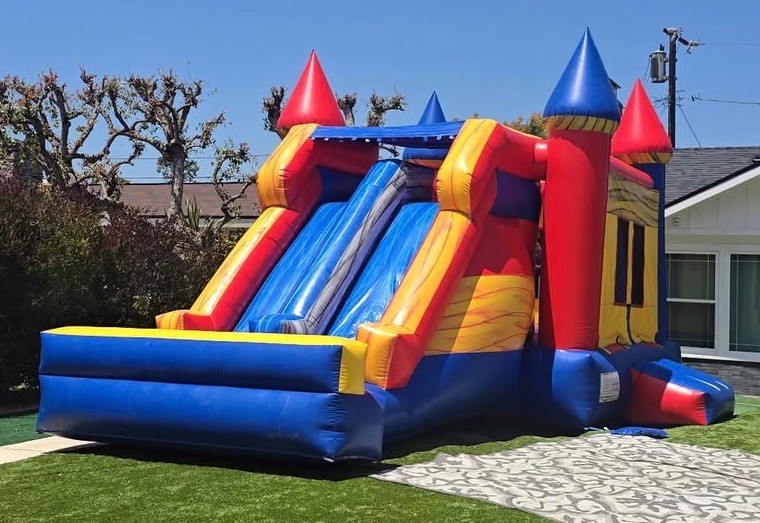
Capacity limits matter more on hard surfaces because overcrowding increases the chance of collisions near the walls, and a child bouncing into the side of the unit near a hard-surface exit is more likely to stumble onto pavement than onto grass. Sticking to the manufacturer's recommended capacity for the unit you rented is the simplest way to keep energy levels manageable and exits controlled. You can review how capacity limits work in practice in our guide on inflatable capacity limits and what they mean.
Adult supervision is non-negotiable. One designated adult should be watching the entrance and exit at all times, not just glancing over periodically. On a hard surface, the consequence of a child tumbling out unattended is more serious than on a soft lawn, so active supervision is the single most effective safety measure you can maintain throughout the event.
What to Tell Your Rental Company When Booking on Pavement
Clear communication before your rental date is what separates a smooth setup from a last-minute scramble. When you contact Jump High Rentals to book, let the team know the following details about your space.
First, confirm that your setup surface is concrete, asphalt, or pavers rather than grass or artificial turf. This single piece of information determines what anchoring equipment the crew loads onto the truck. If you have a mix of surfaces, such as a concrete patio that extends into a grassy side yard, describe the full layout so the crew can plan the best positioning for the unit.
Second, share your approximate square footage and any obstacles around the perimeter. Walls, fences, vehicles, and low-hanging structures all affect where the unit can be placed and how much buffer space is available. If your driveway has a gate or a narrow access point, mention the width so the crew can confirm the unit will fit through during delivery.
Third, let the team know if you expect afternoon wind at your location. Coastal areas like Newport Beach and Huntington Beach can see stronger afternoon breezes than inland neighborhoods in Anaheim Hills or Yorba Linda. That information helps the crew bring appropriate additional weights for your specific setup conditions.
Finally, ask about the protective tarp and entry padding that will be used at your site. A professional rental company should include these as part of a hard surface setup without you needing to source them separately. When you browse the rental catalog or check the FAQ for setup details, you'll find that Jump High Rentals handles the anchoring equipment and protective layers as part of every delivery, so you can focus on the party itself rather than sourcing sandbags on your own.
Concrete and pavement are perfectly workable surfaces for a bounce house rental in California. With the right anchoring weights, a protective ground tarp, entry padding, and a crew that knows what they're doing, your driveway or paved event space can host a safe and genuinely fun celebration. The most important step is simply telling your rental company what they're working with before they show up, so everyone arrives prepared.