
Why Combo Unit Dimensions Drive Every Other Fleet Decision
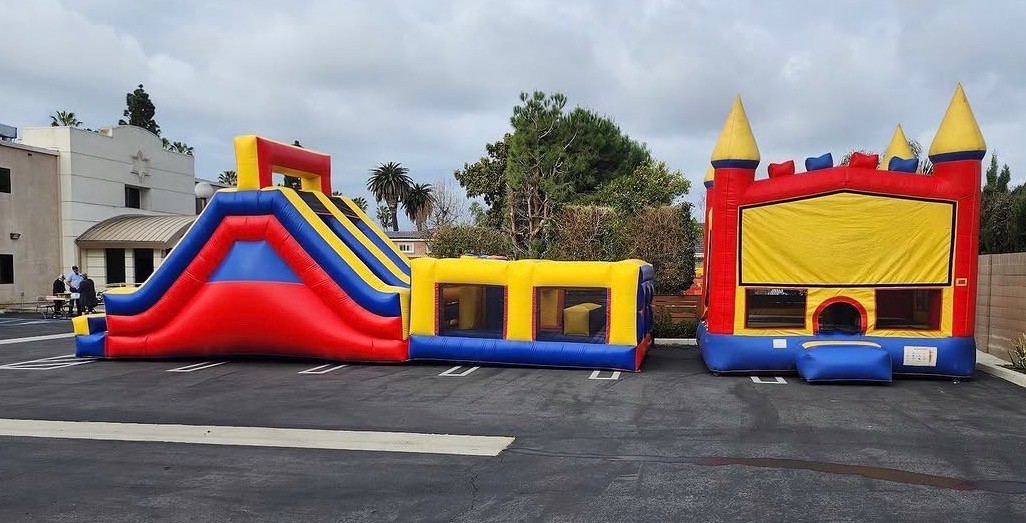
If you are building or expanding a commercial inflatable rental fleet in California, combo units deserve a dedicated sizing strategy before you place a single purchase order. A combo unit, the bounce-plus-slide configuration that combines a bouncing chamber with an attached slide exit, is typically the highest-demand SKU in any rental inventory. Parents booking a backyard birthday in Irvine or a school carnival in Fullerton almost always gravitate toward a combo first because it delivers two activities in one footprint. That demand is great for booking volume, but it also means your sizing decisions carry real operational weight.
Here is why dimensions matter beyond the obvious: every inch of a combo unit's inflated profile determines whether your delivery crew can navigate a side gate, whether the unit fits on a standard flatbed or requires a box truck, how many units you can store per square foot of warehouse space, and what your freight bill looks like when the unit ships from a manufacturer in the Midwest or overseas. Buyers who focus only on the retail price of a unit and skip the spec sheet often discover those savings evaporate in freight surcharges, oversized storage fees, or lost bookings because the unit simply will not fit in the backyards where most of their customers live.
California adds another layer of complexity. The state's dense residential neighborhoods, HOA-governed communities, and park permit requirements mean that a unit sized perfectly for a Texas ranch property may be impractical for a typical Orange County backyard. Combo units in the 13-by-13-foot to 15-by-15-foot inflated footprint range tend to book most consistently in CA suburban markets because they fit through standard 36-to-48-inch side gates and leave enough clearance for staking and blower placement. Larger units in the 18-by-18-foot or 20-by-20-foot range open up school, church, and HOA event bookings but require more logistical coordination on delivery day. Understanding that tradeoff before you buy is the foundation of smart fleet planning.
You can browse Jump High's rental catalog to see which combo configurations perform consistently in OC markets. That real-world booking data is a useful reference point when you are comparing manufacturer spec sheets.
Standard vs. Oversized Combo Units: Spec Ranges CA Buyers Should Know
Commercial combo units generally fall into two practical tiers for CA fleet operators: standard-footprint units and oversized units. Knowing the spec ranges for each tier helps you match inventory to your target booking market before you commit to a purchase.
Standard-footprint combos typically inflate to between 13 by 13 feet and 15 by 15 feet, with heights ranging from 12 to 15 feet at the slide peak. Deflated and rolled, these units pack down to roughly 4 by 4 by 3 feet and weigh between 200 and 350 pounds depending on material thickness and whether the unit includes a water feature. A single 1.5-horsepower continuous-duty blower is usually sufficient for units in this range, though some manufacturers spec a 1-horsepower unit for smaller profiles. These are your bread-and-butter backyard and small park event units. They load two or sometimes three per standard cargo van or small box truck, which keeps your per-delivery fuel and labor costs manageable.
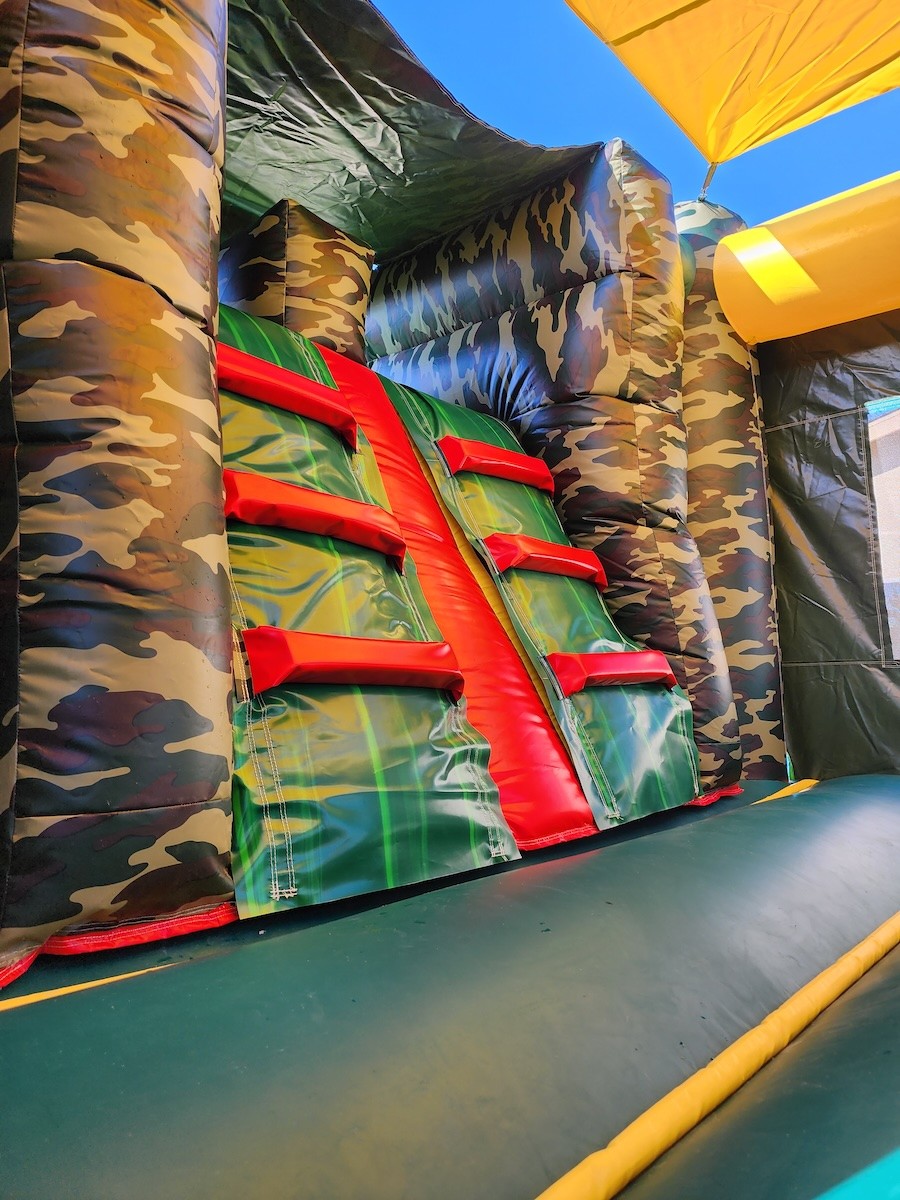
Oversized combos push into the 18-by-18-foot to 22-by-24-foot inflated range, with slide heights that can reach 18 to 20 feet. Deflated weights for these units often land between 400 and 700 pounds, and they typically require dual blowers or a single 2-horsepower commercial blower. These units command higher rental rates and are well-suited for school field days, church carnivals, and HOA block parties across Orange County. The tradeoff is that they require a larger delivery vehicle, more crew time for setup, and significantly more storage space per unit. They also ship at higher freight costs because they exceed standard LTL dimensional weight thresholds.
Material specs matter as well. Commercial-grade combo units use 18-ounce PVC vinyl for high-stress panels and stitched seams, while some budget-tier units use lighter 15-ounce material that degrades faster under California's UV exposure and heat. For a CA fleet, where summer temperatures in inland areas like Anaheim Hills or Yorba Linda can push well above 90 degrees Fahrenheit, investing in UV-resistant, commercial-weight vinyl pays off in unit lifespan and lower repair frequency. The ASTM International F24 committee publishes safety and material standards for amusement rides and devices, including inflatables, and reputable manufacturers will reference compliance with those standards in their product documentation.
Capacity ratings are another spec to read carefully. A standard 13-by-13-foot combo is typically rated for 6 to 8 occupants at a time, while an oversized 20-by-20-foot unit may carry 12 to 15. Those ratings affect how you market the unit to customers and how you communicate safe use guidelines. You can point customers to resources like Jump High's guide on inflatable capacity limits to reinforce safe operation without putting that educational burden entirely on your crew.
Freight, Crating, and Delivery Logistics for CA Fleet Buyers
Freight is where many first-time commercial buyers experience sticker shock. A combo unit priced at $2,800 from a manufacturer can arrive with a freight bill that adds $400 to $900 depending on origin point, carrier, and whether the unit ships crated or bagged. For CA buyers, the distance from major inflatable manufacturing hubs in the Southeast and Midwest means LTL (less-than-truckload) rates are rarely the lowest in the country. As of 2026, LTL base rates for oversized freight into Southern California have remained elevated compared to pre-2022 benchmarks, and fuel surcharges continue to fluctuate seasonally. Plan your unit acquisition budget to include freight as a line item, not an afterthought.
Crating adds cost but also protection. A well-crated combo unit arrives without the seam stress and blower damage that can occur when a heavy rolled unit shifts during transit. If you are ordering multiple units in a single shipment, ask the manufacturer about pallet consolidation options. Some vendors will ship two or three standard-footprint units on a single pallet with shared crating, which reduces per-unit freight cost meaningfully. For oversized units, individual crating is usually unavoidable.
Lead times from CA-accessible manufacturers or distributors typically run four to eight weeks for standard units and up to twelve weeks for custom colors, themed graphics, or oversized configurations. If you are building inventory for a spring or summer season launch, ordering by February gives you a reasonable buffer. Ordering in April for a June launch is a common mistake that leaves new operators scrambling. You can read more about how freight and crating logistics work for CA buyers in Jump High's guide on inflatable freight delivery to CA.
When your units arrive, inspect every seam, anchor loop, and blower port before signing the delivery receipt. Freight damage claims are far easier to file when damage is noted at delivery rather than discovered during your first setup. Photograph the crate or packaging before opening, and document any visible damage with time-stamped photos.
Storage Footprint and Depreciation Planning for Combo Inventory
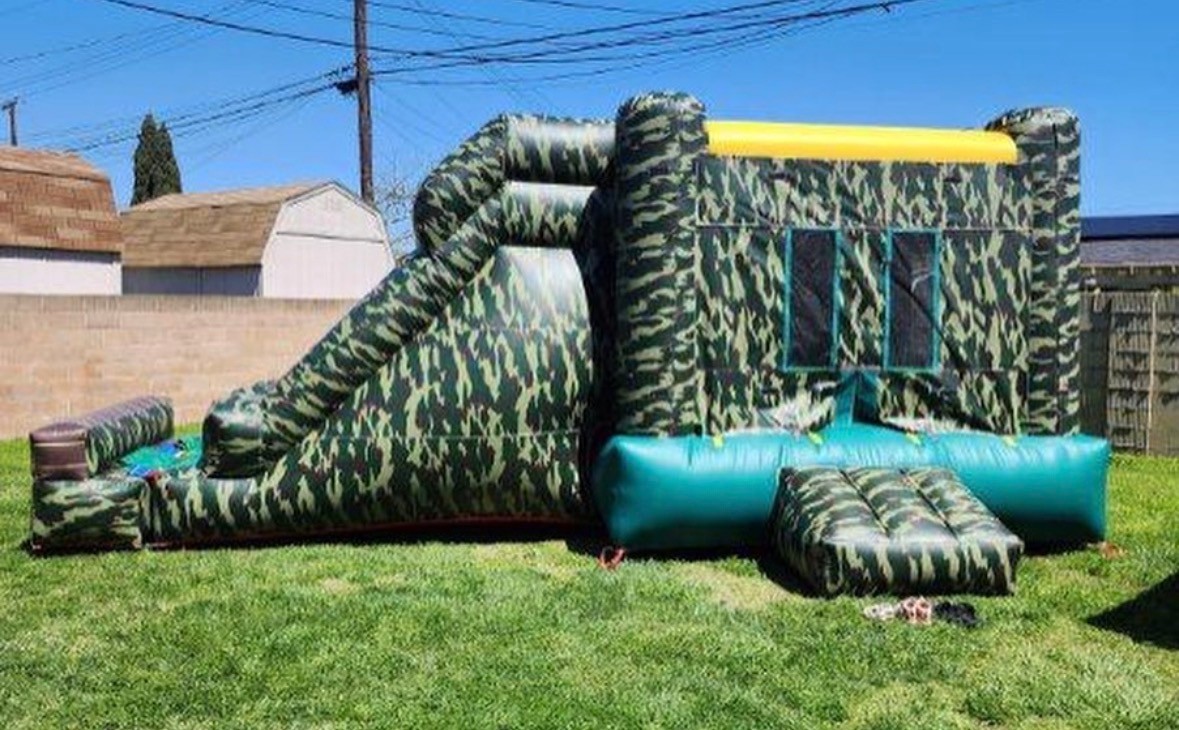
Storage is a fixed cost that scales directly with your unit count and unit size. A standard-footprint combo unit rolled and bagged occupies roughly 12 to 16 square feet of floor space. An oversized unit can occupy 25 to 35 square feet. If you are renting warehouse space in Orange County or the surrounding CA region, where industrial storage rates have remained firm, every square foot of unit footprint has a real monthly cost attached to it. A fleet of ten standard combos needs roughly 150 to 200 square feet of dedicated floor space, plus aisle clearance and blower storage. A mixed fleet of five standard and five oversized units can push that requirement to 250 to 300 square feet before you account for accessories.
Climate considerations matter in CA storage planning. Units stored in non-climate-controlled spaces in inland areas are exposed to heat cycling that accelerates vinyl degradation over time. Coastal storage avoids extreme heat but introduces humidity. Neither extreme is ideal for long-term unit preservation. At minimum, store units fully dry, loosely rolled rather than tightly compressed, and off bare concrete using pallets or rubber mats.
Depreciation planning for commercial combo units should account for a realistic useful life of five to eight years under regular commercial use, assuming proper maintenance and timely repairs. Units that see heavy weekend booking schedules in a warm-weather market like CA may reach the lower end of that range. Tracking repair costs per unit per year gives you an early signal of when a unit is approaching end-of-life and should be retired from front-line inventory rather than patched repeatedly. Jump High's guide on commercial inflatable depreciation offers additional framing for thinking through unit lifecycle costs.
Sourcing, Warranties, and Vendor Support for Commercial Combo Units
Sourcing decisions for CA fleet buyers come down to three practical factors: unit quality, warranty terms, and the vendor's ability to support you after the sale. The inflatable manufacturing market includes a wide range of producers, from domestic manufacturers with US-based customer service to overseas factories with varying quality control. Neither category is automatically better, but the questions you ask before buying determine how well the relationship serves you.
On warranties, commercial combo units from reputable vendors typically carry a one-to-three-year warranty on seams and vinyl, with shorter coverage (often 90 days to one year) on blowers and hardware. Read the warranty document carefully for exclusions. Most commercial warranties exclude damage from improper setup, UV degradation beyond a defined threshold, and normal wear on high-contact surfaces like slide lanes and jump mats. Some vendors offer extended warranty options for an additional cost, which can be worth evaluating for oversized units where repair costs are higher.
Vendor support quality shows up most clearly when something goes wrong. A vendor who provides responsive technical support, stocks replacement parts (blowers, repair vinyl, anchor stakes), and offers clear repair guidance is worth a modest price premium over a vendor who is difficult to reach after the sale. Ask prospective vendors directly: what is your average response time for warranty claims, and do you stock replacement blowers for this unit? The answers tell you a great deal about how the relationship will function when you need it most.
For CA fleet operators who want a real-world reference for which combo unit sizes and configurations generate consistent bookings in the OC market, Jump High's rental catalog reflects active inventory that has been tested across a wide range of Orange County venues and event types. If you are evaluating fleet expansion and want operator-to-operator perspective on what works in this market, reach out through the contact page to start that conversation.