
Booking a bounce house for your child's birthday should feel exciting, not overwhelming. But once you start browsing options, the size question comes up fast. Should you go with a compact unit or something bigger? Is a combo worth it? What if the yard is smaller than you think?
The good news is that picking the right inflatable size does not have to be a guessing game. Once you know a few key details about your party, the right fit becomes much clearer. This guide walks Orange County families through the practical questions that actually matter before you book.
Start With How Many Kids Will Actually Jump
Total guest count is not the number you need. What matters is how many children will be using the inflatable at the same time, and how long they will be rotating through it.
Think about a backyard birthday with 20 guests. If half of those are adults and a handful are babies or toddlers who will not be jumping, the active group might be closer to eight or ten kids. That changes your size decision significantly.
Here is a simple way to frame it before you call or book online:
- How many children are on the guest list (not adults)?
- What is the youngest age in the group and the oldest?
- Will all the kids be jumping at once, or will you run rotations?
- How long is the party, and how many turns will each child realistically get?
A two-hour party with eight kids jumping in groups of four gives every child plenty of time on a mid-size unit. A three-hour party with 20 active kids might need a larger inflatable or a second play zone to keep lines from stacking up.
Starting with the real active headcount, rather than the total invitation list, is the single most useful thing you can do before you start comparing sizes.
Match the Unit Size to Your Kids' Age Group
Guest count tells you how much capacity you need. Age range tells you which type of unit actually fits the group. These two factors work together, and skipping either one leads to a mismatch.
Here is a general framework that works well for Orange County backyard parties:
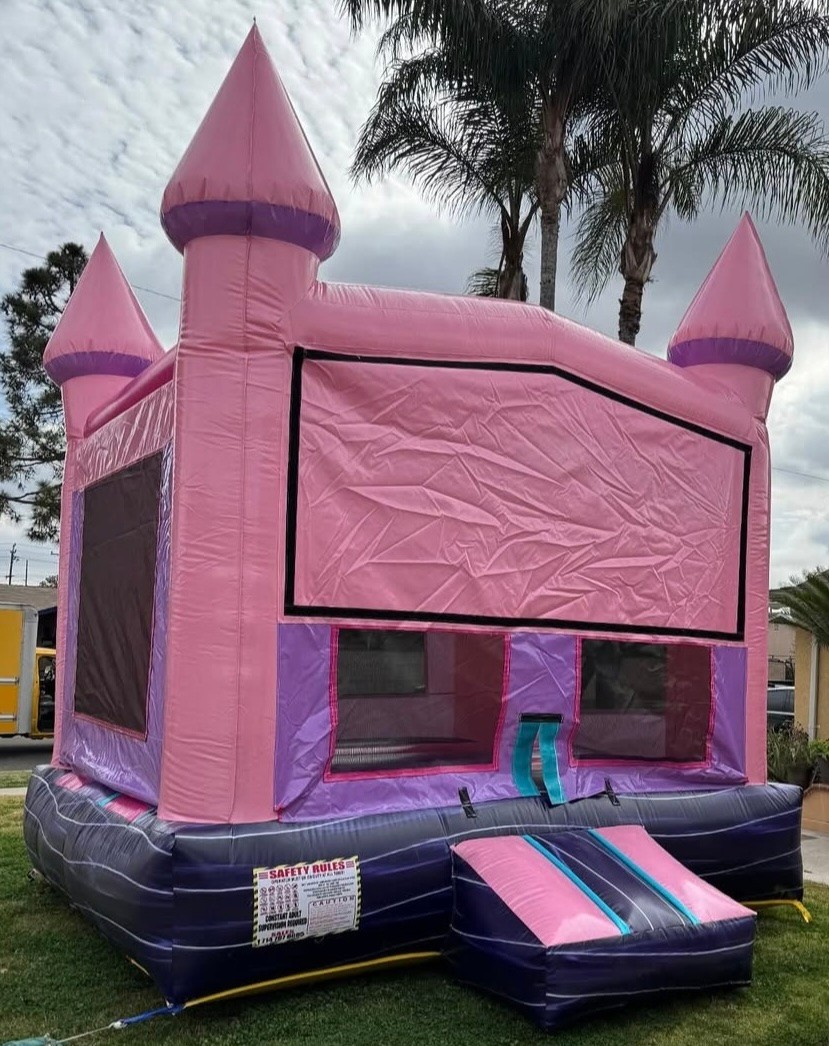
- Toddlers and kids under 5: A compact unit in the 11x11 range is usually the right call. Smaller inflatables feel less overwhelming for young children, and the lower walls and gentler bounce are a better fit for their size and coordination.
- Kids ages 5 to 8: A 13x13 bounce house is a popular choice for this age group. It fits roughly six to eight kids under eight years old at one time and gives them enough room to move without feeling crowded.
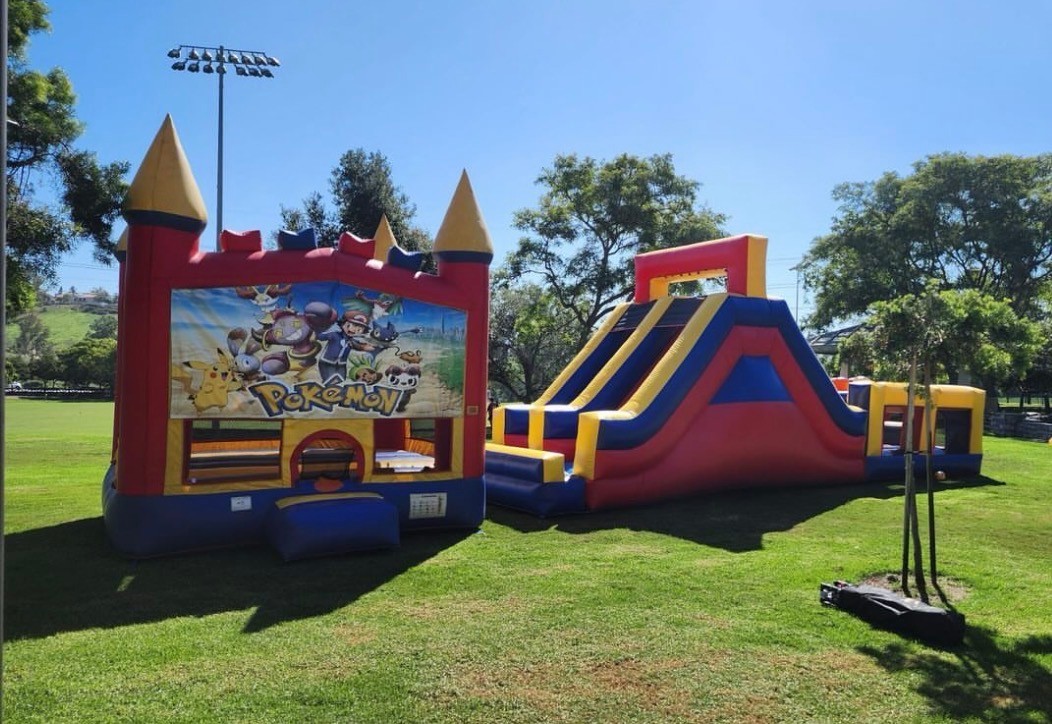
- Kids ages 9 to 12: Older kids tend to want more action. A 15x15 bounce house, a combo unit with a slide, or an obstacle course keeps them engaged longer and handles their energy level better than a smaller jumper.
- Mixed ages: This is where things get a little more nuanced. When you have a wide age range at the same party, a combo unit can help because different kids gravitate toward different features. You can also run age-based rotations so younger children are not sharing the space with bigger kids at the same time.
One thing worth knowing: a bigger inflatable is not automatically the better choice. An oversized unit in a small yard creates clearance problems, and a large bounce house filled with only a few toddlers can feel less safe and less fun than a properly sized one. Matching the unit to the actual age group and space available is what makes the rental work well.
Measure Your Yard Before You Book
This step gets skipped more often than any other, and it is the one that causes the most last-minute surprises on delivery day. Before you finalize a size, walk your yard and take actual measurements.
You need three numbers: length, width, and height clearance.
Length and width should account for the full footprint of the inflatable plus a buffer around the perimeter. A good rule of thumb is to leave three to five feet of clearance on all sides. That space is not just for safety. It gives the setup crew room to work, keeps the unit away from fences and structures, and allows for the blower and anchor stakes.
Height clearance is easy to forget because most people think about floor space first. Standard bounce houses need roughly 15 feet of vertical clearance. Larger units, waterslides, and obstacle courses can require 20 feet or more. Trees, rooflines, patio covers, and low-hanging branches can all reduce usable height even when the ground footprint looks fine.
A few other things to check while you are outside measuring:
- Is there a power outlet within 50 feet of the setup area? The blower needs a continuous power source, and a long outdoor-rated extension cord can help if the outlet is farther away.
- Can the inflatable be carried through your gate or side yard? Most units need a clear path of at least four feet wide to move through during setup and pickup.
- Is the ground relatively flat and free of sharp objects, sprinkler heads, or large roots?
Taking 10 minutes to measure and check these things before you book saves a lot of stress on the day of the party.
When One Inflatable Is Not Enough
For most backyard birthdays, one well-chosen inflatable covers everything. But there are situations where a single unit creates bottlenecks or leaves part of your guest group without something to do.
Consider adding a second inflatable or upgrading to a larger format when:
- Your active guest count is above 15 to 20 children and the party runs longer than two hours.
- You have a wide age gap, such as toddlers and preteens at the same event, and you want each group to have something appropriate.
- You are hosting a school carnival, church event, HOA gathering, or neighborhood block party where kids will be cycling through continuously over several hours.
- Your yard or venue space can comfortably fit two units side by side without crowding the setup area.
Obstacle courses and combo units are often the right answer for larger or mixed-age groups. An obstacle course keeps older kids moving and competitive, while a combo unit with a slide and bounce area gives younger kids more variety in one footprint. Both options tend to reduce the "waiting in line" problem better than a single standard jumper.
For community events in Orange County, it is also worth checking whether your venue or park permit requires specific spacing between inflatables or limits the number of units on-site. Planning for that early keeps the logistics from catching you off guard.
Quick Size Guide for Orange County Parties
Here is a straightforward reference to use when you are comparing options:
- 3 to 5 young children (under 6): A compact or toddler-size inflatable in the 11x11 range is usually the right fit.
- 6 to 10 kids at a backyard birthday: A mid-size bounce house, typically 13x13 or 15x15, handles this group well and fits most standard Orange County backyards.
- Mixed ages or 10 to 20 active kids: A combo unit, a larger bounce house, or an obstacle course gives you the capacity and variety to keep everyone happy.
- Large community or school events: Multiple inflatables or a combination of a bounce house and obstacle course is the most practical setup for high-traffic events with continuous rotation.
Keep in mind that these are starting points. The right choice for your specific party depends on your yard dimensions, the ages of the kids, and how you plan to run the event. A unit that works perfectly for one family's backyard might not be the best fit for a different yard layout or age group.
If you are not sure where to land after working through these questions, the team at Jump High Rentals is happy to help you think it through. Share your guest count, the ages of the kids, and your available setup space, and we can point you toward the size and style that fits your party best. There is no pressure and no obligation. We just want your event to go smoothly from delivery to pickup.