
Dual Lane Combo vs. Standalone Slide: Fleet ROI Breakdown
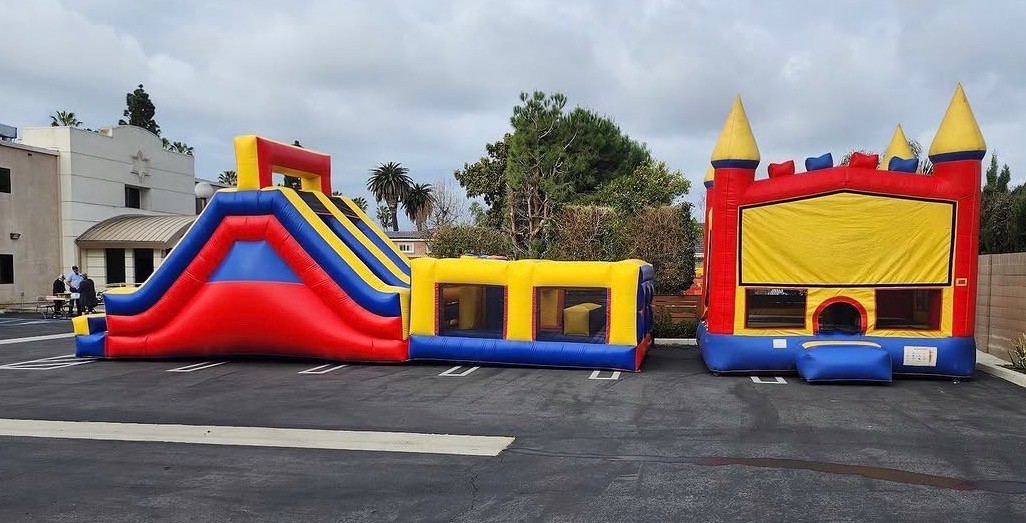
If you're building or scaling an inflatable rental fleet in Arizona, two unit types come up in almost every early inventory conversation: the Dual Lane Combo and the Standalone Slide. Both earn revenue. Both fill a real market need. But they carry very different cost structures, storage demands, and booking profiles, and choosing the wrong one first can slow your payback timeline by months.
This breakdown is written for fleet owners and startup operators who want numbers, not just enthusiasm. We'll walk through landed unit costs, realistic utilization rates, storage footprint math, and what warranty support actually looks like from commercial vendors, so you can make a confident decision about which unit belongs in your fleet and when.
Before diving in, it's worth noting that the comparison below focuses on commercial purchase decisions. If you're currently renting inflatables to test demand before buying, our rentals page is a good place to see what unit types are performing well in the Southern California market, which shares meaningful seasonal overlap with AZ demand patterns.
Unit Cost and Freight to Arizona: What Each Unit Actually Costs to Land
The sticker price on a commercial inflatable is only part of the story. Freight to Arizona, especially for bulkier combo units, adds a meaningful layer to your true landed cost.
A commercial-grade Dual Lane Combo typically runs between $2,800 and $4,500 at the wholesale level, depending on the manufacturer, material weight (18 oz vs. 13 oz vinyl), and included features like basketball hoops or extended slide lanes. Units from established manufacturers such as Cutting Edge, Magic Jump, or Blast Zone carry higher price tags but also come with more robust warranty terms and better commercial certifications. Budget-tier units from overseas-direct suppliers can come in under $2,500, but the tradeoff in material durability and blower quality is real and shows up fast in a high-utilization rental environment.
Freight from domestic warehouse hubs (typically in Texas, Georgia, or California) to Arizona destinations like Phoenix or Tucson generally adds $180 to $350 per unit for a Dual Lane Combo, depending on dimensional weight and the carrier. Combo units are bulky even when deflated and rolled, so LTL (less-than-truckload) shipping is common. If you're ordering multiple units at once, consolidating shipments can bring per-unit freight cost down noticeably.
A commercial Standalone Slide, by contrast, lands in a lower purchase range. A quality 14-foot dry slide runs $900 to $1,600 at wholesale, while a 20-foot wet/dry slide with a pool basin can reach $1,800 to $2,400. Freight is lighter, typically $120 to $220 to AZ destinations, because the rolled footprint is smaller and the unit weighs less. That lower freight cost matters when you're stocking multiple units early in your operation.
The practical takeaway here is that a Dual Lane Combo costs roughly two to three times as much to land as a mid-range Standalone Slide. That gap shapes everything downstream, from your break-even timeline to how many units you can stock with a fixed startup budget.
Utilization Rates and Revenue Per Booking: Where Each Unit Earns
Landed cost only matters in context of how often a unit books and what it earns per rental. This is where the Dual Lane Combo starts to close the gap.
In a healthy AZ rental market, a well-marketed Dual Lane Combo can realistically achieve 10 to 16 rental days per month during peak season (March through October in most Arizona markets). Rental rates for combo units in the AZ market typically range from $280 to $450 per day, depending on your service area, delivery radius, and whether setup and pickup are included. At a conservative 12 rental days per month at $320 per booking, a single Dual Lane Combo generates roughly $3,840 in monthly gross revenue during peak season.
A Standalone Slide books at a lower rate, typically $150 to $250 per day for a 14-foot unit and $200 to $300 for a larger 20-foot wet slide. Utilization can be strong, especially during summer months when water slides are in high demand, but the per-booking revenue ceiling is lower. At 12 rental days per month and $200 per booking, a Standalone Slide generates around $2,400 in monthly gross revenue.
The Dual Lane Combo's higher revenue per booking means it can absorb its higher landed cost faster than the raw numbers might suggest. A $3,500 landed combo at $3,840 monthly gross revenue (before operating costs) reaches its break-even point in roughly one to two peak seasons, assuming reasonable operating expenses and consistent bookings. A $1,400 landed slide at $2,400 monthly gross breaks even faster in absolute terms, but the total revenue ceiling per unit is lower, which matters when you're trying to scale.
One important nuance: combo units tend to book for larger events, schools, church picnics, and HOA gatherings, which often come with longer rental windows and repeat bookings. Standalone Slides attract more backyard birthday bookings, which are plentiful but shorter in duration and more price-sensitive. Understanding your local customer mix in AZ helps you weight these numbers accurately for your specific market.
For operators thinking about large-event capacity, our guide on inflatable rentals for OC school carnivals and fundraisers illustrates how combo units anchor multi-unit event setups, a pattern that translates directly to AZ school and community event bookings.
Storage Footprint and Depreciation: The Hidden Carrying Costs
Fleet owners who focus only on purchase price and revenue often get surprised by storage and depreciation costs. These are real line items that affect your actual ROI, especially in year two and beyond.
A Dual Lane Combo, when deflated and rolled, typically occupies a footprint of roughly 4 feet by 4 feet by 4 feet, sometimes larger depending on the specific unit dimensions. In a storage unit or warehouse bay, you can stack accessories around it, but the unit itself needs a dry, climate-controlled environment to prevent vinyl degradation. In Arizona's summer heat, storage conditions matter more than in cooler climates. Vinyl stored in unventilated spaces above 110 degrees Fahrenheit can experience accelerated seam stress and color fading. A 10x10 climate-controlled storage unit in the Phoenix metro area runs approximately $90 to $150 per month, and a single Dual Lane Combo will comfortably share that space with two or three smaller units.
A Standalone Slide rolls into a more compact package, typically 3 feet by 3 feet by 3 feet for a 14-foot unit. The smaller footprint means you can store more units in the same square footage, which is a genuine advantage for lean startup operators who are renting storage space by the square foot.
Depreciation is harder to pin down precisely, but commercial-grade inflatables from reputable manufacturers typically carry a useful commercial life of five to eight years with proper maintenance. Budget units may show significant wear at the two to three year mark under heavy utilization. Spreading your landed cost over a realistic useful life gives you a per-rental depreciation figure to include in your pricing model. For a $3,500 combo with a six-year useful life and 120 rental days per year, depreciation runs roughly $4.86 per rental day, a manageable number when your day rate is $320.
Maintenance costs, including patch kits, blower replacements, and periodic deep cleaning, run higher for combo units simply because there's more surface area and more mechanical components. Budget roughly $150 to $300 per year per combo unit for consumable maintenance supplies, and more if a blower needs replacement (commercial blowers typically run $80 to $180 each).
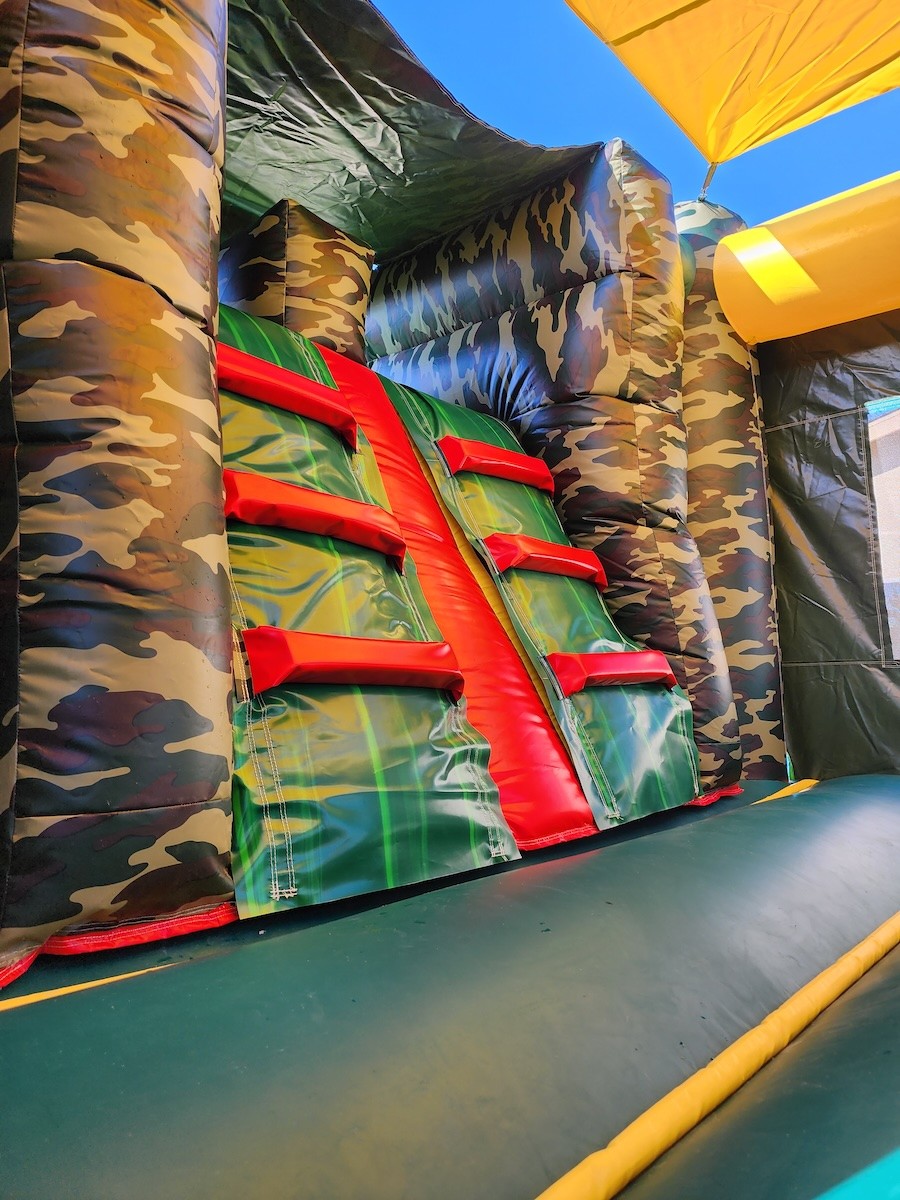
Our guide on how inflatables are cleaned and sanitized in OC covers cleaning protocols that apply equally to commercial fleet operators maintaining units between rentals.
Warranty and Vendor Support: Protecting Your Investment Long-Term
A warranty is only as good as the vendor standing behind it, and this is an area where commercial buyers sometimes learn expensive lessons.
Reputable domestic manufacturers and distributors typically offer one to three year warranties on commercial inflatables, covering seam failures, blower defects, and material delamination under normal use conditions. Some vendors offer extended warranty options for an additional fee. The key questions to ask before purchasing are whether the warranty covers commercial use (many consumer-grade warranties explicitly exclude it), what the claims process looks like, and whether replacement parts and panels are available if a repair is needed outside the warranty window.
For Dual Lane Combos, warranty support matters more because the unit has more components that can fail: two slide lanes, netting, a bounce chamber, and often additional features like hoops or tunnels. A vendor who can supply replacement netting panels or a matching vinyl patch in your unit's color is worth paying a modest premium for. Vendors who disappear after the sale leave you sourcing patches from third parties that may not match your vinyl weight or color.
Standalone Slides have fewer failure points, which makes warranty claims less frequent but not irrelevant. Slide lane seams and the pool basin (on wet units) are the most common repair areas. Confirm that your vendor stocks replacement pool basins for the specific model you're purchasing, as these are the most frequently damaged components on wet slides.
The ASTM International F24 committee standards for amusement rides and devices, including inflatable amusement devices, provide a useful benchmark for evaluating whether a manufacturer's construction and testing claims are credible. Asking a vendor whether their units are built to ASTM F24 specifications is a reasonable due diligence question.
Which Unit Belongs in Your Fleet First
For most AZ startup operators working with a limited initial budget, the Standalone Slide earns its place in the fleet first. The lower landed cost lets you stock two or three units for the price of a single Dual Lane Combo, which means more booking availability across different dates and more flexibility to serve multiple events on the same weekend.
Once you've established consistent utilization and have a customer base that includes schools, churches, and community organizations, adding a Dual Lane Combo makes strong financial sense. The higher per-booking revenue, the ability to anchor large-event packages, and the repeat booking patterns from institutional clients all favor the combo unit as a scaling investment rather than a starting one.
A practical first-year fleet for an AZ operator might include two Standalone Slides (one dry, one wet/dry), a basic bounce house, and a combo unit added in year two once cash flow supports the higher landed cost. That sequencing keeps your break-even timeline manageable while building toward the unit mix that earns the most per peak-season weekend.
If you're thinking through fleet planning or want to see what commercial-grade units look like in a real rental operation, the team at Jump High Rentals is happy to talk through inventory decisions. You can also explore our guides library for additional operational content, or reach out directly with questions about unit performance, sourcing, and fleet sequencing.