
What a Dual Lane Waterslide Actually Costs an OR Fleet Buyer
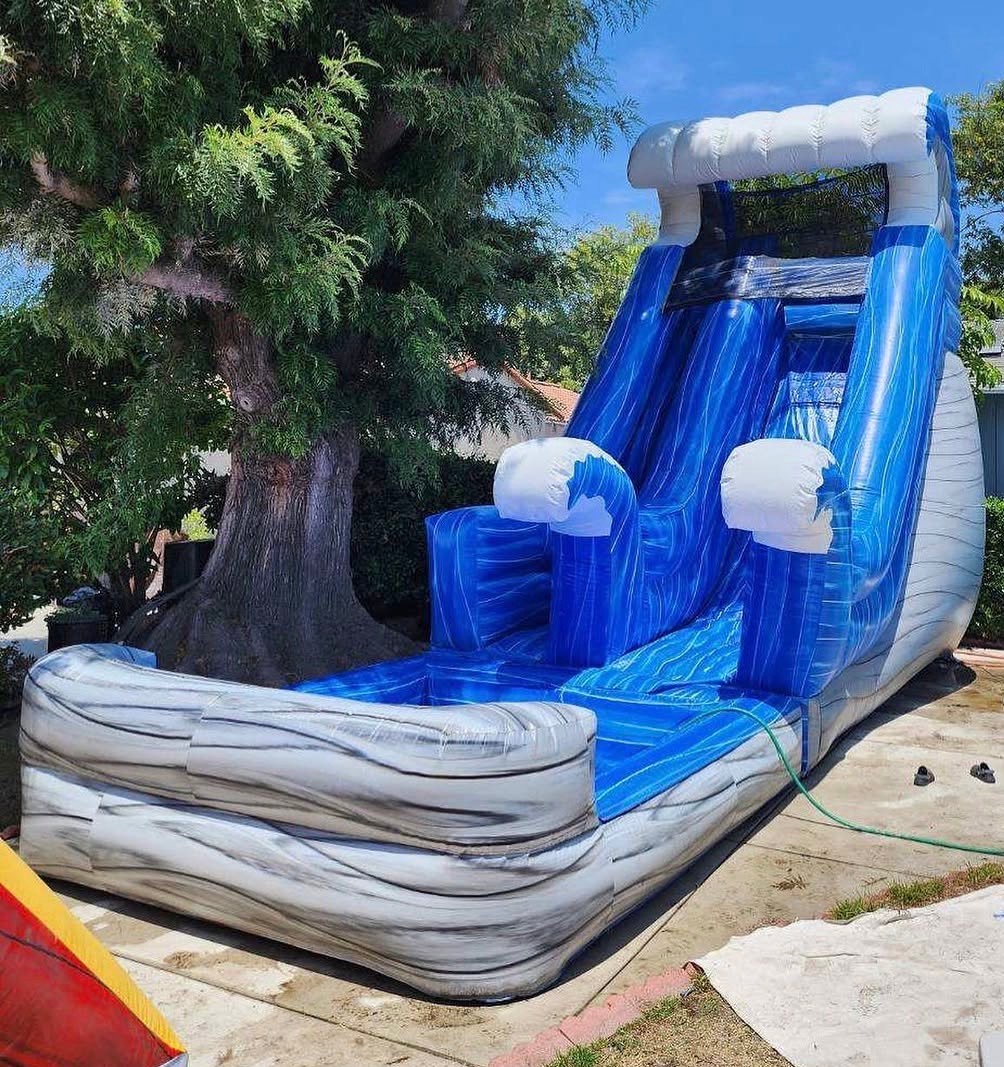
If you're running a party rental operation in Oregon and you're eyeing a dual lane waterslide as your next inventory addition, the first number you need is the landed cost, not the wholesale sticker price. Those two figures can differ by several thousand dollars once you factor in freight, liftgate fees, and any prep work before the unit goes into rotation.
Commercial-grade dual lane waterslides typically run between $3,500 and $8,500 at the wholesale level in 2026, depending on height, lane width, pool size, and the manufacturer's material spec. Units built from 18-oz PVC-coated nylon sit at the higher end of that range and tend to hold up better under repeated commercial use. Lighter 15-oz material can work for lower-volume fleets, but you'll likely see faster wear at stress points like the climbing wall seams and the lane divider. When you're comparing quotes, ask the vendor to specify the material weight and the thread count on the stitching, not just the overall unit dimensions.
Beyond the unit itself, budget for a commercial blower (often sold separately), a ground tarp, anchor stakes rated for outdoor commercial use, and a repair kit. Those accessories can add $200 to $600 depending on what the vendor bundles. Some wholesale suppliers include a starter kit; others price everything individually. Get that itemized before you commit.
One more cost that Oregon buyers sometimes underestimate is the sales tax situation on commercial equipment purchases. Tax treatment varies by how your business is structured and what exemptions apply in your county. Work with your accountant on that piece before you finalize the purchase order, because it can meaningfully affect your actual out-of-pocket number.
Freight and Delivery Logistics for Oregon Rental Operators
Shipping a commercial inflatable to Oregon from a major manufacturer or wholesale distributor involves LTL (less-than-truckload) freight, and the logistics are worth understanding before you sign anything. Most dual lane waterslides ship as a single pallet or two pallets, with a combined weight ranging from 180 to 350 pounds depending on the unit size and what accessories are included. That weight class typically qualifies for standard LTL rates, but the destination zip code matters a lot.
Oregon's major population centers, Portland, Salem, Eugene, and Bend, are generally well-served by LTL carriers. If your operation is based in a more rural area, expect a freight premium or a longer transit window. Carriers often quote "dock to dock" rates that assume you have a loading dock or forklift at your facility. If you're receiving at a residential address or a small commercial space without a dock, you'll need to request a liftgate service, which typically adds $75 to $150 to the freight invoice. Some carriers charge a residential delivery fee on top of that.
Freight rates from major inflatable manufacturing hubs (primarily in the Southeast US and from import ports on the West Coast) to Oregon destinations have ranged from $250 to $600 for standard LTL in recent seasons. Those numbers shift with fuel surcharges and carrier capacity, so treat them as planning estimates rather than locked quotes. Always get a current rate from the carrier before finalizing your budget. Spring is a good time to refresh those estimates since carrier pricing often resets after Q1.
Inspect the shipment carefully before signing the delivery receipt. Photograph any packaging damage before opening, and document the unit condition immediately. Filing a freight damage claim after the fact is much harder if you signed a clean receipt at delivery. This is a practical step that protects your investment from day one.
For Oregon fleet operators who want a broader look at commercial waterslide specifications to evaluate before purchasing, the commercial waterslide specs fleet buyers must verify guide covers the technical checkpoints worth reviewing with any vendor.
Revenue Projections and Break-Even Math for Dual Lane Units
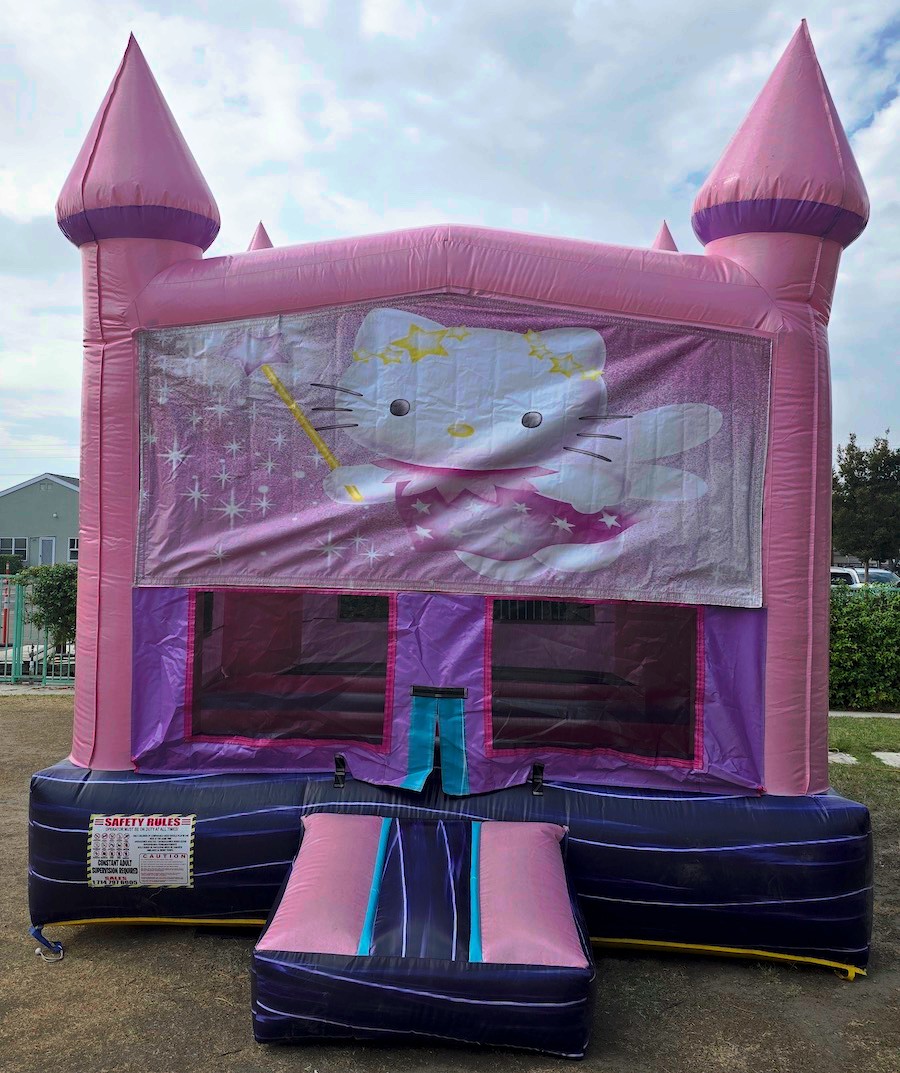
This is where the buying decision gets real. A dual lane waterslide commands a rental premium over a standard bounce house because it serves more kids simultaneously and creates a competitive, high-energy experience that parents are willing to pay for. In most Pacific Northwest markets, dual lane waterslides rent for $350 to $600 per day depending on unit size, local competition, and whether delivery and setup are included in the rate.
To build a simple break-even model, start with your all-in landed cost. If you paid $6,000 for the unit plus $450 in freight and $300 in accessories, your total investment is $6,750. At a rental rate of $450 per booking, you need 15 rentals to recover that cost before operating expenses. That's a clean break-even on the unit itself.
Now layer in operating costs. Each rental involves fuel for delivery, labor for setup and teardown (typically one to two hours each way), cleaning supplies, and wear on your vehicle. A reasonable estimate for those variable costs per rental might run $60 to $120 depending on your delivery radius and labor rate. At $90 per rental in operating costs, your net per booking drops to $360, and your break-even climbs to roughly 19 rentals.
Oregon's rental season for waterslides is concentrated. Demand is strong from late May through early September, with peak weekends in June, July, and August. A well-marketed dual lane unit in a mid-size Oregon market can realistically book 20 to 35 weekends in a strong season. That means a motivated operator could recover the full unit cost within the first summer, with the unit generating pure margin in year two and beyond.
The dual lane format specifically helps your revenue math because it reduces the "waiting line problem" at parties. When kids can race side by side, the unit stays in active use longer, which means hosts are happier and more likely to rebook or refer you. That word-of-mouth effect is harder to quantify but real in a local rental market where reputation drives repeat business.
For context on how combo units compare to standalone slides from a fleet planning perspective, the combo bounce house vs standalone slide for CA backyards guide walks through the trade-offs in a way that applies to fleet decisions regardless of state.
Specs and Sizing Considerations Before You Buy
Not all dual lane waterslides are the same, and the spec sheet details matter more for commercial buyers than for backyard renters. Here are the dimensions and features worth scrutinizing before you place an order.
Height is the most visible spec, but it's not always the most important one for fleet fit. Most commercial dual lane units range from 14 to 20 feet tall. Taller units generate more excitement and can support a higher rental rate, but they also require more setup space and a longer inflation time. A 16-foot unit is often the sweet spot for residential and community event bookings because it clears most backyard trees and fits through standard gate openings when deflated.
The footprint when inflated is the number that determines whether the unit actually fits at your customers' venues. A typical dual lane waterslide needs a flat area of roughly 20 feet wide by 30 to 40 feet long, plus a few feet of clearance on each side. That's a meaningful footprint for a residential backyard. Before you buy, think about the average lot size in your primary service area and whether that footprint is realistic for most of your bookings.
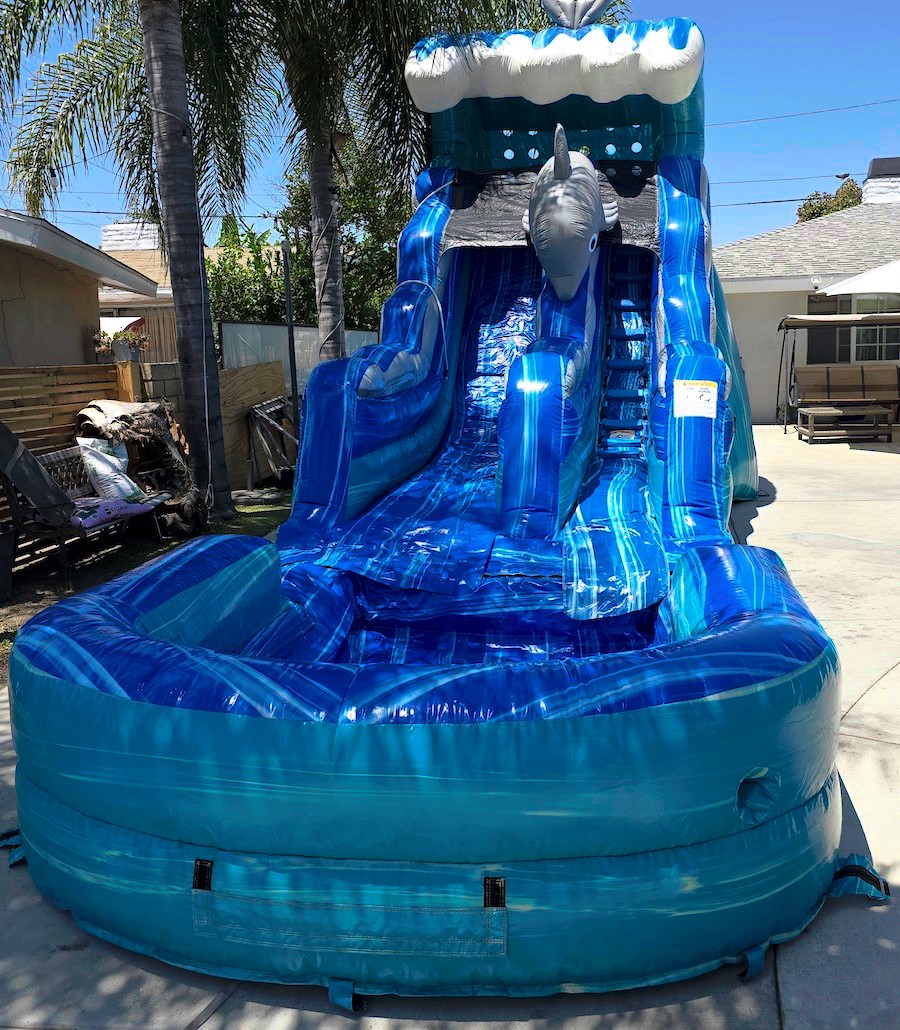
Pool size at the base of the slide affects both the fun factor and the water volume required. Larger splash pools are more appealing to kids but take longer to fill and drain. If your customers are on well water or have low water pressure, a very large pool can create a setup headache. Look for a pool that's generous enough to be safe but not so large that it creates logistical friction on every job.
Anchor point placement and quantity matter for safety compliance. A commercial unit should have multiple anchor points on each side and at the base. Confirm that the anchor configuration is compatible with both grass staking and sandbag anchoring, since some Oregon venues won't allow ground stakes. The bounce house anchoring and staking setup guide covers the practical side of anchoring in detail.
Finally, look at the blower spec. Most dual lane waterslides in this size range require a 1.5 HP to 2 HP continuous-duty blower. Confirm the unit ships with a compatible blower or that the vendor's recommended blower is readily available from a US supplier. Proprietary blower connections that require overseas sourcing are a maintenance headache you don't want in your first season.
Vendor Support, Warranties, and Long-Term Ownership Costs
A dual lane waterslide is a multi-year asset, and the vendor relationship doesn't end at delivery. How a supplier handles warranty claims, replacement parts, and repair support will affect your total cost of ownership more than the initial purchase price in some cases.
Most reputable commercial inflatable manufacturers offer a one-year warranty on seams and materials, with some extending coverage to two or three years on structural components. Read the warranty language carefully. Many warranties exclude damage from improper anchoring, overloading, or use in wind conditions above the rated threshold. Those exclusions aren't unreasonable, but they mean your operating practices directly affect whether a warranty claim will be honored.
Ask the vendor specifically about patch kit availability and whether they sell replacement panels for high-wear areas like the climbing wall and the lane divider. A supplier who stocks repair materials and can ship them quickly is worth a small price premium over a vendor who offers no post-sale support. Downtime during peak season is expensive, and a unit sitting in your garage waiting for a repair part costs you real revenue.
For a deeper look at how to evaluate warranty terms before committing to a purchase, the evaluating inflatable warranties before buying guide covers the key questions to ask any vendor.
Storage is an ongoing cost that Oregon operators sometimes underestimate. A deflated dual lane waterslide typically packs down to a bundle roughly 4 feet by 4 feet by 3 feet, weighing 180 to 280 pounds. You'll need a dry, climate-controlled storage space to prevent mold and material degradation during the off-season. If you're renting storage space, factor that monthly cost into your annual ownership math. A unit stored improperly through a wet Oregon winter can develop mold or seam separation that voids your warranty and shortens the unit's useful life.
Depreciation is worth modeling even if you're not a large operation. A well-maintained commercial waterslide has a useful life of five to eight years under normal rental use. If you paid $6,750 all-in and expect seven years of service, your annual depreciation is roughly $965. That's a real cost even if it's not a cash outlay each year, and it should inform how you price your rentals to ensure the unit pays for its own replacement over time.
Oregon fleet operators who want to explore the full range of commercial inflatable buying considerations, from wholesale sourcing to fleet scaling, can find additional resources through the Jump High Rentals guides library. The team at Jump High is also happy to point operators toward reputable wholesale vendors and share practical fleet planning perspective, even for markets outside Orange County.