
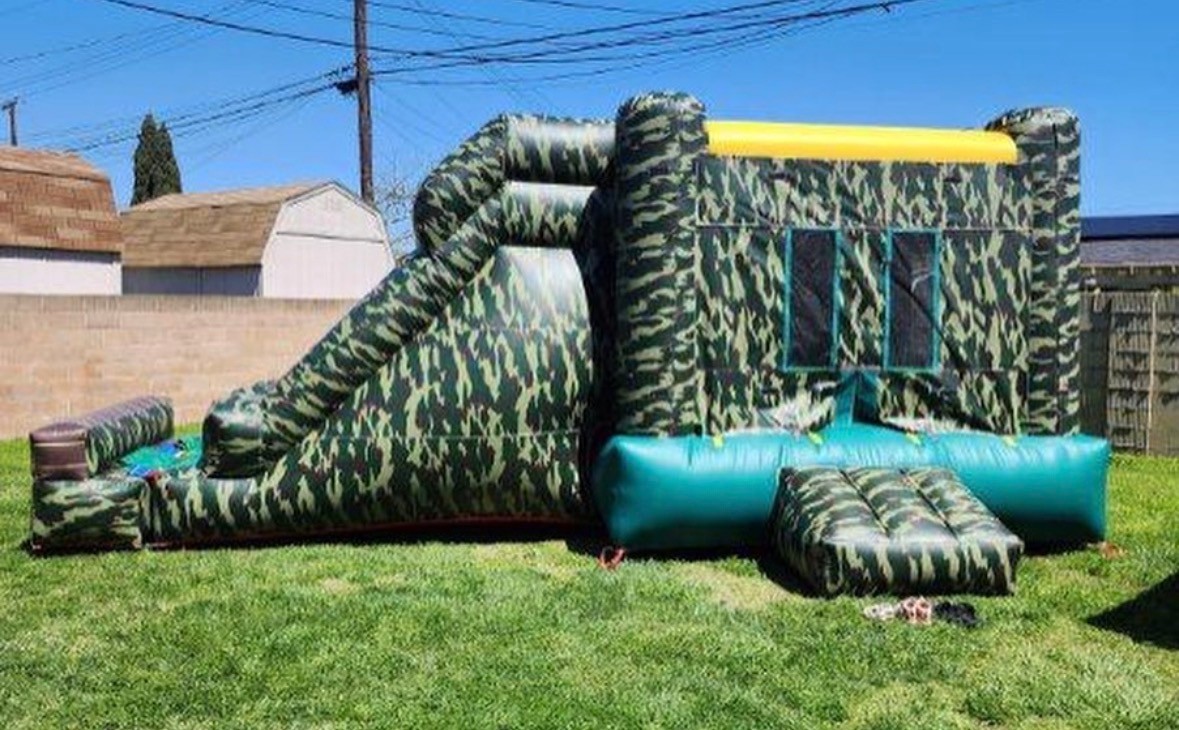
Booking a bounce house for your child's birthday party feels straightforward until you realize there are actually three separate numbers you need to understand before the first kid climbs inside. Weight limits, occupant counts, and age guidelines each mean something different, and on a busy afternoon with a mixed-age guest list, confusing them is one of the most common mistakes Orange County parents make.
This guide breaks down what those numbers mean, where they come from, and how to use them to keep every child at your party safer, whether you are hosting a small backyard birthday in Anaheim or a larger neighborhood event in Irvine.
Weight Limits, Occupant Counts, and Age Guidelines Are Not the Same Thing
These three limits often get lumped together, but each one measures a different kind of stress on the inflatable.
Weight limit refers to the total combined weight the unit is rated to hold at one time. Exceeding this number puts strain on the seams, anchor points, and blower motor. It is a structural limit, not a headcount.
Occupant count is the maximum number of people allowed inside the bounce area simultaneously. This number is based on usable floor space and safe jumping clearance. A unit might technically hold the weight of six children while only having safe floor space for four.
Age guidelines are a separate category entirely. They reflect developmental readiness, bone density, coordination, and the risk of collision injuries, not the size or weight of the child. A five-year-old who weighs 45 pounds is well within most weight limits but may still face higher injury risk than an eight-year-old of the same size.
The safest approach is to treat each limit as its own rule and follow whichever one is most restrictive for your specific group. If the unit label says maximum six occupants and your group of six kids collectively exceeds the weight limit, the weight limit wins. Both limits apply at the same time.
What the Numbers Actually Look Like on a Standard Bounce House
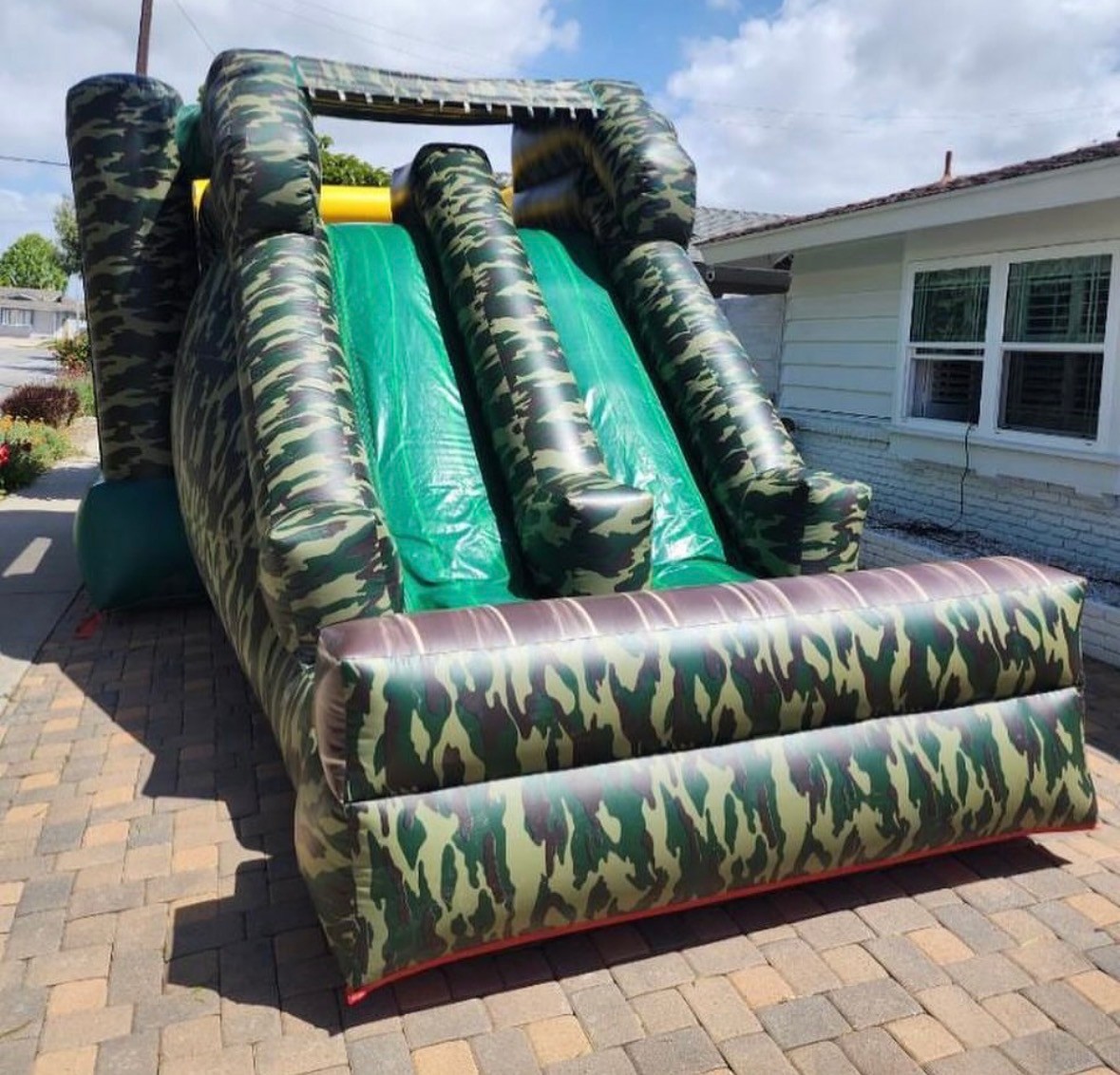
Published weight limits vary by model, but some commonly cited ranges give you a useful starting point for planning.
- Small residential units often carry a total weight limit in the range of 600 to 800 pounds.
- Medium units typically fall between 800 and 1,000 pounds total.
- Larger commercial-grade inflatables can be rated at 1,000 to 1,500 pounds or more.
Per-person limits also appear on some unit labels, often in the range of 100 to 170 pounds for standard bounce houses, with higher ratings on commercial models. These per-person numbers matter most when older siblings, teens, or adults want to join younger kids inside.
The most important thing to understand is that these ranges are general illustrations. The exact numbers for the specific inflatable being delivered to your backyard are printed on the unit label, and those posted numbers are the ones that apply. A general internet search cannot tell you the limit for the model sitting in your driveway on party day.
When you book with Jump High Rentals, ask for the exact model name and its posted maximum occupants and total weight limit before your event date. That gives you time to plan your rotation schedule and decide whether the unit is the right fit for your guest list.
Age Guidance: Why the 3-Plus Rule and the 6-Plus Rule Both Exist
If you have searched bounce house safety online, you have probably seen both of these numbers and wondered which one to follow. The short answer is that they come from different sources with different priorities.
Many rental industry guidelines use age 3 as a general minimum, reflecting that most three-year-olds have enough coordination to participate with close supervision. This is a practical starting point for rental planning, not a medical recommendation.
The American Academy of Pediatrics and the Consumer Product Safety Commission take a more conservative position, recommending age 6 as the minimum for bounce house use. Their guidance is based on injury data showing that younger children are more likely to sustain fractures and head injuries, particularly when they are bouncing alongside bigger kids.
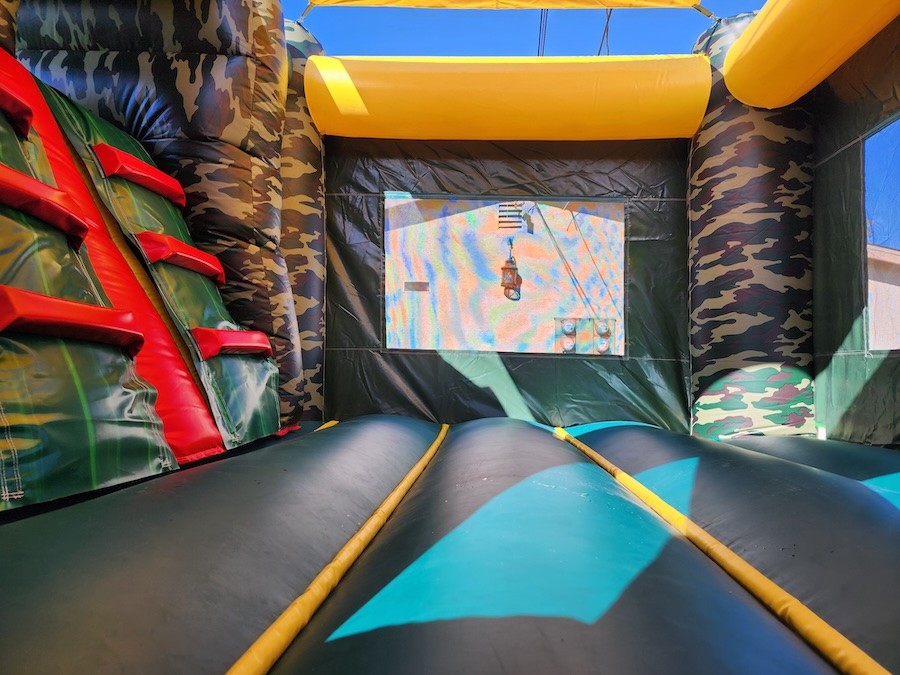
CHOC (Children's Hospital of Orange County) recommends keeping children under 6 off bounce houses and advises that if younger children do participate, groups should be very small and limited to children of similar size and age.
For Orange County parents, the practical takeaway is this: the younger and smaller the child, the more supervision and structure they need. A three-year-old bouncing with other three-year-olds in a dedicated toddler unit is a very different situation than a three-year-old sharing a standard bounce house with eight-year-olds.
Mixed-Age Parties and Toddlers: When to Choose a Different Unit
The most common injury scenario in bounce houses is not a single child falling. It is a size mismatch. When a larger child lands near a smaller child, the force transfers in unpredictable ways, and younger kids often cannot brace or reposition quickly enough to avoid awkward landings.
If your guest list includes a wide age range, consider these alternatives before defaulting to a single standard bounce house.
- A toddler unit is scaled for smaller children and typically has lower walls, softer surfaces, and gentler bounce response. It is designed for the 2-to-5 age group and keeps little ones out of the path of bigger jumpers.
- A combo unit often includes a bounce area plus a small slide, giving older kids more to do while younger children use a designated section. Structured activity tends to reduce the chaotic pile-on dynamic that leads to collisions.
- An obstacle course channels energy into a directed path rather than open jumping, which can be easier to supervise at larger events like school carnivals, church festivals, or HOA block parties.
Separating age groups by unit is one of the most effective ways to reduce collision risk without limiting how many kids can participate overall.
How to Ask the Right Questions Before You Book in Orange County
Knowing what to ask makes the booking process much smoother and helps you arrive at party day with a clear plan. Here are the questions worth asking before you confirm any rental.
- What is the exact model name, and where can I find the posted weight and occupant limits?
- Does the unit have a per-person weight limit in addition to a total weight limit?
- Is this unit appropriate for the age range of my guests, including any children under 6?
- If I have toddlers attending, do you offer a toddler-specific unit or a combo layout that separates age groups?
- How many children should I plan to rotate in and out at a time to stay within the occupant limit safely?
One adult should be assigned to count children in and out of the unit throughout the party. Supervision from across the yard is not the same as active monitoring at the entrance. Designating one person to that role, rather than assuming everyone is watching, is one of the simplest safety upgrades you can make.
At Jump High Rentals, the team is happy to walk you through the specs for any unit before you book. Knowing your guest count, the ages of the children attending, and whether toddlers will be present helps match you to the right inflatable for your event. Reach out before your party date so you have time to plan rotations, choose the right unit size, and feel confident that every child at your Orange County party has a safe place to jump.