
Why Blower Specs Matter for Commercial Inflatables
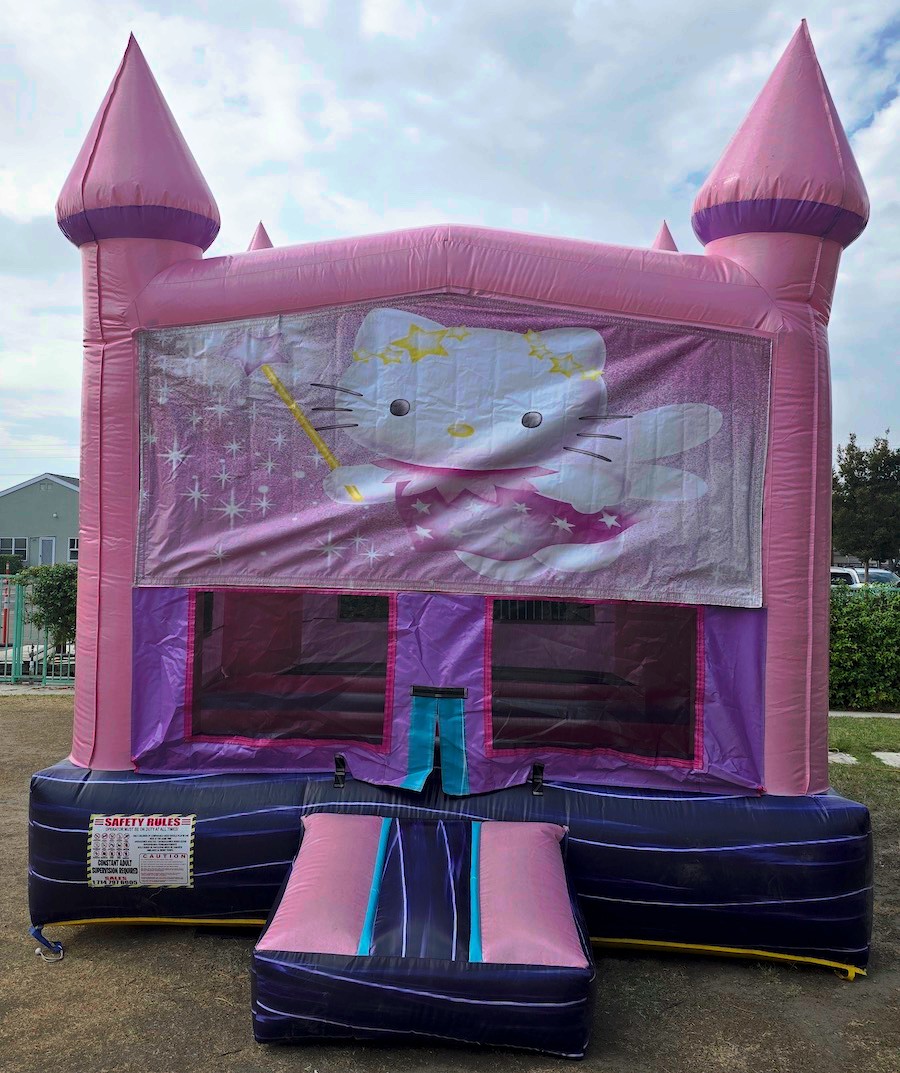
If you run a bounce house rental operation in California, your blower is the single most important piece of hardware in your fleet. The inflatable itself gets the attention, but the blower is what keeps it standing, safe, and ready for the next booking. Choosing the wrong blower, or ignoring the specs on a replacement, can lead to a unit that won't fully inflate, overheats mid-event, or trips a breaker at a school carnival in Anaheim when you have three other units running on the same circuit.
Commercial inflatables are not the same as the backyard units sold at big-box stores, and their blowers reflect that difference. A residential inflatable might run on a small 1/4 HP motor drawing minimal current. A commercial bounce house designed for continuous use across a full rental day needs a blower built for sustained airflow, heat dissipation, and repeated start-stop cycles. When you are scaling a CA fleet or evaluating a new unit purchase, understanding blower specs before you buy protects your investment from day one.
The stakes are higher in California than in many other states. Summer events in Orange County regularly see ambient temperatures above 90 degrees, and a blower that is undersized or poorly ventilated will struggle in that heat. Add the electrical infrastructure realities of older park pavilions, church fellowship halls, and HOA common areas, and you quickly see why spec literacy is not optional for serious fleet operators.
CFM, HP, and Voltage: What the Numbers Mean for CA Operators
Three numbers appear on every commercial inflatable blower spec sheet: CFM (cubic feet per minute), horsepower (HP), and voltage. Each one tells you something different, and all three need to match your unit and your event environment.
CFM measures the volume of air the blower moves per minute. This is the most direct indicator of whether a blower can keep a specific inflatable fully pressurized under real-world conditions, meaning kids jumping, doors opening and closing, and seams flexing throughout a four-to-six-hour rental window. Most commercial bounce houses in the 13-by-13-foot to 15-by-15-foot range run well on blowers rated between 600 and 900 CFM. Larger combo units, obstacle courses, and waterslide inflatables often require 1,100 CFM or more. The manufacturer's spec sheet for your specific unit is the authoritative source here, not a general rule of thumb.
Horsepower tells you about the motor's mechanical output. Commercial blowers for standard bounce houses typically fall in the 1 HP range, while larger units may call for 1.5 HP or higher. More HP generally means the motor can sustain its output under load without overheating, which matters enormously during a six-hour summer event. A blower that is technically rated for the unit but runs at the edge of its capacity all day will wear out far faster than one with a comfortable margin above the minimum requirement.
Voltage is where CA operators need to pay close attention. The vast majority of commercial inflatable blowers run on standard 110/120V single-phase power, which is what you will find at most residential locations and many park facilities. Some larger commercial units require 220V, which limits where you can deploy them without advance coordination. Before you add a 220V unit to your fleet, confirm that your most common venues can actually support it. Tripping a breaker at a Fullerton park event because you assumed the outlet was 220V-capable is the kind of problem that costs you a rebooking and a reputation hit at the same time.
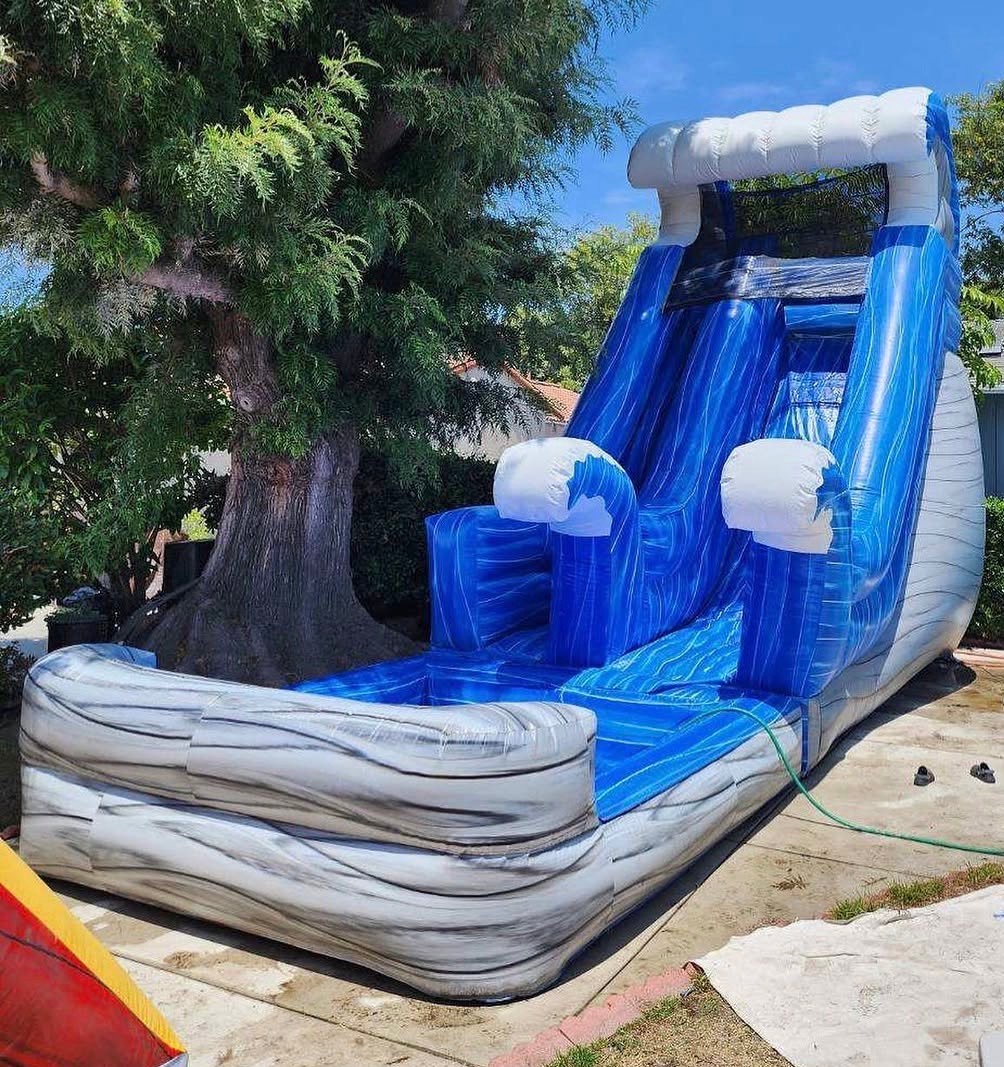
One more number worth tracking is amperage draw. Most 1 HP blowers pull between 10 and 12 amps at startup, with a lower running draw once the motor reaches operating speed. If you are running multiple units at a single event, you need to know the combined amperage load against the available circuit capacity. The Jump High guide on power and extension cords for OC inflatables covers the practical side of this for event setups, and the same logic applies when you are planning a multi-unit deployment for a school field day or HOA block party.
How to Match a Blower to Your Inflatable Unit
Matching a blower to an inflatable is not guesswork. The manufacturer of your commercial unit specifies a blower size for a reason, and deviating from that spec in either direction creates problems. An undersized blower cannot maintain the internal pressure the unit needs to hold its shape safely under active use. An oversized blower can over-pressurize seams and stress attachment points, shortening the life of an expensive inflatable.
Start with the manufacturer's recommended CFM rating for your specific unit. If you purchased a commercial-grade bounce house from a reputable supplier, that number should be in the documentation. If it is not, contact the manufacturer directly and ask for the blower spec by model number. Do not rely on the physical size of the blower tube opening alone, because tube diameter does not directly translate to CFM output.
The blower tube diameter on most commercial units is either 9 inches or 12 inches. A 9-inch tube typically pairs with blowers in the 600 to 900 CFM range, while a 12-inch tube is designed for higher-output blowers. The fit between the blower outlet and the inflatable's intake tube matters for efficiency. A loose connection bleeds air and reduces effective CFM, which means even a correctly rated blower can underperform if the connection is not snug and secured with the appropriate strap or collar.
For CA fleet operators running units in warm conditions, it is worth choosing a blower with a thermal overload protection feature. This is a safety mechanism that shuts the motor down before it overheats rather than allowing it to burn out or create a fire hazard. Most reputable commercial blower brands include this as standard, but confirm it on the spec sheet before purchasing. You can also review how Jump High approaches inflatable maintenance and cleanliness to get a sense of the operational discipline that keeps commercial units running reliably across a full season.
Signs Your Blower Needs Replacement (and What to Do Next)
Even a well-matched, properly maintained blower has a service life. Recognizing the warning signs early saves you from a failed setup at a client's event and prevents a minor motor issue from becoming a full replacement emergency.
The most obvious sign is an inflatable that will not reach full pressure or deflates noticeably during use. Before you assume the blower is the problem, check the inflatable itself for seam tears, zipper failures, or loose tube connections. If the unit checks out structurally, the blower is the next suspect. A motor that is losing output will often run louder than normal, produce more heat than usual, or cycle on and off erratically as the thermal protection kicks in.
Unusual noise is another reliable indicator. A healthy commercial blower runs with a consistent hum. Grinding, rattling, or high-pitched squealing suggests bearing wear or debris inside the housing. Debris ingestion is more common than most operators expect, especially at outdoor events where grass clippings, sand, and small particles get pulled into the intake. Keeping the intake screen clean and clear is a simple maintenance habit that extends blower life significantly.
If the blower trips a breaker repeatedly on a circuit that should be adequate for its amperage draw, the motor may be drawing excess current due to internal wear. This is worth having evaluated by someone familiar with small motor repair before you assume the blower is finished, because sometimes a capacitor replacement or bearing service can restore normal function at a fraction of the cost of a new unit.
When replacement is the right call, move quickly. Running a rental season with a marginal blower is a risk to your equipment, your clients' events, and your reputation as a reliable CA operator. Keep at least one spare blower on hand for each tube diameter in your fleet. Sourcing a replacement the week of a busy summer booking is stressful and sometimes impossible at short notice.
Sourcing and Stocking Replacement Blowers for a CA Fleet
The commercial inflatable blower market has a handful of well-established manufacturers whose products appear across most reputable fleets. Brands like Rotom, Ametek, and Crown are commonly specified by inflatable manufacturers and are available through commercial party supply distributors, inflatable parts suppliers, and some direct-from-manufacturer channels. When sourcing replacements, match the CFM rating, HP, voltage, and tube diameter to your original spec rather than buying by brand name alone, because the same brand may offer multiple models with different output ratings.
For CA operators, sourcing from a distributor with West Coast warehouse inventory reduces lead time significantly compared to ordering from suppliers that ship exclusively from the East Coast or Midwest. Confirm shipping timelines before your busy season, not during it. If a blower fails in late June and your next available unit ships in ten business days, you have a problem that a little advance planning could have prevented.
Stocking strategy matters as much as sourcing. A fleet of ten units with two different tube diameters should have at least two spare blowers on hand, one for each diameter. If your fleet skews heavily toward one unit type, stock accordingly. The cost of a spare blower is modest compared to the revenue loss and client goodwill damage from a failed event.
When evaluating new commercial inflatable purchases, ask the supplier whether replacement blowers are readily available for the unit's specified model. Some lower-cost commercial units use proprietary blower connections or non-standard tube diameters that make replacement sourcing difficult. This is a meaningful factor in total cost of ownership that does not always appear in the initial purchase price comparison.
If you are building or scaling a CA rental fleet and want to see how commercial-grade inflatables are spec'd and maintained in real Orange County operating conditions, browse the Jump High rental fleet to get a sense of the unit types and scale involved. For specific questions about how we approach equipment selection and maintenance, reach out through the contact page. And if you are still working through the broader logistics of running inflatables at multi-unit events, the Jump High guides library covers everything from park permit events to HOA block parties with the same operational detail that informs how we manage our own fleet.