
Why HOA Pool Parties Need a Different Planning Approach
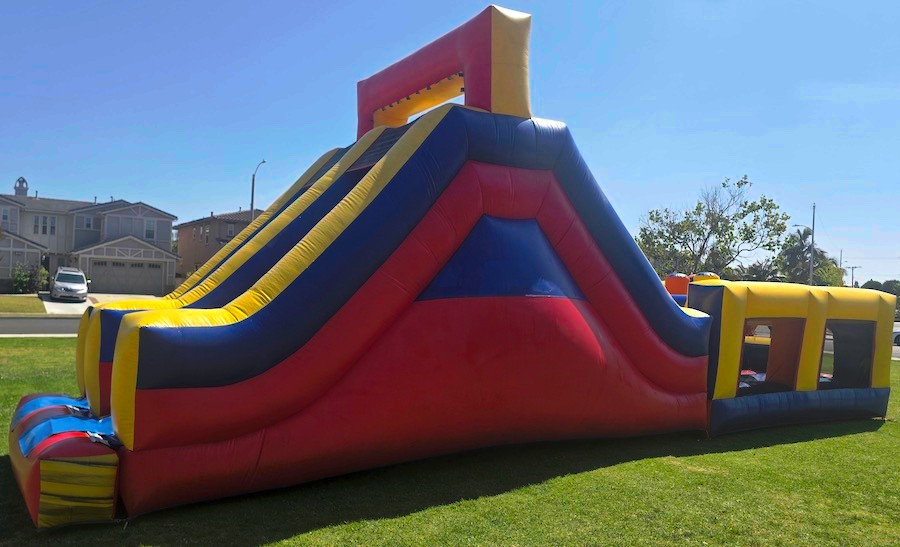
Planning a neighborhood pool party through your HOA is genuinely exciting. You get a built-in community, a beautiful shared space, and a guest list that can stretch from a handful of families to well over a hundred kids and adults. But that same shared space comes with a layer of coordination that a private backyard birthday simply doesn't require, and understanding those differences early is what separates a smooth summer celebration from a stressful one.
The first thing most coordinators discover is that access is more complicated than expected. Pool areas in HOA communities often have coded gates, limited parking near the deck, and narrow pathways that a delivery truck and crew need to navigate. A bounce house or waterslide isn't a small package. It arrives on a truck, gets unloaded by a team, and needs a clear path from the curb to the setup spot. If that path runs through a locked gate or a narrow corridor between buildings, your rental company needs to know before the morning of the event, not during it.
Timing constraints add another layer. Many HOA communities have quiet hours, rules about when vendors can arrive, and shared-space scheduling that limits how early setup can begin. If your event starts at noon and setup requires 45 minutes to an hour, a vendor arrival window that opens at 11:30 doesn't leave much room for surprises. Confirming your setup window with both the HOA management and your rental company at the time of booking is one of the most practical things you can do to protect your event day.
Guest count matters here too, and not just for headcount planning. Larger community events often trigger different permit requirements than a private backyard party would. If you're expecting 50 or more kids, the planning timeline and the questions you ask your rental company should reflect that scale. The inflatable rental checklist for OC parties with 50 guests is a helpful starting point for coordinators managing larger community turnouts.
Choosing the Right Inflatable for a Pool Deck or Shared Green Space
HOA venues tend to offer two types of usable space: the pool deck itself, and an adjacent grass or hardscape area nearby. Each surface has different implications for which inflatable works best and how it gets anchored safely.
Pool decks are typically concrete or pavers. They're flat and firm, which is good for stability, but they require a different anchoring approach than grass. Stakes can't go into concrete, so sandbags or weighted anchoring systems are used instead. This is standard practice for experienced rental companies, but it's worth confirming with your rental team that they carry the right equipment for your specific surface. The guide to bounce house setup on pavers and hardscape in CA walks through what that process looks like in more detail.
Footprint is the other critical factor on a pool deck. The area around a community pool is rarely as open as it looks in photos. You have fencing, furniture, safety equipment stations, and the pool edge itself to work around. Before booking any inflatable, measure the available space carefully and account for the full inflatable footprint plus at least three feet of clearance on all sides. A unit that looks like it fits on paper may not leave enough room once you factor in the blower, the entry ramp, and the safety buffer from the pool edge.
For grass areas adjacent to the pool, a wider range of options opens up. A combo bounce house and waterslide can be a great fit for a summer community event because it gives kids two activities in one footprint, which helps manage flow and reduces crowding. If your HOA green space is large enough, an inflatable obstacle course can also work well for older kids and teens who want something more active than a standard bounce house. The obstacle course versus bounce house guide can help you think through which format fits your crowd.
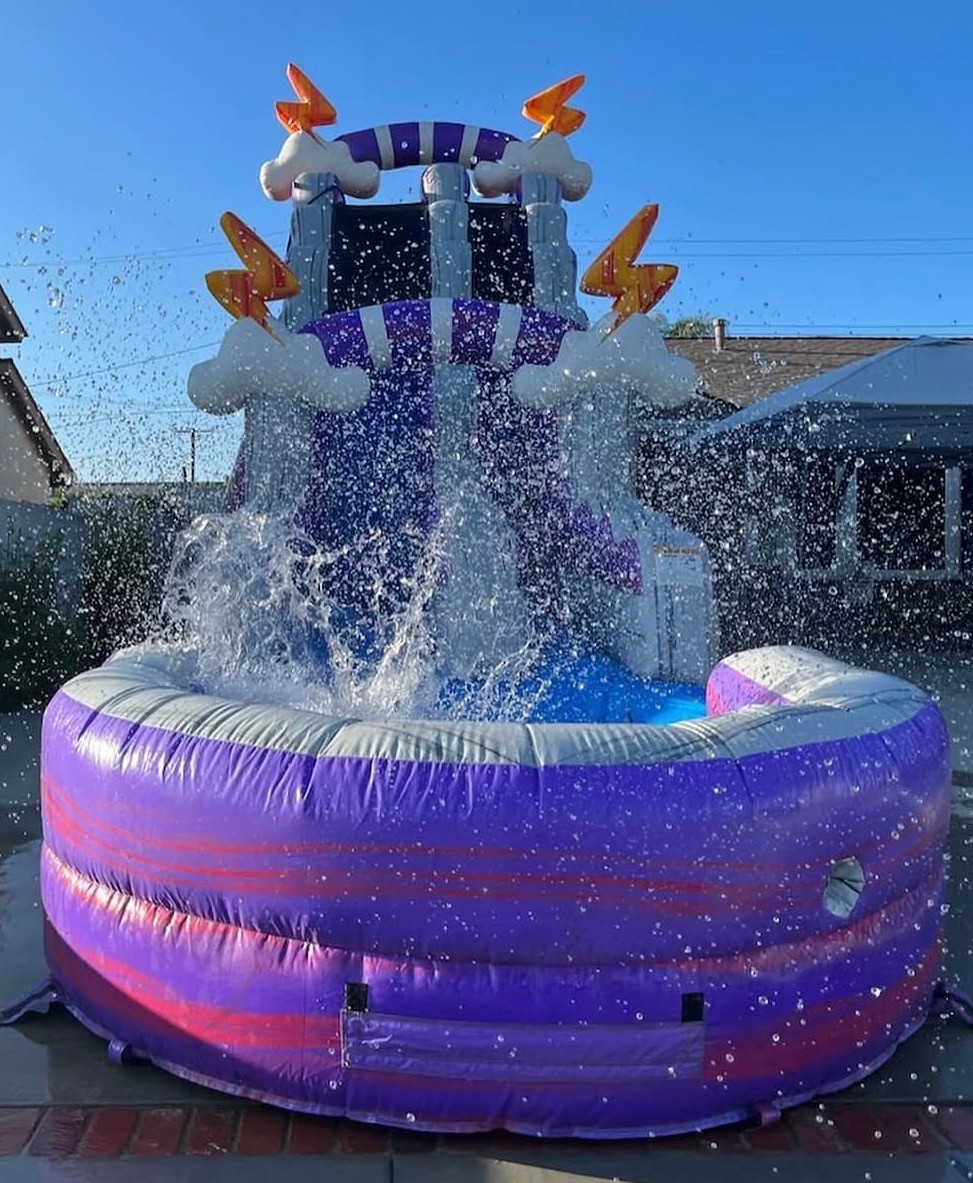
One practical note on waterslides near pools: a waterslide inflatable is a separate attraction from the community pool, not a replacement for it. Kids use the inflatable slide independently, and the two activities run in parallel. Keeping those zones clearly defined for parents and supervisors on the day of the event helps everyone stay oriented and keeps the energy organized.
Permits, HOA Approval, and What to Confirm Before You Book
This is the area where HOA pool party planning diverges most sharply from a backyard birthday, and it's where early action pays off the most.
If your event is taking place on HOA-managed private property, your primary approval path runs through the HOA board or management company. Most HOAs require advance notice for vendor deliveries, and some require a certificate of insurance from the rental company before approving the event. Jump High Rentals can provide documentation to support your approval process, so ask about that when you reach out to book. Confirming what your HOA specifically requires before you finalize your rental is the cleanest way to avoid a last-minute scramble.
If your event is at a community park or a facility managed by a city, county, or state authority, the permit picture gets more layered. A park reservation alone is generally not enough to authorize an inflatable. The inflatable permit is typically a separate application, and it runs through a different department than the facility reservation. Treating those as two parallel tasks rather than one sequential process saves significant time.
For events at California state parks in 2026, inflatable permit applications need to be submitted at least 30 days in advance, and there is a $25 application fee. City and county park requirements vary, so checking with the specific park authority early is the right move. The guide to getting a bounce house permit for an OC park event covers the general process in more detail and is worth reviewing before you start your application.
One thing worth saying clearly: Jump High Rentals can tell you what documentation they provide and what their equipment meets in terms of safety standards, but the permit process itself is your responsibility as the event organizer. Starting that process four to six weeks before your event date gives you enough runway to handle any back-and-forth with the permitting authority without it affecting your booking.
Setup Logistics: Access, Anchoring, and Timing at Shared Venues
The day-of experience at an HOA pool party is shaped almost entirely by how well the pre-event logistics were communicated. When the delivery crew arrives and everything is already confirmed, setup moves quickly and the event starts on time. When there are surprises, even small ones, they tend to compound.
Gate access is the most common friction point. If your pool area requires a code, a key fob, or a staff escort to enter, that information needs to be shared with your rental company before delivery day. The same applies to parking. If the closest parking to the pool is reserved or limited, knowing that in advance lets the crew plan their approach and bring the right equipment to move the inflatable from a farther drop-off point.
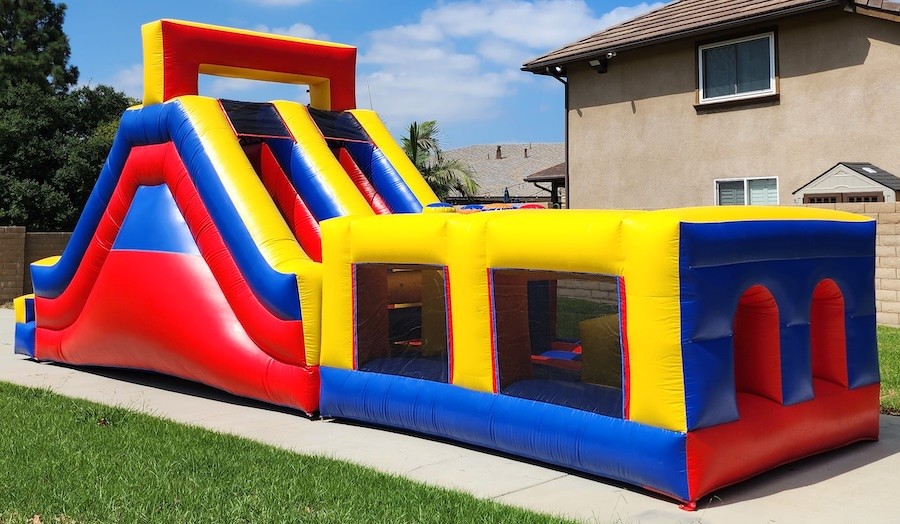
Setup time for most inflatables runs between 30 and 60 minutes depending on the unit size and the surface conditions. Larger combo units or obstacle courses may take longer. Building a buffer into your event schedule so that setup is fully complete before guests arrive is a simple way to start the day without stress. The guide on what to expect on delivery day for OC inflatable rentals gives a clear picture of the full process from truck arrival to blower-on.
Anchoring at pool-area venues deserves specific attention. Concrete and paver surfaces require sandbag anchoring, and the number of sandbags needed depends on the unit size and the wind conditions expected that day. Orange County summers are generally calm, but afternoon marine layer and occasional coastal breezes are real factors, especially in communities closer to the coast. Confirming that your rental company will assess wind conditions and anchor accordingly is a reasonable question to ask at booking. For more on how wind affects inflatable safety, the wind speed limits and inflatable safety guide for OC parties is a useful reference.
Power is another practical detail. Most inflatables require a standard electrical outlet for the blower. If your pool area doesn't have an accessible outdoor outlet near the setup spot, you may need a generator or a long-rated extension cord. Confirming the power situation with your rental company before the event avoids a last-minute scramble on setup day. The power and extension cord guide for OC inflatables covers what to check and what to avoid.
Making Summer Fun Last: Booking Tips for OC's Busiest Party Season
Orange County summers are warm, long, and full of community events. That's wonderful for families and HOA coordinators who want to create memorable neighborhood moments. It also means that the most popular weekends in June, July, and August fill up faster than most people expect.
For HOA pool parties, the booking timeline is even more compressed than for a private backyard event. You're coordinating not just the rental but also the HOA approval, the permit process (if applicable), the facility reservation, and the vendor access logistics. Each of those steps takes time, and they often depend on each other. Starting the rental conversation six to eight weeks before your event date gives you enough room to work through all of them without feeling rushed.
Summer heat is also worth planning around, not just for the kids' comfort but for the inflatables themselves. Direct sun on a dark-colored bounce house can raise the surface temperature significantly, and shade placement matters. If your pool area has covered sections or trees nearby, positioning the inflatable to take advantage of natural shade is worth discussing with your rental team during the planning call. The guide on keeping your bounce house cool during OC summer parties has practical tips that apply directly to pool-area setups.
For HOA coordinators managing larger community events, the HOA community event inflatable rental guide for OC is a natural companion to this piece. It covers multi-unit setups, vendor coordination for bigger guest counts, and how to structure the event flow when you have both inflatables and other activities running at the same time.
The best community pool parties feel effortless to the families who attend them. That feeling is almost always the result of a coordinator who started planning early, asked the right questions, and worked with a rental company that understood the venue. Jump High Rentals serves HOA events across Orange County and is familiar with the access, anchoring, and timing considerations that come with shared community spaces.
If you're organizing a summer pool party for your neighborhood and want to talk through which inflatable fits your venue, reach out to the Jump High team early. Summer weekends go fast, and getting your date secured while your options are still wide open makes the whole planning process a lot more enjoyable.