
What a Bounce House Weather Policy Actually Covers
When you book a bounce house for a backyard birthday in Orange County, the excitement of picking the right unit and counting down the days can make it easy to overlook one important document: the vendor's written weather policy. Most families assume that once the deposit is paid and the date is confirmed, the party is locked in. Weather can change that assumption quickly, and knowing what a policy actually says before you sign is one of the smartest moves you can make as a host.
A weather policy is not a promise that your event will go on no matter what. It is a set of written rules that describe the conditions under which a rental company will set up, keep running, pause, or cancel an inflatable. Policies vary from one vendor to the next, so the details matter. Some companies offer a credit toward a future date if weather forces a cancellation. Others have a specific cutoff time, meaning if you cancel within a certain window before delivery, the deposit terms change. A few vendors outline a reschedule option with no penalty if conditions fall outside safe operating thresholds.
What you want to look for in any policy is clarity on three things: what weather conditions trigger a cancellation or early pickup, who makes that call (you, the company, or both), and what happens to your payment if the event cannot proceed. Reading those three points before you book puts you in a much stronger position than discovering them the morning of the party. You can review Jump High's rental options while you plan, and the FAQ page covers common booking questions that come up during this stage.
Wind, Rain, and Wet Surfaces: The Real Safety Concerns
Of all the weather factors that affect inflatable rentals, wind is the one that gets the most attention from safety-conscious companies, and for good reason. An inflatable that is properly staked and anchored on a calm day can become unstable when sustained winds or gusts exceed safe operating thresholds. Most professional rental companies follow a wind threshold guideline, often somewhere in the range of 15 to 25 miles per hour depending on the unit size and type, though the specific number varies by vendor and equipment. If you want to understand how wind thresholds work in more detail, the wind speed limits and inflatable safety guide is a helpful starting point.
Rain introduces a different set of concerns. The inflatable itself may not be destroyed by getting wet, but the surface conditions around and inside the unit change significantly when water is involved. Wet vinyl becomes slippery, and children moving in and out of a bounce house on a rainy day face a higher risk of slipping on the entry ramp or surrounding ground. Puddles near the blower or power connections also create hazards that go beyond the inflatable itself. Even a light drizzle that seems manageable from inside the house can make the setup area genuinely unsafe for kids.
Wet surfaces extend the concern beyond the inflatable's footprint. A backyard with standing water, muddy patches, or a slick patio near the unit creates a zone where kids are running, jumping, and transitioning in and out of the inflatable at full speed. That combination of wet ground and excited children is exactly the scenario that a thoughtful weather policy is designed to address. It is also worth noting that a "wet or dry" combo unit is not a free pass to operate in any rain condition. Those units are designed for intentional water play in controlled conditions, not for use during active rainfall with poor drainage or slick surrounding surfaces.
Questions to Ask Your OC Rental Company Before You Book
Asking the right questions before you pay a deposit is the single best way to avoid a stressful morning-of conversation. Start with the most direct question: "Can I see your written weather policy?" A reputable company will share it without hesitation. If the answer is vague or verbal only, that is worth noting before you commit.
From there, ask specifically about wind. What is the wind speed threshold at which the unit needs to come down? Does the company monitor forecasts on their end, or is the host responsible for making that call? Knowing who holds that responsibility matters, because if conditions deteriorate during the party, you want a clear process rather than a guessing game.
Ask about rain separately from wind. Some policies treat them the same way, while others have different terms for light rain versus a full storm. Find out whether a light drizzle triggers the same response as a heavy downpour, and whether the company will send a crew to take down the unit early if conditions change mid-event.
Finally, ask about your options if the weather forces a cancellation. Is there a credit, a reschedule window, or a partial refund? What is the cutoff time for making that decision? Getting those answers in writing, even as a confirmation email, protects both you and the company. The bounce house rental deposits and cancellation policies guide walks through what those terms typically look like so you know what to expect going in.
How Your Venue Type Changes the Weather Equation
Where you are hosting the event changes how weather affects your rental in practical ways. A backyard in Yorba Linda with mature trees and a solid grass surface drains and dries differently than a concrete patio in Costa Mesa or a park lawn in Laguna Hills. Each setting comes with its own weather-related considerations, and a good rental company will factor those in when discussing setup.
Backyard setups on grass give you the most flexibility in most cases. Grass absorbs light rain reasonably well, and a properly staked inflatable on a flat lawn has good anchoring options. The challenge comes when the ground is already saturated from earlier rain, because soft or muddy soil can compromise stake depth and drainage around the unit. If your yard has a slope, wet conditions make that slope more relevant to safety. The water slide rental setup on sloped CA backyards guide covers that specific scenario in more detail.
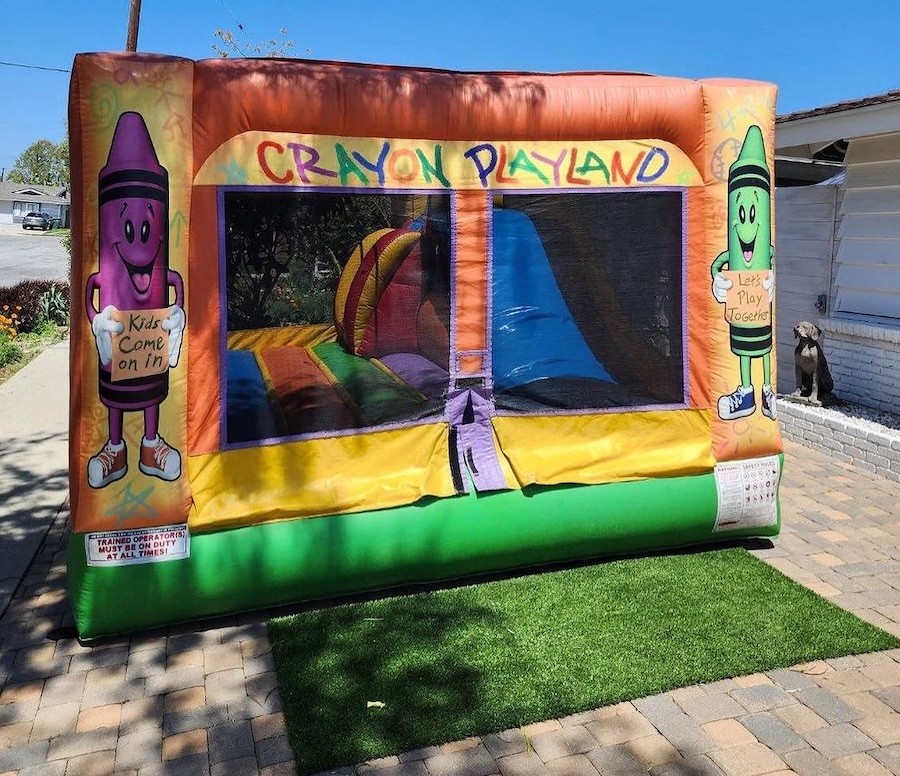
Concrete and paver surfaces handle rain differently. Water does not absorb into hard surfaces, so runoff and pooling become the main concerns. Anchoring on concrete also requires a different approach than grass staking, which affects how the unit responds in wind. If your party is on a patio or driveway, confirm with your rental company that their setup crew is equipped for that surface type and that the weather policy accounts for hard-surface drainage.
Park events add a layer of complexity that goes beyond the inflatable itself. Many Orange County parks require permits for inflatable rentals, and some parks have their own rules about weather-related closures. If the park closes due to conditions, your rental may need to be cancelled regardless of the vendor's own policy. Families planning park events should confirm both the park's weather closure rules and the rental company's policy so there are no surprises. The inflatable rentals for Irvine Park permit events guide is a useful reference for understanding how those layers interact.
What to Do If Conditions Change on Party Day
Even the most carefully planned party in Orange County can run into a weather surprise. The marine layer that looked like it would burn off by 10 a.m. sometimes sticks around longer than expected. A Santa Ana wind event can pick up faster than a morning forecast suggested. Knowing your next steps before that happens keeps you calm and keeps the kids safe.
The first thing to do when conditions start shifting is to contact your rental company directly. Do not wait until the wind is already gusting or the rain has started. Most companies appreciate an early call because it gives their crew more flexibility to respond. If the policy includes a weather credit or reschedule option, the earlier you communicate, the smoother that process tends to go.
If the company advises taking the unit down early, follow that guidance. The inflatable is a piece of equipment with safety thresholds, and the crew who set it up understands those thresholds better than anyone. Deflating and securing the unit before conditions worsen is always the right call, even if it means cutting the bounce time short. Kids are resilient, and a party that pivots to indoor games or a rescheduled date is far better than one that ends with an injury.
On the planning side, having a simple backup activity in mind before party day is a low-effort way to protect the fun. A playlist, a craft table, or a movie setup in the garage gives you something to pivot to without scrambling. Orange County summers are reliably warm and dry from roughly April through October, which is also the peak booking season for inflatables. Booking early and confirming your weather policy in writing during that window means you are prepared for the rare day when the forecast does not cooperate.
If you are ready to browse units or want to talk through the weather policy before you commit, the Jump High Rentals contact page is the best place to start. The team can walk you through the written policy, confirm what your specific venue and date look like from a weather planning perspective, and help you find the right unit from the full rentals catalog. A little preparation before booking day makes the actual party day a whole lot more fun.