
Why Artificial Turf Is Common in OC Backyards (and What That Means for Inflatables)
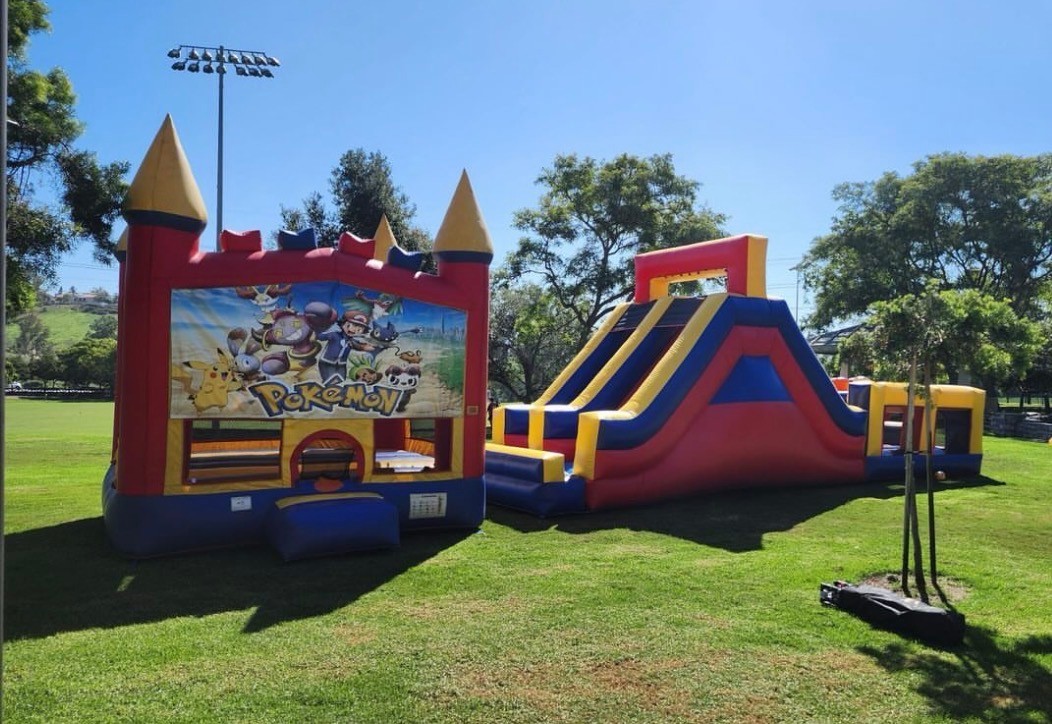
Walk through almost any neighborhood in Irvine, Mission Viejo, or Yorba Linda and you will spot it: lush, perfectly green backyard turf that never browns in the summer heat. Artificial grass has become a go-to choice for Orange County homeowners dealing with water restrictions, drought conditions, and the general challenge of keeping natural lawn alive through long, dry California summers. For families who host backyard birthday parties, it also means a clean, mud-free surface that looks great in photos and holds up to foot traffic from a crowd of kids.
But when a bounce house enters the picture, that synthetic lawn raises a few questions worth thinking through before you book. Can the anchoring stakes go into turf without damaging it? Will the blower and base of the inflatable create moisture problems underneath? Is the yard actually large enough once you account for the inflatable footprint and the clearance a safe setup requires? These are practical questions, and the good news is that artificial turf is a workable surface for inflatables in most Orange County backyards. The key is making sure the setup is matched to your specific yard rather than assuming everything will work out on delivery day.
This guide walks through what parents with synthetic grass yards should check before booking, so the event day goes smoothly from the moment the crew arrives.
How Bounce Houses Are Anchored on Synthetic Grass
Anchoring is the most important safety consideration for any inflatable, regardless of surface. A bounce house that is not properly secured can shift during use, and on a slippery synthetic surface, that risk is worth taking seriously. The good news is that artificial turf does not prevent proper anchoring. It does, however, require a slightly different approach than a natural grass yard.
On natural grass, ground stakes are driven directly into the soil. On synthetic turf, the same anchoring points exist, but the installer needs to locate the anchor holes built into the turf system or work around the backing material carefully. Most professionally installed synthetic turf in Orange County has a compacted aggregate base beneath it, and stakes can be driven through the turf backing and into that base without causing lasting damage to the surface. The pile height and backing thickness of your specific turf can affect how this works, which is why it helps to share that information with your rental company before the event.
At Jump High Rentals, the setup crew assesses the surface on arrival and confirms that anchoring points are secure before the inflatable is inflated. If you are curious about how that process works for your specific yard, the FAQ page covers common setup questions, and the team is happy to talk through your turf type when you reach out before booking.
One practical tip: if your turf was installed with a putting green or decorative edging around the perimeter, let the crew know in advance. Those areas sometimes have different base materials or edging hardware that can affect where stakes can safely go. A quick heads-up before delivery day prevents any surprises during setup.
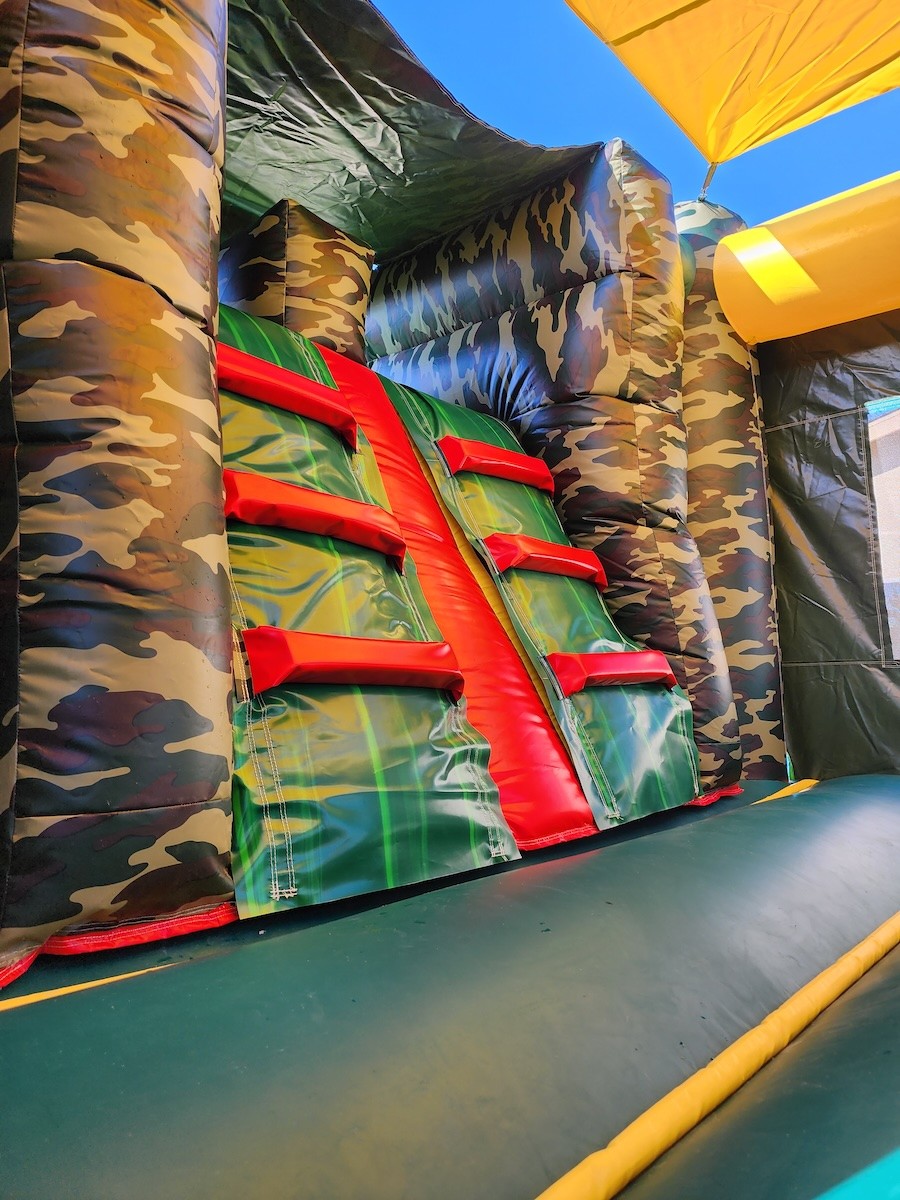
For a deeper look at anchoring practices across different surfaces, the guide on bounce house anchoring and staking setup covers the full picture, including what differs between grass, concrete, and pavers.
Yard Size, Access, and Clearance on Turf Surfaces
Artificial turf yards in Orange County tend to be compact and well-defined. That is part of their appeal: a clean, contained outdoor space that is easy to maintain. But compact yards also mean that the inflatable footprint, the blower placement, and the safe clearance zones around the unit all need to fit within a tighter area than you might find at a park or a larger suburban lot.
Before booking, measure your turf area carefully. The inflatable itself has a listed footprint, but you also need to account for the blower (which sits outside the unit and needs its own clear space), the entry and exit points for kids, and a buffer zone around all sides of the inflatable. A general rule of thumb is to add at least two feet of clearance on each side beyond the unit's listed dimensions, and more is better when kids are jumping and may exit unexpectedly.
Yard access is the other piece that catches parents off guard. Most OC backyards are accessed through a side gate, and that gate width determines whether the inflatable can be carried through in one piece or needs to be partially deflated and maneuvered through a narrow opening. A standard side gate in many Orange County neighborhoods runs between 36 and 48 inches wide. Some inflatables require a wider opening, and some can be navigated through a narrower passage with the right crew approach. The guide on backyard gate clearance for OC bounce house rentals walks through exactly what to measure and how to communicate that to your rental company.
If your turf area is on the smaller side, that does not automatically rule out an inflatable. It may mean choosing a compact bounce house rather than a large combo unit, or positioning the unit along one side of the yard to preserve a clear path for guests. The guide on how to pick the right bounce house size for your backyard can help you match the unit to your actual space before you finalize a booking.
Moisture, Drainage, and Cleanliness on Turf Event Days
One of the reasons parents love synthetic turf is that it drains quickly and does not turn into mud after a sprinkler cycle or a light rain. That drainage quality is generally a plus for inflatable setups, but there are a few moisture-related details worth knowing before event day.
If your irrigation system runs on a timer, turn it off the night before and the morning of your event. Even well-draining turf can hold surface moisture after a watering cycle, and a damp base under the inflatable is not ideal for either the unit or the turf backing. If there has been recent rain, check that the turf surface is fully dry before the crew arrives. Wet synthetic grass can be slippery, and a moist base can affect how securely stakes hold during the event.
For dry-use inflatables (standard bounce houses and obstacle courses), the turf surface should be completely dry on setup day. For wet inflatables like waterslides, the water runoff will flow across the turf surface, and you will want to confirm that your drainage system can handle the volume without pooling near the unit's base. If you are considering a waterslide for a turf yard, the guide on waterslide rental setup on sloped CA backyards covers how slope and drainage interact with wet inflatable setups.
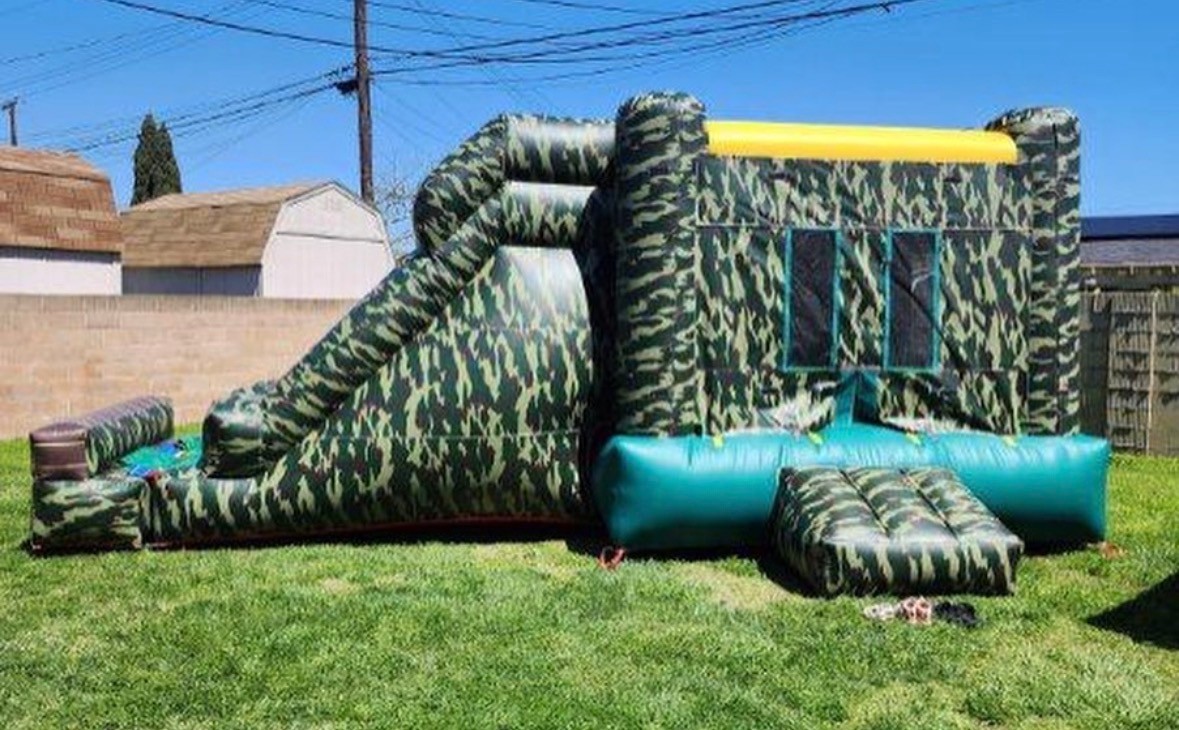
Cleanliness is a consistent priority for Orange County parents, and it is worth knowing that a clean inflatable on a clean turf surface is a realistic expectation when you book with a company that inspects and sanitizes units between rentals. The guide on how inflatables are cleaned and sanitized in OC explains what that process looks like and what parents should expect when the unit arrives.
One more practical note: synthetic turf can get hot in direct afternoon sun during Orange County summers. If your event runs through the warmest part of the day, the turf surface itself may be uncomfortable for kids to walk on barefoot near the inflatable entry point. Shade from a canopy or a well-timed event start can make a real difference in comfort. The guide on keeping your bounce house cool during OC summer parties has practical tips for managing heat on event day.
What to Ask Jump High Before Booking on Artificial Turf
The most effective way to set up a smooth event on a synthetic grass yard is to share your yard details before booking rather than on delivery day. A few specific pieces of information help the team recommend the right unit and confirm the right anchoring approach for your surface.
Start with your turf area dimensions, including the length and width of the usable space and any fixed features (planters, built-in seating, or putting green sections) that reduce the open area. Then measure your side gate or access point and note whether there are any steps, narrow passages, or overhead obstructions between the street and the backyard. If you know the brand or installer of your turf, that can help the crew anticipate the backing type and base material they will be working with.
It also helps to mention whether your turf has any recent damage, loose seams, or areas where the backing has lifted. A setup crew can work around most surface conditions, but knowing in advance means they arrive prepared rather than problem-solving on the spot.
Finally, let the team know your guest count and the ages of the kids who will be using the inflatable. That information shapes which unit makes the most sense for your yard, your surface, and your crowd. A party with twenty kids ages four through eight has different needs than a mixed-age group of forty guests, and the right inflatable choice affects how the setup fits your turf area.
You can browse the full rental catalog at jumphighrental.com/rentals to get a sense of unit sizes and styles, and the guides section has additional resources for backyard party planning across Orange County.
Ready to Book?
If your backyard has artificial turf and you are planning a birthday party or family event in Orange County, the team at Jump High Rentals is ready to help you figure out the right setup. Share your yard dimensions, your turf type, and your guest count, and the team can recommend a unit that fits your space and confirm the anchoring approach before delivery day. Contact Jump High Rentals to get started.