
What Commercial Inflatable Warranties Actually Cover
When you're building a rental fleet in Washington state, the purchase price of a commercial inflatable is only part of the equation. The warranty attached to that unit determines how much of your investment survives the first season of heavy use. Yet warranty documents are often the last thing buyers read carefully before signing, and that oversight can turn a promising fleet addition into an expensive repair cycle.
Commercial inflatable warranties generally fall into two categories: structural coverage and component coverage. Structural coverage addresses the vinyl body of the unit itself, including seam integrity, panel bonding, and the overall air-retention performance of the bounce chamber. Component coverage handles the separate parts that make the unit function, most commonly the blower motor, zippers, anchor rings, and internal baffles. A warranty that looks comprehensive at first glance may only cover one of these categories in full while offering limited or no protection on the other.
Most reputable vendors selling to commercial buyers in 2026 offer somewhere between one and three years of structural warranty on their flagship units. A one-year warranty is common on entry-level commercial stock, while three-year coverage tends to appear on units built from 18-oz or heavier commercial-grade vinyl. If a vendor is quoting you a "lifetime warranty" without defining what that term covers or excludes, treat that language as a red flag rather than a selling point. Vague warranty promises rarely hold up when you submit a claim for a delaminating seam six months into your rental season.
It also matters where the warranty is honored. Some overseas manufacturers offer warranty coverage that requires you to ship the damaged unit back to the country of origin for inspection. For a WA-based fleet operator, that process can take weeks and leave a revenue-generating unit out of rotation during your peak summer window. Before you commit to a purchase, confirm whether warranty claims are handled domestically, whether the vendor has a US-based repair network, and how long the typical turnaround is for a warranty replacement or repair.
Seam, Blower, and Material Warranty Terms to Compare
The seam is the most stress-prone part of any inflatable. Every jump, every landing, and every inflation cycle puts tension on the stitched and heat-welded joints that hold the unit together. When comparing warranty terms across vendors, pay close attention to how seam coverage is written. Some warranties cover seam separation only if it results from a manufacturing defect, which means the vendor can decline a claim by attributing the failure to "normal wear and overuse." Others offer broader language that covers seam integrity for the full warranty period regardless of usage volume, which is far more useful for a commercial operator running units on weekends throughout the spring and summer.
Blower warranties are typically shorter than structural warranties, often running six months to one year even on premium units. The blower is a mechanical component with moving parts, and vendors treat it more like an appliance than a structural element. When evaluating blower coverage, ask whether the warranty covers the full motor assembly or only specific internal components. Also confirm whether the vendor stocks replacement blowers domestically. A blower that fails on a Friday afternoon before a Saturday booking is a real scenario for WA fleet operators, and a vendor who can ship a replacement unit overnight from a US warehouse is worth more than one offering a longer warranty term with a two-week international fulfillment window.
Material weight is another variable that affects how warranty terms translate to real-world durability. Commercial inflatables are commonly manufactured from vinyl ranging between 13-oz and 18-oz per square yard. Heavier vinyl resists puncture and UV degradation better, which is relevant in Washington where outdoor events can involve both intense summer sun and unexpected moisture. Some vendors offer tiered warranties based on vinyl weight, with longer coverage periods tied to heavier-gauge units. If a vendor is offering the same warranty length on a 13-oz unit as on an 18-oz unit, that uniformity may signal that the warranty terms are more marketing language than a genuine reflection of expected product lifespan.
Zipper and anchor ring coverage is often buried in the fine print. These components take significant stress during setup and teardown, and they fail more frequently than most buyers anticipate. Ask specifically whether zippers and D-ring anchor points are covered under the main warranty or excluded as "wear items." Vendors who exclude these components from coverage are effectively passing the most common repair costs back to you from day one.
Vendor Support and Parts Availability for WA Buyers
Washington state's geography creates specific logistical considerations for fleet buyers that buyers in more centrally located states don't face to the same degree. Freight transit times from major inflatable manufacturing hubs on the East Coast or from overseas ports can add days to parts delivery, and some vendors simply don't maintain West Coast distribution infrastructure. Before purchasing from any vendor, ask directly whether they have parts warehoused in the western US and what their typical shipping timeline is to a WA address.
Parts availability matters as much as the warranty itself. A vendor who offers a two-year structural warranty but can't supply replacement panels, repair patches, or compatible blower motors within a reasonable timeframe is offering coverage that exists mostly on paper. The most useful vendor relationships for WA fleet operators are those where you can reach a knowledgeable support contact by phone, receive accurate lead times on parts, and get repair guidance from someone who understands commercial rental use rather than residential backyard setups.
Ask vendors whether they offer repair training or documentation. Some manufacturers provide video tutorials, repair kits, and technical guides that allow your team to handle minor seam repairs and patch work in-house. That capability reduces your dependency on the vendor for small fixes and keeps units in rotation during the busy season. For WA operators running events across a wide geographic area, the ability to handle field repairs quickly is a practical advantage that compounds over time.
Also consider whether the vendor has a track record of staying in business. The commercial inflatable manufacturing space has seen consolidation and turnover, and a warranty from a vendor who exits the market or changes ownership is difficult to enforce. Look for vendors who have been operating under the same name and ownership for at least five years, who have verifiable customer references from other commercial fleet operators, and who can demonstrate an active parts supply chain rather than just a catalog listing.
Warranty Gaps That Hurt Fleet ROI Over Time
Even well-written warranties contain exclusions that can quietly erode your fleet ROI if you don't account for them in your purchasing decision. The most common exclusion categories are UV degradation, improper storage, and operator error. UV exclusions are particularly relevant for WA operators who run outdoor events during the long summer daylight hours. If your warranty excludes color fading and vinyl brittleness caused by sun exposure, you may find that a unit which looks structurally sound is actually approaching the end of its useful life faster than the warranty period suggests.
Storage-related exclusions are another area where fleet operators get caught off guard. Most commercial inflatable warranties require that units be stored in a dry, climate-controlled environment. Washington's wet winters create real storage challenges, and if moisture damage occurs in a storage unit or garage that doesn't meet the vendor's specified conditions, the warranty claim may be denied. Factor storage infrastructure into your total cost of ownership before comparing purchase prices across vendors.
Depreciation timelines also interact with warranty coverage in ways that affect ROI calculations. A unit with a three-year warranty that depreciates significantly in resale value after two seasons of heavy use may not deliver the return you projected at purchase. Conversely, a well-built unit with strong seam construction and a reputable vendor behind it can retain rental revenue potential well beyond its warranty period if it's maintained properly. The warranty is a signal of manufacturer confidence, but it's not a substitute for evaluating build quality directly through material specs, customer references, and if possible, a physical inspection of a sample unit before placing a large order.
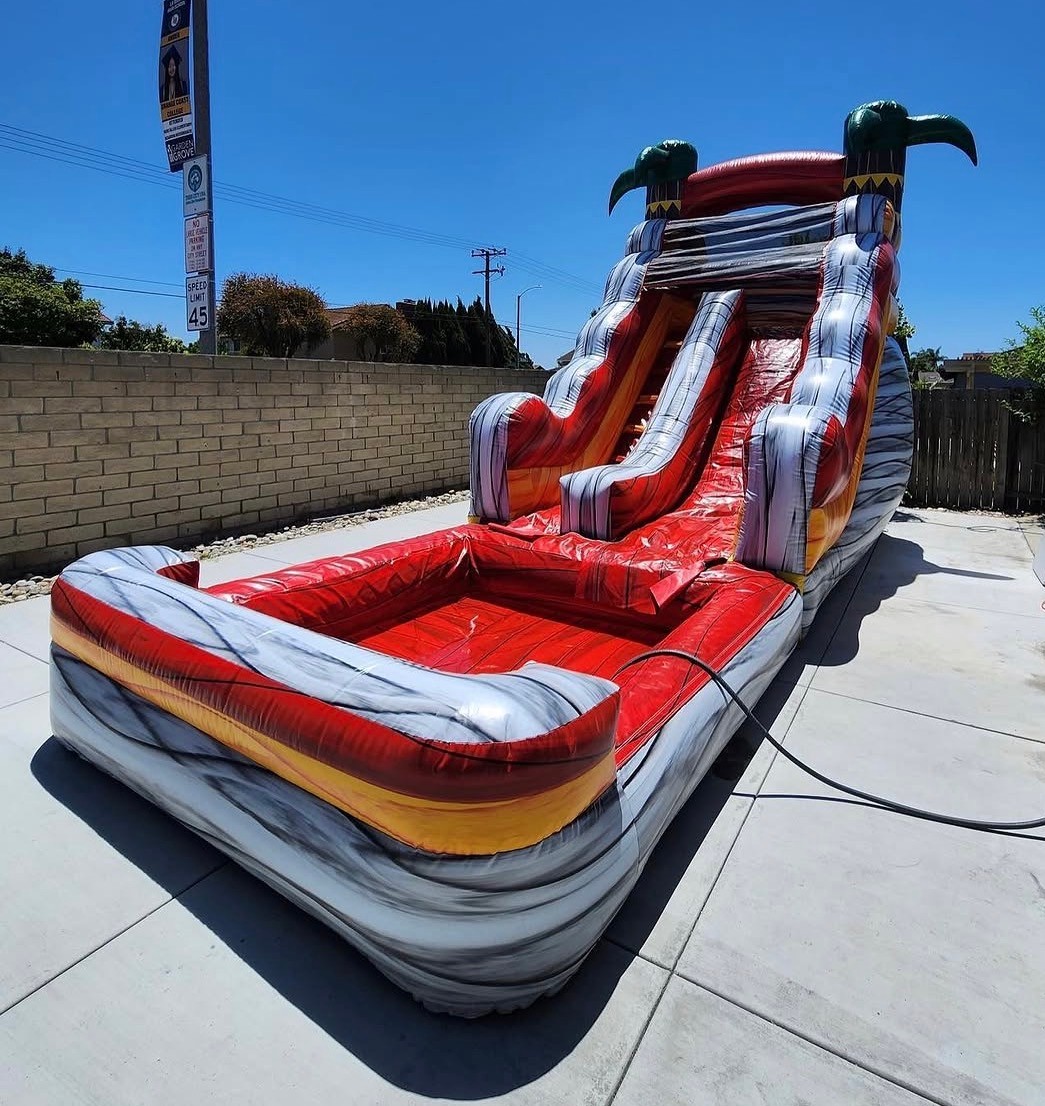
Combo units and waterslides tend to have more complex warranty structures than standalone bounce houses because they incorporate more components and more varied stress points. If you're adding waterslides to your WA fleet, confirm that the water-contact surfaces, pool liner, and splash zone stitching are covered under the same terms as the dry bounce sections. Some vendors write separate warranty schedules for wet and dry components, and the wet-side coverage is often shorter.
How to Vet a Vendor Before You Sign
The most reliable way to evaluate a vendor's warranty is to treat it as a document that reflects their overall business practices. A vendor who writes clear, specific warranty language with defined claim procedures, domestic support contacts, and realistic exclusions is likely running their business with the same transparency. A vendor whose warranty is vague, full of carve-outs, or difficult to obtain before purchase is showing you something important about how they handle problems after the sale.
Request a copy of the full warranty document before placing any order. If a vendor is reluctant to share warranty terms prior to purchase, that reluctance is itself useful information. Read the claims process section carefully. Understand whether claims require photographic documentation, whether you need to return the unit for inspection, and what the vendor's timeline commitment is for resolving a claim. A warranty that takes 90 days to process a claim is functionally less valuable than a shorter warranty with a 10-day resolution commitment.
Talk to other commercial fleet operators who have purchased from the vendor. Online communities for inflatable rental business owners are active and candid, and firsthand accounts of how a vendor handled a warranty claim under real conditions are more informative than any marketing material. Ask specifically about claim approval rates, parts quality, and whether the vendor's support team was responsive when problems arose.
For WA buyers who are newer to fleet building, working with an experienced local operator can provide practical context that vendor sales teams won't offer. At Jump High Rentals, we've navigated vendor relationships, evaluated unit quality across price points, and built a fleet that holds up through Orange County's demanding summer rental season. If you're exploring how to source and evaluate commercial inflatables for your own operation, browse our rental fleet to see what well-maintained commercial units look like in practice, or reach out to our team for a conversation about what we've learned from the buying side. You can also find additional sourcing and fleet-building guidance in our guides library, where we cover topics from blower specs to delivery logistics for commercial buyers.
The warranty you accept on a commercial inflatable is a long-term commitment. Taking the time to read it carefully, ask the right questions, and compare vendor support terms before you sign is one of the most practical investments you can make in the health of your rental business.