
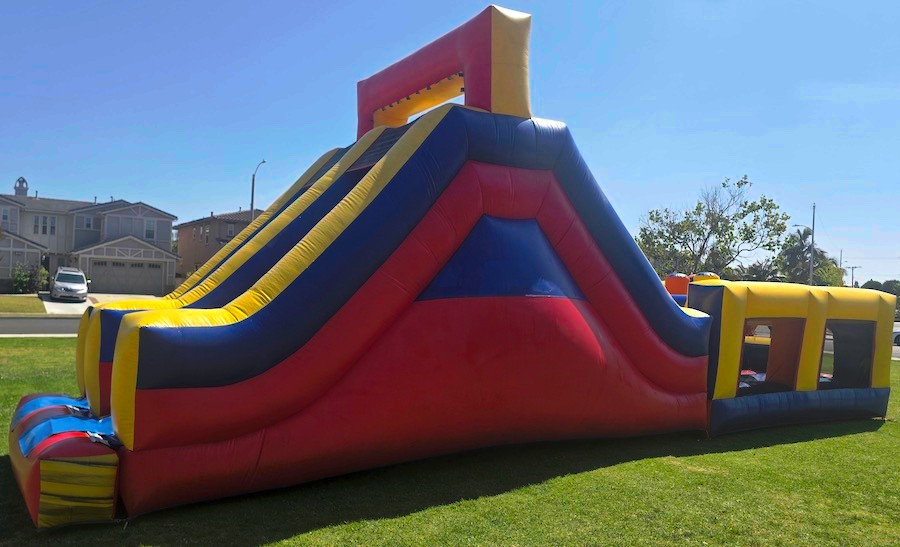
School carnivals and fundraisers are some of the most rewarding events a PTA committee can pull off, and they are also some of the most logistically demanding. You are coordinating volunteers, managing student crowds across multiple grade levels, keeping parents engaged, and trying to raise real money, all at the same time. Inflatables can make that job easier, but only when they are chosen and placed with a plan behind them.
This guide is written for PTA chairs, school event coordinators, and volunteer teams in Orange County who want to use inflatable rentals strategically, not just as a last-minute addition to the activity lineup.
Why Inflatables Work So Well at School Carnivals and Fundraisers
The most common challenge at a school carnival is crowd flow. When every student heads to the same activity at the same time, lines get long, kids get frustrated, and parents start leaving early. Inflatables solve this problem in a way that few other attractions can.
A well-placed bounce house or obstacle course becomes a destination. Students move toward it, spend time on it, and then rotate to the next station. That natural movement keeps the event feeling energetic without creating a single bottleneck. When you add two or three inflatables in different areas of the campus or field, you effectively spread the crowd across the entire space.
There is also a fundraising angle that is easy to overlook. Inflatables are one of the few attractions where schools can sell wristbands, punch cards, or ride tickets and see strong participation. Students want to use them, which means they are willing to spend, and parents are willing to buy. That makes inflatables one of the more reliable revenue-generating stations at a carnival when paired with a clear ticketing or wristband system.
From a volunteer standpoint, inflatables are relatively easy to supervise once they are set up. A single trained volunteer can monitor an inflatable station, which frees up the rest of your team to handle games, food, and admissions. Compared with running a complicated game or managing a craft station, inflatable supervision is straightforward.
Choosing the Right Inflatables for Each Age Group
One of the most common mistakes school event planners make is renting one large bounce house and assuming it will work for everyone. In practice, a mixed-age school event needs a mix of attractions.
For kindergarten through second grade, smaller bounce houses and toddler-friendly combo units are the right fit. These younger kids need lower entry points, gentler bounce surfaces, and clear sight lines for the volunteers watching them. Putting a young child in a high-energy obstacle course designed for older students creates safety concerns and usually ends in tears.
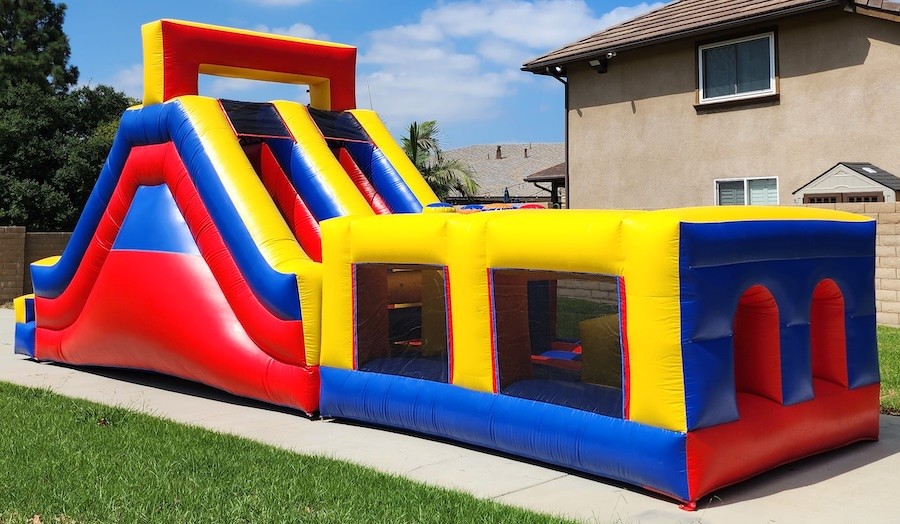
For third through fifth grade, combo units with slides and smaller obstacle courses hit the sweet spot. These students are coordinated enough to handle more physical challenges, and they respond well to attractions that feel like a game rather than just a bounce surface. Combo units that include a climbing wall, slide, and bounce area give them variety without requiring a separate attraction for each element.
For middle school students, if your event includes that age group, full obstacle courses and larger interactive inflatables tend to hold attention better. Older students often disengage from standard bounce houses, but a competitive obstacle course where they can race a friend keeps them involved and keeps the line moving.
A practical approach for most Orange County elementary school carnivals is to plan for at least two inflatables: one sized for younger students and one that challenges the upper grades. If your budget and space allow a third unit, a standalone slide or interactive game attraction can serve as a middle-ground option that works across multiple age groups.
Planning Your Layout: Space, Power, and Crowd Flow
Before you confirm any rental, you need to know your site. That means measuring the available space, identifying power sources, and thinking through how students will move through the event.
Each inflatable has a footprint that includes not just the unit itself but the clearance space around it. Entry and exit areas need to be kept clear, and you want enough room between attractions so that two crowds are not colliding. When you speak with your rental company, share the dimensions of your setup area and ask for unit recommendations that fit comfortably with proper clearance.
Power access is a practical detail that catches a lot of first-time school event planners off guard. Inflatables run on electric blowers, and those blowers need to stay on for the duration of the event. You will need a dedicated power source within reach of each unit. Extension cords can bridge a gap, but they need to be rated for outdoor use and kept out of foot traffic paths. Your rental company can advise on cord length and power requirements, but it is worth confirming the location of your campus outlets before booking.
Shade and heat are real considerations for outdoor events in Orange County, especially in the spring and early fall when carnival season peaks. Positioning inflatables in shaded areas when possible, and planning for water stations nearby, helps keep the experience comfortable for students and reduces the chance of heat-related issues during a long event day.
Think about entry and exit flow as well. Ideally, students enter and exit the inflatable from the same direction, with a volunteer positioned to manage the line. Placing the inflatable so that the exit side feeds back toward the main event area, rather than toward a fence or dead end, keeps traffic moving naturally.
Coordinating Delivery and Setup with Your Rental Company
School events have fixed start times, and that means your inflatables need to be fully set up and ready before students arrive. Coordinating delivery logistics with your rental company early in the planning process is one of the most important steps a school event coordinator can take.
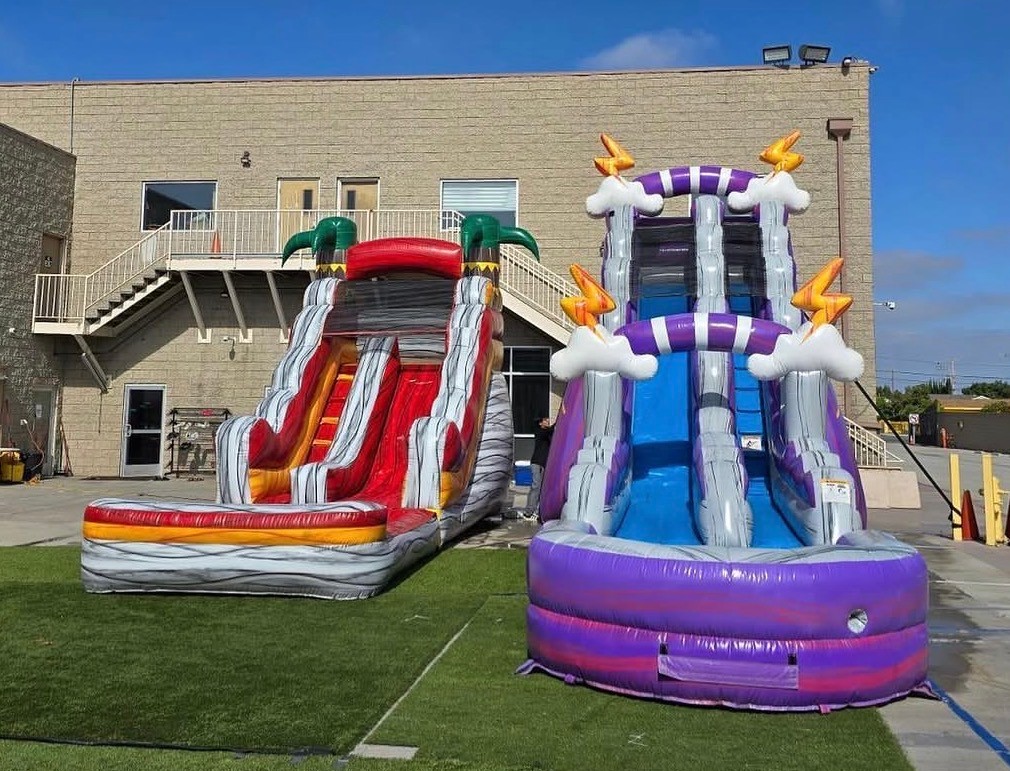
When you contact Jump High Rentals, share the event date, your setup window, and any access details for the campus. School campuses often have specific gate access, parking restrictions, or surface conditions that affect how a delivery crew can bring equipment in. The more information you provide upfront, the smoother the morning of your event will go.
Ask about the setup timeline. Most inflatables take between 20 and 45 minutes to set up depending on the unit, but if you are renting multiple pieces, the total setup window will be longer. Build that time into your volunteer schedule so that someone is available to meet the delivery crew and confirm placement before the crew leaves.
Also confirm what is included in the rental. With Jump High Rentals, delivery, setup, and pickup are all part of the service, which means your volunteer team does not need to figure out how to inflate, anchor, or break down the equipment. That is a meaningful advantage for a committee that already has a full day ahead of them.
If your school or district requires vendor documentation, ask about that early. Some campuses have their own requirements around vendor vetting, and getting that process started well before the event date prevents last-minute delays.
Making Inflatables Part of Your Fundraising Strategy
Inflatables are not just a crowd-pleaser. When integrated into your fundraising plan, they can become one of your strongest revenue stations.
The most common approach is a wristband system, where students purchase a wristband at the admissions table that gives them unlimited access to inflatables throughout the event. This works well because it creates a clear value proposition for parents and generates a predictable revenue stream for the school. A per-ride ticket system is another option that gives families more control over spending, though it requires more volunteer time at each station to collect and count tickets.
Sponsorship is worth considering as well. Local businesses in Orange County are often willing to sponsor a specific attraction at a school carnival in exchange for signage or recognition in event materials. An inflatable station with a sponsor banner attached is a visible, high-traffic placement that many small businesses find appealing.
When you are planning the overall event budget, treat the inflatable rental as an investment in both attendance and revenue. Events with more engaging attractions tend to draw larger crowds, and larger crowds mean more ticket sales, more food purchases, and more overall fundraising participation. A well-run carnival with quality inflatables can generate significantly more than one that relies on low-cost activities alone.
If you are in the early stages of planning a school carnival or fundraiser in Orange County, reaching out to Jump High Rentals sooner rather than later gives you more flexibility on unit selection and scheduling. Delivery, setup, and pickup are all handled, so your committee can stay focused on what matters most: running a great event for your school community.