
When a bounce house arrives at your Orange County backyard, the setup crew does more than unroll the inflatable and plug in the blower. Before a single child steps inside, the unit needs to be anchored securely to the ground. That anchoring process is one of the most important safety steps in the entire rental experience, and understanding what it looks like helps you prepare your space and feel confident the equipment is ready for kids.
This guide walks you through why anchoring matters, what it looks like on different surfaces, and how you can get your yard ready before the Jump High Rentals crew pulls up.
Why Anchoring Matters Before Any Child Steps Inside
A bounce house is a large, air-filled structure. Even on a calm day, the combination of active kids jumping inside and any breeze outside creates forces that can cause an unsecured inflatable to shift, lean, or lift. Proper anchoring keeps the unit flat, stable, and in place throughout the entire event.
Every inflatable is built with designated anchor points, typically reinforced loops or D-rings at the base. Professional setup guidance consistently recommends securing every one of those points, not just a few. Leaving even one or two straps unattached creates uneven tension across the unit, which can cause it to twist or tilt during use.
Anchoring also works together with surface preparation. The ground beneath the inflatable needs to be flat and free of rocks, sticks, toys, and any sharp debris that could damage the material or create a hazard underfoot. A well-anchored bounce house on a poorly prepared surface is still a problem, which is why the setup process addresses both at the same time.
The short version: anchoring is not a formality. It is a foundational safety step that protects the kids using the inflatable and the people standing nearby.
Stakes on Grass vs. Sandbags on Hard Surfaces
The anchoring method your crew uses depends almost entirely on the surface the inflatable sits on. The two most common setups in Orange County backyards and event spaces are stakes in grass and weighted sandbags on hard surfaces.
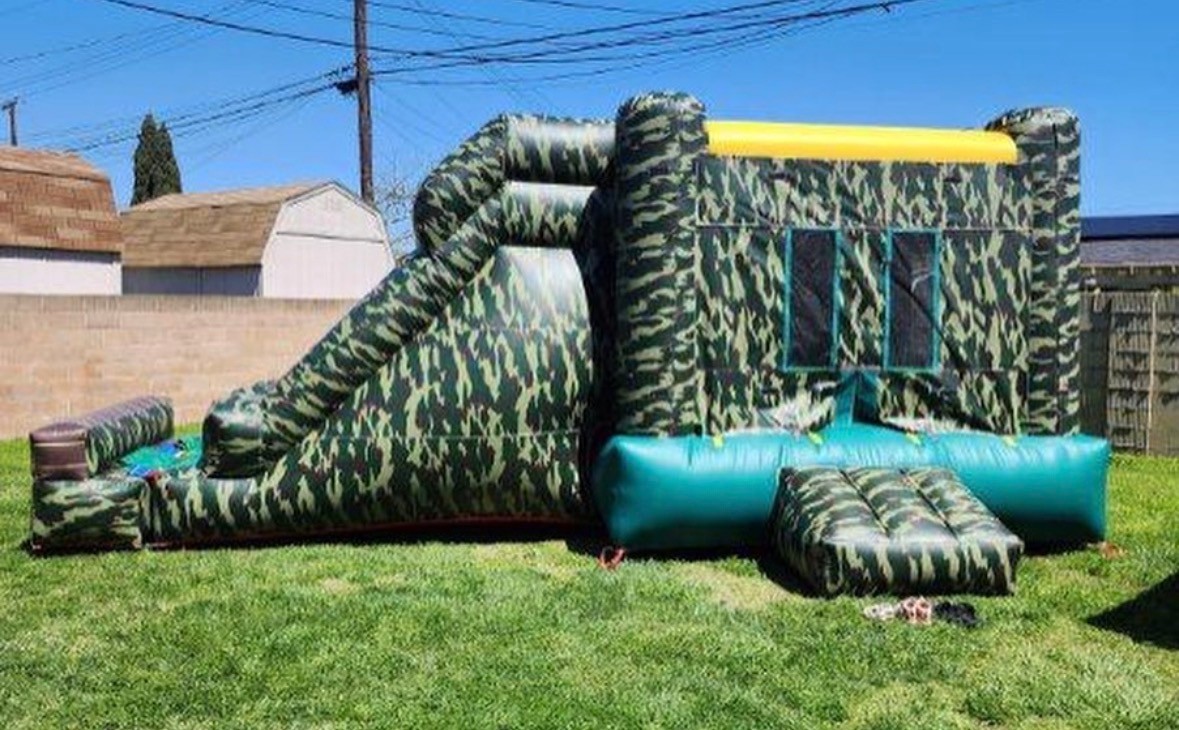
Grass and dirt surfaces are the most straightforward for anchoring. The crew drives heavy-duty metal stakes into the ground at an angle, typically angled away from the inflatable to maximize hold. Tether straps connect the stake to the anchor point on the inflatable and are pulled tight before the unit is opened for use. You will usually also see a tarp or ground cover placed under the inflatable to protect the material from abrasion and moisture.
Concrete, asphalt, pavers, and many artificial turf surfaces do not allow staking, so the setup shifts to sandbags or similar weighted anchors placed at each tie-down point. The goal is exactly the same as staking: keep the inflatable from lifting, sliding, or rotating. Sandbags are purpose-built for this use and placed with care at each anchor location.
A few things that should never substitute for proper anchors: fences, vehicles, patio furniture, bricks, or any household item that was not designed for this purpose. Improvised tie-downs can shift unexpectedly, create trip hazards, or fail under load. Reputable setup guidance is clear on this point, and the Jump High Rentals crew arrives with the right equipment for your surface type.
One practical note for booking: when you reserve your rental, mention whether your setup area is grass, concrete, pavers, or turf. That single detail helps the crew load the correct anchoring equipment before they leave the warehouse, which means a smoother and faster setup at your event.
How to Prepare Your Space Before the Crew Arrives
A little preparation on your end makes a real difference in how quickly and safely the setup goes. Here is what to have ready before the delivery window:
- Clear the setup area of toys, garden tools, hoses, furniture, and any loose debris.
- Check for low-hanging branches, overhead wires, or roof edges within the footprint and the surrounding clearance zone.
- Make sure there is a clear path from the street or driveway to the setup area, wide enough for the crew to roll the inflatable through.
- Know where your outdoor power outlet is, since the blower needs a dedicated circuit nearby.
- If you have pets, move them indoors or to a separate area before the crew arrives.
Flat ground matters more than most first-time renters expect. A slight slope that looks minor to the eye can affect how the inflatable sits and how evenly the anchor tension distributes. If your yard has an uneven area, let the crew know when you book so they can plan accordingly.
Overhead clearance is part of the equation too. The inflatable needs open space above it, away from trees, power lines, and any structure that could interfere with the fully inflated height of the unit.
Wind, Weather, and When to Pause the Fun
Orange County weather is generally forgiving, but wind is the variable that matters most for inflatable safety. Most industry guidance places the practical wind limit for bounce house use somewhere in the range of 15 to 20 miles per hour, depending on the size of the unit and the anchoring method in use. When gusts exceed that range, the safest choice is to stop use and deflate the unit until conditions improve.
Wind affects anchored inflatables differently than you might expect. Even a well-staked unit can experience uplift forces in strong gusts, especially if the wind is coming from a direction that catches the open entrance. Anchoring reduces that risk significantly, but it does not eliminate the need for weather awareness during the event.
A few practical guidelines for party day:
- Check the forecast the morning of your event, not just the night before.
- Assign one adult to keep an eye on conditions throughout the party, not just at the start.
- If the wind picks up noticeably during the event, clear the inflatable and contact your rental company for guidance.
- Rain also affects safety, since wet surfaces inside the inflatable increase slip risk for dry-use units.
The goal is not to cancel at the first sign of a breeze. It is to stay aware and make a calm, informed call if conditions change.
What Professional Setup Includes at Jump High Rentals
When the Jump High Rentals crew arrives at your Orange County home or event space, setup is a complete process, not just dropping off equipment. The crew places the inflatable on a ground cover, connects the blower, and secures every anchor point using the method appropriate for your surface. Before leaving, they verify that the unit is fully inflated, stable, and sitting correctly on the ground.
That verification step matters. A crew that checks anchor tension, confirms the inflatable is not leaning, and looks at the surface conditions before opening the unit for kids is doing exactly what professional setup should include. You should not have to wonder whether the anchoring was done correctly.
When you book, sharing your surface type (grass, concrete, pavers, or artificial turf) helps the crew prepare the right anchoring equipment in advance. It is a small detail that makes the whole setup go more smoothly and gives you one less thing to think about on party day.
If you have questions about your specific yard layout, overhead clearance, or surface conditions, reach out before your booking date. The Jump High Rentals team is happy to talk through what setup will look like at your location so there are no surprises when the truck arrives.