
Why Active Supervision Is the Most Important Safety Tool You Have
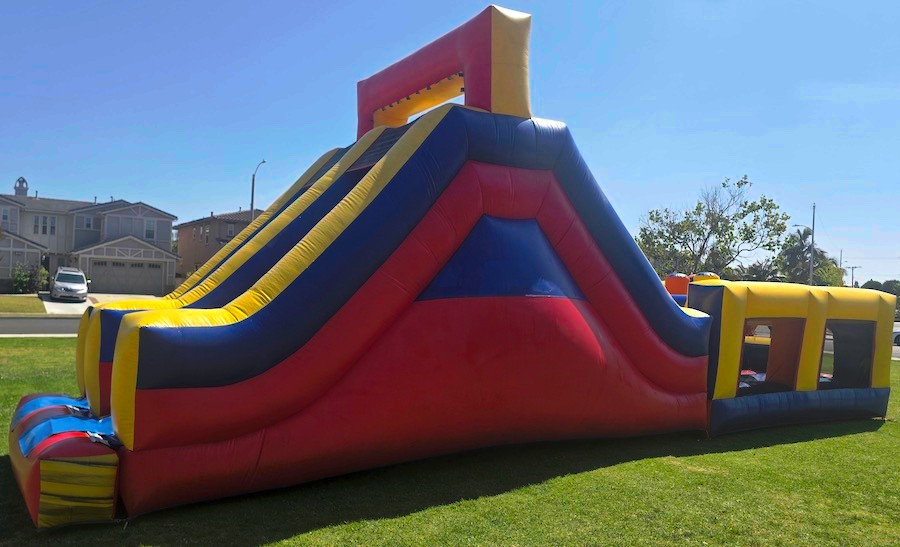
Picture a sunny Saturday afternoon in your Orange County backyard. The bounce house is inflated, the kids are excited, and you have a dozen other things to manage: the cake, the drinks, the grandparents who just arrived. It's tempting to assume the inflatable will take care of itself for a while. That assumption is where most party-day problems begin.
Active supervision means one adult has one job, and that job is watching the inflatable. Not glancing at it between conversations. Not monitoring it from across the yard while refilling the chip bowl. Watching it, the way a lifeguard watches a pool. That adult should have a clear sightline to the entrance, the interior, and the exit, and their attention should stay there for the duration of the rental.
Why does this matter so much? Because the situations that lead to injuries on inflatables almost always involve a brief window when no one was paying close attention. A bigger kid lands on a smaller one. Two children collide at the entrance. Someone tries a flip they saw on a video. These moments happen fast, and a present, attentive adult can redirect behavior before it becomes a problem.
If you are hosting a larger party, consider assigning two supervisors and rotating them every 30 to 45 minutes so neither one loses focus from fatigue. Treat the role the way you would treat any other important party job. Write it on your planning list, assign it to a specific person before guests arrive, and make sure that person knows they are not expected to multitask. A reliable rental company like Jump High Rentals will walk you through safety instructions at setup, but the supervision role belongs to you and your team for the rest of the event.
You can find more practical planning ideas in the Jump High Rentals guides library, including tips on supervising kids on inflatables and building a complete backyard birthday party checklist.
Site Prep and Anchoring: What to Check Before the Crew Arrives
A well-supervised inflatable on a poorly prepared surface is still a safety risk. The good news is that site prep is straightforward when you know what to look for, and doing it before the delivery crew arrives makes setup faster and smoother for everyone.
Start by walking the area where the inflatable will go. Look for anything sharp or hard at ground level: rocks, garden stakes, sprinkler heads, or toys that got left in the grass. Remove all of it. Then check for overhead obstructions. Tree branches, patio covers, string lights, and power lines all need enough clearance above the inflatable, so measure up, not just out. Most inflatables need several feet of clearance on every side as well, so factor in the space around the unit, not just the footprint itself.
Surface matters too. Grass is generally the easiest surface to anchor into, but many Orange County backyards have pavers, concrete, or artificial turf. Each surface has its own anchoring method, and a knowledgeable crew will come prepared. If you are unsure what your yard requires, mention it when you book so the team can bring the right equipment. You can also read more about specific surface setups in the concrete vs. grass inflatable guide and the artificial turf anchoring guide.
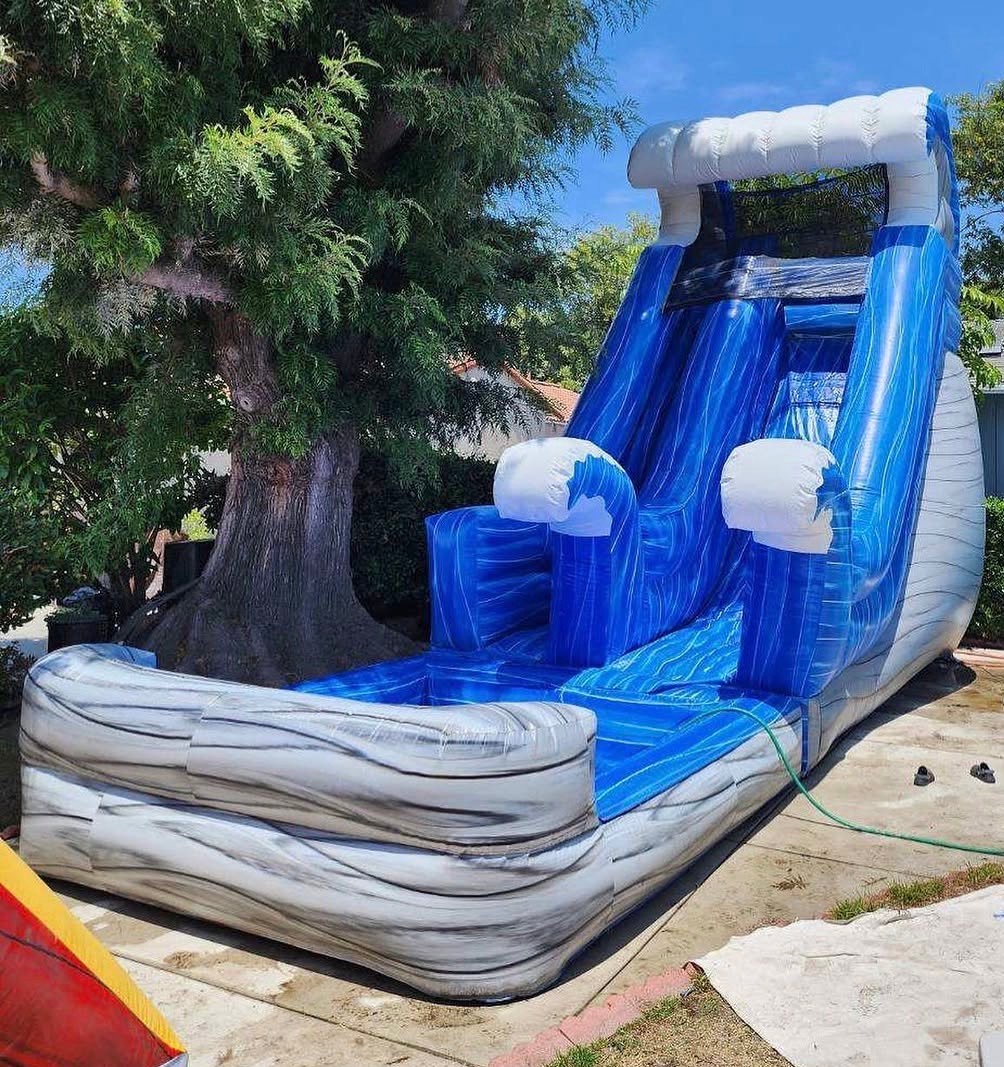
Anchoring is not optional. Stakes or sandbags keep the inflatable from shifting during use, and a properly anchored unit also holds up better when wind picks up unexpectedly. When the Jump High Rentals crew sets up your unit, they handle anchoring as part of the process. Your job is to make sure the site is clear and accessible so they can do it correctly.
One more thing to check before the crew arrives: the path from the street or driveway to your setup area. If the inflatable needs to travel through a side gate or around a corner, measure that clearance in advance. A narrow gate can slow down setup significantly, and in some cases it affects which unit will fit. The backyard prep guide covers this in more detail and is worth a quick read before your delivery window.
Capacity, Age Groups, and Rotation: Managing the Bounce
Every inflatable has a posted capacity limit, and that number exists for a reason. It reflects the weight and space the unit is designed to handle safely. When too many kids pile in at once, the bouncing surface becomes unpredictable, collisions happen more often, and the risk of someone getting hurt goes up. Following the capacity limit is one of the simplest and most effective safety decisions you can make.
In practice, managing capacity means counting kids before they enter and keeping that number at or below the posted limit. Your supervisor can handle this at the entrance, which is another reason the role needs to be active rather than passive. For a busy party with 20 or more kids cycling through, a rotation system works well. Set a timer for five to seven minutes, then rotate a new group in when it goes off. Kids respond well to this when it is explained cheerfully and consistently.
Age and size separation is equally important. A seven-year-old and a three-year-old bouncing together in the same space is a collision waiting to happen, not because either child is doing anything wrong, but because the size and energy difference creates risk. Whenever possible, group children by similar age and size, especially if you have a wide range of guests. Younger children often enjoy having a dedicated turn without older kids in the unit, and parents of toddlers will appreciate the thoughtfulness.
If you are planning a larger event and want to think through capacity more carefully, the inflatable capacity limits guide is a helpful resource. For parties with 50 or more kids, the large-event inflatable checklist walks through how to plan rotations and unit selection at scale.
Rules to Announce Before Anyone Steps Inside
The most effective safety rules are the ones kids hear before they start bouncing, not after something goes wrong. Take two minutes at the start of the party to gather the children near the inflatable entrance and go through the rules together. Keep the language simple, direct, and friendly. You are not trying to scare anyone; you are setting the stage for a great time.
The core rules that apply to nearly every inflatable rental are straightforward. No shoes inside the unit. No glasses, jewelry, or hair accessories that could scratch or snag. No food or drinks inside. No flips or somersaults. No climbing the walls or netting. No pushing, wrestling, or rough play. One person at the entrance at a time, and everyone exits before the next group enters if you are running rotations.
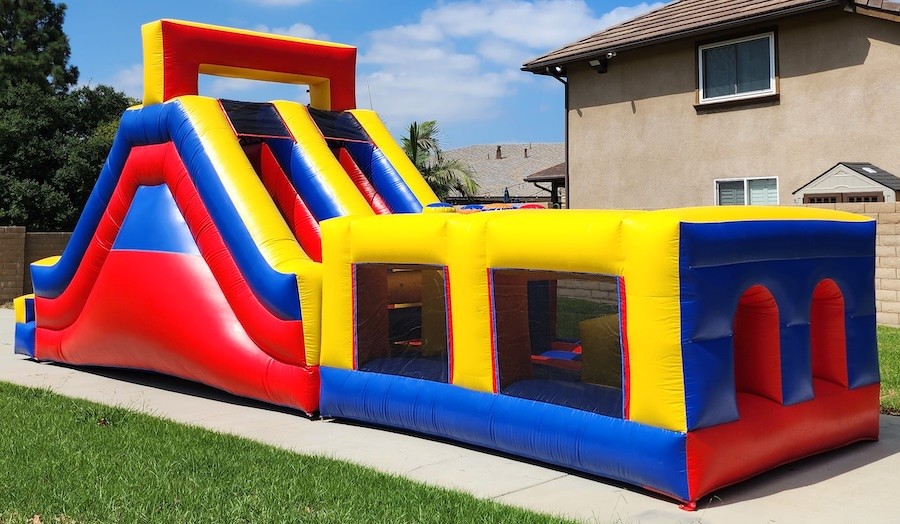
Announce these rules once to the whole group, then have your supervisor reinforce them calmly as needed throughout the event. Kids are much more likely to follow rules they heard explained than rules posted on a sign they never read. If a child repeatedly ignores the rules, a short break outside the inflatable is a reasonable and effective response.
For a ready-to-share version of these guidelines, the bounce house rules guide has a parent-friendly format you can print or read aloud before the party starts.
Weather, Wind, and When to Call It
Orange County weather is generally party-friendly, but conditions can shift during an afternoon event, especially in inland areas or during late summer afternoons when marine layer gives way to warmer, windier conditions. Knowing when to pause or stop inflatable use is part of being a prepared host.
Wind is the primary weather concern for inflatables. Most manufacturers and industry safety guidance recommend stopping use when sustained wind reaches a certain threshold, typically in the range of 15 to 20 miles per hour, with immediate shutdown when winds are stronger or gusts are unpredictable. You do not need a weather station to make this call. If the inflatable is visibly straining against its anchors, if the walls are bowing inward, or if the unit feels unstable when you touch it, those are clear signals to get kids out and keep them out until conditions settle.
Thunderstorms are a non-negotiable stop. At the first sign of lightning or thunder, clear the inflatable immediately and move everyone indoors or under a solid structure. Do not wait to see if the storm passes while children are still inside or nearby.
Rain on its own is a judgment call for dry inflatables. A light drizzle may not require immediate shutdown, but wet surfaces inside a bounce house become slippery quickly, which increases fall risk. If rain is steady enough to wet the interior surface, it is time to pause use. For wet inflatables like waterslides, rain changes the experience but not necessarily the safety picture in the same way. When in doubt, err on the side of caution and give the kids a snack break while you assess.
If you want to understand the specific wind thresholds and weather policies that apply to your rental, the wind speed and inflatable safety guide covers the topic in detail. The rainy day policy guide is also worth bookmarking before your event date.
Ready to Book Your OC Party Inflatable?
Planning ahead and knowing your role as a supervisor makes the whole event more enjoyable, for you and for the kids. When you work with a local company that handles delivery, professional setup, proper anchoring, and clear safety instructions, your job on party day becomes much simpler. You focus on the celebration; the equipment is already taken care of.
Jump High Rentals serves families, schools, churches, and HOAs across Orange County with clean, well-maintained inflatables and a crew that shows up prepared. Browse the full selection on the rentals page, get answers to common questions on the FAQ page, or reach out directly through the contact page to talk through your event details. Your backyard party is worth doing right, and the right partner makes that easy.