
Why the Listed Footprint Is Only the Starting Point
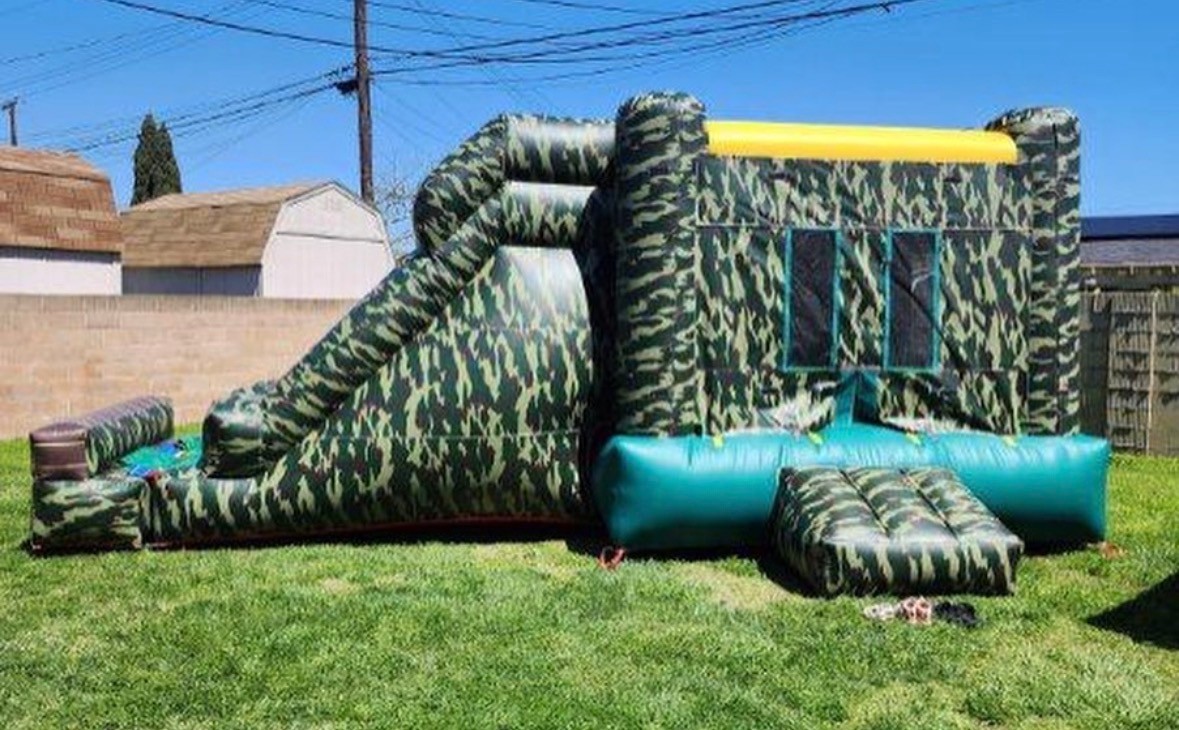
When you browse inflatable rentals online, every product page shows a footprint measurement. You see something like 15 x 15 feet, you glance at your backyard, and it looks like it should work. That quick mental check is where most first-time renters run into trouble.
The listed footprint tells you how much floor space the inflatable itself occupies when fully inflated. It does not account for the blower unit that sits outside the inflatable, the entry and exit zone where kids climb in and tumble out, the anchor stakes or sandbag positions around the perimeter, or the clearance buffer that keeps the walls from pressing against a fence, planter, or patio edge. When you add all of those elements together, a 15 x 15 bounce house realistically needs closer to 20 x 20 feet of clear, flat space to set up safely and comfortably.
This is not a technicality. It is the difference between a setup that looks great and functions well versus one where the blower is wedged against a fence, the entry flap faces a wall, or kids are bouncing inches from a concrete edge. Taking five minutes to measure your actual usable space before you book saves a lot of stress on delivery day. If you want a broader overview of how size decisions work, the bounce house size guide on the Jump High site is a helpful companion to this article.
How to Measure Your Yard in Five Steps
You do not need special equipment for this. A standard tape measure, a notepad or phone, and about five minutes are all it takes to get the numbers you need.
Step one: identify your flattest zone. Walk your yard and find the area with the most level, unobstructed ground. This is your candidate zone, not necessarily the largest open area. A big yard with a slope through the middle may have a smaller usable flat section than it appears. For more on how slopes affect setup, the sloped backyard guide covers what to look for and when to flag it before booking.
Step two: measure length and width. Run your tape measure across the longest flat dimension, then across the width. Write both numbers down. Do not round up generously. Use the actual measurement, because you will be subtracting from it in the next step.
Step three: subtract obstacles. Walk the perimeter of your measured zone and note anything that eats into the space. Patio furniture, a built-in grill, a planter box, a trampoline, a garden hose reel, even a large potted plant all reduce your usable area. Subtract the footprint of each obstacle from your total. What remains is your true working space.
Step four: check your access path. Think about how the delivery crew will move the inflatable from the street or driveway to your setup zone. The path needs to be wide enough for the rolled or folded inflatable to pass through, which typically means a gate or side yard opening of at least 36 inches. Measure your gate width now, because a tight gate can limit which units are possible to deliver even if the yard itself is large enough.
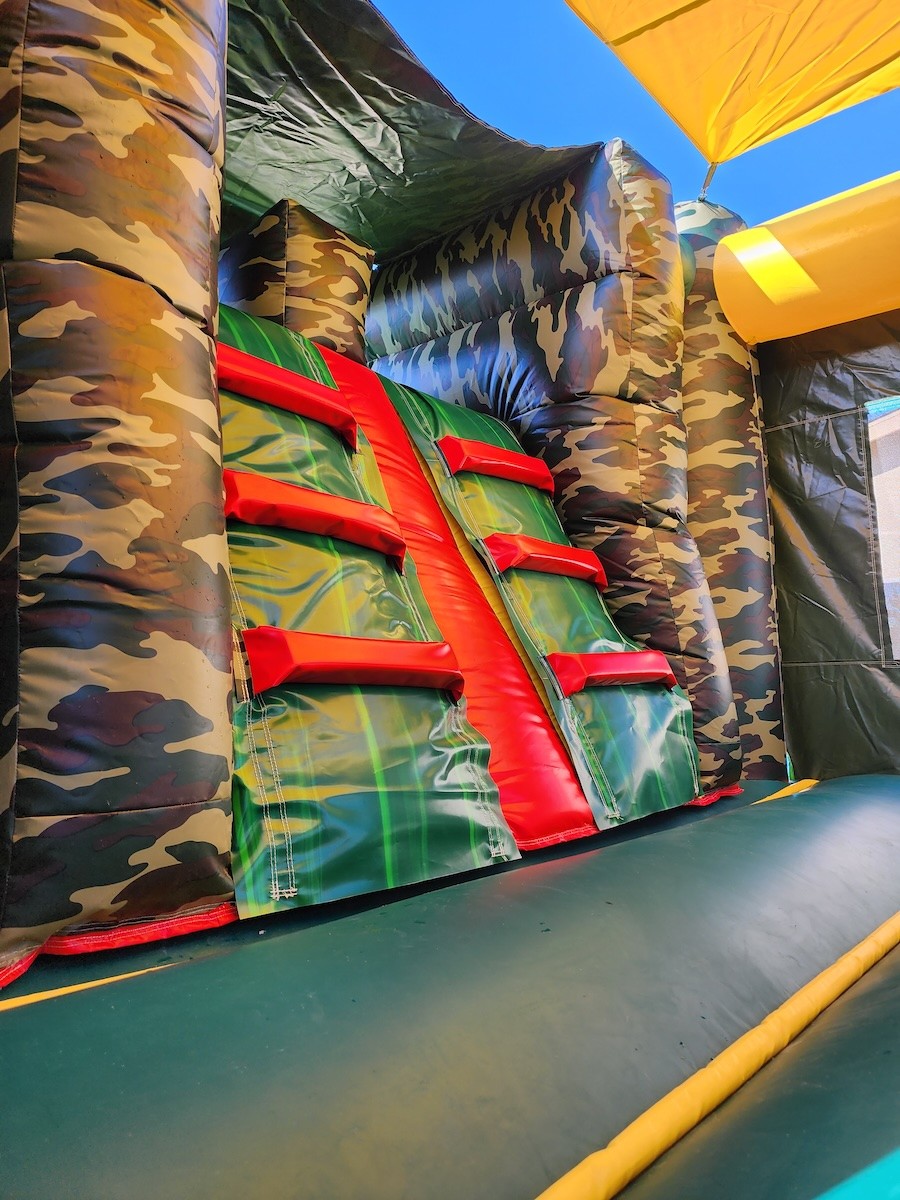
Step five: take a photo or quick sketch. Snap a photo of the yard from a corner angle that shows the setup zone, the fence lines, and any overhead features. A rough sketch with your measurements labeled works just as well. Either one gives the Jump High team a clear picture of your space when you reach out to confirm fit, and it takes about thirty seconds to capture.
Clearance, Access, and Overhead: What Most Parents Miss
Most parents measure the ground and stop there. The three factors that most often cause last-minute complications are side clearance, access path width, and overhead height, and all three are easy to check once you know to look for them.
Side clearance refers to the buffer space between the inflatable walls and any fixed structure. A practical target is two to three feet on each side. That gap keeps the inflatable from rubbing against a fence as it shifts slightly during use, gives the anchor stakes room to be placed correctly, and leaves a walking path for adult supervisors to move around the unit. If your yard is tight on one side, mention it when you book so the team can plan placement accordingly.
Access path width matters more than most people expect. A standard side yard gate in an Orange County neighborhood is often just barely wide enough for a rolled inflatable to pass through. If your gate is narrower than 36 inches, some larger units may not be deliverable to your backyard at all, regardless of how much open space you have once you get there. Measure the gate opening at its narrowest point, including any latch hardware that protrudes inward.
Overhead clearance is the factor that surprises parents the most. Most standard bounce houses stand between 12 and 15 feet tall when fully inflated. Combo units with attached slides can be taller. That means you need to look up, not just around. Tree branches, roof eaves, patio cover edges, utility lines, and second-story overhangs all need to clear the top of the inflatable with room to spare. A general guideline is to aim for at least 15 to 18 feet of vertical clearance above the setup zone. If you have a large shade tree over your backyard, check whether any branches hang over the flat area you measured.
Power access is one more thing worth confirming before delivery day. Most inflatable blowers run on a standard 110-volt household outlet, but the outlet needs to be within reach of the setup zone. If your nearest outdoor outlet is on the far side of the house, you may need an extension cord rated for outdoor use. The power and extension cord guide has practical details on cord length, gauge, and placement to keep things running smoothly.
Matching Yard Size to the Right Inflatable Type
Once you have your usable measurements in hand, the next step is matching those numbers to the right category of inflatable. The goal is not to fit the biggest possible unit into your yard. The goal is to choose a unit that fits comfortably, leaves room for kids to move around it safely, and still leaves some yard space for parents, food tables, and everything else that makes a party work.
For smaller yards where the flat usable zone is roughly 18 x 18 to 20 x 20 feet after clearance, a standard bounce house is usually the right call. Standard units in the 13 x 13 to 15 x 15 foot range give you a comfortable fit with room for the blower and anchor points without crowding the rest of the space. These work especially well for younger kids at backyard birthday parties where the guest count is moderate and the energy level is high.
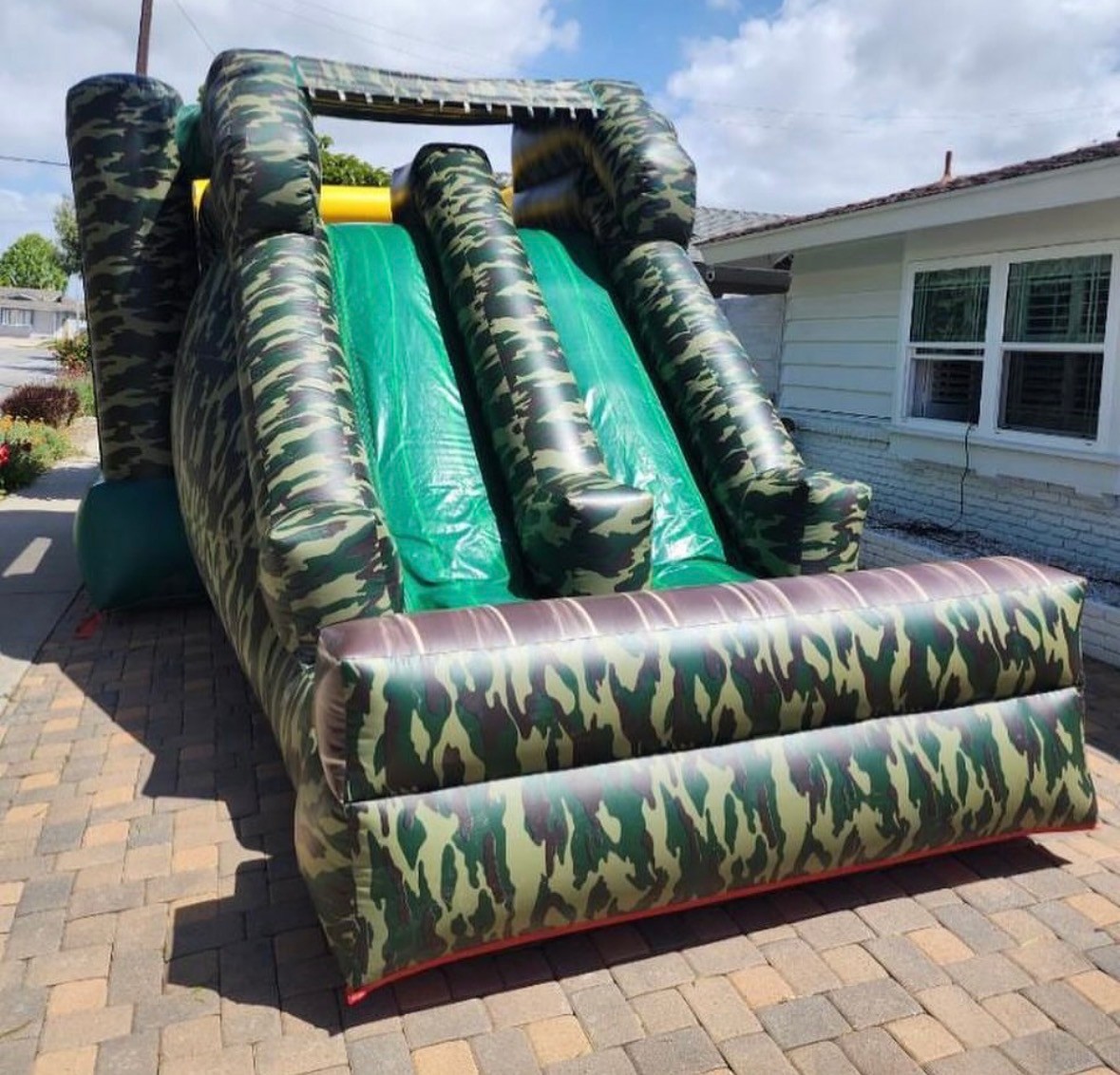
For medium yards with a usable flat zone of around 20 x 25 to 25 x 30 feet, a combo unit becomes a realistic option. Combo units combine a bounce area with a built-in slide, which makes them popular for mixed-age groups. They do require more total space because the slide extends the overall footprint, so the extra room matters. The combo bounce house vs. standalone slide guide can help you think through whether a combo unit fits both your space and your guest list.
For larger yards or open spaces like a park lawn or church field, obstacle courses and waterslides open up as options. These units have longer footprints and need more clearance on all sides, but they also deliver a bigger experience for larger groups. If your event is at a park or community space rather than a private backyard, check permit requirements early. The inflatable rentals for Irvine park permit events guide is a useful starting point for understanding what venue-specific logistics look like.
For parties with toddlers or very young children, a compact or toddler-specific unit is often a better fit than a standard bounce house even if the yard has plenty of room. Smaller units are sized for younger kids, which means lower walls, gentler bounce, and easier supervision. Fitting the unit to the age group matters as much as fitting it to the yard.
What to Share with Jump High Before You Book
You have measured your yard, noted your clearance zones, checked your gate width, and taken a photo. Now you are ready to have a useful conversation before you commit to a booking.
When you reach out to Jump High, share your usable flat dimensions (length and width after subtracting obstacles), your gate or access path width, any overhead features you noticed, and the distance from your nearest outdoor outlet to the setup zone. If you have a slope anywhere in the yard, mention it even if you think the flat zone avoids it entirely. The team can help you think through placement options you might not have considered.
A photo of the yard goes a long way. It takes thirty seconds to send and often answers questions that are hard to describe in words, like whether a patio cover extends over part of the setup zone or whether a raised planter sits right at the edge of the flat area.
The backyard prep guide has a helpful checklist for what to clear and confirm before the delivery crew arrives, which is a natural next step once your unit is confirmed. And if you are ready to start browsing options, the Jump High rentals catalog shows current availability with dimensions listed for each unit.
Measuring first and booking second is the simplest way to make sure delivery day goes smoothly. Reach out through the contact page with your measurements and a photo, and the team can confirm fit, suggest the right unit for your space, and get your date reserved before the summer calendar fills up.