
What Makes a Waterslide Truly Commercial Grade
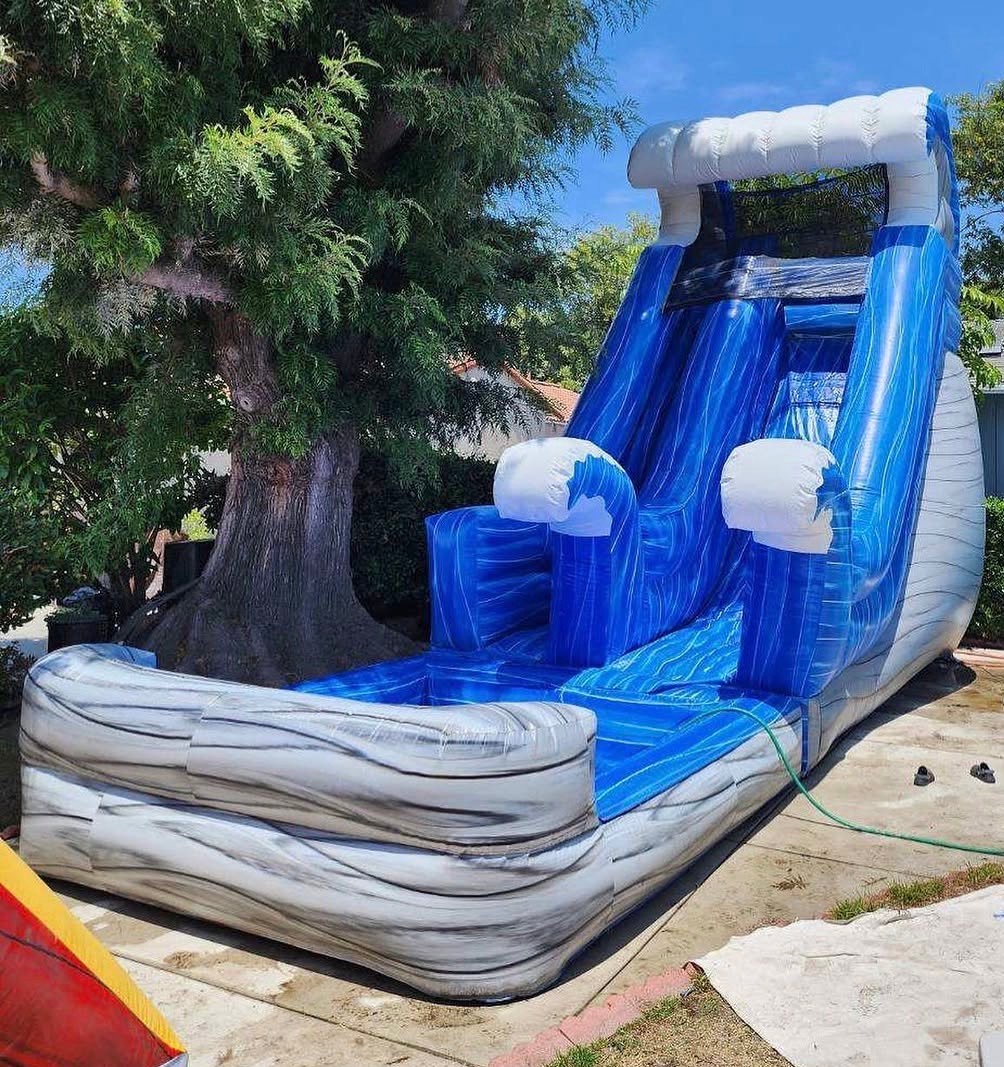
If you are sourcing waterslides for a rental fleet in Colorado, the phrase "commercial grade" is not a marketing label. It is a specification threshold that determines whether a unit survives two seasons or ten. Understanding what separates a commercial unit from a residential or semi-commercial product is the first decision you make before any vendor conversation begins.
Commercial-grade waterslides are manufactured from heavy-duty PVC vinyl, typically ranging from 18 to 21 ounces per square yard. Residential and backyard-party units often use 13 to 15 ounce material, which is adequate for occasional home use but degrades quickly under daily rental cycles. For a Colorado fleet, where a single summer weekend might mean two or three consecutive rentals at different sites, material weight is a direct predictor of repair frequency and unit lifespan.
Stitching matters just as much as vinyl weight. Look for triple-stitched or quadruple-stitched seams at stress points, particularly at the slide lane edges, pool basin seams, and blower attachment points. Vendors who publish seam specifications in their product sheets are generally more transparent about overall build quality. If a vendor cannot tell you the stitch count at high-stress points, that is a signal worth noting.
Blower compatibility is another spec that fleet buyers sometimes overlook until a unit arrives. Commercial waterslides require continuous-duty blowers, typically one or two horsepower depending on unit size. The blower should be rated for continuous operation across the full rental window, not just intermittent use. Confirm that the unit ships with a compatible blower or that the blower specifications are clearly documented so you can source the right motor independently. You can find general commercial inflatable blower guidance in the Jump High guides index for context on how rental operators approach power requirements.
Anchor point reinforcement is a Colorado-specific concern. The state's afternoon thunderstorms and high-altitude wind events are not the same conditions a manufacturer in a Gulf Coast climate designs around by default. Ask vendors specifically about D-ring anchor placement, anchor point reinforcement patches, and whether the unit has been tested in wind conditions above 20 miles per hour. Units that pass ASTM F2374 testing standards for inflatable amusement rides have been evaluated against defined structural criteria, which gives fleet buyers a documented baseline rather than a verbal assurance.
How to Evaluate Wholesale Vendors and Pricing Tiers
The commercial inflatable wholesale market has several distinct tiers, and understanding where a vendor sits in that structure affects both your unit cost and your post-purchase support options.
Direct-import manufacturers, often based in China with US distribution warehouses, typically offer the lowest per-unit prices. A commercial waterslide in the 18-foot height range from a direct-import vendor might run between $2,800 and $5,500 depending on configuration, vinyl weight, and included accessories. Larger units, dual-lane slides, and combo configurations with bounce chambers push that range higher, sometimes into the $7,000 to $12,000 territory for fully loaded commercial units. These are general market estimates for 2026 and should be verified with current vendor quotes before any purchase decision.
Domestic distributors and US-based manufacturers carry higher price points but often provide faster warranty service, English-language technical support, and replacement parts that ship within days rather than weeks. For a Colorado operator whose revenue window runs roughly Memorial Day through Labor Day, a two-week international parts delay during peak season is a real business risk, not just an inconvenience.
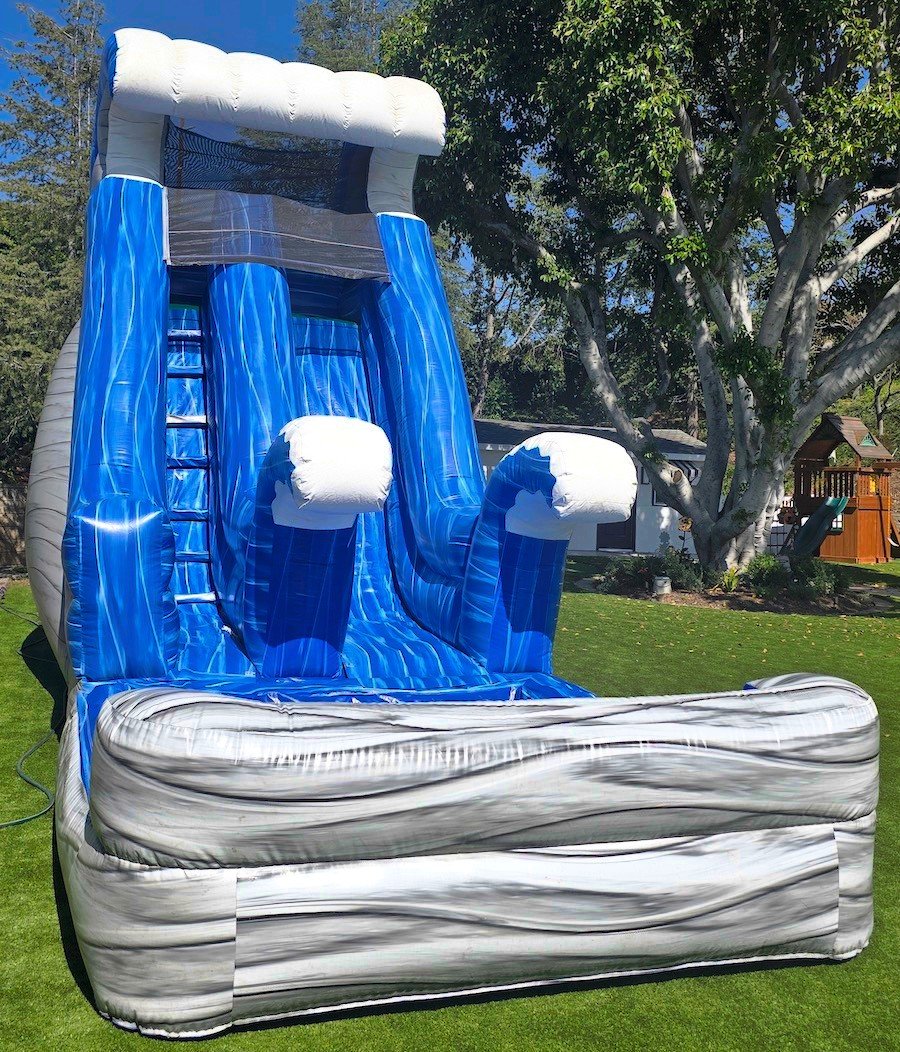
When evaluating vendors, ask for a sample warranty document before you commit. A credible commercial warranty covers materials and seams for at least one year and ideally two, with clear language about what voids coverage. Wear from normal rental use should not void a commercial warranty. If the warranty language is vague about what constitutes "misuse," push for clarification in writing.
Request references from other rental operators who have purchased the same unit model you are considering. A vendor who cannot connect you with existing customers is not necessarily a bad actor, but it is a gap in your due diligence. Online communities for inflatable rental operators, including several active groups on Facebook and industry forums, are practical places to gather candid feedback on specific vendors and models before you wire a deposit.
Pricing tiers also shift based on order volume. Buying two or three units in a single order often unlocks freight consolidation savings and sometimes a per-unit discount. For a fleet startup in Colorado, this creates a planning question: is it smarter to buy one unit to test the market, or to commit to a small fleet order and reduce your per-unit landed cost? That answer depends on your local demand data, storage capacity, and available capital, all of which are covered in later sections.
Freight and Delivery Logistics for CO Buyers
Colorado's geography creates freight considerations that operators in coastal or flatland states do not face in the same way. Most commercial waterslides ship via LTL (less-than-truckload) freight on pallets. A single large waterslide unit, boxed and palletized, typically weighs between 200 and 500 pounds and occupies significant pallet space. Freight costs from a West Coast distribution warehouse to Colorado generally run between $300 and $700 per unit for standard LTL, though fuel surcharges and carrier rate changes can push that range in either direction. Always get a freight quote that includes delivery to your specific zip code, not just a regional estimate.
If you are ordering from a direct-import vendor with a port-of-entry warehouse in Los Angeles or Long Beach, your freight lane is relatively straightforward. If the vendor ships from the East Coast or directly from overseas, factor in longer transit times and potentially higher costs. Ask for a tracking-capable carrier and confirm that the vendor uses freight companies with experience handling oversized, palletized goods rather than standard parcel carriers.
Inspect every unit at delivery before signing the freight receipt. Photograph the packaging from multiple angles before opening, and document any visible damage to the pallet or outer carton. If the vinyl is punctured or a seam is damaged in transit, your ability to file a freight claim depends on having documented the condition at delivery. Signing the receipt without inspection waives most carrier liability, which is a costly mistake on a $4,000 unit.
For Colorado buyers specifically, consider your delivery address carefully. Residential delivery surcharges are common with LTL carriers, and some carriers will not deliver to addresses without a loading dock or forklift. A commercial storage unit or warehouse address often simplifies delivery logistics and reduces surcharge exposure. If you are operating out of a residential property initially, confirm the carrier's residential delivery policy before the order ships.
Sizing Your Fleet for Colorado's Rental Season
Colorado's rental season for waterslides is compressed compared to states like Florida or Texas. Realistically, consistent demand runs from late May through early September, with the peak concentrated in June, July, and early August. That roughly 14-week window is your revenue engine, and fleet sizing decisions need to account for it honestly.
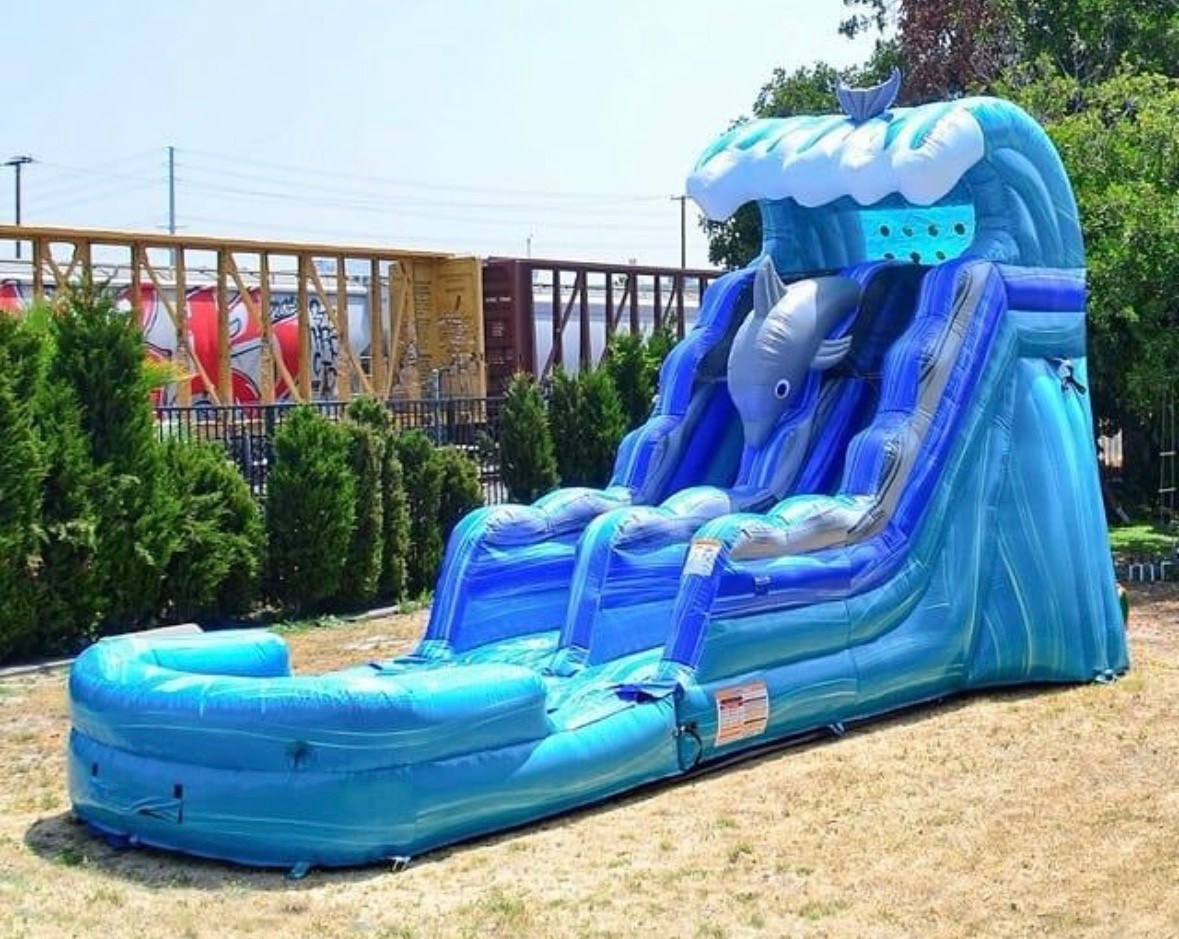
A single commercial waterslide unit, rented at an average of $350 to $550 per day (rates vary by market and unit size), booked on weekends plus some weekday events, might generate 25 to 40 rental days across a full Colorado season. At the midpoint of that range, a unit grossing $450 per rental day over 32 rental days produces approximately $14,400 in seasonal gross revenue before operating costs. That math changes significantly if you can capture weekday school, HOA, or corporate event bookings in addition to weekend birthday parties.
Fleet sizing follows from that revenue model. A two-unit fleet doubles your booking capacity and allows you to serve simultaneous events, which is particularly valuable on peak summer weekends when demand concentrates. A three-unit fleet adds redundancy: if one unit is in repair or cleaning rotation, you still have two available for bookings. Most operators starting in a mid-size Colorado market find that two to three units is a practical initial fleet before expanding based on demonstrated local demand.
Unit variety matters as much as quantity. A fleet of three identical 18-foot slides competes with itself and limits your ability to serve different customer segments. A more strategic mix might include one mid-size slide for residential backyard parties, one larger or dual-lane unit for HOA and school events, and one combo unit that combines a bounce chamber with a slide for younger-age birthday parties. Reviewing how rental operators structure their inventory for different event types can be useful context, and the Jump High Rentals catalog shows one example of how a working fleet is organized by unit type and use case.
Storage, Depreciation, and Long-Term ROI
Storage is a cost that fleet buyers sometimes underestimate in their initial ROI projections. Commercial waterslides, when properly deflated, rolled, and stored, require meaningful square footage. A single large unit might occupy 40 to 80 square feet of floor space when stored, plus additional space for blowers, stakes, tarps, and repair kits. A three-unit fleet with accessories can easily fill a 10-by-20-foot storage unit or a two-car garage.
Climate-controlled storage is worth the premium in Colorado. Extreme cold can affect PVC vinyl flexibility over time, and temperature swings between summer and winter are significant at altitude. Storing units in a space that stays above freezing and below 90 degrees Fahrenheit extends material life and reduces the risk of stress cracking at fold lines. Budget $150 to $300 per month for a climate-controlled commercial storage unit in most Colorado markets, and include that figure in your annual operating cost model.
Depreciation for commercial inflatables varies by usage intensity and maintenance quality. A well-maintained commercial waterslide from a reputable manufacturer, used 30 to 40 times per season and properly cleaned and stored, can realistically last seven to ten seasons before requiring major refurbishment or replacement. That lifespan assumption is the foundation of your per-rental depreciation calculation. Dividing the unit's landed cost (purchase price plus freight) by the total estimated rental cycles across its useful life gives you a per-rental depreciation figure to include in your pricing model.
Repair kit inventory is a practical ROI factor that belongs in your startup budget. Vinyl patch kits, seam sealant, and spare blower motors are consumables that every fleet operator needs on hand. A basic repair kit from your unit's manufacturer typically runs $50 to $150, and having a spare blower motor ($200 to $400 depending on horsepower) prevents a single mechanical failure from canceling a booked event.
Colorado operators who want to see how a rental-side business structures its fleet decisions for real-world event demand can browse the Jump High Rentals catalog for unit context, and the Jump High guides index covers operational topics from delivery logistics to event-day setup that translate directly to fleet management decisions. If you have questions about how commercial inflatable operations work from the rental side, the contact page is a practical starting point.