
Why Obstacle Courses Outperform Bounce Houses at School Field Days
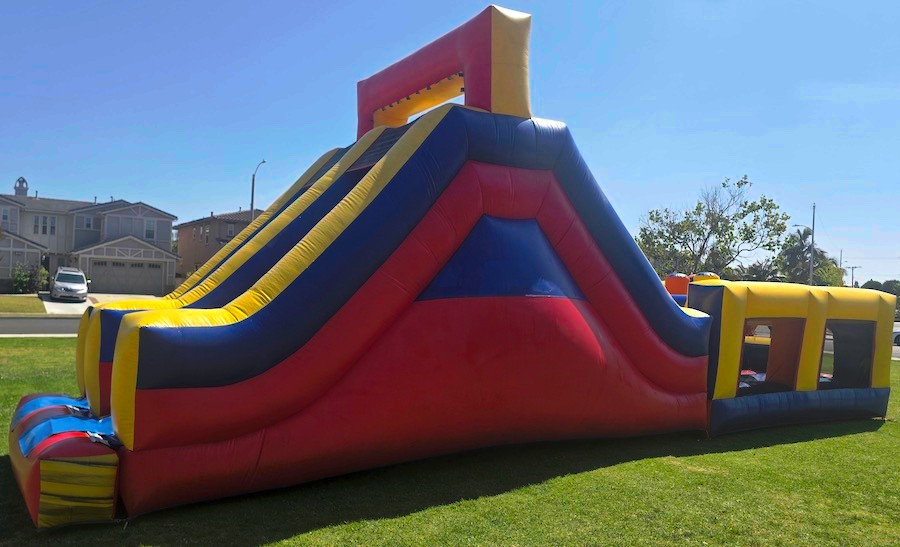
If you have ever watched a single bounce house try to serve 150 students on a field day, you already know the problem. Kids wait in a long line, bounce for two minutes, and then stand around with nowhere to go. The energy that was supposed to make the day memorable turns into restless shuffling and frustrated chaperones.
An inflatable obstacle course solves that problem by design. Instead of a single entry and exit point, a course moves students through a sequence of challenges: crawl tunnels, climbing walls, pop-up obstacles, and a slide finish. That linear flow means one student enters while another is already halfway through, and a third is sliding out the other end. Throughput goes up, wait times go down, and the kids who are waiting can actually see the action ahead of them, which keeps excitement high.
For school field days in Orange County, that throughput advantage is significant. A well-sized obstacle course can cycle a class of 30 students through in roughly 15 to 20 minutes when a supervising adult is managing the entry point. That fits neatly into the rotation blocks most field day schedules already use. Compare that with a standard bounce house, where capacity limits often mean only six to eight kids are inside at once, and the math quickly favors the course.
Obstacle courses also support the kind of structured competition that makes field days memorable. Timed runs, relay formats, and class-versus-class challenges are all natural fits for a linear course. You get cheering, friendly rivalry, and a clear finish line, which is exactly the energy a good field day needs. For older students especially, the physical challenge of climbing and crawling holds attention in a way that a basic bounce house often does not. You can read more about how obstacle courses compare with other inflatable formats in the obstacle course vs. bounce house guide on the Jump High Rentals site.
Sizing an Inflatable Obstacle Course for Your OC School Yard
Getting the size right is the step that most first-time school event coordinators underestimate. A course that looks manageable in a product photo can require a footprint of 40 by 15 feet or larger once you account for the unit itself, the blower placement, anchoring stakes or sandbags, and the entry and exit lanes where students line up and exit safely.
Start by measuring your available space before you contact any rental company. Walk the area you plan to use and note whether it is blacktop, grass, or a combination. Also note any fixed obstacles nearby: portable classrooms, fencing, bleachers, or landscaping that would reduce your usable width. A good rule of thumb is to add at least five feet of clearance on each side of the course footprint and ten feet at the exit end where students land and walk away.
Grass surfaces are generally the easiest to work with because they allow for standard stake anchoring. Blacktop and concrete require sandbag anchoring, which is a normal setup for OC school yards but does require the rental company to bring the right equipment. If your school yard is primarily pavement, confirm with your rental provider that they carry sandbags and know how to anchor properly on hard surfaces. The concrete and pavement anchoring guide covers what that setup looks like in practice.
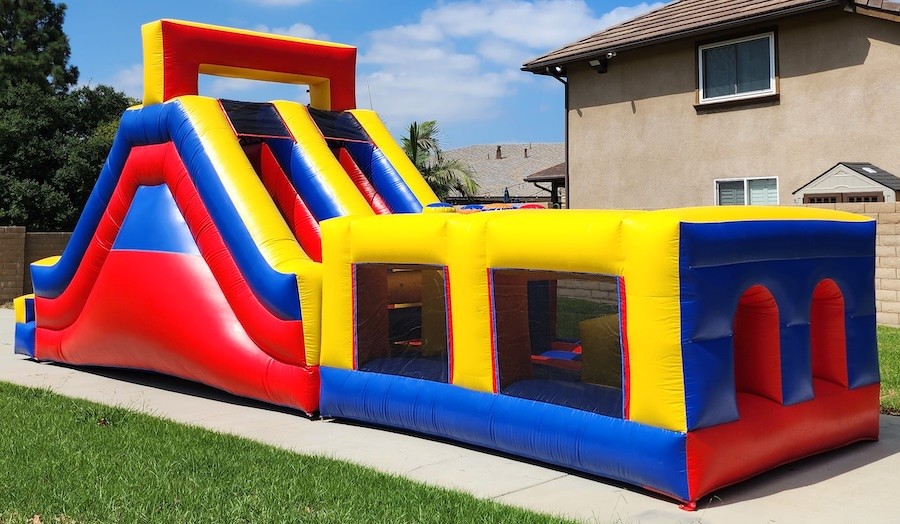
Student age and grade level also affect which course size makes sense. A course designed for elementary-age kids typically has lower climbing walls and shorter crawl tunnels than a course built for middle schoolers. Mixing age groups on the same course in the same rotation can create safety issues, so if your field day includes both younger and older grades, talk with your rental provider about whether one course handles both or whether you need separate time blocks with different supervision rules.
For events with 200 or more students rotating through, a single obstacle course may not be enough. Pairing a course with a second inflatable, such as a combo bounce unit or a separate activity station, keeps wait times reasonable and gives you a backup option if one unit needs a brief break. The multi-unit inflatable rental guide is a useful reference for larger school events.
What to Confirm Before Delivery Day at a CA School or Park
School and park venues in Orange County often have requirements that a backyard birthday party does not. Confirming these details early prevents the kind of last-minute scramble that can derail a field day before it starts.
The first question to answer is whether your school district or park permit requires a certificate of insurance from the rental company. Many OC school districts and city parks do ask for this documentation, and the timeline for getting it approved can be longer than you expect. Ask your rental provider what they can provide and then check with your school administration or parks department about what format they need and how far in advance they need it. This guide does not provide legal or insurance advice, but it is worth noting that this step alone is the one most coordinators wish they had started earlier.
Power access is the next practical concern. Obstacle courses run on electric blowers, and a standard residential extension cord is not adequate for a commercial inflatable. Your school yard may have outdoor outlets, but you need to confirm their location relative to your planned setup area and whether the circuit can handle the load. If the nearest outlet is too far away or unavailable, a generator becomes necessary. The power and extension cord guide explains what to look for and what questions to ask your rental provider.
Cleanliness is a real concern for school events, not just a marketing talking point. You are bringing an inflatable into contact with hundreds of students, and parents and administrators will notice if the unit arrives dirty or smells like it was not properly dried after its last use. Ask your rental provider specifically what their cleaning process looks like between rentals and what you should expect when the unit arrives. A reputable company will be able to describe their sanitation steps clearly. The how inflatables are cleaned and sanitized guide gives you the right questions to ask.
Finally, confirm your delivery and pickup windows against your school's schedule. Most field days run during school hours, which means setup needs to happen before students arrive on the field and pickup needs to happen after dismissal or at a time that does not interfere with afternoon traffic and bus schedules. Give your rental provider a clear picture of your site access window and ask them to confirm the delivery time in writing.
Keeping Rotations Moving and Students Safe During the Event
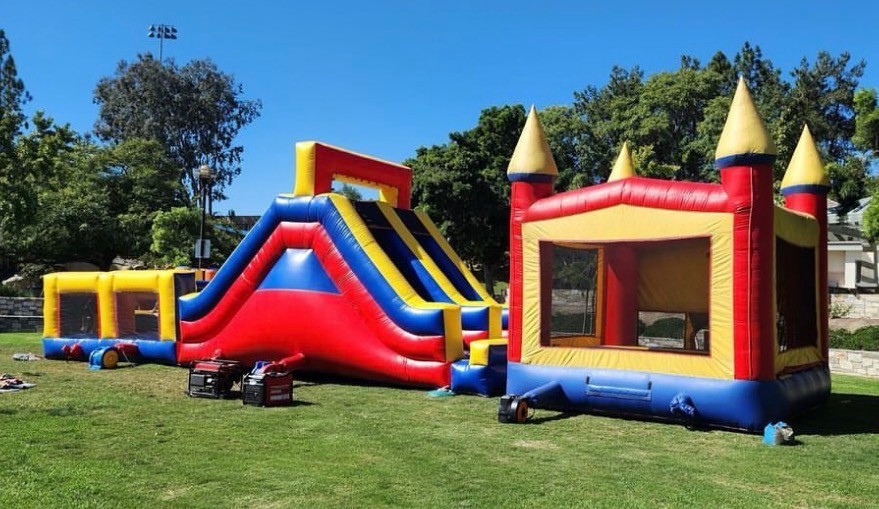
A well-planned rotation schedule is what separates a smooth field day from a chaotic one. Before the event, decide how long each class or group will spend at the obstacle course station and who is responsible for managing the entry point during each rotation. One adult at the entry end and one at the exit end is a practical minimum for keeping the flow safe and orderly.
Capacity limits on inflatables are not suggestions. They reflect the weight and activity load the unit is designed to handle safely. For an obstacle course, that typically means one student in each section of the course at a time, not a full class piling in at once. Brief your supervising volunteers on this before the event starts so they are not making judgment calls in the moment. The inflatable capacity limits guide explains how these limits work and why they matter.
Age separation is worth planning for if your field day includes multiple grade levels. Younger students and older students have different body sizes and different energy levels, and mixing them on the same course in the same rotation increases the chance of collisions or rough play. A simple solution is to schedule younger grades during earlier rotations and older grades later, with a brief transition break between groups.
Wind is a practical safety factor in Orange County that field day planners sometimes overlook. If conditions become gusty during your event, a responsible rental provider will have clear guidance on when a unit should be deflated. Review the wind speed and inflatable safety guide ahead of time so your supervising staff knows what to watch for and what to do if conditions change.
How to Book an OC Field Day Obstacle Course Without the Guesswork
Spring field day season in Orange County typically runs from late April through early June, and fall events cluster around September and October. Both windows are popular with schools, community groups, and HOAs, which means the best obstacle course units book up faster than most coordinators expect. If your field day date is set, the safest approach is to reserve your rental as soon as the date is confirmed, even if you are still finalizing other details.
When you reach out to Jump High Rentals, have a few pieces of information ready: your event date, your approximate student count, the surface type at your venue (grass, blacktop, or mixed), and whether you have confirmed power access or will need generator support. That information lets the team match you with the right course size and confirm whether your site setup is straightforward or needs extra planning.
You can browse available inflatable options on the Jump High Rentals rentals page to get a sense of what is available before you call. The booking guide also walks through the full reservation process if this is your first time renting for a school or institutional event. And if you have questions that are not covered there, the FAQ is a good place to start before reaching out directly.
Field days are one of the most anticipated events on the school calendar, and the right inflatable setup can make the difference between a day students talk about for weeks and one that just passed. Contact Jump High Rentals to check availability for your spring or fall date and get your obstacle course reserved before the calendar fills up.