
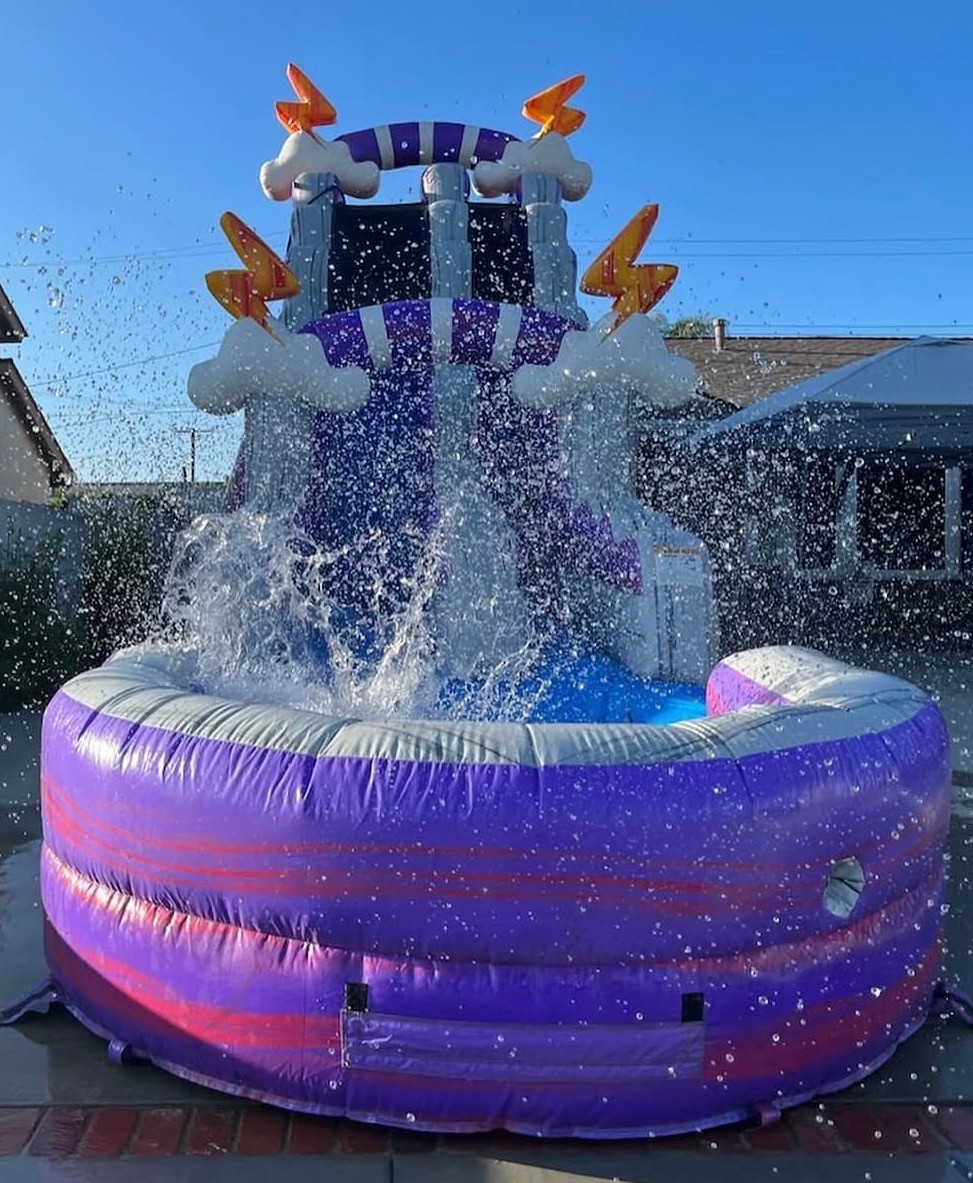
A sloped backyard stops a lot of Orange County parents from even calling a rental company. They assume the grade rules them out, picture the inflatable tilting sideways, and start looking at park venues instead. The good news is that a slope alone rarely disqualifies a yard. What actually matters is whether a flat, stable setup zone exists somewhere on the property, and in most cases, one does.
This guide walks you through how to assess your space, what information to share before you book, and how to pick a waterslide that fits a yard that is not perfectly level.
Why Slope Alone Does Not Disqualify Your Backyard
The concern most parents have is a reasonable one. A waterslide that sits on uneven ground can shift during use, drain poorly, or place uneven stress on the blower and anchor points. Those are real issues. But the key word is "uneven," not "sloped."
Many backyards in Southern California have a noticeable grade from one end to the other. That grade is often the result of standard lot grading, hillside construction, or landscaping decisions made decades ago. What matters for a waterslide setup is not the overall slope of the yard but whether there is a section of ground that is flat enough to support the unit safely.
A yard that slopes gently from the back fence down toward the house might have a perfectly usable flat zone near the patio or along one side. A yard that drops more steeply might still have a level pad near the garage or a grassy area that sits at a consistent grade. The rental crew's job is to find that zone and confirm the unit can be anchored correctly within it.
What a crew cannot work with is a setup area where the ground shifts mid-unit, where soft or waterlogged soil makes staking unreliable, or where the slope is steep enough that the inflatable would visibly tilt once inflated. In those situations, the right call is to choose a different unit, a different placement, or a different location on the property entirely.
How to Find the Flattest Usable Zone in Your Yard
Before you call or book online, spend ten minutes walking your yard with a practical eye. You are not trying to measure the exact grade. You are trying to identify the largest continuous area where the ground feels consistent underfoot.
Here is what to look for:
- Walk the perimeter and note where the ground levels off, even briefly. Flat zones near fences, patios, or side yards are common.
- Look for areas where water pools after rain or irrigation. Pooling usually means the ground is lower and potentially softer, which can affect staking.
- Check for tree roots, sprinkler heads, or buried lines that could interfere with ground stakes.
- Note where your hose bib is located and estimate how far a garden hose would need to reach. Some waterslide units require a continuous water supply, so distance from the spigot matters.
- Measure the flattest usable area in both directions. Most standard backyard waterslides need at least 15 to 20 feet of clear, level ground, and larger units need more.
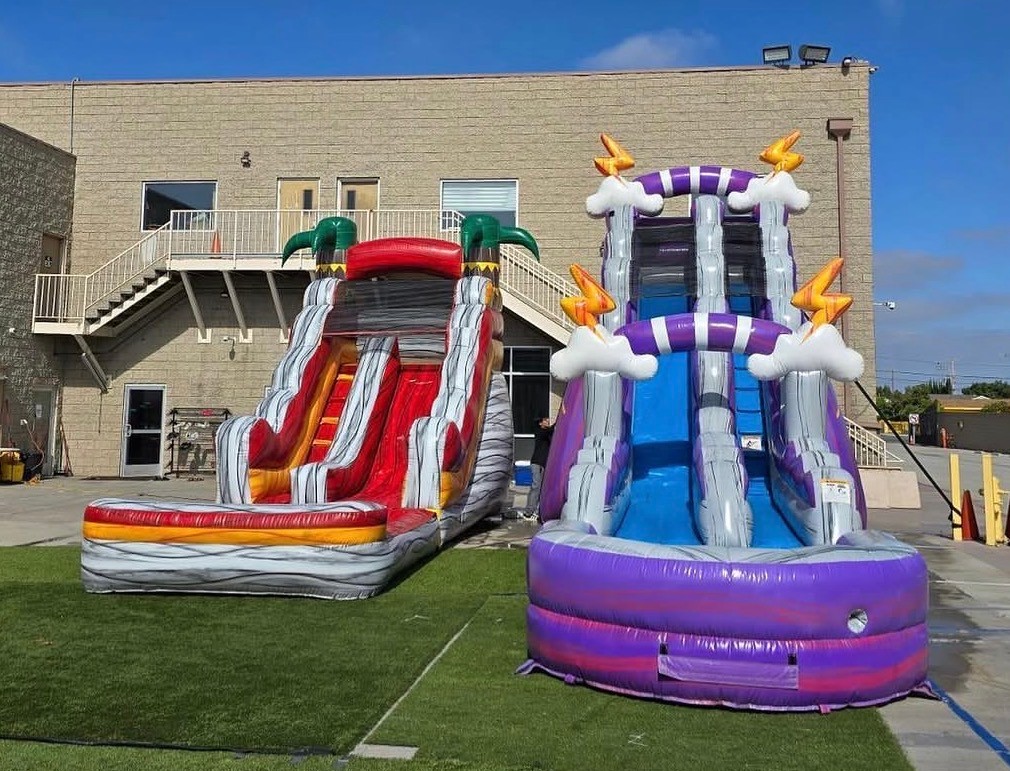
Once you have a rough sense of your best zone, take photos from multiple angles, including a wide shot from the back of the yard and a side view that shows the grade. Those photos will help a rental team give you a much more accurate recommendation than a phone description alone.
What to Tell Your Rental Company Before You Book
Sharing the right information upfront saves time for everyone and helps the crew arrive prepared. When you contact Jump High Rentals, a few details make a big difference.
Tell the team where the flattest area of your yard is located and roughly how large it is. Share the photos you took. Mention whether the ground is grass, concrete, or a mix, and whether the grass tends to stay soft after watering. If your yard has a visible slope, describe which direction it runs and whether it is gradual or more pronounced.
Also confirm the hose situation. Let the team know where your outdoor spigot is and whether you have a standard garden hose or would need to reach across a longer distance. If you are not sure whether your hose reaches the setup zone, measure it before you call.
If your party is at a park rather than a private backyard, the conversation shifts slightly. Orange County parks have their own permit and approval processes, and some locations have restrictions on staking or surface types. For private residential setups, the main focus is access, surface condition, and available space.
Finally, ask about unit options early. Knowing your yard dimensions and slope situation before you browse units helps the team point you toward the right size and style rather than letting you fall in love with a unit that will not fit your space.
Choosing the Right Waterslide for a Challenging Yard
Not every waterslide is equally forgiving on tricky terrain. Taller, longer units need more continuous level ground and are harder to anchor on a slope. Smaller units and wet combo inflatables tend to be more adaptable because they have a smaller footprint and lower center of gravity.
If your yard has a meaningful grade, a compact waterslide or a combo unit with a built-in splash zone is often the smarter choice. These units still deliver the water fun kids love, but they require less perfectly flat ground to set up safely. A combo unit also gives you a bounce area alongside the slide, which keeps more kids engaged at once without needing a larger setup footprint.
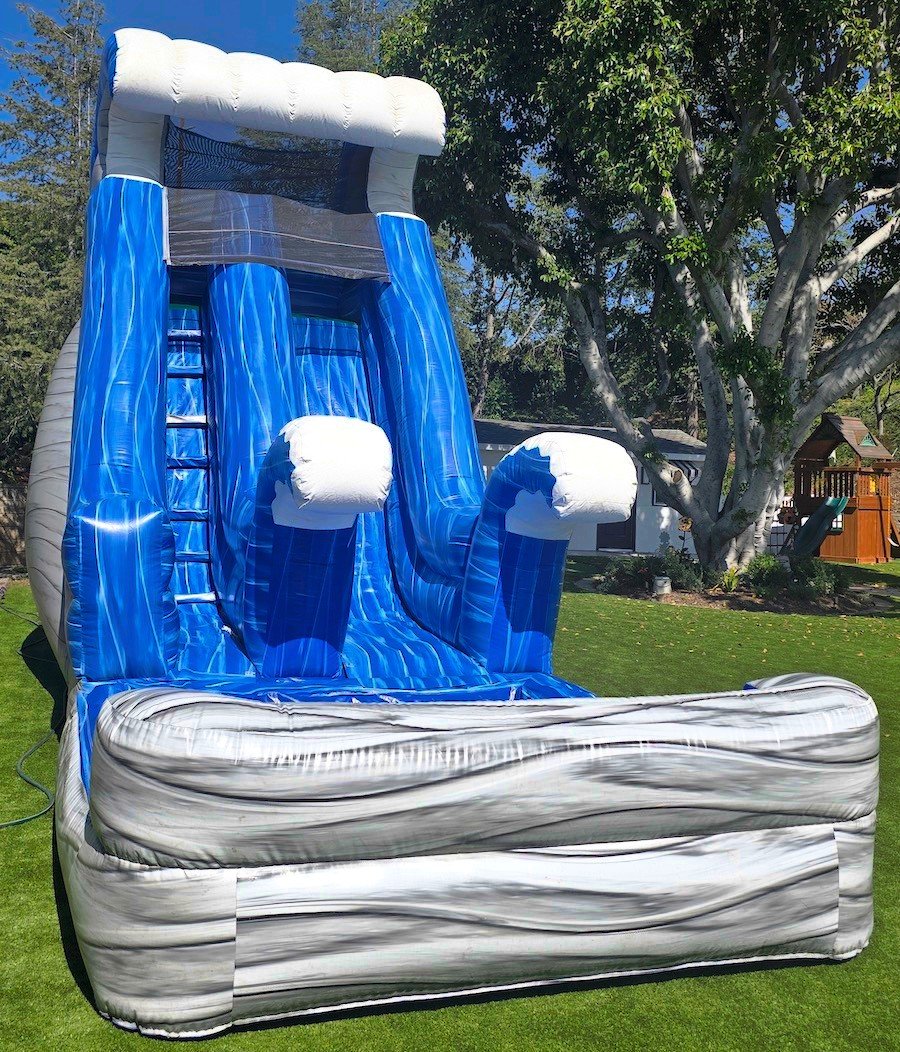
For yards with very limited flat space, a slip-and-slide style inflatable or a smaller splash pad attachment may be worth considering. These options work well for younger kids and require less anchoring than a full tower slide.
The rental team can walk you through what is available in the current inventory and match a unit to your specific yard dimensions. Describing your space accurately, including the slope, is the fastest way to land on the right recommendation.
Safety Checks the Crew Will Make on Arrival
Even if you have done everything right before the delivery day, the crew will still do their own assessment when they arrive. That is a normal part of professional setup, not a sign that something is wrong.
The crew will check the ground surface for firmness and consistency, confirm that the anchor stakes can be placed correctly, and verify that the unit sits level once it is partially inflated. If the placement needs to shift slightly to find a better surface, they will make that call on the spot.
They will also check the water connection, confirm there is enough clearance around the unit for safe entry and exit, and make sure the blower has access to power. If the setup area has any issues that were not visible in photos, the crew will talk through options with you before committing to a placement that does not meet safety requirements.
The goal is always to get the setup right, not just to get it done. A waterslide that sits level, anchors securely, and drains properly is one that kids can enjoy safely for the full rental period.
Ready to Check Your Yard?
If you have been holding off on booking because you were not sure your sloped backyard would qualify, now is a good time to take those photos and reach out. The team at Jump High Rentals is happy to look at your yard dimensions and slope situation and recommend the best unit for your space. Serving families across Orange County, CA, the team handles delivery, setup, and pickup so you can focus on the party.
Send your photos or measurements when you inquire and the team can give you a much more specific answer than a general size guide ever could.