
How Each Unit Type Earns Revenue in a CA Rental Fleet
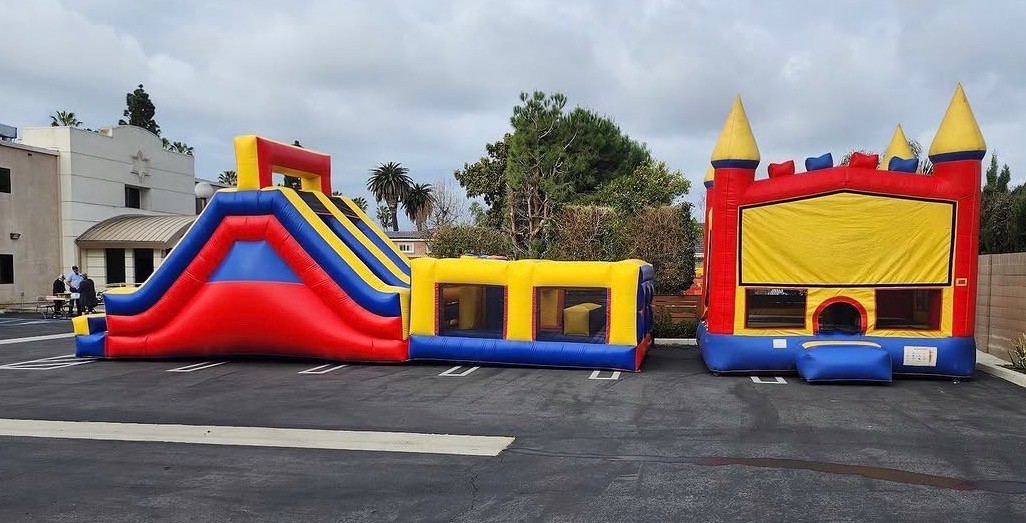
Before you commit capital to either unit, it helps to understand how each one generates bookings across a typical California rental season. Dual lane combo units and standalone waterslides both earn revenue, but they do it through different booking profiles, and that difference shapes your ROI timeline more than the sticker price alone.
A dual lane combo combines a bounce chamber with a slide (often with wet or dry capability) into a single inflatable footprint. Because it offers two activities in one unit, it appeals to a wider range of event types: backyard birthdays, school carnivals, church festivals, and HOA block parties. Operators who track their booking logs consistently report that combo units carry higher utilization rates across spring and fall shoulder seasons, when parents want a full activity station rather than a single-function slide. That year-round versatility is a meaningful revenue advantage in a market like Orange County, where the rental season stretches well beyond summer.
A standalone waterslide, by contrast, earns its keep during a concentrated peak window. In CA, that window runs roughly from late April through September, with the heaviest demand landing in June, July, and August. During those months, a quality standalone slide can command premium pricing and book out weeks in advance. The challenge is that outside of summer, standalone slides often sit idle unless your market includes pool parties, corporate picnics, or events in warmer inland zip codes where demand extends a bit longer. If your fleet is small and you are building toward a full calendar, a unit that earns only during peak season creates cash flow gaps you will need to plan around.
The practical takeaway for fleet planning: a dual lane combo tends to produce more consistent monthly revenue across a 12-month period, while a standalone slide can produce higher per-event revenue during peak months but requires stronger summer booking volume to offset off-season downtime. Operators who browse the Jump High Rentals catalog can see firsthand which configurations generate the most repeat customer requests in Orange County, which is useful market intelligence when you are deciding what to add to your own fleet.
Upfront Cost, Freight, and Setup Complexity Compared
Unit acquisition cost is only one part of the capital equation. Freight, setup labor, and accessory requirements all affect your true cost basis, and they differ meaningfully between these two unit types.
Dual lane combo units typically run between $3,500 and $6,500 at wholesale, depending on size, lane configuration, and manufacturer. Units with wet and dry capability sit toward the upper end of that range because the additional plumbing connections and reinforced slide channels add material cost. Standalone waterslides carry a wider price spread. A compact single-lane slide might start around $2,800, while a large dual-lane standalone with a tall drop can reach $7,000 or more. The height and complexity of the slide structure directly affect both price and freight cost.
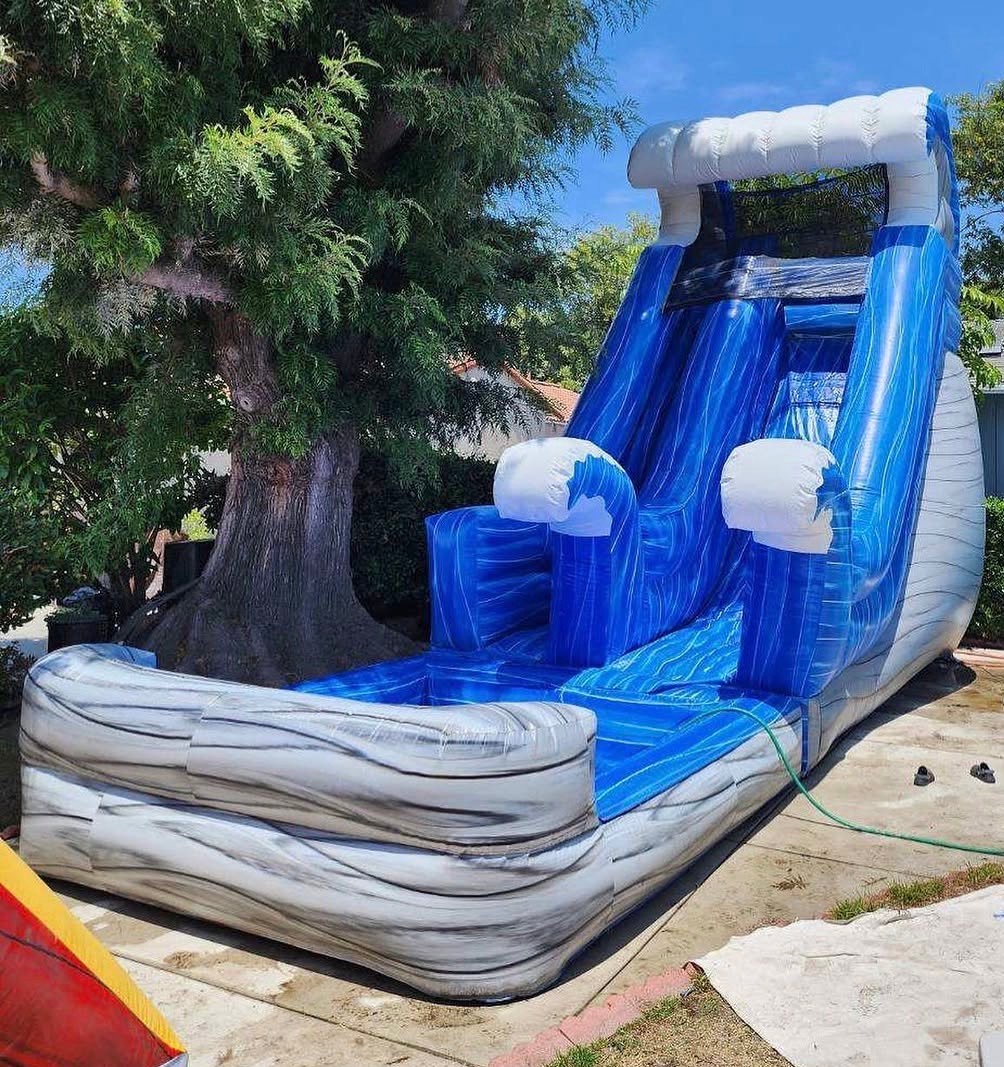
Freight to California from major inflatable manufacturers (most of whom ship from overseas through West Coast ports or domestic warehouses) typically runs $400 to $900 per unit for standard LTL delivery, though oversized or crated standalone slides with tall towers can push freight closer to $1,200 or more depending on dimensional weight. Combo units are generally more compact when deflated and rolled, which keeps dimensional weight lower and often results in lower freight costs per unit compared to a tall standalone slide of equivalent capacity. If you are sourcing multiple units in a single order, consolidated freight can reduce per-unit shipping cost significantly, so timing your purchases together is worth considering.
Setup complexity also differs. A dual lane combo requires a blower, anchor stakes or sandbags, and a water connection if running wet. Setup time for an experienced crew typically runs 20 to 35 minutes. A large standalone waterslide, particularly one with a tall tower and extended run-out lane, can take 35 to 55 minutes to set up safely, and it may require a larger crew for safe inflation and anchoring. That additional labor time is a real cost if you are running multiple deliveries in a single day. You can find practical setup and anchoring context in Jump High's guide on water slide rental setup on sloped CA backyards, which illustrates the site conditions your crews will encounter across Southern California.
Storage Footprint and Depreciation for CA Operators
Storage is a cost that many new fleet operators underestimate. In California, commercial storage space is expensive, and the footprint of your inflatable inventory directly affects your monthly overhead. Understanding how each unit type compares on storage and depreciation helps you model true long-term ROI.
Deflated and rolled, a dual lane combo unit typically occupies a storage footprint of roughly 4 by 4 feet and stacks to about 3 feet high, depending on the manufacturer's roll dimensions. That is a manageable footprint for most storage units or warehouse bays. A large standalone waterslide, especially one with a tall tower section that must be stored separately, can require significantly more floor space. Some tall slide units include rigid or semi-rigid structural components that cannot be compressed the same way a bounce chamber can, which means they take up more linear shelf or floor space per unit.
On depreciation, commercial inflatables in active rental use typically show meaningful wear over a three to five year period, though actual lifespan depends heavily on cleaning practices, anchor discipline, and how often the unit runs wet. Combo units that run both wet and dry tend to show wear more evenly across the bounce chamber and slide surfaces, while standalone waterslides that run wet almost exclusively can show concentrated wear on the slide channel and landing zone. CA fleet operators should factor a realistic depreciation timeline into their pricing model from day one. A unit that costs $5,000 and earns $350 per rental needs roughly 15 bookings to recover its cost before depreciation, maintenance, and storage overhead are factored in. That math changes depending on your local rental rate and booking frequency.
Warranty terms from inflatable manufacturers vary considerably. Some offer 12-month warranties on seams and stitching, while others provide extended coverage on blower motors or structural components. Before purchasing, confirm whether the warranty covers commercial use specifically, since some manufacturers void coverage if the unit is used for paid rentals. This is a sourcing question worth asking directly before you commit.
Booking Demand: Which Unit Fills Your Calendar Faster
Demand data from Orange County rental activity offers a useful real-world signal for CA fleet operators evaluating these two unit types. Combo units consistently appear in a broader range of event categories throughout the year. A dual lane combo with wet and dry capability can serve a summer birthday in Anaheim Hills, a fall church carnival in Mission Viejo, and a spring school field day in Fullerton, all with the same unit. That cross-event versatility translates directly into higher annual booking frequency for most operators.
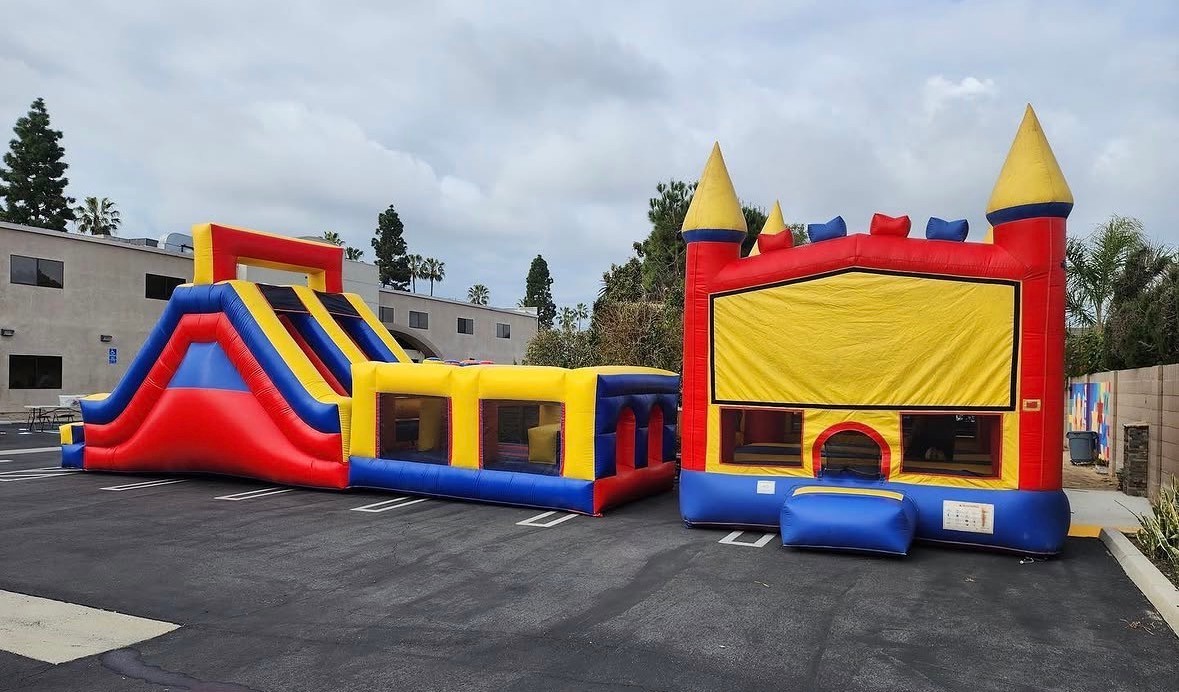
Standalone waterslides generate strong demand during summer, particularly for larger events where a dedicated slide experience is the centerpiece attraction. Events with 50 or more kids, corporate picnics, and community pool parties often specifically request a standalone slide because the throughput capacity and visual impact are higher than a combo unit's slide section. If your target market includes large-scale events, a standalone slide can be a strong revenue performer during peak months. The inflatable rental checklist for OC parties with 50 guests gives a sense of what large-event customers prioritize when selecting equipment, which is useful context for fleet operators thinking about demand.
One pattern worth noting: operators who carry at least one combo unit alongside a standalone slide tend to fill more calendar dates than those who specialize in only one unit type. The combo unit captures shoulder-season bookings that a standalone slide would miss, while the standalone slide captures peak-season premium events that a combo unit might not satisfy on its own. For a fleet of three to five units, a mix of both types generally produces stronger annual revenue than an all-combo or all-slide inventory.
How to Decide Based on Your Fleet Size and Market
The right choice between a dual lane combo and a standalone slide depends on where you are in your fleet development and what your local CA market actually demands. There is no single correct answer, but there are clear signals that point toward one unit over the other depending on your situation.
If you are building your first or second unit, a dual lane combo with wet and dry capability is generally the lower-risk starting point. It covers more event types, produces more consistent year-round bookings, and gives you operational experience with a unit that is manageable to set up and store. The upfront cost is predictable, freight is typically lower than a large standalone slide, and the depreciation timeline is well-established in the industry.
If you already have two or three combo units and are looking to add a premium offering for summer peak season, a standalone waterslide is a logical next step. It differentiates your catalog, commands higher per-event pricing during summer, and attracts large-event clients who want a dedicated slide experience. The key is having enough existing combo inventory to carry your calendar through the off-season while the slide sits between summer bookings.
For operators in coastal and inland Orange County markets specifically, demand patterns tend to favor combo units in fall and spring, with standalone slides peaking sharply in summer. If you serve communities like Yorba Linda, Anaheim Hills, or Fullerton where summer heat runs long, your standalone slide season may extend a few weeks longer than in coastal cities. The inflatable rentals for Yorba Linda and Placentia CA guide reflects the demand patterns in those inland communities, which can help you calibrate expectations for your service area.
Fleet operators who want to see which combo and slide configurations generate the most customer requests in Orange County are welcome to browse the Jump High Rentals catalog as a real-world reference point. If you have sourcing questions or want to discuss vendor referrals for commercial unit purchases, the contact page is the right place to start that conversation. The FAQ also covers common questions about unit specifications and delivery logistics that fleet buyers often ask before making a purchase decision.