
How Much Space Does an Obstacle Course Rental Need?
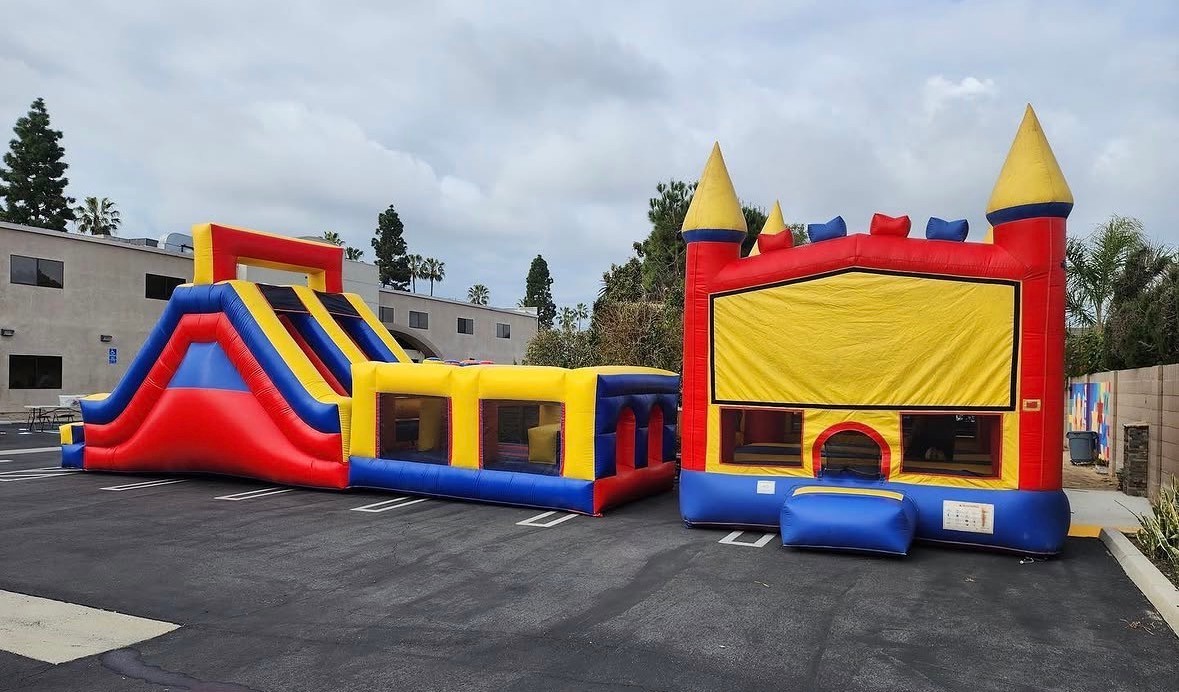
The most common question families and event planners ask before booking an obstacle course in Orange County is a simple one: will it actually fit? It's a fair concern, and the answer depends on a few specific measurements that are easy to check before you ever pick up the phone.
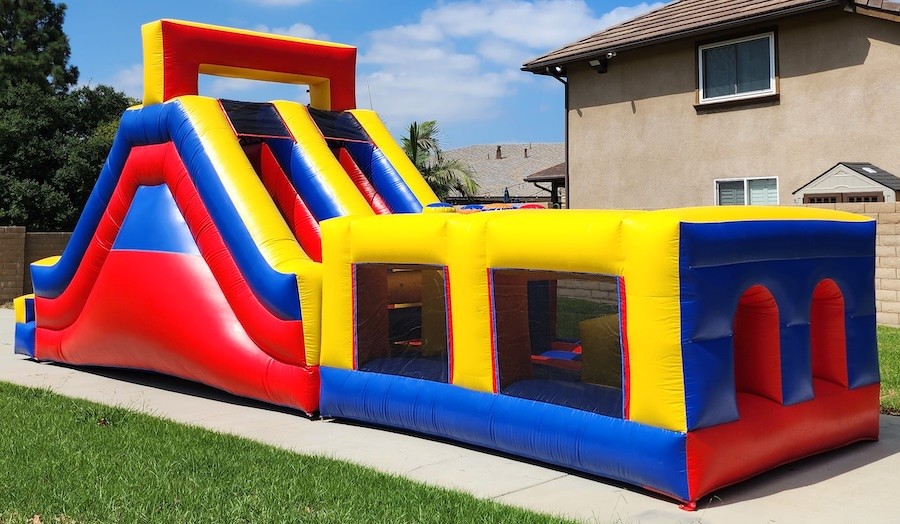
Most inflatable obstacle courses fall into one of two size ranges. Smaller residential units typically run around 30 to 40 feet long and 10 to 12 feet wide, making them a realistic option for a standard OC backyard with a modest lawn. Larger competition-style courses can stretch 50 to 65 feet long or more, which is better suited for parks, school fields, or wide side yards with generous clearance. Height matters too: most units stand between 10 and 14 feet tall, so overhead clearance from tree branches, patio covers, or utility lines needs to be part of your measurement check.
The footprint you measure for the inflatable itself is not the only number that matters. You need to add buffer space on all sides: at least 3 feet on each side and 5 feet at both the entrance and exit ends. That buffer gives the blower unit room to sit, gives your setup crew space to stake the unit safely, and gives kids a clear landing zone when they come out the other side. A 40-foot course with proper clearance realistically needs a usable area closer to 50 feet long and 18 feet wide. If your yard is close to that number, it's worth measuring twice before assuming it will work.
A good rule of thumb for typical Orange County backyards: if you have a flat, open lawn that measures at least 45 feet by 18 feet with no overhead obstructions, a standard residential obstacle course will fit comfortably. If your space is tighter, the team at Jump High Rentals can walk you through which units in the catalog are sized for smaller footprints before you commit to a booking.
Backyard vs. Park Setup: What Changes in CA
Setting up an obstacle course in your backyard and setting one up at a local park in Orange County are two different planning conversations, and knowing the difference ahead of time saves a lot of day-of stress.
In a backyard, the main variables are access and surface. The delivery crew needs a clear path from the street or driveway to the setup area, wide enough to roll the inflatable through. Most units are transported on a hand truck or dolly, so a standard gate opening of at least 4 feet works for smaller units. Larger courses may need a double gate or a side-yard path that is at least 5 to 6 feet wide. If your yard has a narrow side passage, a step-down from a patio, or a gate that swings inward, mention that when you book. The crew can often work around it, but they need to know in advance.
At a public park in Orange County, the setup process adds one important layer: permits. Many OC parks require a special use permit for commercial inflatables, and some parks have specific zones where staking into the ground is allowed. Staking matters because obstacle courses need to be anchored securely, and parks with irrigation systems or underground utilities may restrict where stakes can go. The guide to bounce house rentals for Orange County park events covers the permit process in more detail, and the Irvine park permit guide is a helpful reference if you are planning an event in a city-managed space.
One more difference worth noting: park setups often involve longer carry distances from the parking area to the event site. If your chosen park location is more than 100 to 150 feet from where the delivery vehicle can park, let the team know. That affects setup time and logistics, and it's better to plan for it than to discover it on the morning of your event.
Power, Surface, and Access Requirements to Know First
Obstacle courses run on continuous power from a blower motor, and that blower needs to stay on for the entire rental period. Most standard units require a dedicated 20-amp circuit, and the blower should be the only device drawing from that circuit. If you are running the course in a backyard, a standard outdoor outlet works in most cases, but you need to know where that outlet is and how far it sits from the setup location.
Extension cords are sometimes necessary, but not all extension cords are appropriate for inflatable blowers. The power and extension cord guide for OC inflatables explains gauge requirements in plain language. The short version: use a heavy-duty, 12-gauge outdoor cord rated for the amperage your blower draws, and keep the run as short as possible. Long, undersized cords cause voltage drop, which can overheat the motor and shut the unit down mid-party.
Surface type affects both safety and anchoring. Grass is the preferred surface for obstacle courses because it allows for ground stakes, which provide the most secure anchor points. Concrete and pavers are workable but require sandbag anchoring, which adds weight to the delivery and slightly changes the setup footprint. Artificial turf is increasingly common in OC backyards, and it can work well as long as the turf is installed over a firm base and the crew uses the right anchoring method. The guide to bounce house setup on artificial turf covers the specifics if your yard has synthetic grass.
For park setups, power access is a common challenge. Not all parks have outdoor outlets near event areas, and running a generator is sometimes the only option. If you are planning a school or church event at a park location, confirm power access with the park department early. Some OC parks have electrical hookups available for permitted events, but they may need to be reserved separately.
Choosing the Right Obstacle Course Size for Your Guest Count
Guest count is one of the most practical factors in choosing between a smaller residential course and a larger event-scale unit. An obstacle course is not like a bounce house where a dozen kids can be inside at once. It is a throughput activity: kids line up, go through one at a time or in small groups, and the fun comes from the challenge and the competition.
For a backyard birthday with 20 to 30 kids, a standard 30 to 40-foot course handles the crowd well. Kids cycle through quickly, wait times stay short, and the energy stays high. If your guest list climbs toward 40 to 60 kids, a longer course or a second activity unit helps prevent a long queue from forming and keeps everyone engaged. The inflatable rental checklist for OC parties with 50 guests is a useful planning reference for larger headcounts.
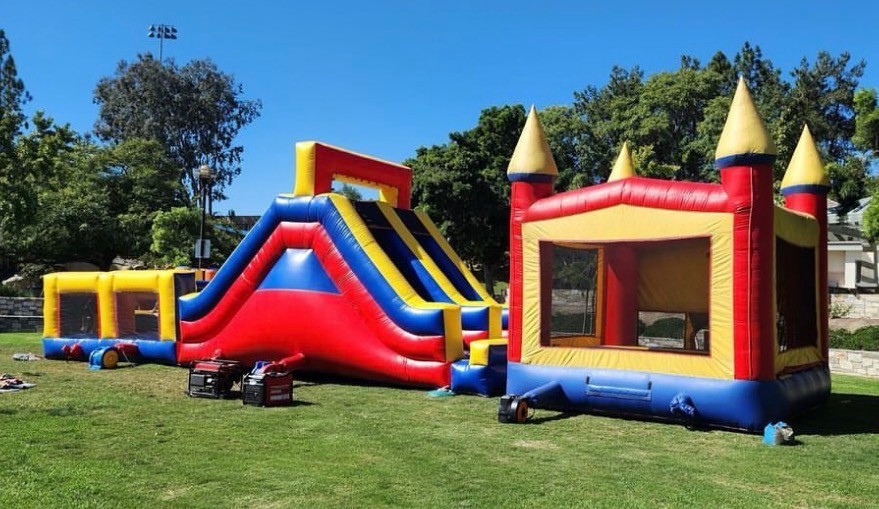
Age mix matters as much as total count. Obstacle courses are particularly popular with kids ages 5 through 12, and they are a strong choice for teen parties where a standard bounce house might feel too young. If you have a wide age range at your event, a combo unit that includes both a bounce area and an obstacle challenge can serve more of the crowd at once. The guide comparing obstacle courses and bounce houses walks through that decision in more detail.
For school field days, church carnivals, and HOA community events, the math shifts. Events with 100 or more kids benefit from multiple inflatables running simultaneously, and an obstacle course becomes one station in a larger activity rotation rather than the single centerpiece. The guide on how many inflatables to rent for a 100-person OC event gives planners a practical framework for scaling up.
What Happens on Setup Day (and How to Prepare)
Knowing what to expect when the Jump High crew arrives makes the whole experience smoother, especially if this is your first time renting an obstacle course. Setup typically takes between 30 and 60 minutes depending on the unit size, surface type, and access conditions. The crew handles all of the inflation, anchoring, and safety checks. Your job is to have the space cleared and ready when they arrive.
Before the delivery window, walk the setup area and remove anything that could get in the way: lawn furniture, garden hoses, toys, potted plants, and anything else within the footprint plus buffer zone. If you have a dog, keep them inside or in a separate area during setup. The crew is friendly, but an excited dog underfoot slows things down and creates a safety hazard.
Mark your outdoor outlet location and make sure it is accessible. If you are using an extension cord, have it ready and positioned before the crew arrives. Confirm that the gate or access path is unlocked and clear. If there are any quirks about your yard, like a soft spot in the lawn, a low-hanging branch the crew should know about, or a gate that sticks, mention them when you confirm your booking or when the crew calls to confirm the delivery window.
After setup, the crew will walk you through the basic operating instructions and safety rules before they leave. If you have questions about capacity limits, age guidelines, or what to do if the blower trips a breaker, that walkthrough is the right time to ask. You can also review the FAQ page ahead of time so you feel prepared going in.
When the rental period ends, the crew returns to deflate, disassemble, and load the unit. You do not need to do anything except make sure the area is accessible again. The whole pickup process is typically faster than setup.
Ready to confirm whether your space works for an obstacle course? Browse the full inflatable lineup at Jump High Rentals or reach out to the team with your yard measurements before you book. A quick conversation about dimensions now saves a lot of guesswork on delivery day.