
Start Here: What OC Schools Need Before Booking Inflatables
Planning a field day in Orange County takes more coordination than most people outside the school office realize. Between scheduling the date, lining up volunteers, and making sure every grade level gets a turn at the fun, the logistics stack up quickly. Adding inflatables to the mix raises the excitement level considerably, but it also adds a few planning steps that are worth working through early rather than the week before the event.
The first thing to confirm is whether your school or district requires advance approval for outside vendors on campus. Many Orange County Unified, Garden Grove Unified, and Anaheim Union High School District campuses have a vendor approval or certificate of insurance process that the rental company must complete before equipment can be delivered. Jump High Rentals is familiar with these requirements and can provide the documentation your front office needs, but building in enough lead time matters. Reaching out at least four to six weeks before your field day gives everyone room to handle paperwork without stress.
Next, identify who on your staff will serve as the primary contact on event day. This person coordinates with the delivery crew, confirms the setup location, and stays available if anything needs adjusting. Having one clear point of contact makes the whole process smoother for your team and for the rental crew. If your PTA is co-organizing the event, decide ahead of time whether the school coordinator or a PTA lead holds that role.
Finally, think through your budget structure before you start comparing units. Field day inflatable rentals for schools typically work best when the cost is covered through a combination of PTA funds, school activity budgets, or a small per-student fee collected in advance. Knowing your ceiling before you browse the Jump High Rentals catalog helps you make faster decisions and avoid the back-and-forth of getting quotes for units that are out of range.
Choosing the Right Inflatables for Field Day Guest Counts
Field day is not a birthday party for twenty kids. Most elementary schools in Orange County run field day for an entire grade level or the full student body, which means you could be managing anywhere from 80 to 400 kids rotating through stations throughout the day. The inflatable you choose needs to match that throughput, not just look exciting in a photo.
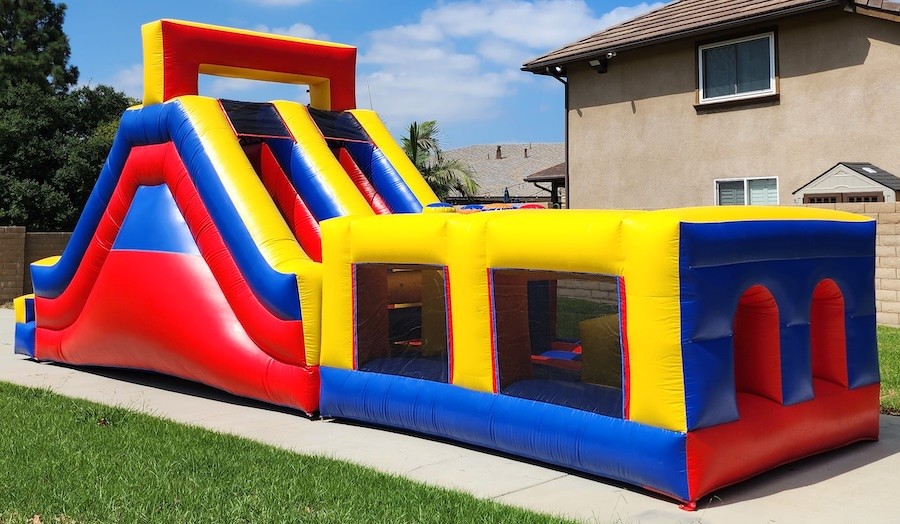
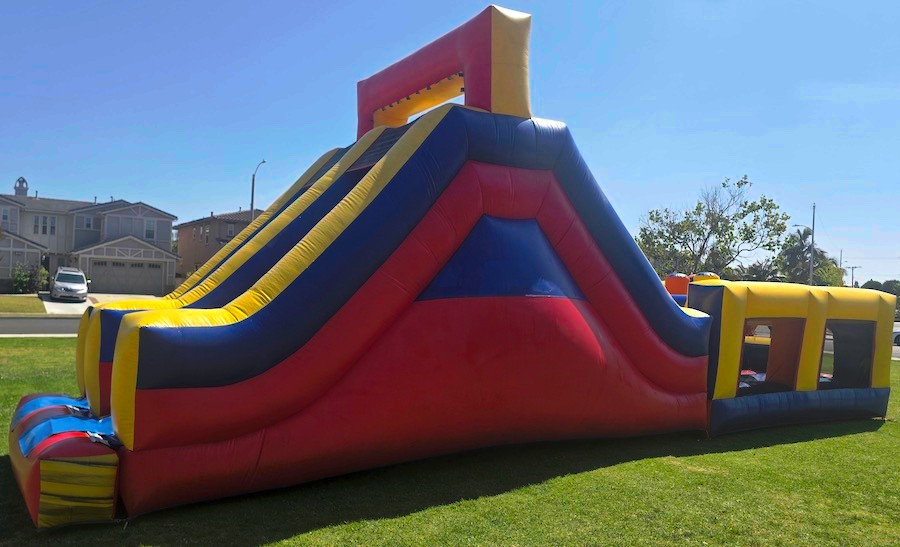
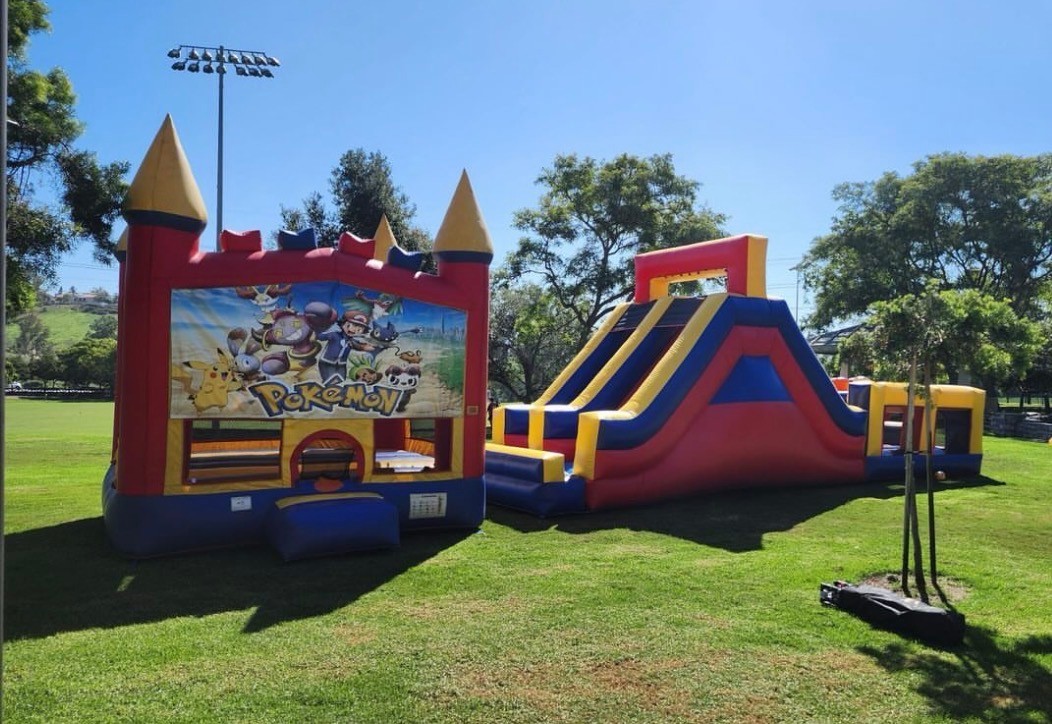
A standard bounce house works well for smaller grade-level events or as one station among many. For larger events where multiple classes rotate through, an inflatable obstacle course tends to be a stronger choice because it moves kids through in a linear path, keeps the line visible, and gives each participant a defined start and finish. This structure also makes supervision easier because staff can position themselves at the entrance and exit rather than watching an open bouncing area from all sides.
If your field day falls during warmer months, which is common for OC schools wrapping up the school year in May or June, a waterslide or combo unit with a slide can become the most popular station on the field. Keep in mind that wet inflatables require a water source nearby and a plan for kids to dry off before heading back to class or to the next station. Reviewing the waterslide vs. combo unit guide can help you think through which format fits your setup.
For events with mixed age groups, consider whether you need separate units for younger and older students. A toddler-friendly bounce house is not the right fit for fifth graders, and a large obstacle course can feel intimidating or physically demanding for kindergarteners. Splitting your inflatable stations by grade band, with one unit designated for K through 2 and another for grades 3 through 5, gives every student an experience that feels right-sized for them. The inflatable capacity guide is a helpful reference when you are estimating how many kids can safely rotate through each unit per hour.
Delivery, Setup, and Space Requirements on School Grounds
School campuses present some specific logistical considerations that differ from a backyard birthday or a park event. Delivery trucks need a clear path to the setup area, which is often a blacktop, a grass field, or a multi-use athletic area. Sharing a detailed site map or a photo of the space with your rental coordinator in advance helps the crew plan their approach and confirm that the unit you have chosen will fit.
Most standard bounce houses require a footprint of roughly 15 by 15 feet, while obstacle courses can run 50 feet or longer depending on the model. Add several feet of clearance on all sides for anchoring, blower placement, and safe entry and exit. If your school's field has sprinkler heads, drainage grates, or low-hanging structures nearby, flag those details when you book so the crew can plan anchor placement accordingly.
Power is another consideration that surprises some school coordinators. Inflatable blowers require a dedicated electrical outlet, typically a standard 20-amp circuit, within 50 to 100 feet of the unit. If your field does not have outdoor outlets nearby, a generator may be needed. Ask about this when you book, and read through the power and extension cord guide to understand what your setup will require.
Delivery timing matters on a school campus more than almost anywhere else. You do not want a delivery truck navigating a parking lot during morning drop-off, and you do not want setup happening while students are already outside. Scheduling delivery at least 90 minutes before your first student rotation begins gives the crew time to set up, inflate, and walk through the unit with your staff contact before anyone gets in line. Discuss your school's arrival and dismissal schedule with the rental team when you confirm your booking window. The delivery windows guide covers what to expect in more detail.
Supervision and Safety Rules for Field Day Inflatables
Inflatables are genuinely fun, and they are also equipment that requires attentive supervision to stay safe. For a school field day, that means assigning a dedicated adult to each inflatable station rather than relying on a general crowd of volunteers to keep an eye on things from a distance.
Each unit should have at least one adult stationed at the entrance to manage the line, enforce capacity limits, and make sure kids remove shoes before entering. A second adult near the exit or inside the unit area helps monitor what is happening once kids are bouncing. Capacity limits are not suggestions. Overcrowding is one of the most common causes of inflatable-related injuries, and keeping the count at or below the posted limit is the single most effective thing your volunteers can do to keep kids safe. The inflatable capacity limits guide explains how those numbers are determined and why they matter.
Before the first rotation begins, take five minutes to walk your volunteer team through the basic rules. No flipping or roughhousing, no mixing of significantly different age groups in the same session, no climbing on the outside of the unit, and no entering or exiting except through the designated opening. These are the same rules outlined in the bounce house rules guide, and sharing that resource with your volunteers ahead of time can save you from having to explain everything on the spot.
Wind is a factor that OC teachers sometimes overlook when planning outdoor events. If conditions become gusty during your field day, the rental company's guidelines will specify when a unit needs to be deflated for safety. Assign one person on your team to monitor conditions and know the wind threshold for your specific unit. The wind speed and inflatable safety guide is a practical reference to review before your event.
Your Field Day Inflatable Rental Checklist
This section pulls together the key steps from everything above into a format you can print, share with your PTA co-chair, or paste into your event planning folder. Think of it as your running task list from first inquiry through event-day wrap-up.
Four to six weeks before field day, confirm vendor approval requirements with your school's front office and begin collecting documentation. Identify your on-site coordinator and share their contact information with the rental company. Set your budget and browse the Jump High Rentals catalog to narrow down unit options based on your student count and available space.
Two to three weeks out, finalize your unit selection and confirm your delivery window with the rental team. Share a site map or photos of your setup area, including outlet locations and any access restrictions. Confirm your volunteer roster and assign specific adults to each inflatable station.
One week before, send a reminder to volunteers with the basic safety rules and their station assignments. Confirm your delivery time and the name of the crew lead who will be on site. Review the power setup plan and confirm whether you need an extension cord or generator.
The day before, walk the setup area and clear any debris, sprinkler heads, or obstacles. Confirm the weather forecast and have a backup plan ready if conditions are borderline. Make sure your on-site coordinator has the rental company's direct phone number.
On event day, meet the delivery crew at the designated entrance and walk them to the setup area. Allow 60 to 90 minutes for setup and inflation before students arrive. Brief your volunteers on safety rules and capacity limits before the first rotation. Monitor conditions throughout the event and keep the rental company's number handy for any questions.
After the event, make sure the area is clear of students before the pickup crew arrives. Return any rental accessories provided with the unit and confirm pickup timing with the crew.
Planning a field day that students will talk about for the rest of the school year is absolutely doable, and Jump High Rentals has worked with schools across Orange County to make it happen. If you are ready to get a quote or want to talk through which units make sense for your student count and campus layout, reach out through the contact page or visit the FAQ for quick answers to common questions. Jump High delivers across Orange County with transparent pricing and a crew that understands what school events require.