
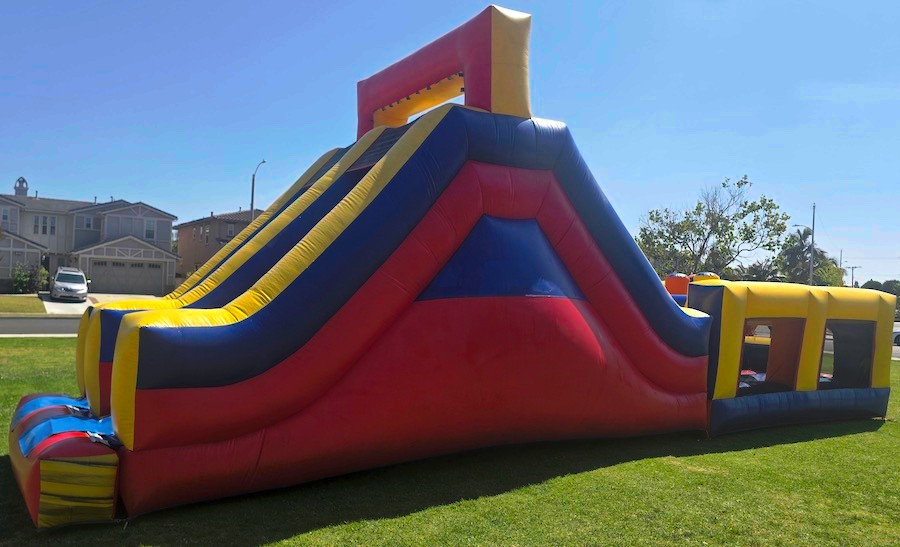
Planning a party for 100 or more guests in Orange County is a different challenge than organizing a backyard birthday for 30 kids. The logistics shift, the space requirements grow, and the single bounce house that works beautifully for a small gathering becomes a bottleneck the moment a crowd arrives. Multi-unit inflatable setups are the practical answer, and this guide walks you through how to think about them before you book.
Why One Inflatable Is Not Enough for 100-Plus Guests
Picture a standard bounce house at a school carnival with 150 kids rotating through. Even a large unit holds a limited number of children safely at one time, which means a line forms quickly. That line grows. Parents get restless. Kids lose interest and wander. The single inflatable that looked impressive in the rental catalog becomes the event's biggest friction point.
Multiple inflatables solve this by spreading attendance across several attractions at once. When children have three or four places to go, the crowd distributes naturally. Wait times shrink, energy stays high, and the event feels organized rather than chaotic.
This is the core idea behind multi-unit planning: you are not just adding more fun, you are building throughput into your event layout. Each unit becomes a station, and the stations work together to keep guests moving and engaged throughout the rental window.
For Orange County events drawing over 100 guests, this approach is especially practical because so many of these gatherings happen at venues with defined boundaries. School fields, church parking lots, HOA common areas, and community parks all have edges. Spreading units across that footprint gives every corner of the venue a purpose and prevents the crowd from clustering in one spot.
The other factor worth noting is age range. Large events almost always include a mix of younger children and older kids. A single standard bounce house tends to appeal to one age group more than another. When you add an obstacle course or a waterslide to the mix, you give older kids a challenge that holds their attention while younger children enjoy the simpler bounce unit. That age-matching is a quiet but powerful crowd-management tool.
How to Mix Bounce Houses, Obstacle Courses, and Slides for Crowd Flow
There is no single formula for the right unit mix, but there are combinations that consistently work well for large OC events.
A common starting point for events between 100 and 200 guests is pairing a standard bounce house or combo unit with an obstacle course. The bounce house handles younger children and casual bouncers. The obstacle course draws competitive energy from older kids and adults who want a physical challenge. Both units run simultaneously, which means the crowd divides rather than stacks.
For events with water access or summer timing, adding a waterslide to that pairing creates a third attraction. Now you have three distinct experiences: bouncing, racing through an obstacle course, and sliding. Children cycle through all three, which extends engagement and keeps any one unit from becoming overwhelmed.
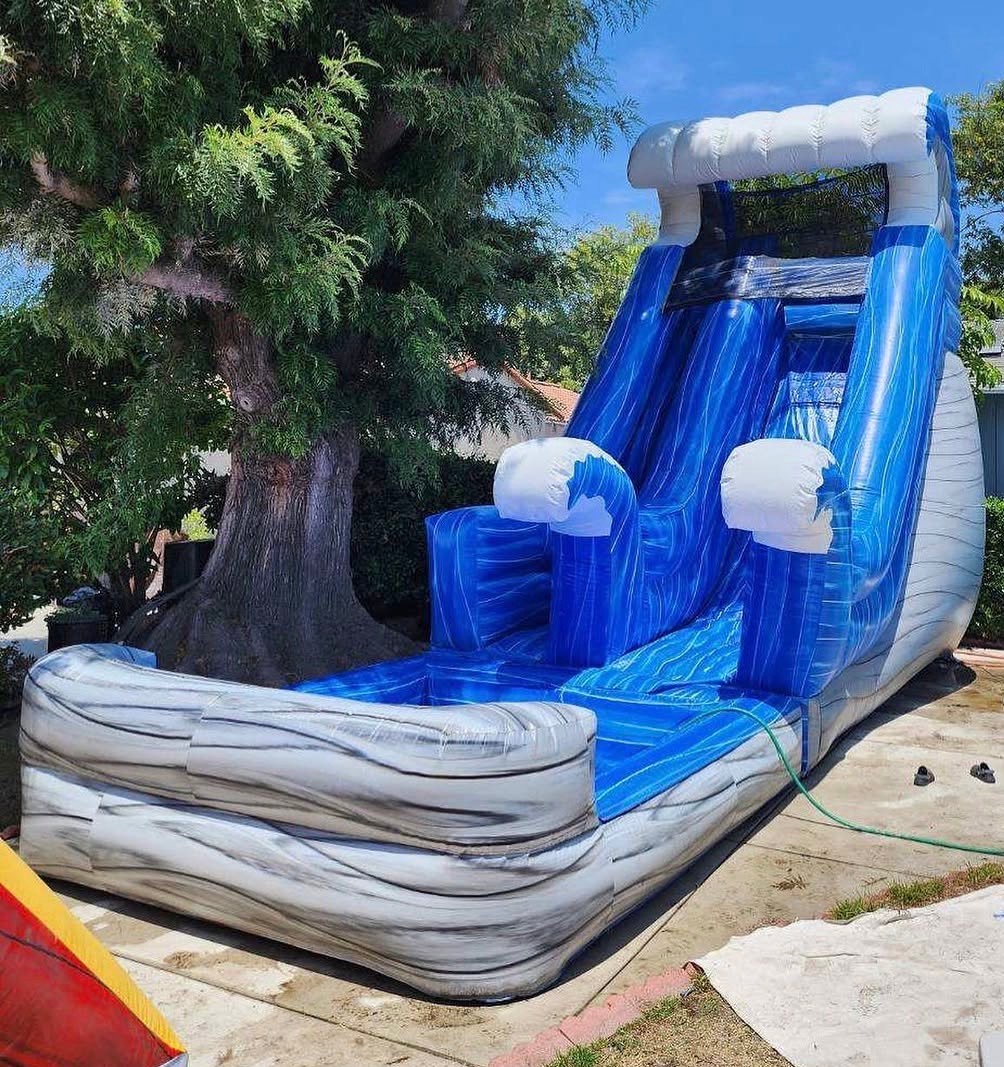
Here are a few unit combinations that work well for different event types:
- School carnivals and fundraisers: One large combo unit, one obstacle course, and one standard bounce house for younger grades. This covers multiple age groups and keeps lines manageable across a long event window.
- Church festivals and community celebrations: A bounce house, a combo unit with a built-in slide, and an obstacle course. The variety suits mixed-age congregations and keeps the energy distributed across the venue.
- HOA block parties: Two combo units placed at opposite ends of the common area, with an obstacle course in the center. This layout naturally pulls guests toward different zones and prevents crowding near the entrance.
- Large birthday parties (50 to 100-plus kids): A waterslide and an obstacle course for older kids, plus a smaller bounce house or combo unit for younger siblings. Age-appropriate separation reduces supervision stress.
The key principle in all of these combinations is intentional placement. Units should not cluster together. Spread them across your usable space so that moving from one to another requires a short walk. That movement itself helps manage flow and keeps the venue feeling active rather than packed.
Choosing the Right Setup for Your OC Venue Type
Orange County events happen in a wide range of settings, and the venue type shapes which multi-unit setup makes the most sense.
Backyard events have the tightest space constraints. Before booking multiple units, measure your usable lawn area carefully, not just the overall yard. Account for fencing, landscaping, patio furniture, and any areas that need to stay clear for guest movement. A rental team can help you determine how many units fit safely given your actual dimensions.
School and church venues often have large paved or grass areas that accommodate multi-unit setups well. These venues may also have specific rules about staking, anchoring, or generator use, so confirm those details with the facility coordinator before finalizing your rental order. Some venues require additional paperwork for large events, particularly if the setup involves power equipment.
HOA common areas vary widely. Some have generous open lawns that easily fit three or four units. Others have landscaping, irrigation heads, or underground utilities that limit where inflatables can be placed. Ask your HOA management office about any restrictions before booking, and share that information with your rental provider so the delivery team can plan accordingly.
Public parks in Orange County may require a permit for commercial inflatable use. Requirements differ by city and park, so check with the relevant parks and recreation department well in advance. Some providers may also ask for proof of insurance or a certificate of additional insured status for park events. This is a venue-side requirement, not something a rental company can resolve on your behalf, so build that research into your planning timeline.
Corporate and community event spaces often have loading dock access, parking lot setups, or large turf areas that make multi-unit delivery straightforward. Confirm whether the venue has power outlets accessible to your setup area, or whether a generator will be needed for each unit.
Regardless of venue type, the most useful measurement you can provide to your rental team is the clear, usable square footage available for inflatables, not the total property size. That number determines what fits safely and how units can be arranged for the best crowd flow.
What to Confirm Before Your Multi-Unit Delivery Day
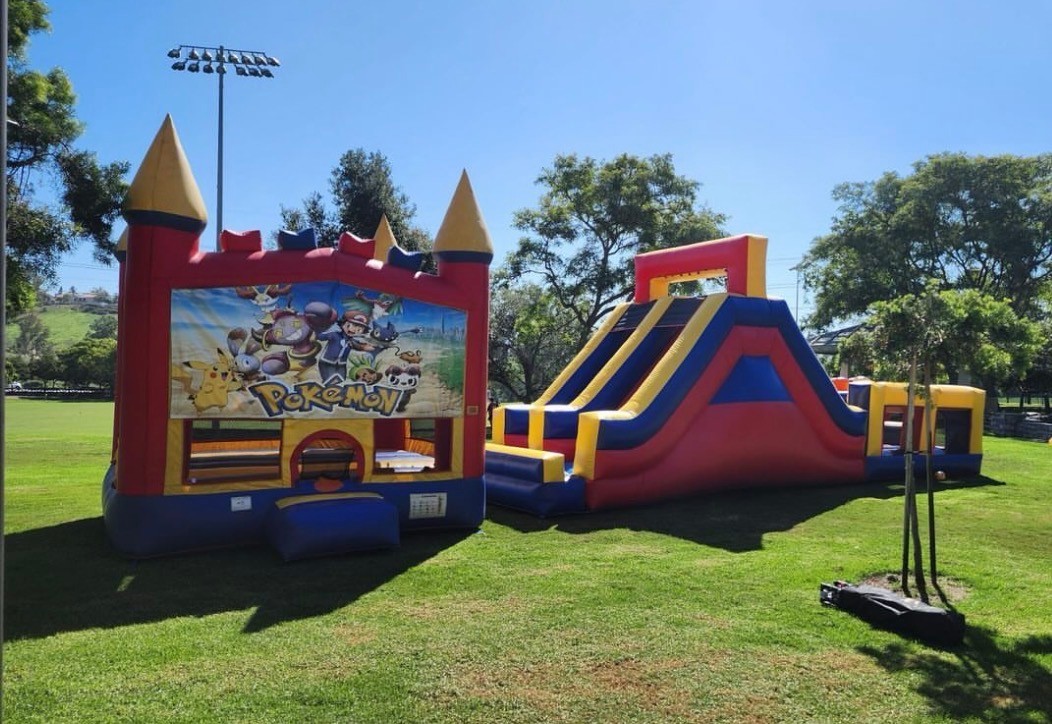
Large events have more moving parts than backyard parties, and a few confirmations before delivery day will save significant stress.
Start with power. Each inflatable requires a dedicated power source, and running multiple units means multiple blowers running simultaneously. Confirm how many outlets are available at your venue and where they are located. If the venue cannot support the load, ask about generator options when you book.
Next, confirm the setup window. Multi-unit deliveries take longer than single-unit drops. Your rental team needs enough time to stage, inflate, and inspect each unit before guests arrive. Build that buffer into your event schedule, and make sure the venue allows early access for setup.
Water access matters for waterslides and wet combo units. Know where the nearest hose bib is located and whether a hose of sufficient length is available or needs to be provided. Confirm whether the venue permits water use in the setup area.
Ask about supervision expectations for each unit. Larger events with multiple inflatables benefit from having a designated adult monitor near each attraction. This is not a formal staffing requirement from the rental company, but it is a practical safety consideration that keeps the event running smoothly.
Finally, review the teardown plan. With multiple units, pickup takes time as well. Confirm the end time with your rental provider and make sure the venue allows the team enough access to deflate, pack, and load all equipment without rushing.
A quick checklist to run through before your delivery day:
- Usable setup area measured and confirmed
- Power sources identified and sufficient for all units
- Water access confirmed for any wet units
- Venue rules reviewed (staking, anchoring, generator policy)
- Setup and teardown windows communicated to the venue
- Adult monitors assigned to each unit
- Any permits or facility paperwork completed in advance
Book Your Multi-Unit Setup with Jump High Rentals
Jump High Rentals serves Orange County families, schools, churches, and HOAs with delivery, setup, and pickup included on every order. If you are planning an event for 100 or more guests, the best starting point is a conversation about your guest count, your venue type, and the age range of the children attending. That information helps the team recommend a unit mix that fits your space and keeps your event moving.
Reach out to Jump High Rentals to describe your event and get a recommendation for the right combination of bounce houses, obstacle courses, and slides. Whether you are coordinating a school carnival in Irvine, a church festival in Mission Viejo, or an HOA block party in Tustin, the team can help you plan a setup that works for your crowd and your venue.