
Most waterslide injuries at backyard parties and community events are not caused by faulty equipment. They happen when toddlers, grade-schoolers, teens, and adults share the same lane at the same time. The size difference alone creates real collision risk, and the problem gets worse when there is no clear plan for who goes when or who watches the landing zone.
If you are planning a party in California with a wide range of ages on the guest list, a few simple rules can make the afternoon far safer and more fun for everyone. Here is a practical framework that parents, school coordinators, HOA event leads, and church planners can actually use on the day of the event.
Why Mixed-Age Groups Need Different Waterslide Rules
A waterslide that is perfectly safe for a nine-year-old can be genuinely risky for a three-year-old sharing the same lane. The physics are straightforward: heavier and taller riders travel faster and carry more momentum. When a larger rider catches up to a smaller one in the splash zone, the collision can happen before either child has time to react.
This is not a hypothetical concern. Rental safety guides consistently flag the exit point as the highest-risk area on any waterslide, precisely because riders arrive with speed and smaller children may still be in the splash area when the next person lands.
Mixed-age groups also create supervision gaps. When a parent is watching a toddler at the bottom, it is easy to miss what is happening at the top of the slide. When attention is at the top, the landing zone goes unwatched. Neither spot alone is enough.
The practical takeaway is that the rules you apply to a group of similarly-sized kids do not transfer cleanly to a party where guests range from age two to age forty. You need a separate plan for mixed groups, and that plan starts before anyone gets in line.
Age-Based Turn Schedules That Actually Work at Parties
The most reliable approach for mixed-age events is timed rotation by age group rather than open free-for-all access. Instead of letting everyone line up together, you divide the session into blocks.
A common structure that works well at Orange County backyard parties and community events looks like this:
- Toddlers and preschoolers (ages 2 to 5): Give this group the first block, typically 20 to 30 minutes, before older kids build up speed expectations. Keep the line short and the pace slow.
- Grade-school children (ages 6 to 11): Run a second block after the youngest riders have finished or moved to a separate activity. This age group is usually the largest at birthday parties, so plan for a longer window.
- Tweens, teens, and adults (ages 12 and up): Schedule this group last or run a separate session if your event is long enough. Older riders tend to go faster and may roughhouse if supervision is relaxed.
Within each block, enforce one rider per lane at a time. The next person in line should not step onto the slide until the previous rider has fully cleared the splash area and moved away from the exit point. Racing side by side in a single lane is one of the most common causes of collisions, even among riders of similar size.
Post the schedule somewhere visible, or have a designated adult announce transitions. Kids are far more cooperative about waiting when they know their turn is coming and when a grown-up is clearly in charge of the rotation.
Where to Station Your Supervisor (It Is Not the Top)
Many parents instinctively position themselves at the top of the slide to help children get started. That is a reasonable instinct, but it leaves the most dangerous spot unmonitored.
The exit point is where collisions happen. A child who slides down and does not immediately clear the splash area is at risk from the next rider coming in behind them. An adult stationed at the bottom can physically guide children out of the splash zone, signal the top when it is clear to send the next rider, and respond immediately if someone falls or gets disoriented on landing.
If you have enough adults available, station one at the top to manage the line and one at the bottom to manage the exit. If you only have one supervisor, put them at the bottom and use a simple verbal or hand signal system so the child at the top knows when to go.
For larger events such as school field days, church carnivals, or HOA gatherings in Orange County, consider assigning a dedicated slide monitor as a named role rather than assuming a nearby parent will step in. Volunteer fatigue is real, and the slide monitor position should rotate every 30 to 45 minutes so attention stays sharp.
A few additional rules worth enforcing regardless of age group: riders should always go feet-first and seated, no head-first or backward sliding, no flipping or wrestling on the slide surface, and no re-entry into the splash pool from the slide lane.
Choosing the Right Slide Size for Your Guest Mix
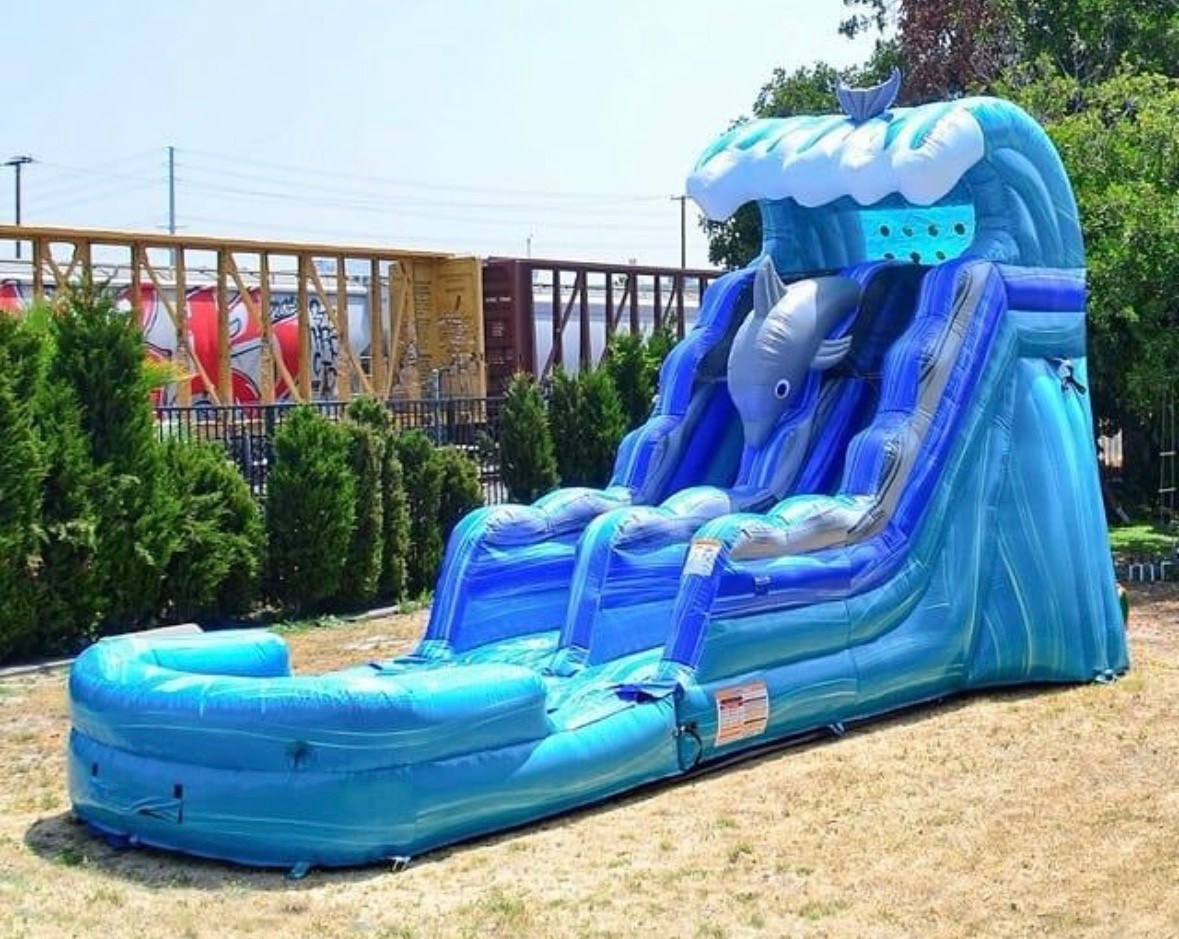
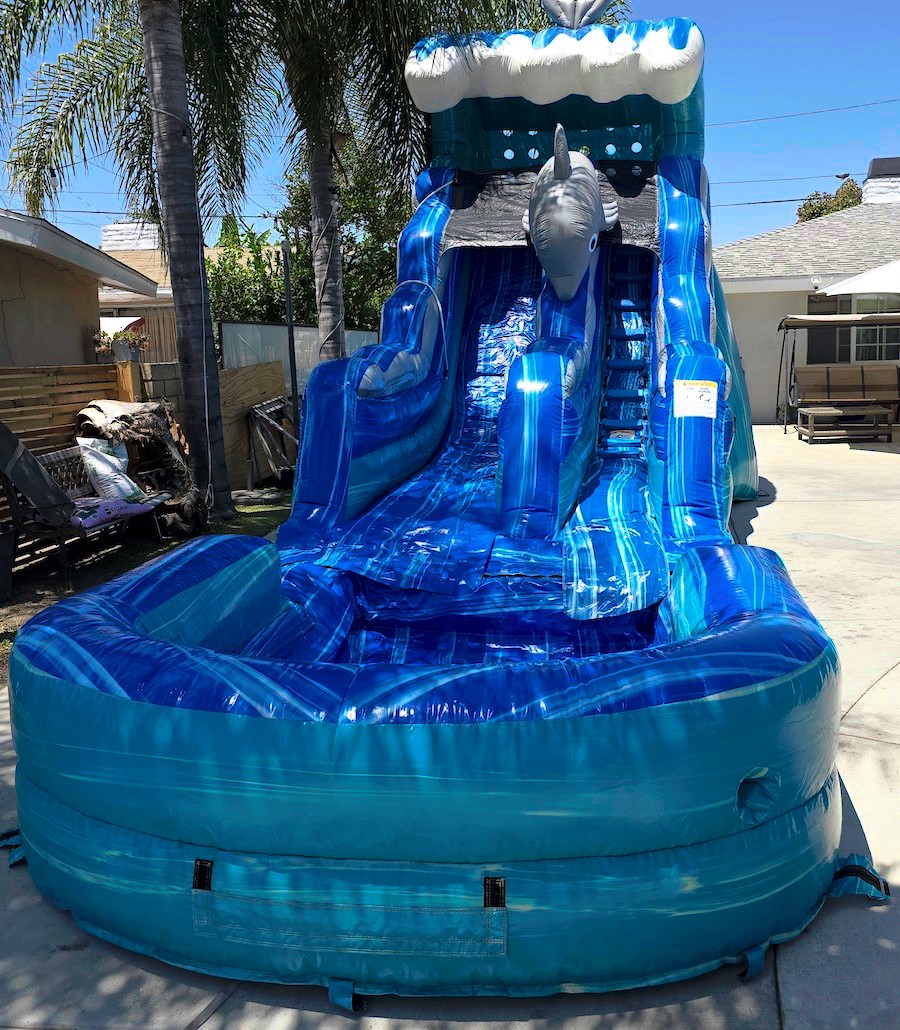
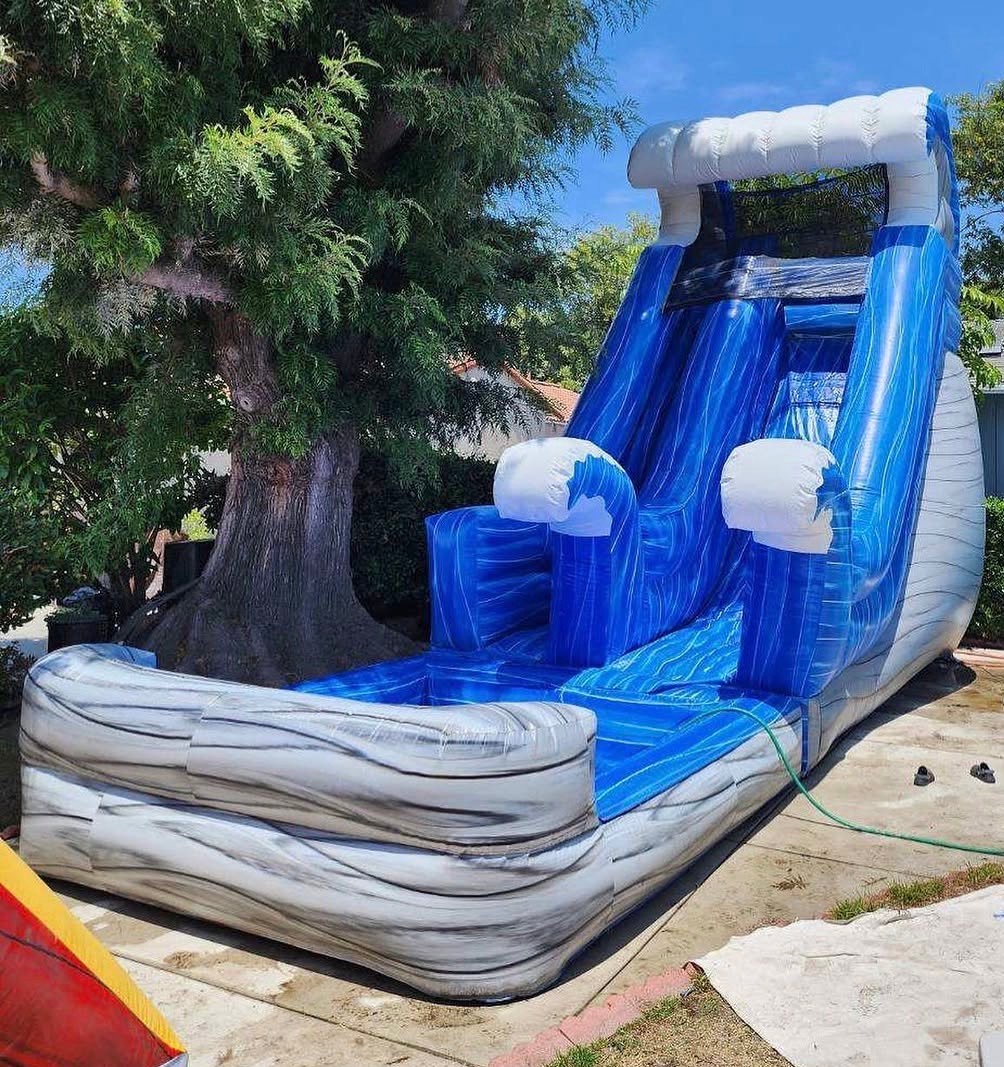
Not every waterslide is designed for every age range. A unit built for young children typically has a lower slide height, a gentler slope, and a smaller splash area. A unit designed for older kids and adults has a steeper pitch and more speed. Putting a toddler on a teen-rated slide is a mismatch in both directions: the toddler may not have the coordination to ride safely, and the speed at the bottom may be more than the splash pool is designed to absorb for a small body.
If your guest list genuinely spans toddlers through adults, the cleanest solution is two separate units: a smaller slide rated for younger children and a larger one for older guests. This eliminates the need to police age mixing on a single lane and lets both groups enjoy the activity at the same time without waiting for rotation blocks.
If budget or space allows only one unit, choose the slide that fits your youngest expected riders safely, and accept that older guests may find it less exciting. The reverse approach, choosing a large slide and hoping younger kids can manage, creates more risk than it resolves.
When evaluating slide options, pay attention to the posted weight limit and rider capacity. Capacity is not just a headcount. It reflects the unit's structural design and the weight distribution the splash pool and frame are built to handle. Exceeding those limits, even briefly, changes how the slide performs.
Questions to Ask Your Rental Company Before Booking
Before you confirm a waterslide rental for a mixed-age event, a short conversation with your rental company can prevent most of the common mismatches. Here are the questions worth asking:
- What is the minimum and maximum age rating for this specific unit?
- What is the weight limit per rider, and is there a combined capacity limit for the splash area?
- Is this slide appropriate for the youngest guest I expect, not just the average age of the group?
- What surface does the unit need to be set up on, and how much clearance is required on all sides and overhead?
- What is the access path width needed for delivery and setup?
- Are there rules about footwear, jewelry, or eyeglasses that I should communicate to guests before the event?
- What should I do if the blower loses pressure during the event?
A reputable rental company will answer these questions clearly and without pressure. If a company cannot confirm the age and weight ratings for a specific unit, that is worth noting before you book.
At Jump High Rentals, we serve Orange County families, schools, churches, and HOAs with clean, well-maintained inflatables and straightforward delivery logistics. If you are planning a mixed-age event and want to confirm which waterslide units are the right fit for your youngest and oldest expected riders, reach out before you book. We are happy to walk through the options with you and help you find a setup that works for your backyard, park, or venue.
A safe waterslide afternoon in California does not require complicated rules. It requires the right unit, a clear rotation plan, and an adult watching the landing zone. Get those three things right, and the rest of the party tends to take care of itself.