
Why Wind Is the First Thing to Watch on Party Day
When you are planning a backyard birthday in Anaheim Hills or coordinating a school carnival in Mission Viejo, the weather question that matters most is not temperature. It is wind. Wind is the single most common reason a professional rental team will pause or stop an inflatable event, and understanding why helps you plan with confidence rather than anxiety.
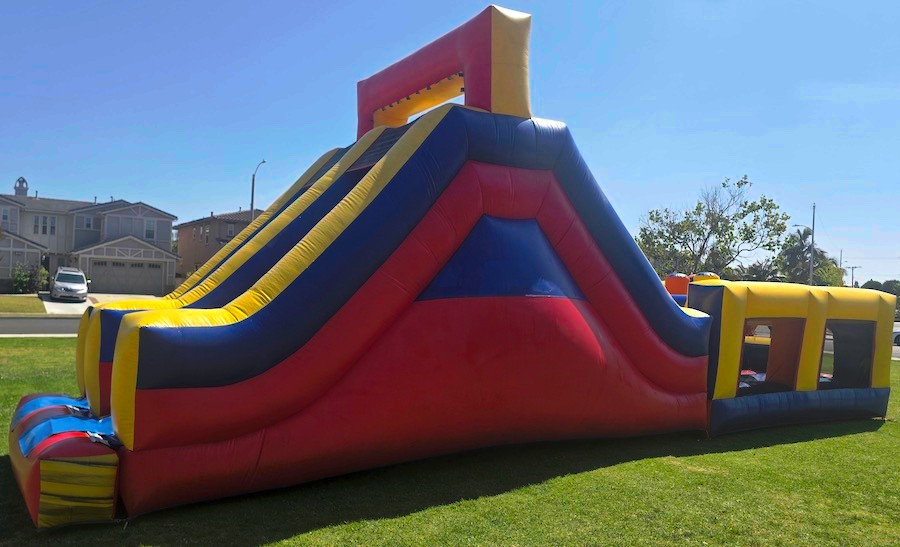
Inflatables are designed to stay pressurized and stable under normal outdoor conditions, but they are large, air-filled structures with significant surface area. Even a moderate gust can push against the walls and roof of a bounce house in ways that strain anchor points and shift the unit. The general industry threshold that rental professionals follow is around 15 mph for sustained winds, with gusts in the 15 to 20 mph range triggering a closer look at whether the unit should keep running. Taller pieces like waterslides and obstacle courses catch more wind than a standard bounce house, so the practical cutoff for those units can be even lower.
One thing worth knowing: "light wind" is not automatically safe. A steady 12 mph breeze that picks up to 18 mph in gusts is a different situation than a calm morning with occasional 5 mph puffs. The direction matters too. A yard that is open to the west in a coastal OC neighborhood can funnel afternoon wind in ways that a more sheltered inland backyard would not. This is exactly why a locally experienced team that knows Orange County microclimates is more useful than a generic weather app reading.
You can read more about specific thresholds and how they apply to different inflatable types in the wind speed limits and inflatable safety guide. The short version: when wind picks up, the right move is to pause use, check anchor points, and wait to see whether conditions settle before resuming.
Rain, Wet Surfaces, and What to Do Before You Decide
Rain creates two separate problems at once, and it helps to think about them individually. The first is surface safety. A wet bounce house floor becomes slippery very quickly, and kids who are running, jumping, and landing do not adjust their behavior to match the surface. Slip-and-fall risk rises fast once moisture gets inside the unit, even if the rain itself feels light. The second problem is electrical. Blowers, extension cords, and power connections should never be exposed to standing water or heavy rain. Moisture near electrical equipment is a serious hazard that goes beyond the inflatable itself.
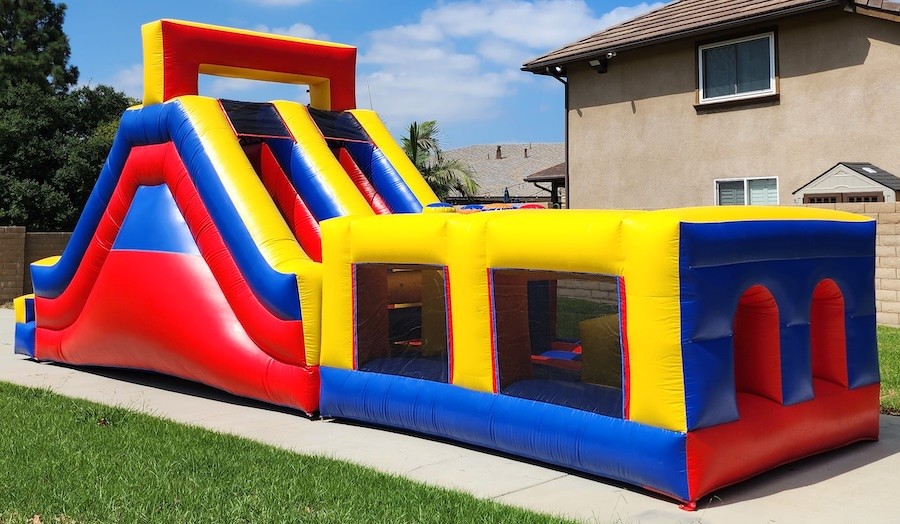
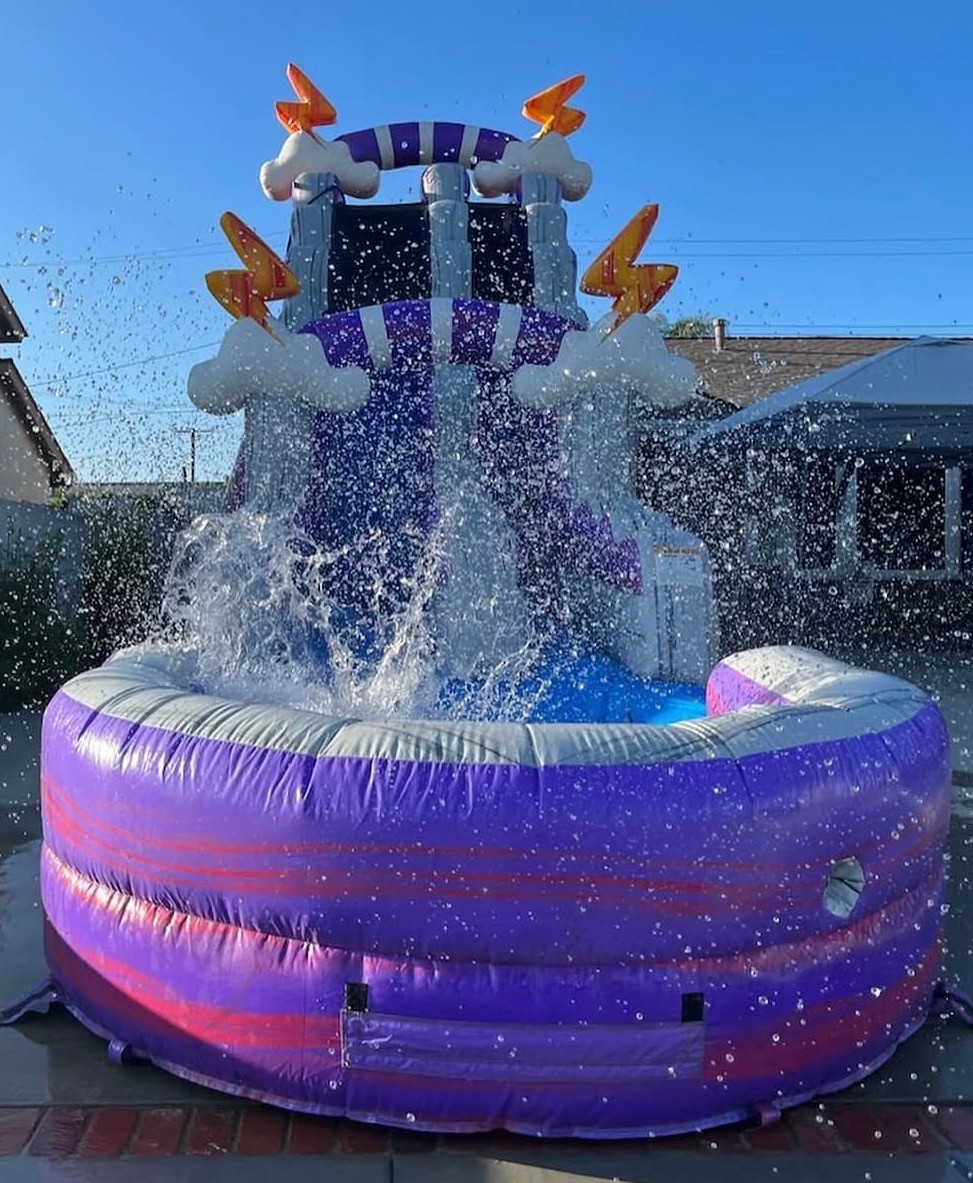
For dry inflatables, the standard guidance is to stop use during heavy rain and to inspect the interior before allowing kids back in after any rainfall. If water has pooled on the floor or the walls are visibly wet, the unit needs to dry before it is safe to use again. For wet inflatables like waterslides, the situation is different because those units are designed for water contact, but the blower and power setup still need to stay dry and protected.
A light drizzle that passes quickly is a different call than a steady afternoon rain. If you are hosting an event and the sky looks uncertain, the most practical approach is to have a clear plan with your rental company before the day arrives. Ask specifically: what counts as "heavy rain" in their policy, who makes the call to pause use, and how they handle same-day weather changes. You can also review the rain and wet weather policy for inflatable rentals for a fuller breakdown of how these decisions typically work.
One common misconception is that a covered patio or canopy solves the rain problem. Partial cover helps with light drizzle, but it does not protect the blower connection from moisture blowing sideways, and it does not change the fact that kids track water in from outside. If rain is significant, the safest answer is usually to pause the inflatable and move to an indoor backup plan until conditions clear.
Lightning Rules: When to Deflate and Wait
Lightning is the clearest weather situation in the inflatable rental world because the answer is always the same: deflate the unit, move everyone indoors, and wait. There is no wind speed calculation or surface check involved. When lightning is in the area, the inflatable comes down.
The practical reason is straightforward. An inflatable is a large, elevated structure in an open yard. It is not a lightning rod, but it is not a safe place to be during an electrical storm either. Beyond the inflatable itself, the blower motor and power connections are running outdoors, and any electrical equipment in wet or stormy conditions creates risk. The standard guidance used by professional rental companies is to wait until the storm has clearly passed, typically until lightning has not been observed for a meaningful period, before considering whether to reinflate and resume.
For event planners coordinating school carnivals or HOA block parties with fixed schedules, this is worth building into your contingency plan before the event. If your event runs from 11 a.m. to 3 p.m. and a storm rolls through at 1 p.m., you need to know in advance how long a weather delay can realistically last before it affects your pickup window and your guests. Talking through that scenario with your rental team before the event day is much easier than trying to make those decisions in the middle of a party.
Anchoring and Clearance: The Setup Details That Matter in OC Yards
Weather safety does not start when the wind picks up. It starts during setup. Proper anchoring is what keeps an inflatable stable under the conditions it will actually face during your event, and the right anchoring method depends on your surface.
On grass, professional setup teams use ground stakes driven at angles through the anchor loops on the inflatable's base. On concrete, pavers, or asphalt (which is common in OC driveways, school blacktops, and church parking lots), stakes are not an option. Weighted sandbags or ballast anchors are used instead, and the placement and weight matter. An inflatable that is correctly anchored on concrete can be very stable, but it requires the right equipment and someone who knows how to position it. You can find a detailed breakdown of surface-specific setup in the bounce house anchoring and staking setup guide and the concrete vs. grass setup guide for OC inflatables.
Clearance is the other piece that often gets underestimated. A good rule of thumb is roughly six feet of open space on all sides of the inflatable. That means six feet from the nearest fence, wall, tree, or structure. In Orange County backyards, especially in neighborhoods with smaller lots in cities like Fullerton, Garden Grove, or Costa Mesa, that clearance can be tight. Measuring your available space before booking is one of the most useful things you can do as a host. The prepare your backyard before the inflatable arrives guide walks through exactly how to do that measurement and what to look for.
Clearance also matters for weather reasons specifically. An inflatable that is too close to a fence or wall has less room to flex in wind and can press against structures in ways that stress the anchor points. A properly spaced setup gives the unit room to respond to gusts without creating a collision hazard.
Questions to Ask Your Rental Company Before You Book
The best time to understand a rental company's weather policies is before you put down a deposit, not the morning of your party. A few direct questions will tell you a lot about how prepared and transparent a company is.
Ask what their specific wind cutoff is and whether it differs by unit type. A company that gives you a clear number (around 15 mph sustained, with adjustments for taller units) is thinking about this seriously. Ask who monitors weather during the event. Is it the host's responsibility, or does the company check in? Ask whether the setup team inspects anchor points before they leave, and whether they are reachable by phone if conditions change during your event.
Ask how they handle same-day rain delays or cancellations, and what their policy looks like if weather forces an early pickup. Understanding the deposit and cancellation terms in a weather scenario is practical information, not a pessimistic question. You can review general guidance on this topic in the bounce house rental deposits and cancellation policies guide.
Finally, ask whether the unit arrives clean and dry. Weather safety and hygiene are connected in a simple way: a unit that was used in wet conditions at a previous event and not properly dried and sanitized before your rental is a problem on both counts. Jump High Rentals cleans and sanitizes inflatables between every event. If you want to understand what that process looks like, the how inflatables are cleaned and sanitized guide covers the details.
Planning a party in Orange County means working with a company that knows the local weather patterns, communicates clearly when conditions change, and sets up every unit with the anchoring and clearance it needs to stay safe. If you have questions about weather policies, setup procedures, or how Jump High handles same-day communication, reach out through the contact page or browse the full rentals catalog to find the right inflatable for your event.