
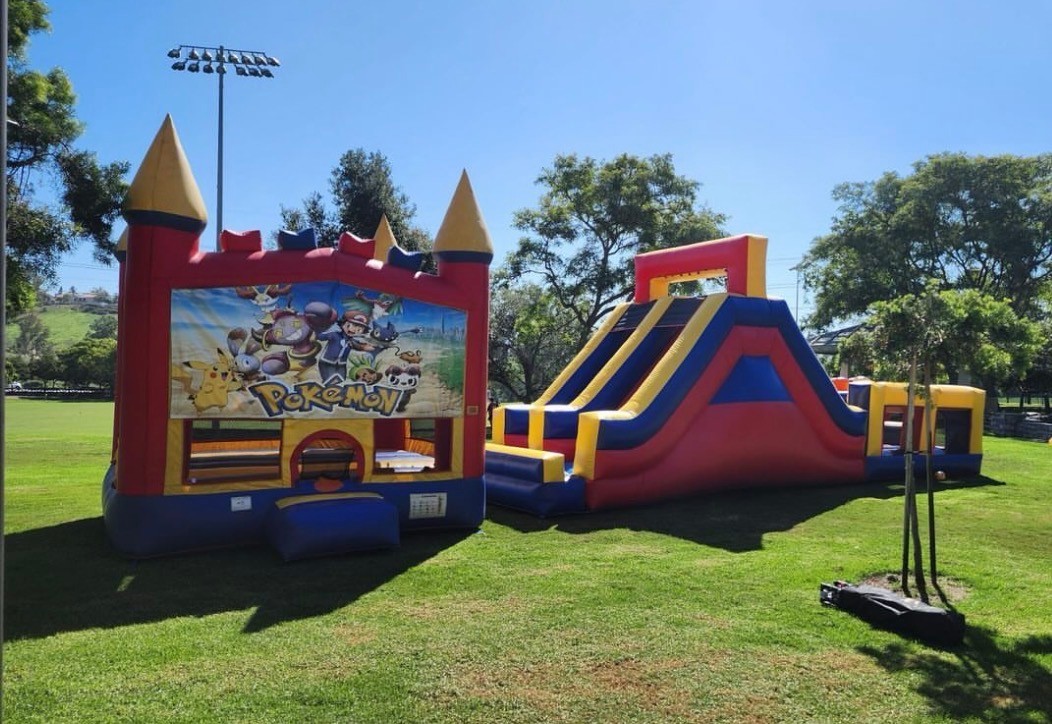
Bounce houses, waterslides, and obstacle courses bring a lot of joy to Orange County backyards and community events. They also come with one weather risk that surprises many first-time renters: wind. Most families think about rain when they picture a weather problem, but wind is actually the condition that causes the most concern for inflatable safety. If you are planning a party in CA this year, understanding how wind affects inflatables before the event day can make a real difference for everyone attending.
Why Wind Is the Top Weather Risk for Inflatables
Rain is inconvenient. Wind is a structural concern. When gusts hit an inflatable, the force does not just push the unit sideways. It creates lift, which works against the anchoring system holding the unit to the ground. The larger the inflatable, the more surface area the wind has to work with, and the more force it can generate.
A common misconception is that a well-anchored bounce house is safe in any wind condition. Anchors, whether heavy-duty ground stakes or sandbags, are an essential part of setup. But they are designed to complement a safe operating environment, not to override it. When winds exceed the manufacturer's approved limit for a specific unit, anchors alone cannot guarantee the inflatable stays grounded and stable.
There is also the matter of what happens inside and around the inflatable during high winds. Debris can become airborne. Branches, patio furniture, and even lightweight toys can turn into hazards. Children inside the unit may not notice conditions changing outside, which is why adult supervision and a clear plan for shutting down quickly are so important.
What Wind Speed Is Too High for a Bounce House?
This is one of the most common questions families ask, and the honest answer is that there is no single universal number. Different inflatables have different wind ratings depending on their size, shape, and construction. A small toddler bounce house has a different profile than a 30-foot obstacle course or a tall waterslide tower.
A practical range that many rental operators reference is somewhere between 15 and 25 mph as the upper threshold for safe operation, but the number that actually matters is the one listed in the manufacturer's setup and operation guide for the specific unit being delivered to your yard. That is the figure your rental provider should be able to share with you before the event.
Here are a few things worth knowing about wind limits:
- The limit applies to gusts, not just sustained wind speed. A forecast showing 12 mph winds can still produce gusts well above 20 mph.
- Forecasts are a starting point, not a guarantee. Real-time conditions at your specific location may differ from what the weather app shows.
- Taller and wider inflatables generally have lower wind tolerances because they catch more air.
- If winds rise above the safe threshold during your event, the right call is to deflate the unit immediately, not to wait and see.
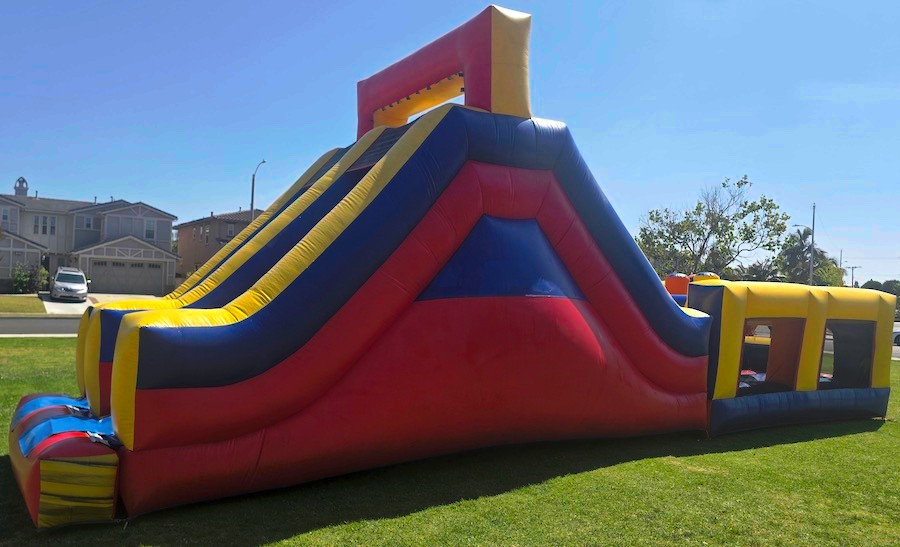
Knowing the specific limit for your rental unit ahead of time means you are not making that judgment call under pressure on the day of the party.
Santa Ana Winds and What OC Hosts Should Know
Orange County sits in a region where Santa Ana wind events are a seasonal reality, particularly in the fall and early winter months. These are dry, offshore winds that can arrive quickly and bring sustained speeds and gusts well above what a typical afternoon sea breeze would produce. During a Santa Ana event, conditions can shift from calm to dangerous in a short window.
Local emergency guidance during wind advisories typically recommends securing loose outdoor items and staying indoors when gusts are severe. For inflatable rentals, this means a Santa Ana event is not just a reason to pause the bounce house. It may be a reason to cancel or reschedule the outdoor portion of your event entirely.
OC hosts planning events between October and February should pay extra attention to extended weather forecasts in the days leading up to the party. A forecast that looks calm on Monday can change significantly by Saturday. Building a flexible plan into your event, including a non-inflatable activity option or an indoor backup space, gives you room to make a safe call without scrambling at the last minute.
Open spaces like parks, school fields, and HOA common areas can also be more exposed to wind than a sheltered backyard. If your event is in one of those locations, factor in the reduced windbreak protection when you are evaluating conditions.
How to Monitor Wind on the Day of Your Party
Checking the weather app the morning of your event is a good start, but it is not enough on its own. App forecasts show general conditions for a broad area, and your specific backyard or venue may experience different gusts depending on local geography, nearby structures, and the direction of the wind.
A handheld anemometer (a small, inexpensive wind meter) gives you a real-time reading at the exact location where the inflatable is set up. Some rental companies bring one to setup and check conditions before the unit is inflated. Asking your provider whether they use one is a reasonable question.
During the event itself, assign one adult to periodically check conditions rather than relying on everyone to notice at once. If winds pick up noticeably, check the meter reading against the unit's approved limit. If conditions are approaching or exceeding that threshold, begin clearing kids out and deflating the unit before the situation becomes urgent.
A few practical habits for the day of the party:
- Check the forecast the night before and again the morning of the event.
- Note any wind advisory language from the National Weather Service for Orange County.
- Keep the wind meter accessible throughout the event, not just at setup.
- Know in advance where the blower switch is and how quickly the unit deflates.
- Have a simple indoor or covered activity ready in case the inflatable needs to come down early.
Questions to Ask Your Rental Company Before You Book
The best time to talk through wind safety is before you finalize your reservation, not on the morning of the event. A good rental provider will be able to answer these questions clearly and without hesitation.
What is the wind limit for the specific unit I am renting? This should come from the manufacturer's documentation for that model, not a general estimate. If the answer is vague, ask for the specific number.
Do your crew members use a wind meter at setup? Real-time measurement at the delivery site is more reliable than a forecast alone.
What happens if winds exceed the safe limit during my event? Ask whether the crew will return to deflate the unit, whether you are expected to handle it yourself, and how quickly they can respond.
What is your weather rescheduling policy? Understand whether Santa Ana conditions or a wind advisory would qualify as a weather event under their policy, and what your options are if you need to move the date.
Are there any site conditions that would affect the wind rating? An inflatable set up near a wall or fence may behave differently than one in the center of an open yard.
At Jump High Rentals, we are happy to walk through these details with you before you book. Knowing the wind rating for your specific unit and understanding what to do if conditions change gives you a much more confident foundation for your event planning. Reach out to our team to ask about unit-specific wind limits and our weather policy before you finalize your reservation. A quick conversation now can save a lot of stress on party day.