
School field days are one of the most anticipated events on the campus calendar. Students get to step outside the classroom, burn off energy, cheer for their classmates, and just have fun together. For the PTA volunteers, school staff, and event coordinators making it all happen, the pressure is real: you need activities that are safe, age-appropriate, easy to supervise, and capable of keeping dozens (sometimes hundreds) of kids engaged at once.
Inflatables have become a go-to solution for California school field days precisely because they check all of those boxes. A well-chosen lineup of bounce houses, obstacle courses, and interactive inflatables can transform a blacktop or grassy field into a full-on festival atmosphere, without requiring your volunteer team to build anything from scratch. When you work with a rental company that handles delivery, setup, and pickup, the logistics become much more manageable for everyone involved.
Here is what Orange County school organizers and PTA teams need to know before booking inflatables for a field day in 2026.
Why Inflatables Work So Well for School Field Days
The biggest challenge at any school field day is keeping large groups of students active and rotating through stations without long waits or supervision gaps. Inflatables are designed for exactly that kind of high-volume, high-energy use.
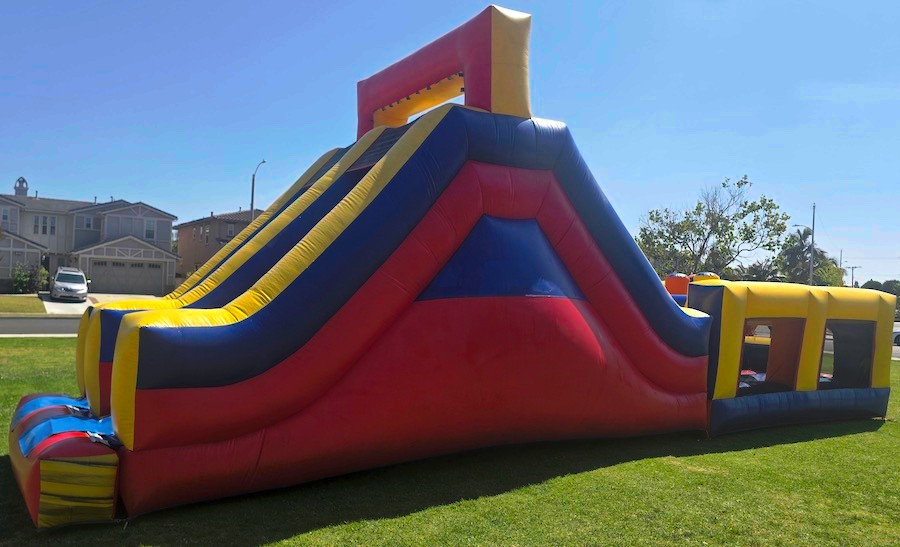
Obstacle courses, in particular, are a favorite for field days because they move students through a defined path with a clear start and finish. One student enters, works through the course, exits at the other end, and the next student steps in. That built-in flow keeps lines shorter and gives volunteers a natural way to manage participation. Bounce houses work well as a secondary station where students can take turns in smaller groups while other activities run simultaneously.
Interactive inflatable games, such as jousting platforms, bungee runs, or inflatable sports challenges, add a competitive element that tends to land well with older elementary and middle school students. These units also photograph well for school newsletters and social media, which is a small but real bonus for PTA communications.
Commercial-grade inflatables from a professional rental company are built for repeated use by large groups. They are cleaned and inspected between rentals, which matters a great deal to school staff and parents who are thinking about hygiene and safety for children. When you ask a vendor about their cleaning and maintenance process, a straightforward answer is a good sign.
Choosing the Right Inflatable for Your Student Age Group and Campus Space
Not every inflatable is the right fit for every school event. Matching the unit to your student age range and your available campus space is one of the most important planning decisions you will make.
For younger elementary students (kindergarten through second grade), standard bounce houses with lower entry points and gentler activity levels are usually the best fit. These students are smaller, and a unit sized for older kids can feel overwhelming or create safety concerns when mixed age groups are using it at the same time.
Older elementary and middle school students tend to enjoy more challenge. Obstacle courses with climbing walls, tunnels, and pop-up obstacles are popular with this group. Combo units that include a bounce area and a slide give students more variety within a single footprint, which can help when campus space is limited.
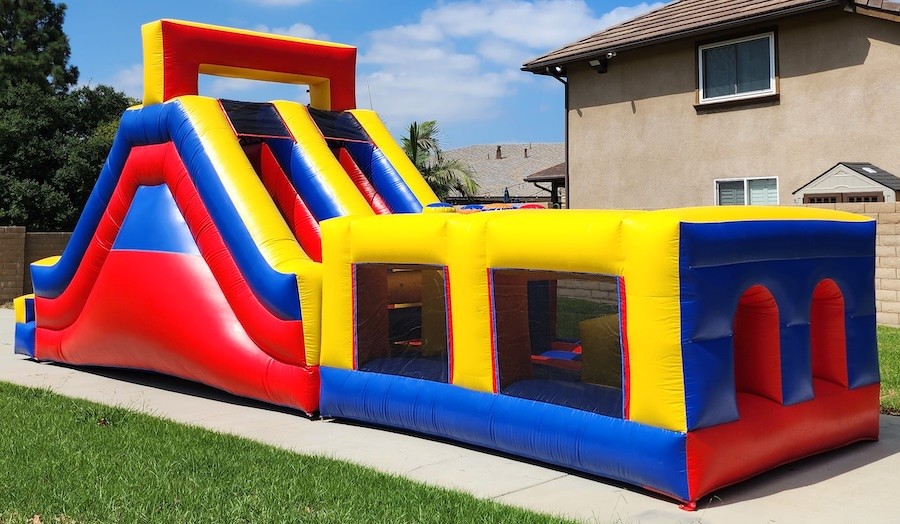
For high school field days or senior class events, larger obstacle courses, bungee runs, or competitive inflatable games tend to generate more enthusiasm than a standard bounce house. The activity should feel age-appropriate and engaging rather than something they associate with younger kids.
Before you finalize your rental order, measure your usable space carefully. Keep in mind that inflatables need clearance on all sides, not just the footprint of the unit itself. Your rental company can help you confirm whether a specific unit fits your site, but having your measurements ready before you call speeds up that conversation considerably.
A few practical questions to work through before selecting units:
- How many students will be cycling through each station over the course of the event?
- Is the surface grass, blacktop, or a mix? (Some units anchor differently depending on the surface.)
- Are there any overhead obstructions such as trees, awnings, or power lines near your planned setup area?
- Will students be using the inflatables in grade-level groups or all at once?
- Does your school or district have any vendor requirements that need to be confirmed before booking?
Keeping Lines Moving and Students Safe During Field Day
Even the best inflatable lineup can create a frustrating experience if lines are long and supervision is thin. A little planning goes a long way here.
Assign at least one adult volunteer to each inflatable station. That person's job is to manage the line, enforce the capacity limit for the unit, and watch for any behavior that could lead to a collision or fall. Most rental companies will provide guidance on the recommended number of riders per unit, and following those guidelines is important for both safety and the longevity of the equipment.
Rotate students through stations on a schedule rather than letting them drift freely. A timed rotation, even something as simple as a whistle every eight to ten minutes, keeps groups moving and prevents one popular station from becoming a bottleneck. It also gives every student a chance to try each activity rather than spending the whole event in one line.
Keep water and shade accessible near the inflatable stations. California field days in late spring and early summer can get warm quickly, especially on blacktop surfaces that absorb heat. Remind students to take water breaks between turns, and consider scheduling the most physically demanding activities during the cooler morning hours if your event runs from morning into the afternoon.
Have a clear set of rules posted at each station and reviewed with students before the event begins. Rules do not need to be complicated: no shoes inside the inflatable, one direction of travel on the obstacle course, no rough play. Simple and consistent rules are easier for volunteers to enforce and easier for students to follow.
What to Ask Your CA Inflatable Rental Company Before Booking
Choosing the right vendor is just as important as choosing the right inflatables. Here are the questions worth asking before you confirm a booking for your school field day.
Ask about their experience with school and campus events. A company that regularly serves schools, churches, and community organizations will understand the logistics of larger events, including staggered delivery windows, multiple units on the same site, and the need for efficient setup and teardown.
Ask about their insurance documentation. Many schools and districts require vendors to provide proof of insurance before they are approved to operate on campus. This is a standard checkpoint in the booking process, and a reputable rental company will be prepared to provide that documentation. Jump High Rentals is happy to discuss what documentation we carry, though we always encourage school coordinators to confirm their district's specific vendor requirements directly with their administration.
Ask how they handle delivery and setup. For a school field day, you likely have a specific window when the campus is accessible and staff are available to coordinate. Confirm that the rental company can work within that window and that setup is included in the quoted price. Ask the same question about pickup at the end of the event.
Ask about their cleaning and maintenance process. For a school event involving children, knowing that inflatables are cleaned and inspected between rentals is a reasonable expectation, and a good vendor will be able to answer that question clearly.
Ask about their cancellation and weather policy. Spring and early summer weather in Orange County is generally cooperative, but conditions can change. Understanding the vendor's policy before you book avoids surprises if you need to adjust your plans.
Planning for Weather, Water, and Warm OC Afternoons
Southern California's late-spring and early-summer weather is one of the reasons field days are so popular here. Most days are warm, sunny, and dry, which is ideal for outdoor inflatables. That said, planning for the heat is part of planning a safe event.
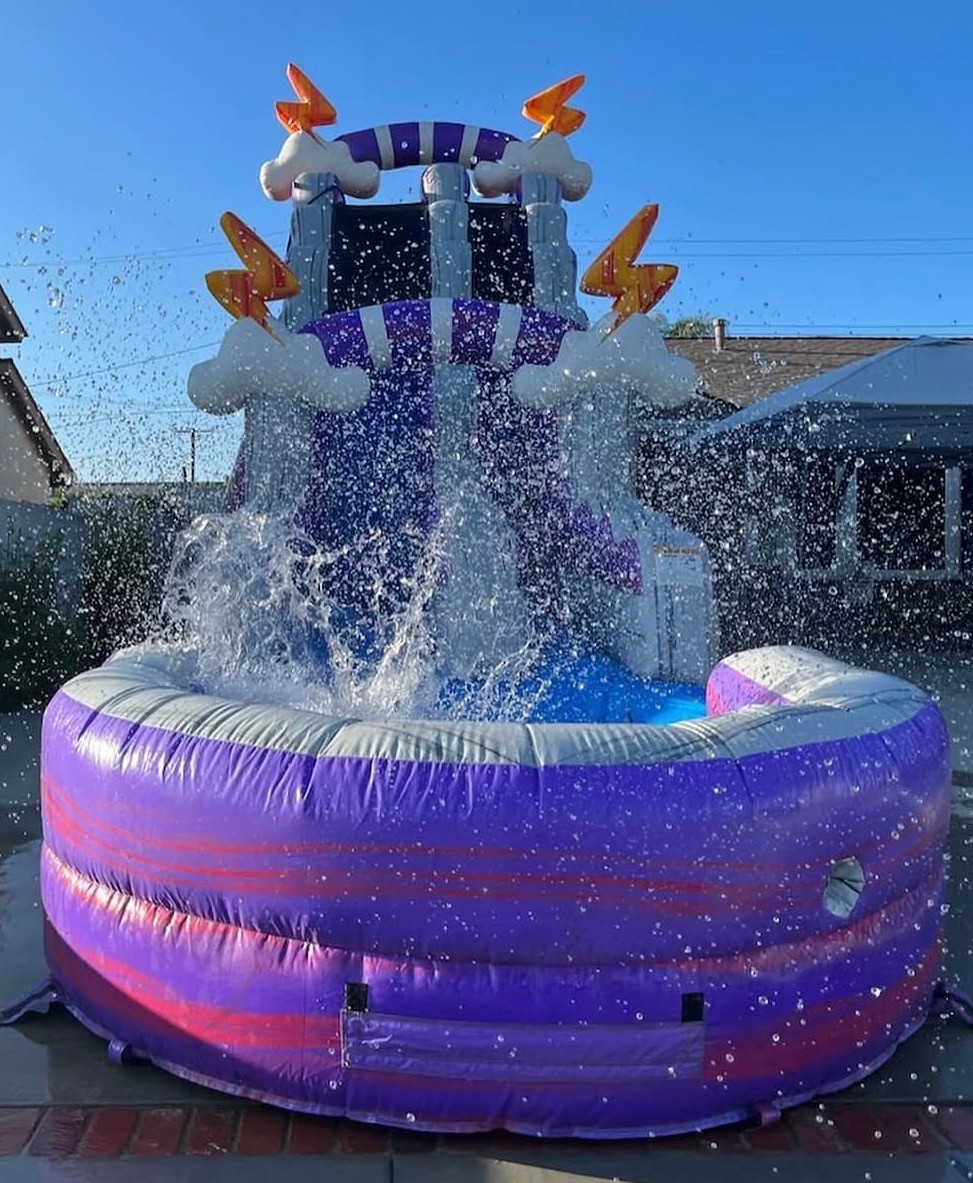
Water slides and wet inflatables can be a wonderful addition to a field day when temperatures are climbing. Students love them, and the cooling effect makes the outdoor activity more comfortable during the warmest part of the day. If your campus has access to a water source and your school administration approves wet activities, a water slide station can become the highlight of the event.
If your field day is scheduled for a morning start or takes place on a shaded campus, dry inflatables such as obstacle courses and bounce houses may be the better fit. They do not require water access, they are easier to supervise in terms of wet surfaces and slip hazards, and they work well across a wider range of temperatures.
Whatever mix you choose, build in shade and hydration stations near the inflatable area. Canopy tents, water stations, and a designated rest area give students a place to cool down between turns and help your volunteer team spot anyone who needs a break.
Popular field day dates in Orange County tend to fall in April, May, and early June. Those months fill up quickly for rental companies serving schools across the region. If you are planning a spring field day, reaching out to Jump High Rentals early in the year gives you the best selection of units and the most flexibility on delivery timing. The earlier you confirm your date, the smoother the rest of your planning will be.
Jump High Rentals serves schools, churches, HOAs, and families across Orange County with clean, professionally maintained inflatables and full-service delivery and setup. If you are organizing a school field day and want to talk through which units fit your campus and your student group, we would love to help you put together a plan that works. Reach out early so we can hold your date before the spring calendar fills up.