
Why Guest Count Changes Everything at 50-Plus Kids
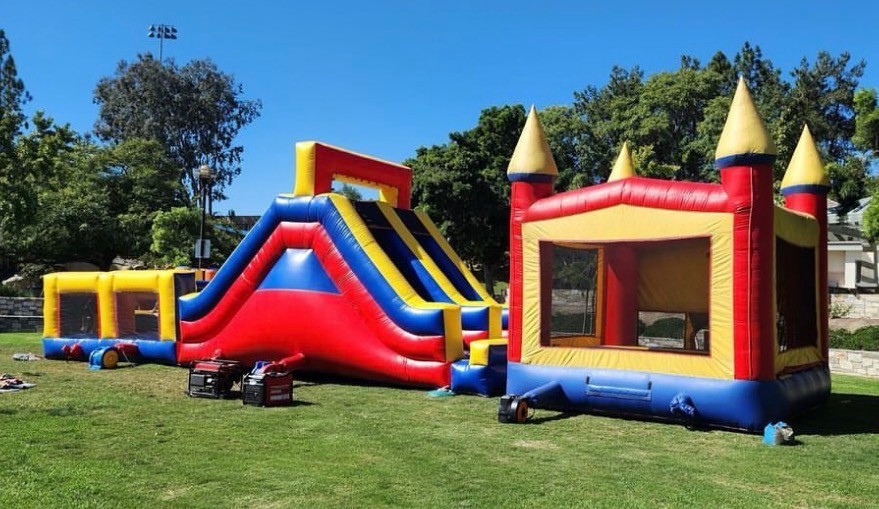
Planning a party for 10 or 15 kids is a very different exercise than hosting 50 or more. When your guest list crosses that threshold, the decisions you make about inflatables shift from "what looks fun" to "how do we keep every child moving and happy for the full event." Capacity math becomes your best planning tool, and ignoring it is the fastest way to turn a celebration into a frustrating lineup.
Every inflatable unit has a posted occupancy limit, and that number exists for a reason. A standard 13-by-13-foot bounce house typically accommodates 6 to 8 kids at one time, depending on age and size. If you have 50 children cycling through that single unit over a four-hour party, you are looking at rotation windows of just a few minutes per child before the next group needs a turn. For younger kids who want to bounce for 20 minutes straight, that math creates real friction. Understanding inflatable capacity limits and what they mean before you book is one of the most practical steps you can take as a host.
The good news is that Orange County families and event planners have solid options for scaling up. Larger combo units, obstacle courses, and multi-unit setups are all designed specifically for crowds where a single bounce house simply cannot carry the load. The key is knowing which configuration fits your venue, your age group, and your actual headcount before delivery day arrives.
How to Match Inflatable Size and Type to Your Crowd
Not every large inflatable solves the same problem. The right unit depends on how old your guests are, how long the party runs, and whether you want kids cycling through quickly or spending extended time on each attraction.
For a group of 50 kids in the 5-to-10 age range, a large combo unit (typically 20 by 20 feet or larger) that combines a bounce area, climbing wall, and attached slide can handle significantly more simultaneous users than a standard bounce house. These units often accommodate 10 to 12 kids at once, which meaningfully reduces wait times when you have a full crowd. If your group skews older, toward the 10-to-14 range, an inflatable obstacle course tends to hold attention longer and moves kids through in a more structured flow, which actually helps with crowd management. You can read more about how those units compare in the guide to obstacle course versus bounce house for your party.
Waterslides are another strong option for summer events in Orange County, especially when temperatures climb. A dual-lane waterslide allows two kids to race simultaneously, which doubles throughput compared to a single-lane unit. For a party of 50 or more, that difference in flow rate matters. If you are weighing a waterslide against a combo unit for a warm-weather event, the guide on choosing between a waterslide and combo unit for OC parties walks through the tradeoffs in detail.
One practical rule of thumb: for every 25 kids at your event, plan on at least one dedicated inflatable attraction. That ratio keeps average wait times reasonable and gives kids enough variety to stay engaged. A party of 50 kids ideally has two units running simultaneously. A party of 75 to 100 kids benefits from three or more, depending on unit type and layout.
Multi-Unit Setups for Large OC Backyards and Park Events
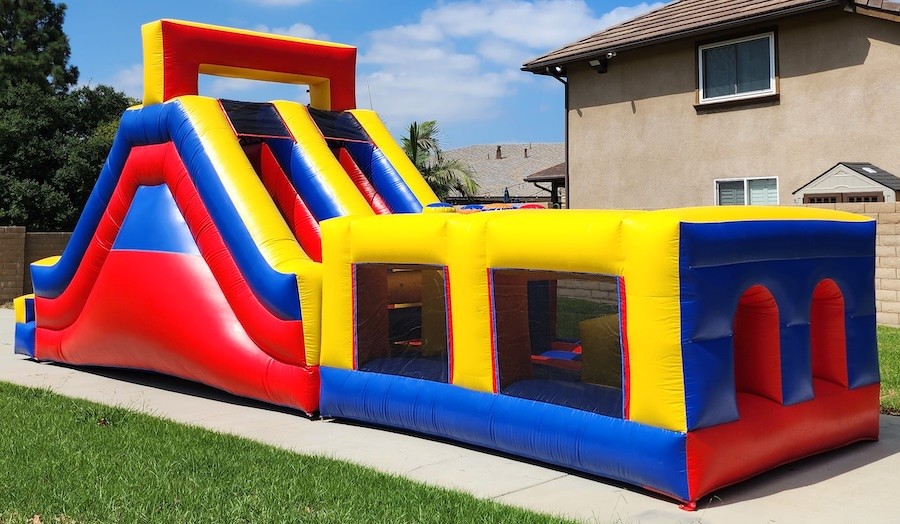
Running multiple inflatables at once is the most reliable way to serve a large crowd without long lines, and it is more common than many first-time large-event hosts expect. Schools, churches, HOAs, and community organizations across Orange County regularly book two, three, or even four units for a single event. The logistics are manageable when you plan the layout in advance.
For backyard events, the main constraint is square footage. A setup with two combo units side by side requires a clear, flat area of roughly 40 by 25 feet at minimum, plus buffer space around each unit for safe entry and exit. If your yard is on the smaller side or has slopes, it is worth reviewing the sloped backyard setup guide before committing to a multi-unit configuration. Park events in Orange County often offer more open space, but they come with permit requirements that vary by city. The guide to inflatable rentals for Irvine park permit events is a useful starting point if you are planning a public park setup.
For school carnivals, church festivals, and HOA block parties, a staggered layout works well. Placing units at different stations around a field or parking lot creates natural foot traffic patterns and prevents all 50-plus kids from crowding the same corner. Jump High's team can help you think through placement based on your specific venue dimensions when you reach out to discuss your event.
The multi-unit inflatable rental guide for large OC events covers layout strategies in more depth, including how to position units relative to shade, food areas, and seating so the overall event flow feels intentional rather than chaotic.
Space and Power Requirements for Big-Group Inflatables
Larger inflatables and multi-unit setups have specific space and power needs that differ from a single standard bounce house. Getting these details right before delivery day prevents surprises and keeps setup on schedule.
On the space side, each inflatable needs its posted footprint plus a clear buffer of at least three feet on all sides. That buffer is not optional. It gives kids room to exit safely, gives your setup crew room to stake and anchor properly, and reduces the chance of the unit contacting fences, walls, or other structures during use. For a 20-by-20-foot combo unit, you are realistically planning for a 26-by-26-foot clear zone. Multiply that across two or three units and you can see why measuring your venue carefully before booking is so important. The guide on how to pick the right bounce house size for your backyard includes measurement tips that apply equally to larger units.
Power is the other major consideration. Each inflatable blower draws between 1.5 and 2 amps continuously, and larger units or dual-blower setups draw more. Running two or three inflatables simultaneously means you need multiple dedicated circuits, ideally on separate breakers. Sharing a single household circuit with other party equipment (speakers, lighting, catering warmers) is a common cause of tripped breakers mid-party. The power and extension cord guide for OC inflatables explains circuit requirements in plain language and is worth reading before your event day.
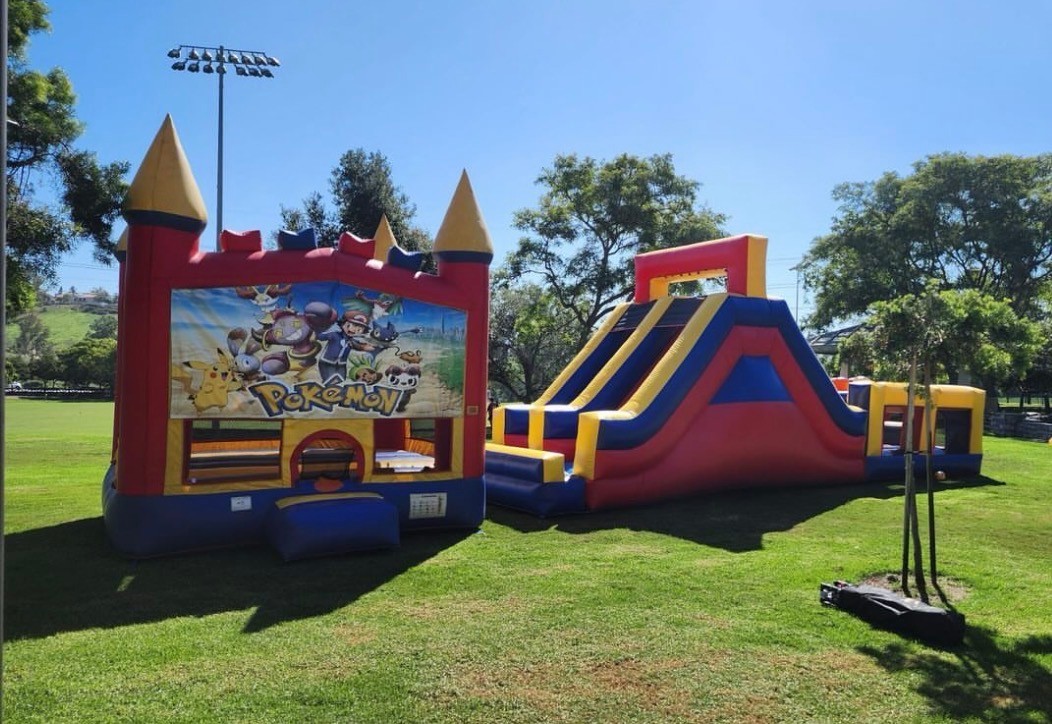
For park events or venues without convenient outlet access, generator rentals are an option. If your venue requires a generator, mention that when you book so the team can factor it into your setup plan.
Anchoring is equally important at scale. Larger units require more staking points, and the anchoring method varies depending on whether you are setting up on grass, concrete, or artificial turf. The bounce house anchoring and staking setup guide covers the differences and explains what to expect from a professional setup crew.
Booking and Logistics Tips for Large OC Party Rentals
Large-event bookings in Orange County move quickly, especially from May through September. If you are planning a summer birthday, school carnival, or community event with 50 or more kids, booking four to six weeks in advance is a reasonable baseline. For peak dates like holiday weekends, end-of-school celebrations, and Fourth of July, eight weeks or more is not unusual. The guide on how far ahead to book inflatable rentals in OC breaks down lead times by season so you can plan accordingly.
When you contact Jump High to discuss a large event, having a few pieces of information ready makes the conversation much more productive. Know your approximate guest count, the ages of the children attending, your venue address and surface type (grass, concrete, artificial turf), and your available power sources. With that information, the team can recommend specific units, flag any setup considerations for your venue, and confirm availability for your date.
For events at schools, churches, or HOA-managed properties, it is also worth confirming any venue-specific requirements in advance. Some locations require proof of the rental company's insurance, and others have rules about staking into the ground or generator use. Jump High carries the documentation that most OC venues request, but having that conversation early prevents last-minute delays. You can find general guidance on the FAQ page or reach out directly through the contact page.
One more practical note: for events with 75 or more kids, consider staggering arrival times or organizing kids into rotation groups. Even with multiple inflatables running, a structured rotation keeps lines short and gives every child a fair share of time on each unit. It also makes supervision easier, which matters when you have a large crowd of mixed ages. The guide on supervising kids on inflatables has practical tips for organizing adult monitors across multiple stations.
Ready to size up your rental for a big group? Browse the Jump High rentals catalog to see current unit options, or contact the team directly for a sizing recommendation based on your guest count and venue. Summer weekends book fast, so locking in your date early gives you the best selection.