
Planning a backyard birthday or community event in Orange County is exciting right up until the bounce house blower trips your breaker ten minutes into the party. It happens more often than most people expect, and it almost always comes down to one overlooked detail: the power setup. This guide walks you through what inflatables actually need from your electrical system, how to choose the right extension cord, and when a generator makes more sense than hunting for an outdoor outlet.
Why Your Outlet Choice Matters More Than You Think
Most people assume that any outdoor outlet within reach will do the job. The blower plugs in, the inflatable fills up, and the party starts. That assumption works fine until the circuit is already carrying a load from string lights, a speaker system, a food warmer, or a refrigerator running inside the house on the same breaker.
Bounce house blowers are not low-draw appliances. A standard residential inflatable blower pulls roughly 7 to 14 amps depending on the size and complexity of the unit. A small starter bounce house may sit at the lower end of that range, while a large combo unit with a slide, climbing wall, and basketball hoop can push toward the higher end. When that blower shares a 15-amp or 20-amp circuit with other party equipment, the math gets tight quickly.
The issue is not just whether the outlet works. The issue is whether the circuit feeding that outlet has enough remaining capacity to handle the blower without competing loads pushing it over the breaker threshold. A dedicated 20-amp circuit, meaning one that is not shared with other devices or appliances, gives the blower the clean, consistent power it needs to run all day without interruption.
For Orange County backyard setups, the best starting point is identifying which outdoor outlet is on its own circuit or the least-loaded circuit in the house. If you are not sure, your rental company can help you think through the options before delivery day.
What to Know About Amps, Circuits, and Blower Load
Understanding a few basic electrical concepts will help you ask better questions and avoid surprises on party day. You do not need to be an electrician. You just need to know what the blower requires and whether your setup can deliver it.
Inflatables run on standard 115 to 120-volt household power, the same voltage as most outlets in a California home. The key variable is amperage, which is the measure of how much current the circuit can carry at once. Most residential circuits are rated at either 15 or 20 amps. A bounce house blower drawing 10 amps on a 15-amp circuit leaves only 5 amps of headroom. Add a Bluetooth speaker and a string of patio lights, and you are already at the edge.
A few practical points worth keeping in mind:
- Larger inflatables and combo units use more power than single-chamber bounce houses, so always ask your rental company how many blowers the specific unit requires.
- Some larger setups use two blowers, which means you may need two separate circuits or two separate outlet locations.
- Startup surge matters. Blower motors draw a brief spike of current when they first turn on, which can trip a breaker even if the steady-state draw seems manageable.
- Never run the blower on the same circuit as a refrigerator, air conditioner, or other high-draw appliance.
If you are renting for a school carnival, church festival, or HOA block party, the power demands scale up with each additional inflatable. Confirming the power plan with your rental company before the event date is one of the most practical things you can do to keep the day running smoothly.
Choosing the Right Extension Cord for an Inflatable
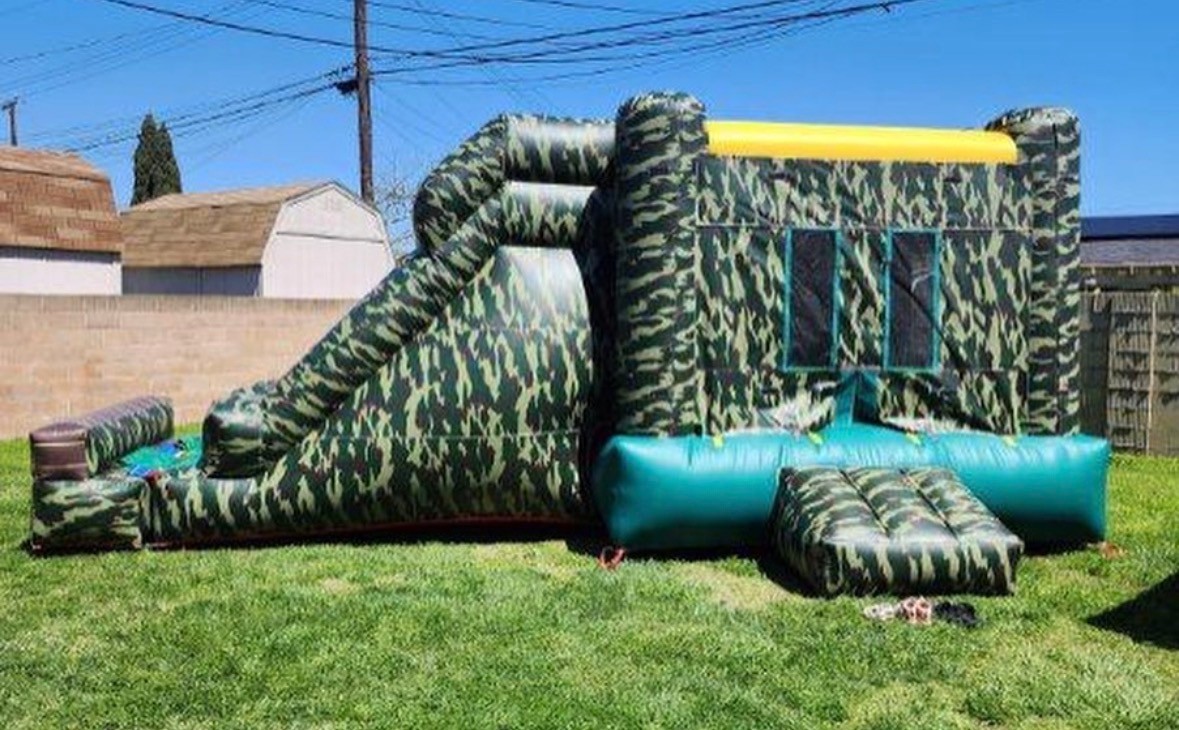
Sometimes the nearest dedicated outlet is not right next to the setup area. A heavy-duty outdoor extension cord can bridge that gap safely, but not all extension cords are created equal. Using the wrong cord is one of the most common mistakes first-time renters make.
The gauge of the cord is the most important factor. Gauge refers to the thickness of the wire inside the cord. Lower gauge numbers mean thicker wire, which means the cord can carry more current with less resistance. For a bounce house blower, a 12-gauge outdoor-rated extension cord is the standard recommendation. Lighter cords, such as 16-gauge or 14-gauge, can cause voltage drop, which means the blower receives less power than it needs. Voltage drop can reduce blower performance, cause the inflatable to deflate slowly over time, or create heat buildup in the cord itself.
Cord length also matters. Longer cords create more resistance, which increases voltage drop. Keeping the cord run under 50 feet is a reasonable target for most backyard setups. If you need to go longer, staying under 100 feet with a 12-gauge cord is generally workable, but shorter is always better. Avoid daisy-chaining two extension cords together to reach a distant outlet. That setup compounds resistance and reduces the safety margin significantly.
A few additional cord tips for OC outdoor setups:
- Use cords rated for outdoor use. Indoor cords are not designed for moisture, sun exposure, or ground contact.
- Keep the cord out of high-traffic areas where guests might trip over it or where it could be pinched under equipment.
- Do not run the cord under rugs, mats, or tarps, which can trap heat.
- Check the cord for any damage, fraying, or exposed wire before use.
Your Jump High Rentals team can advise on cord length based on your specific yard layout when you call ahead to discuss the setup.
When a Generator Is the Better Option in OC
For events at parks, school fields, church parking lots, or any outdoor venue without reliable access to a dedicated outlet, a generator is often the most practical power solution. Orange County has dozens of popular party locations where site power is either unavailable, uncertain, or shared with other vendors and activities.
Generator sizing depends on how many inflatables you are running and what else needs power at the event. A general starting point is roughly 2,000 watts for a single medium bounce house, and closer to 4,000 watts or more when running multiple inflatables simultaneously. It is important to size up rather than down because generators, like circuits, need headroom for startup surge and for any other equipment sharing the load.
A few things to confirm before relying on a generator at an OC park or venue:
- Check whether the specific park or venue allows generator use. Some Orange County parks have restrictions on fuel-powered generators, and some require permits for events above a certain size.
- Position the generator away from the inflatable and away from areas where guests will be gathered, and follow the manufacturer's guidance on ventilation.
- Use a generator with enough rated wattage to cover the total load plus a reasonable buffer. Running a generator at or near its maximum capacity for hours at a time reduces reliability.
- Confirm with your rental company how many blowers the setup requires so you can size the generator accurately.
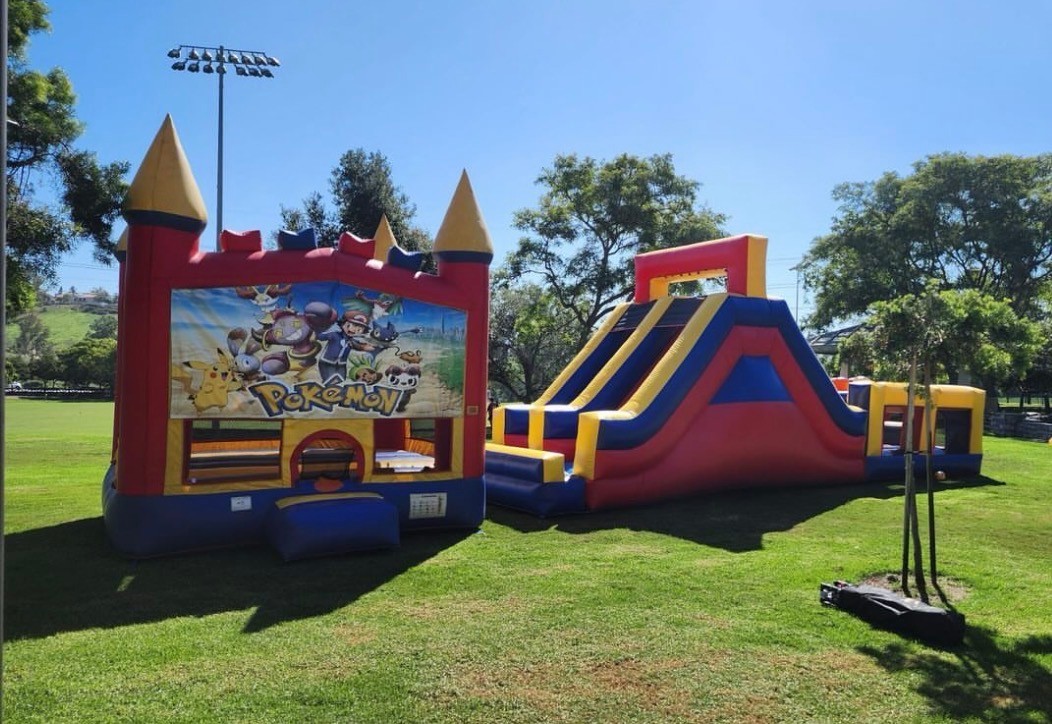
If you are planning a large community event and are unsure whether to rely on site power or bring a generator, talking through the details with your rental company before booking is the most reliable way to avoid a power problem on event day.
Power Questions to Ask Before You Book
A quick conversation before your rental is confirmed can prevent most of the common power issues that come up on party day. Here are the questions worth asking when you contact Jump High Rentals:
How many blowers does this inflatable use? Larger combo units and obstacle courses sometimes require two blowers, which changes the outlet and cord plan entirely.
Does this setup need one outlet or two? If two, are they on separate circuits? Knowing this in advance lets you check your home's breaker panel or talk to your venue contact before delivery day.
How far is the setup area from the nearest outlet? Bring a rough measurement if you can. That number determines whether you need an extension cord, how long it should be, and what gauge is appropriate.
Does my backyard outlet need to be on a dedicated circuit? For most standard bounce houses, a dedicated 20-amp circuit is the ideal setup. Your rental team can help you assess whether your available outlet is likely to work.
Will this event need a generator? If you are hosting at a park, school, or any venue without confirmed outlet access, ask your rental company what generator size they recommend for the specific units you are booking.
Is there anything else drawing power at the event that I should account for? Food trucks, DJ equipment, lighting rigs, and catering warmers all add to the electrical load. Thinking through the full picture before the party helps you avoid a tripped breaker at the worst possible moment.
Jump High Rentals serves families and event planners across Orange County, and the team is happy to walk through the power setup for your specific location before you finalize your booking. Reach out before your event date so the right unit, blower count, and cord plan can be matched to your backyard or venue. A little planning up front keeps the inflatables running and the kids happy all day long.