
Church and School Inflatable Event Checklist for OC Planners
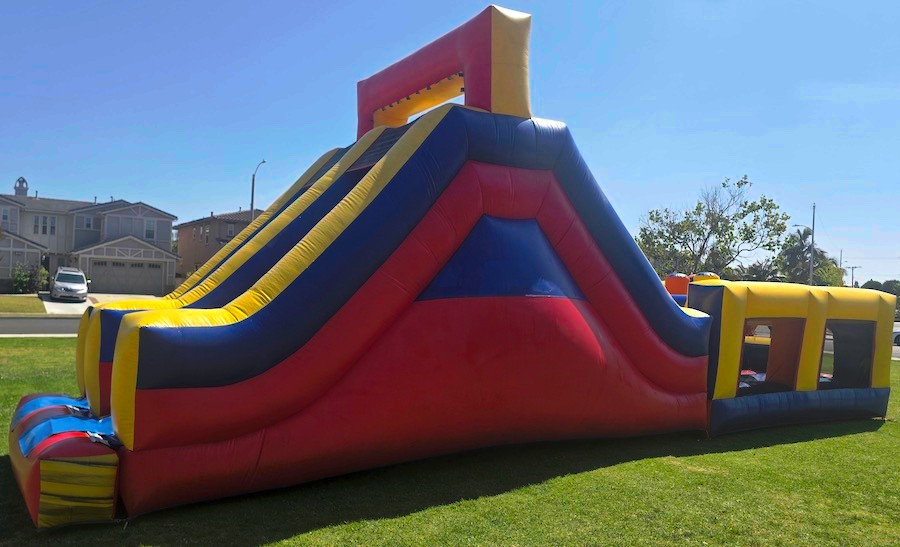
Planning an inflatable rental for a school carnival or church festival is a different challenge than booking a bounce house for a backyard birthday. You're coordinating with administrators, managing volunteer crews, working around institutional approval timelines, and keeping an eye on guest counts that can easily reach 150 to 300 people. Getting the details right before event day makes the difference between a smooth, joyful celebration and a scramble that leaves kids waiting in line while adults troubleshoot logistics.
This checklist is built specifically for Orange County event planners handling larger institutional events: school field days, church fall festivals, VBS celebrations, PTA fundraisers, and community carnivals. Whether you're a seasoned coordinator or stepping into this role for the first time, walking through these steps early gives you the confidence to run the day well.
Before You Book: Site and Capacity Questions to Answer First
The single most important thing you can do before contacting any rental company is to understand your venue. Institutional venues in Orange County vary widely. A church parking lot in Anaheim Hills has different surface conditions, access points, and shade coverage than a school blacktop in Garden Grove or a grassy field in Mission Viejo. Each of those differences affects which inflatables work, how many you can fit, and how the setup crew will need to approach the space.
Start by measuring your available footprint. Inflatables need more room than their listed dimensions suggest because you need clearance on all sides for anchoring, blower placement, and safe entry and exit. A unit listed as 15 by 15 feet typically needs closer to 20 by 20 feet of clear space once you account for stakes, tethers, and the blower unit. If you're planning multiple inflatables, map out each zone separately and confirm there's enough separation between units for crowd flow.
Next, think about your expected attendance. Guest count directly shapes how many units you need and how long lines will form. A single bounce house handles roughly 6 to 8 kids at a time, which means a 200-person event with a mix of ages will need multiple units to keep wait times reasonable. Our guide on how guest count affects which inflatable to rent in OC walks through the math in more detail, and it's worth reviewing before you finalize your equipment list.
Also confirm whether your venue requires an event permit or has a formal approval process for inflatables. Many OC school districts and church properties have internal approval chains, and some city parks require permits for commercial inflatables. Starting that process early prevents last-minute surprises. Our guide on how to get a bounce house permit for an OC park event covers the general process for park-based events if your venue falls into that category.
Choosing the Right Inflatables for a School or Church Event
Once you know your space and your crowd, the next step is matching equipment to your audience. School carnivals and church festivals typically serve a wide age range, from toddlers attending with parents to middle schoolers who want something more physically challenging. That mix matters when you're selecting units.
For younger children (roughly ages 3 to 7), a standard bounce house or a smaller combo unit with a slide gives them an age-appropriate experience without overwhelming them. For older kids and tweens, an inflatable obstacle course tends to hold attention much longer because it introduces a competitive element. Many OC planners running events with 100 or more kids find that pairing a bounce house with an obstacle course serves the crowd better than doubling up on the same unit type.
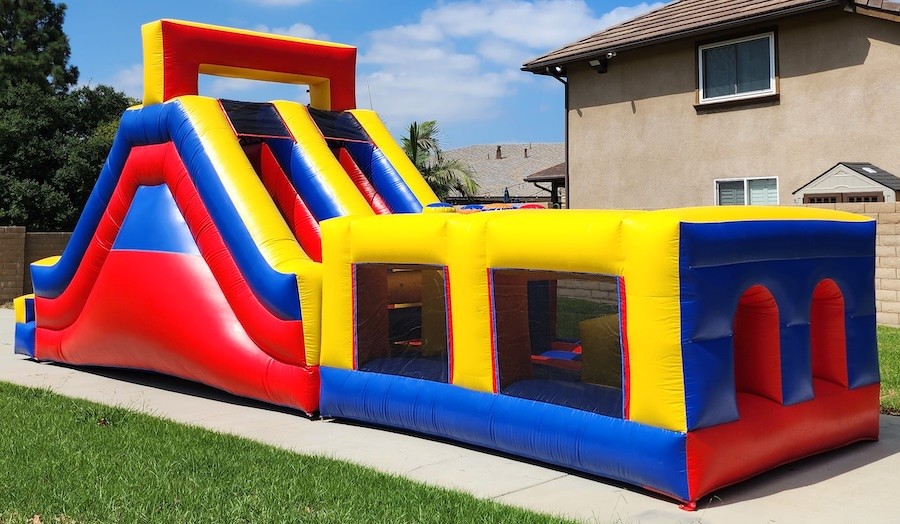
Combo units, which combine a bounce area with a slide, are popular for mixed-age events because they offer variety in a single footprint. If your event runs during warmer months, a waterslide or a wet-dry combo can become the centerpiece attraction. Just confirm that your venue has adequate drainage and that your event permits wet activities before committing to a water unit. Our guide on choosing between a waterslide and combo unit for OC parties covers the tradeoffs in detail.
For very large events, multi-unit setups are often the right answer. Running two or three inflatables simultaneously reduces line congestion, keeps energy distributed across the event space, and gives you flexibility to assign different units to different age groups. Jump High handles multi-unit rentals for large OC events regularly, so if you're planning a setup of this scale, it's worth discussing your full layout during the booking conversation.
Power, Space, and Setup Logistics for OC Venues
Every inflatable runs on a continuous-duty blower that needs a dedicated electrical circuit. This is one of the most common planning gaps at institutional events, and it's worth addressing early. Most blowers draw between 7 and 15 amps, and running multiple units means you need multiple circuits. Sharing a single circuit with other event equipment (food vendors, PA systems, lighting) can trip breakers and shut down inflatables mid-event.
Walk your venue and identify where the electrical outlets are located, what their amperage is, and how far each outlet sits from your planned inflatable zones. Extension cords are sometimes necessary, but they need to be the right gauge for the load and the distance. Our power and extension cord guide for OC inflatables explains what to look for and what to avoid.
Surface type also affects setup. Grass is the most forgiving surface for staking and anchoring. Asphalt and concrete require sandbag anchoring instead of ground stakes, which your rental company should supply. If your venue has a mix of surfaces, flag that during your booking conversation so the crew arrives prepared. Artificial turf has its own anchoring considerations, covered in our guide on how to safely anchor inflatables on artificial turf in OC.
Delivery access is another practical detail that catches planners off guard. Setup crews need to bring equipment through a gate or entrance wide enough for a dolly or hand truck. Confirm your venue's access points in advance and let your rental company know if there are locked gates, narrow pathways, or parking restrictions that could affect arrival time. For large events, coordinating a specific delivery window helps avoid conflicts with other vendor arrivals.
Day-of Supervision and Safety Protocols for Group Events
Inflatables at institutional events require active supervision, and the responsibility for organizing that supervision falls on the event coordinator. A rental company delivers, sets up, and ensures the equipment is safe and properly anchored. The ongoing supervision of children using the equipment is the event organizer's responsibility.
For school and church events, plan on assigning at least one dedicated adult volunteer per inflatable unit. That person's job is to monitor capacity limits, enforce age and size groupings, and watch for unsafe behavior like flipping, rough play, or overcrowding near the entrance. Capacity limits are not suggestions; they reflect the engineering load ratings of the unit. Our guide on inflatable capacity limits and what they mean explains the reasoning behind those numbers in plain terms.
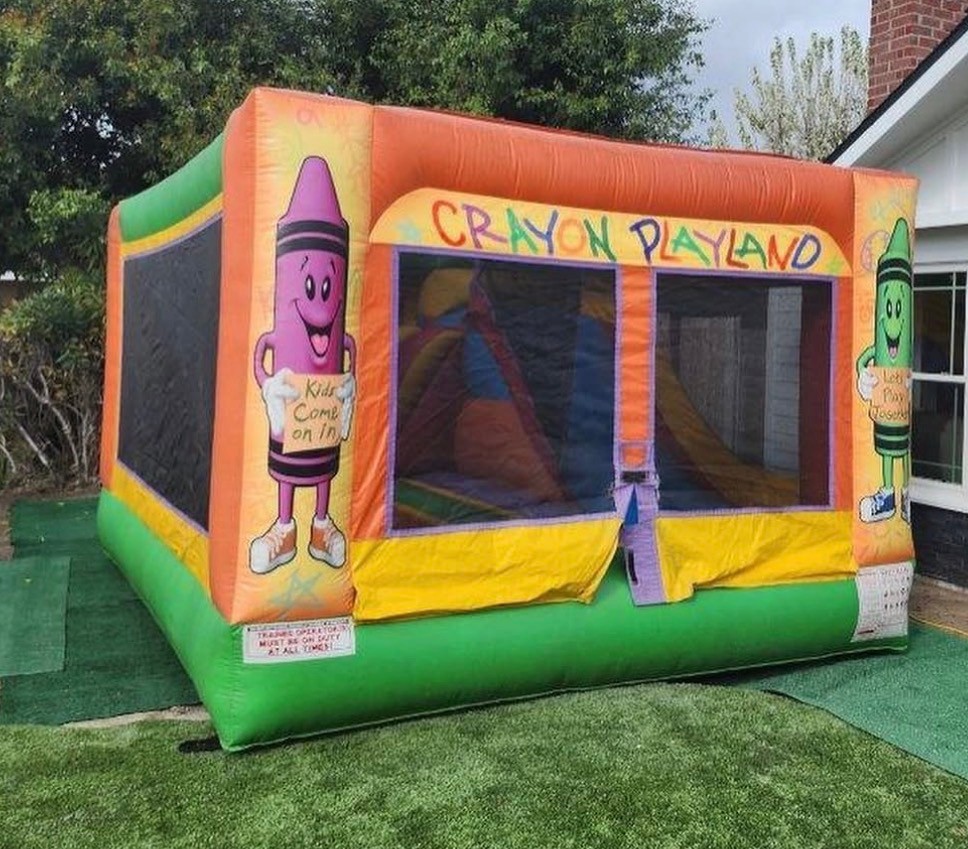
Brief your volunteers before the event opens. They should know the capacity for each unit, the age or size restrictions that apply, and what to do if a child is injured or if the inflatable needs to be cleared quickly. A short five-minute walkthrough with your volunteer crew before guests arrive is one of the highest-value things you can do to prevent problems.
Wind is a real safety factor at outdoor OC events, particularly in hillside communities and open fields. Inflatables should not operate in sustained winds above 20 to 25 mph. Keep an eye on conditions throughout the day, and have a clear plan for deflating and securing units if wind picks up unexpectedly. Our guide on wind speed limits and inflatable safety for OC parties covers the thresholds and what to watch for.
Working With Your Rental Company: What to Confirm Before Event Day
A good rental company for an institutional event is more than a delivery service. They're a logistics partner who helps you anticipate problems before they happen. When you reach out to Jump High to discuss your event, come prepared with your venue address, your expected guest count, your surface type, your power situation, and your event timeline.
Confirm delivery and pickup windows in writing. Large events often have strict venue access hours, and your rental company needs to know when they can arrive for setup and when they need to return for breakdown. Confirm that your rental agreement reflects those windows clearly. Our guide on inflatable rental delivery windows and what to expect in OC walks through how that process typically works.
Ask about multi-unit availability for your event date, especially if you're planning a spring or fall event when school carnivals and church festivals cluster on the calendar. Popular weekends book out weeks in advance, and securing your units early protects your date. Also confirm what happens if weather creates a problem on event day, so you understand the options available to you.
Finally, share your event layout with the rental team before they arrive. A simple sketch showing where each inflatable zone sits, where power is located, and where the delivery entrance is saves time on setup day and reduces the chance of a unit ending up in the wrong spot. The more context your rental company has going in, the smoother the morning runs.
If you're ready to talk through your event details, contact Jump High Rentals directly. We work with schools, churches, HOAs, and community organizations across Orange County and can help you match the right units to your space, your crowd, and your timeline. You can also browse our full inflatable rental catalog to get a sense of what's available before we connect.
Jump High Rentals serves Orange County, CA with bounce houses, obstacle courses, waterslides, and party inflatables. Delivery, setup, and pickup are included. This guide is for educational purposes and does not constitute legal, insurance, or safety certification advice.