
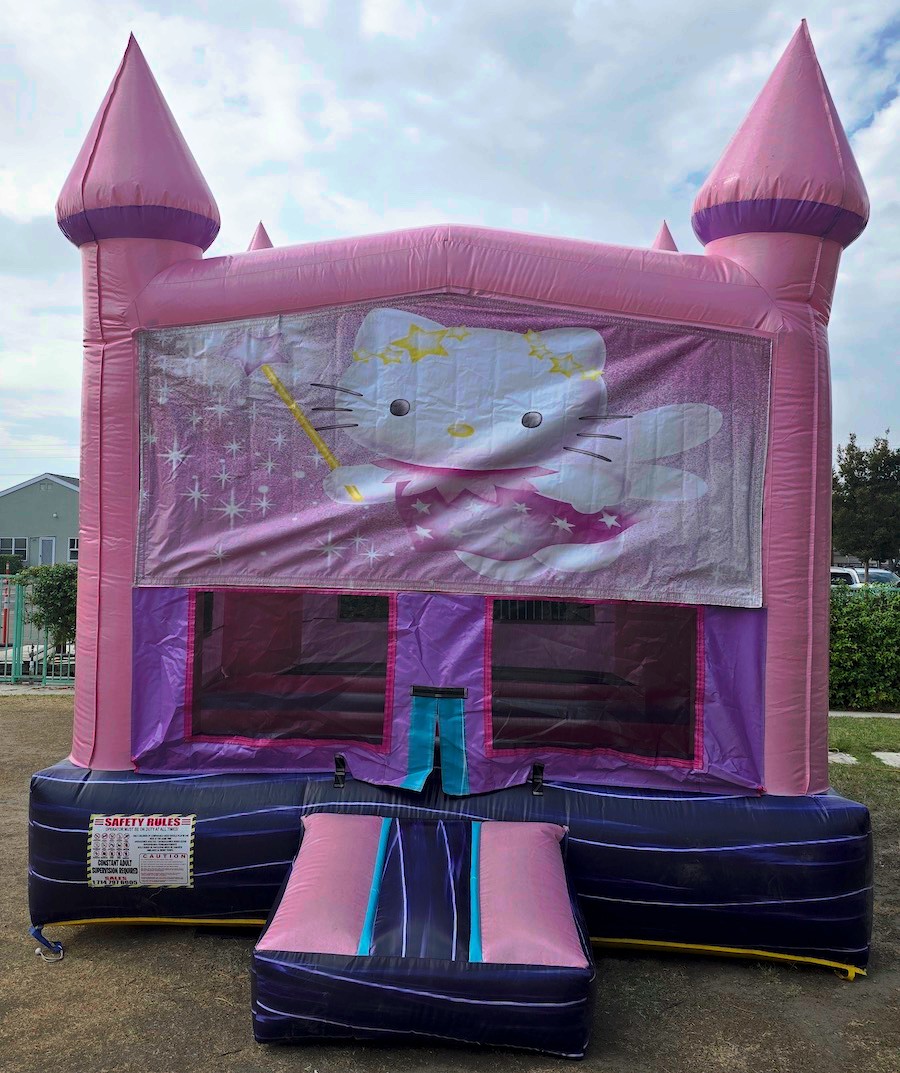
Booking a bounce house for a backyard birthday or school carnival feels straightforward until the wind picks up an hour into the party. Most families assume that once an inflatable is staked into the ground, it is safe to use in almost any conditions. That assumption can lead to real problems. Wind is the single biggest weather hazard for inflatables, and understanding the limits before your event date is one of the most practical things you can do as a host or event planner in California.
This guide walks through wind thresholds by unit type, what rain and thunderstorms mean for your rental, and how to monitor conditions so you can make a fast, confident call if the weather shifts.
Why Wind Is the Biggest Weather Risk for Inflatables
Rain is inconvenient. Cold weather is uncomfortable. But wind is the hazard that can move a bounce house, tip a slide, or send an unanchored inflatable across a yard in seconds. That is not an exaggeration. Meteorological research and CPSC incident data both point to wind as the leading cause of serious bounce house accidents.
Here is why wind behaves differently than most people expect. A calm hourly forecast can still hide strong gusts, and gusts are the real danger. A forecast that shows 10 mph average winds might include gusts of 20 to 25 mph, and those short bursts are enough to stress anchoring systems and shift larger inflatables. Watching the forecast number alone is not enough.
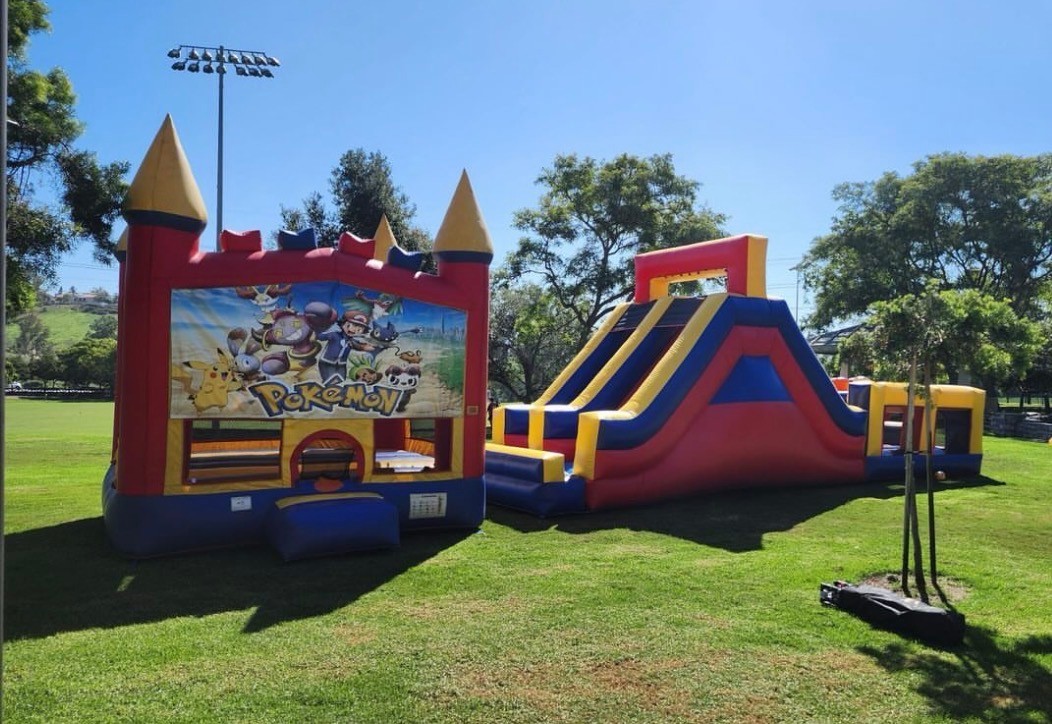
Larger units carry more surface area, which means they catch more wind force. A standard bounce house sits lower to the ground and has less exposure than a tall waterslide or a multi-section obstacle course. That difference matters when you are deciding whether to keep play going as conditions change.
Open locations also amplify risk. School fields, HOA common areas, and park lawns tend to have fewer natural windbreaks than a fenced backyard. If your event is in an open space, plan to be more conservative with your wind limits, not less.
Wind Speed Limits: What the Numbers Mean for Your Rental
Safety guidance from the CPSC and inflatable industry sources points to a general range of 15 to 25 mph as the zone where decisions need to be made. Here is a practical way to think about it.
At or below 15 mph: Most properly anchored bounce houses can operate safely. Conditions are generally stable, and a flat, even surface with correct staking provides solid hold.
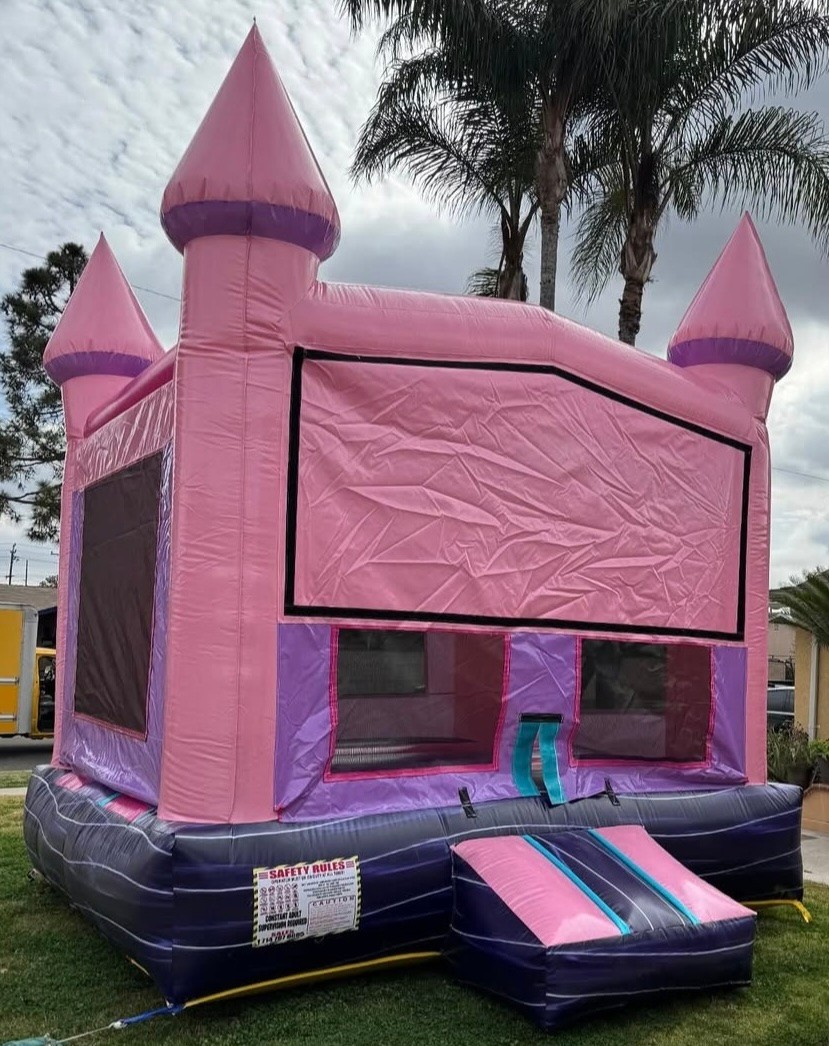
Between 15 and 20 mph: This is the caution zone. Standard bounce houses may still be usable if anchoring is solid and gusts are not spiking above the average. Larger inflatables, including tall slides and multi-lane obstacle courses, should be shut down in this range. The extra height and surface area make them significantly more vulnerable.
Above 20 to 25 mph, or with gusty conditions: Stop play for all units. Even a well-staked bounce house is not designed to operate reliably in sustained winds above this range. If gusts are frequent or unpredictable, the safer call is always to deflate and clear the kids out.
One important clarification: anchoring does not make a bounce house safe in strong wind. Staking is essential, and it helps, but it does not override the wind limit. A staked unit in 30 mph gusts is still a hazard. The wind limit applies regardless of how well the inflatable is anchored.
Before your event, ask your rental company what wind cutoff they recommend for the specific unit you are renting. A standard bounce house and a 20-foot waterslide have different thresholds, and your rental provider should be able to give you a clear answer for your setup.
Rain, Thunderstorms, and Wet Surfaces: When to Stop Play
Rain creates two separate problems. First, inflatable surfaces become slippery when wet, which increases the chance of falls inside and around the unit. Second, rain near blowers and electrical connections raises safety concerns that go beyond the inflatable itself.
Light drizzle is a judgment call, but steady rain is a reason to pause. If the surface inside the bounce house is wet, kids are sliding when they should be bouncing, and the risk of a collision or fall goes up significantly. For waterslides, rain adds to an already wet surface and can make the surrounding area muddy and unstable.
Thunderstorms are a hard stop. If you see lightning or hear thunder, clear the inflatable immediately and move everyone indoors or to a covered area. The standard guidance is to wait at least 30 minutes after the last thunder or lightning before resuming any outdoor activity. Do not restart play just because the rain has stopped. Lightning can still be present after rain ends.
A few practical notes for wet-weather situations:
- Wet grass around the inflatable becomes slippery, so watch the entry and exit area carefully.
- If the blower motor gets wet, do not attempt to restart it yourself. Contact your rental company.
- A dry bounce house that gets rained on mid-event should be wiped down before kids re-enter if play resumes.
- Waterslide rentals in rainy conditions need extra attention around the base splash zone, which can become a slip hazard with standing water.
How to Monitor Weather During Your Event
Checking the forecast the morning of your party is a starting point, not a complete plan. Weather in Southern California can shift quickly, especially in coastal areas and during late spring or early fall. A clear morning does not guarantee calm afternoon conditions.
Designate one adult at your event as the weather watcher. This does not need to be a formal role, but someone should be paying attention to wind changes and sky conditions throughout the event, not just at setup. Apps like Weather.gov, Weather Underground, or the National Weather Service hourly forecast give you real-time wind readings and gust data, which is more useful than a simple daily summary.
Set a personal threshold before the party starts. Decide in advance: if wind hits a certain speed or gusts become frequent, play stops. Having that number in your head before the event means you are not making a judgment call in the middle of a crowded party with 20 kids asking to keep bouncing.
Also build in a quick-exit plan. Know how long it takes to clear children from the inflatable, and make sure any supervising adults know the signal to stop play. A calm, practiced response is much easier than a rushed one when conditions change fast.
Setting Up Safely: Placement, Anchoring, and Surface Rules
Where you place the inflatable matters as much as how you anchor it. The CPSC recommends keeping bounce houses away from tree branches, power lines, and fences. Overhead hazards become a serious problem if wind causes the unit to shift or if a child exits unexpectedly.
The setup surface should be flat and even. Slopes create uneven weight distribution and can make the unit less stable in wind. Grass is the preferred surface for staking because it allows 18-inch metal stakes to anchor properly. If your setup area is concrete or asphalt, sandbags (typically 50 pounds each) are used in place of stakes, and your rental company should provide or specify the right anchoring method for that surface.
Keep a clear perimeter around the inflatable. Children and adults standing too close to the sides can be struck if the unit shifts, and the area around the entrance should be free of obstacles so kids can exit quickly if needed.
For school fields, parks, and HOA spaces, check whether the ground is level and whether there are any irrigation heads, drainage grates, or other surface features that could interfere with staking. Open venues often look flat but have subtle slopes that affect setup. Arriving early and walking the setup area before the rental truck arrives saves a lot of time and avoids last-minute placement problems.
Before You Book: Ask the Right Questions
Weather planning starts before the rental is confirmed. When you contact Jump High Rentals, ask specifically about the wind limit for the unit you are considering, what the policy is if weather becomes unsafe on the day of your event, and whether the setup location you have in mind is appropriate for the size of inflatable you want.
Having that conversation in advance means you are not figuring out the rules while kids are already in line to bounce. Call or text Jump High Rentals before your booking to go over the details for your specific unit and event location. A quick conversation now makes for a much smoother party day, whatever the weather brings.