
Why Guest Count Changes Everything About Your Inflatable Choice
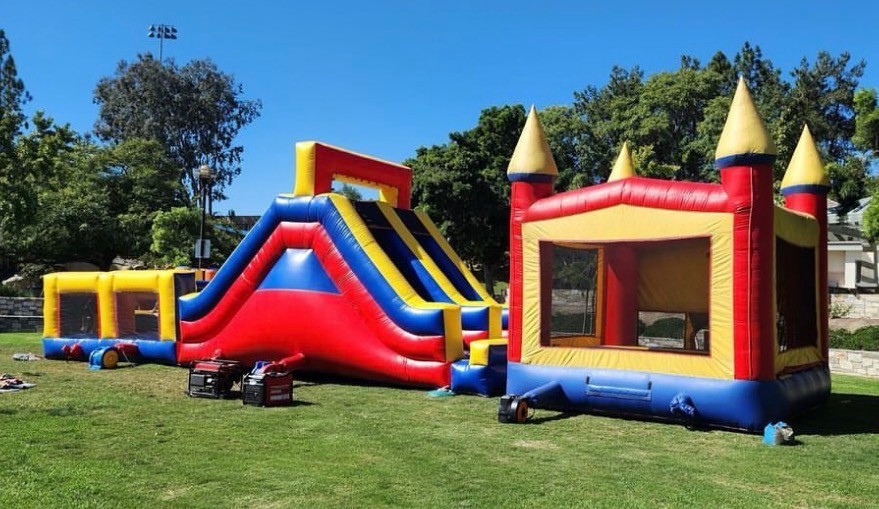
Picture a standard 13-by-13-foot bounce house at a party with 55 kids. Within the first twenty minutes, you have a line stretching across the yard, restless kids bumping into each other at the entrance, and a few frustrated parents wondering why they didn't plan for more. Guest count is the single most important factor in choosing the right inflatable setup, and it's the one detail that first-time renters most often underestimate.
Most standard bounce houses are designed with a safe occupancy of around six to eight kids at a time, depending on their ages and sizes. That works beautifully for a cozy backyard birthday with 20 guests. But when your headcount climbs past 50, you're looking at a completely different planning challenge. The math is simple: if 50 kids each want two turns on a single bounce house during a four-hour party, you're managing a rotation that leaves almost no room for spontaneous play. Kids get bored waiting, parents get anxious, and the energy that makes a great party starts to drain away.
The good news is that Orange County families have a lot of options. Larger-format inflatables, combo units, and multi-unit setups can absorb big crowds without turning your party into a queuing exercise. The key is knowing which unit types handle volume well and how many you realistically need for your headcount. If you want a quick overview of how capacity numbers work in practice, the inflatable capacity limits guide is a helpful starting point before you start comparing units.
Which Inflatables Handle Large Groups Best in OC
Not every inflatable is built for crowd management. A standard bounce house is a single-activity unit: kids go in, bounce, and come out. That's great for smaller groups, but for 50 or more children you want inflatables that either accommodate more kids simultaneously or create enough activity variety that the crowd naturally spreads out.
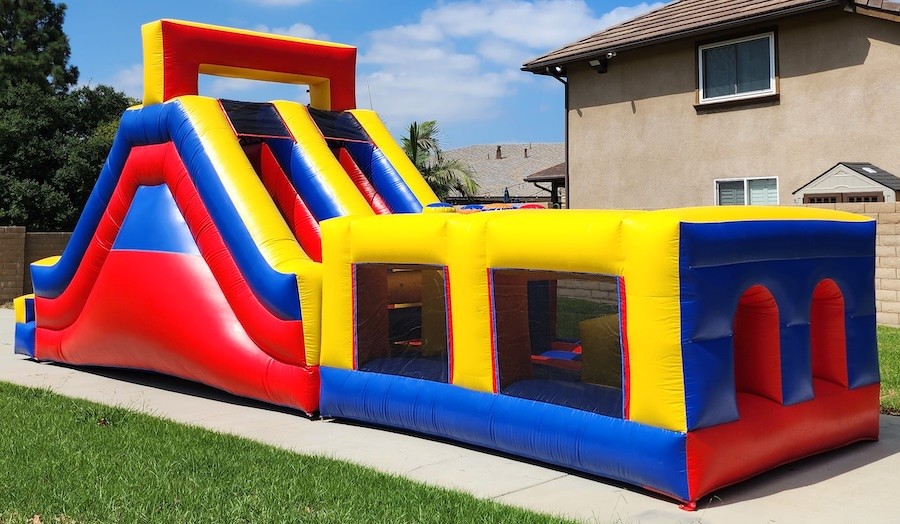
Obstacle courses are one of the strongest choices for large groups. A full-size inflatable obstacle course typically runs 30 to 60 feet long and moves kids through a sequence of challenges, which means the unit is constantly cycling participants rather than holding a static group. Kids enter one end, work through the course, and exit the other side, keeping the flow moving. Teens and older kids especially love the competitive element, and you can run informal races to keep energy high. The obstacle course vs. bounce house guide breaks down the tradeoffs in more detail if you're weighing your options.
Combo bounce houses are another smart pick for large parties. These units combine a bounce area, a climbing wall, and a slide in one footprint, which means a single inflatable offers three distinct activities. Kids who are waiting to bounce can watch others on the slide, and the variety keeps attention spans longer than a plain bounce house would. For summer parties, a waterslide or wet-dry combo unit adds a whole separate attraction that pulls kids away from the bounce area and reduces crowding naturally. You can read more about how those units compare in the waterslide vs. combo unit guide.
For very large events like school carnivals, church festivals, or HOA block parties, a mix of unit types works better than multiples of the same inflatable. Pairing an obstacle course with a combo bounce house and a standalone waterslide gives you three distinct activity zones. Kids self-sort by interest, lines stay shorter at each unit, and the overall energy of the event feels more like a festival than a birthday party with a single attraction.
How Many Units Do You Actually Need for 50 or More Kids
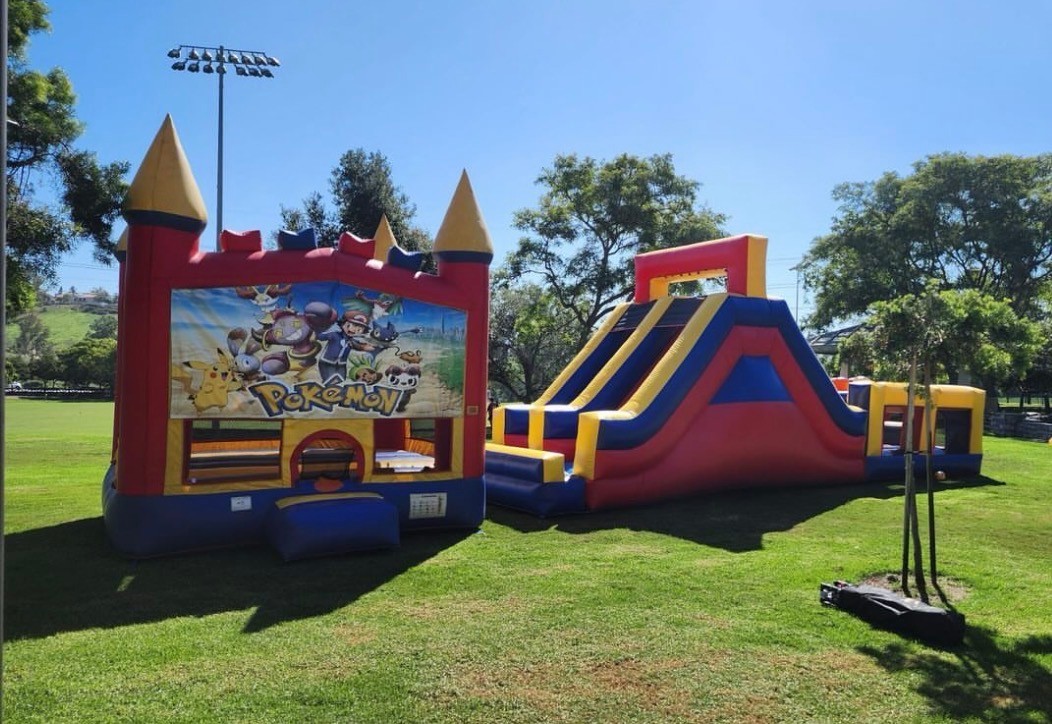
There's no universal formula, but a practical rule of thumb for Orange County parties is to plan for at least one unit per 20 to 25 active kids. That assumes a standard four-hour rental window and kids who are cycling on and off throughout the event rather than all jumping at once. For 50 kids, two well-chosen units is a reasonable minimum. For 75 to 100 kids, three units gives you much more comfortable crowd flow.
Age mix matters too. If your guest list is mostly toddlers and young children under age five, you'll want at least one unit sized and styled for that age group, since mixing toddlers into a high-energy obstacle course with older kids creates safety concerns. The bounce house age guide covers which units are appropriate for different age ranges, which is especially useful when your party spans a wide age spread.
For events with 100 or more kids, the guide on how many inflatables to rent for a 100-person OC event goes deeper on unit combinations and layout strategies. The short version: more units are almost always better than one very large unit, because distributed activity zones prevent the bottleneck effect that kills party momentum.
Power access is a practical constraint that affects how many units you can run simultaneously. Each inflatable blower draws a meaningful amount of power, and most residential backyards have limits on how many circuits you can safely use at once. The power and extension cord guide explains what to check before booking multiple units so you're not surprised on delivery day.
Backyard vs. Park Setup for Big OC Parties
For parties with 50 or more kids, the venue question becomes as important as the inflatable question. Most standard Orange County backyards can comfortably fit one or two inflatables, but fitting three or more units along with tables, a food area, and 50-plus guests requires either a large lot or a different venue entirely.
A good rule of thumb for backyard planning is to measure your usable flat space before you book. Each inflatable needs its listed footprint plus several feet of clearance on all sides for safe operation and for the blower unit. A combo bounce house might need a 20-by-20-foot footprint, an obstacle course could require 15 by 50 feet or more, and a waterslide often needs a longer run with a splash zone at the bottom. If your yard can't comfortably fit the units you need with room for kids to move around safely, a park setting is worth considering.
Orange County parks offer more open space, but they come with their own logistics. Most OC city parks require a permit for commercial inflatables, and the permit process, fees, and lead times vary by city. Some parks also have restrictions on staking into the ground, which affects how inflatables are anchored. The guide to getting a bounce house permit for an OC park event walks through the general process, and the Irvine park permit guide covers one of the more commonly used park systems in detail.
For HOA community events and school carnivals, parking lot setups or large grass fields often work better than either a backyard or a public park. These venues typically have the flat space and power access that large multi-unit setups require. If you're coordinating a school or church event, the church and school inflatable event checklist is a practical resource for working through the logistics before your booking call.
One thing that applies to every large-group setup: supervision matters more when more kids are present. Having a designated adult at each inflatable, not just a general eye on the yard, makes a real difference in keeping the energy safe and fun. The supervising kids on inflatables guide has practical tips you can share with parent volunteers before the party starts.
Booking Tips and Logistics for Large Inflatable Orders
Large orders need more lead time than single-unit bookings. If you're planning a party for 50 or more kids in Orange County during spring or summer, booking four to six weeks in advance is a realistic minimum, and popular weekends in May, June, and July can fill up even earlier. The how far ahead to book guide covers timing in detail, but the short answer for large events is: earlier is always better.
When you contact Jump High Rentals for a large order, it helps to have a few pieces of information ready. Know your approximate headcount and age range, your venue type (backyard, park, school, or church), your available flat space dimensions, and whether you have access to standard outdoor electrical outlets near the setup area. Having this information ready makes the booking conversation faster and helps the team recommend the right unit combination for your specific situation.
Delivery logistics for multi-unit orders also take more time than a single bounce house drop-off. Setup for two or three inflatables can take 60 to 90 minutes, so plan your delivery window accordingly. If your party starts at noon, a 9 or 10 a.m. delivery window gives the crew enough time to set up, test each blower, and walk you through the units before guests arrive. You can review what to expect on delivery day in the delivery windows guide.
Finally, think through your rental duration. A four-hour window is standard for many backyard parties, but for large events where setup and teardown take longer, an eight-hour window often makes more practical sense. It removes the time pressure of watching the clock while kids are still having fun, and it gives the crew a comfortable pickup window that doesn't interrupt the end of your event.
Planning a party for 50 or more kids in Orange County? Browse the Jump High Rentals catalog and reach out for a same-day quote so you can lock in your date before the weekend fills up.